

Business
Social security benefits to rise 2.8%: Retirees to see $56 monthly boost; senior citizens say increase not enough – The Times of India

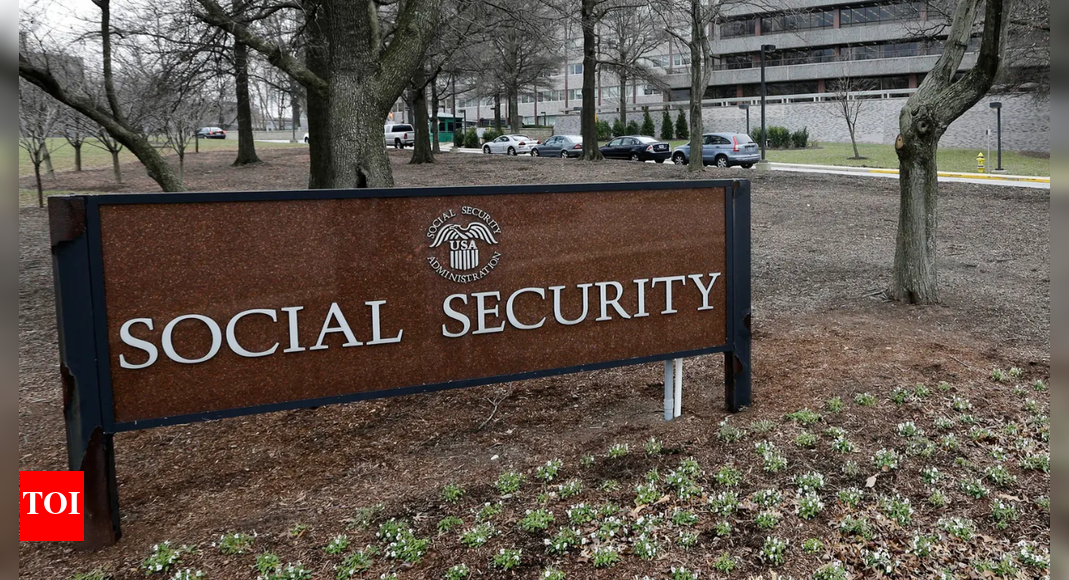
The Social Security administration on Friday announced that its benefits will increase by 2.8% in 2026, giving retirees an average monthly boost of more than $56. The rise reflects moderating inflation after several years of higher cost-of-living adjustments (COLA).The increase will take effect in January for nearly 71 million Social Security recipients, while about 7.5 million people receiving Supplemental Security Income will see higher payments starting December 31.The announcement, which was scheduled for last week, was delayed due to the US federal government shutdown.Recipients saw a 2.5% increase in 2025 and a 3.2% rise in 2024, following a historic 8.7% jump in 2023 driven by record-high inflation. The COLA is funded by payroll taxes collected from workers and employers, up to an annual salary cap that will rise to $184,500 in 2026 from $176,100 in 2025.Social Security Administration Commissioner Frank Bisignano said in a statement that the annual adjustment “is one way we are working to make sure benefits reflect today’s economic realities and continue to provide a foundation of security.” However, many seniors believe the increase won’t be enough to meet rising living costs, reported AP.Polling from AARP shows that many older Americans share that concern. Only 22% of Americans over 50 believe a COLA of around 3% is enough to keep up with inflation, while 77% disagree. According to the MIT Living Wage Calculator, a single adult living in Florence, South Carolina, spends about $10,184 annually on housing, $3,053 on medical expenses and $3,839 on food.Emerson Sprick, director of retirement and labor policy at the Bipartisan Policy Center, said in a statement that cost-of-living increases “can’t solve all the financial challenges households face or all the shortcomings of the program.”The latest adjustment comes as the Social Security Administration faces internal challenges and uncertainty about the program’s long-term future. In July, Treasury Secretary Scott Bessent said the Republican administration was committed to protecting Social Security, hours after comments suggesting that a new children’s savings program signed by President Donald Trump was “a back door for privatising Social Security,” as quoted by AP.







Business
New Income Tax Act 2025 to come into effect from April 1, key reliefs announced in Budget 2026
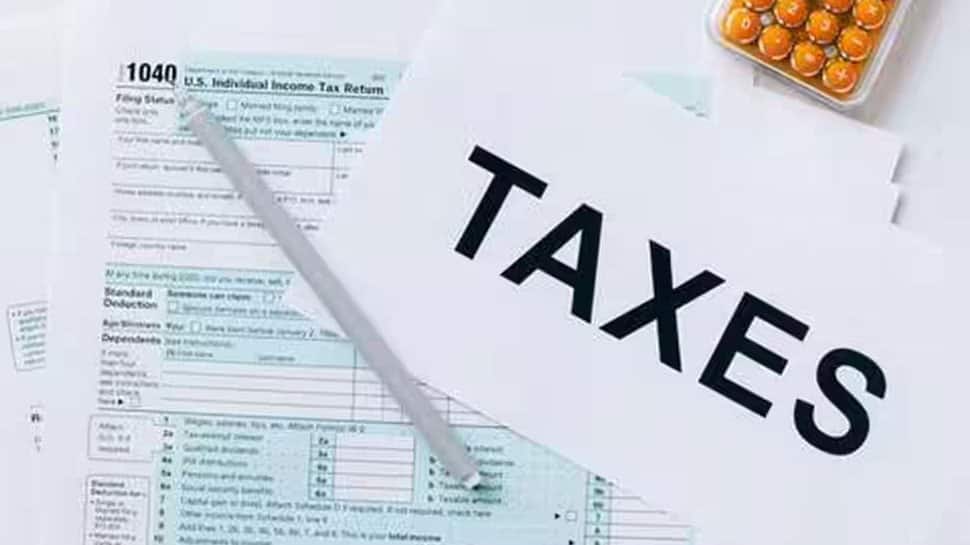
New Delhi: Finance Minister Nirmala Sitharaman on Sunday said that the Income Tax Act 2025 will come into effect from April 1, 2026, and the I-T forms have been redesigned such that ordinary citizens can comply without difficulty for ease of living.
The new measures include exemption on insurance interest awards, nil deduction certificates for small taxpayers, and extension of the ITR filing deadline for non-audit cases to August 31.
Individuals with ITR 1 and ITR 2 will continue to file I-T returns till July 31.
“In July 2024, I announced a comprehensive review of the Income Tax Act 1961. This was completed in record time, and the Income Tax Act 2025 will come into effect from April 1, 2026. The forms have been redesigned such that ordinary citizens can comply without difficulty, for) ease of living,” she said while presenting the Budget 2026-27
In a move that directly eases cash-flow pressure on individuals making overseas payments, the Union Budget announced lower tax collection at source across key categories.
“I propose to reduce the TCS rate on the sale of overseas tour programme packages from the current 5 per cent and 20 per cent to 2 per cent without any stipulation of amount. I propose to reduce the TCS rate for pursuing education and for medical purposes from 5 per cent to 2 per cent,” said Sitharaman.
She clarified withholding on services, adding that “supply of manpower services is proposed to be specifically brought within the ambit of payment contractors for the purpose of TDS to avoid ambiguity”.
“Thus, TDS on these services will be at the rate of either 1 per cent or 2 per cent only,” she mentioned during her Budget speech.
The Budget also proposes a tax holiday for foreign cloud companies using data centres in India till 2047.
Business
Budget 2026 Live Updates: TCS On Overseas Tour Packages Slashed To 2%; TDS On Education LRS Eased
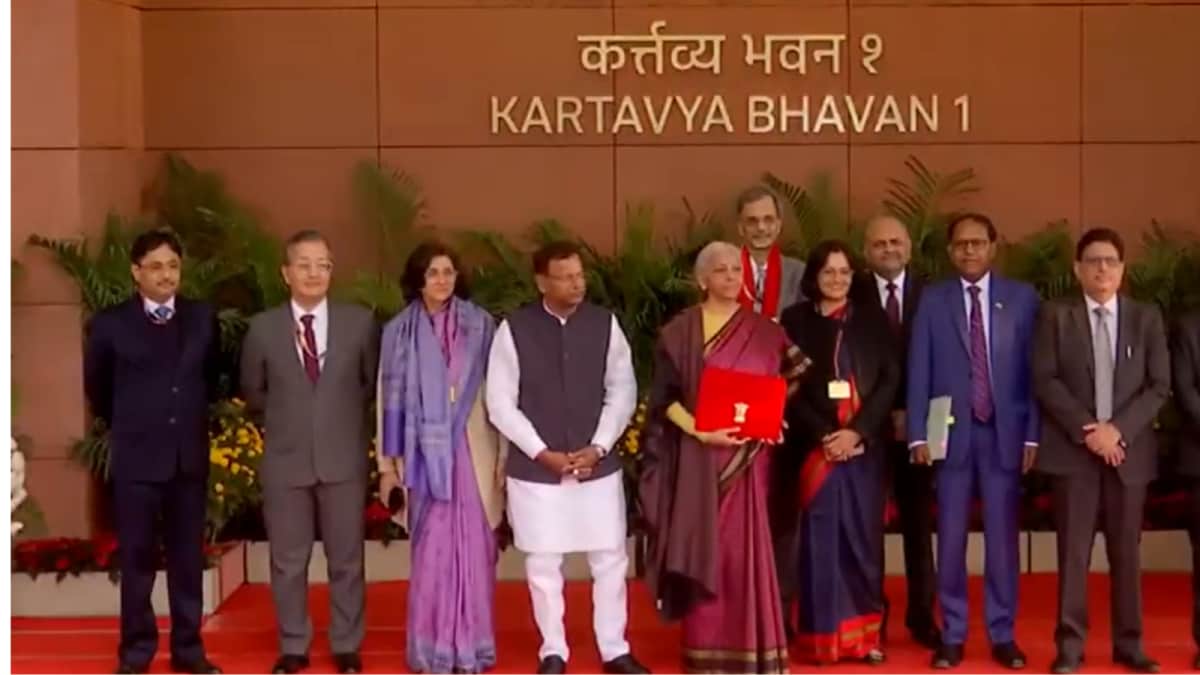
Union Budget 2026 Live Updates: Union Budget 2026 Live Updates: Finance Minister Nirmala Sitharaman is presenting the Union Budget 2026-27 in Parliament, her record ninth budget speech. During her Budget Speech, the FM will detail budgetary allocations and revenue projections for the upcoming financial year 2026-27. Sitharaman is notably dressed in a Kanjeevaram Silk saree, a nod to the traditional weaving sector in poll-bound Tamil Nadu.
The budget comes at a time when there is geopolitical turmoil, economic volatility and trade war. Different sectors are looking to get some support with new measures and relaxations ahead of the budget, especially export-oriented industries, which have borne the brunt of the higher US tariffs being imposed last year by the Trump administration.
On January 29, 2026, Sitharaman tabled the Economic Survey 2025-26, a comprehensive snapshot of the country’s macro-economic situation, in Parliament, setting the stage for the budget and showing the government’s roadmap. The survey projected that India’s economy is expected to grow 6.8%-7.2% in FY27, underscoring resilience even as global economic uncertainty persists.
Budget 2026 Expectations
Expectations across key sectors are taking shape as stakeholders look to the Budget for support that sustains growth, strengthens jobs and eases financial pressures:
Taxpayers & Households: Many taxpayers want practical improvements to the income tax structure that preserve simplicity while supporting long-term financial planning — including broader deductions for home loan interest and diversified retirement savings options.
New Tax Regime vs Old Tax Regime | New Income Tax Rules | Income Tax 2026
Businesses & Industry: With industrial output and investment showing resilience, firms are looking for policies that bolster capital formation, ease compliance, and expand infrastructure spending — especially in manufacturing and technology-driven sectors that promise jobs and exports.
Startups & Innovation: The startup ecosystem expects incentives around employee stock options and capital access, along with regulatory tweaks that encourage risk capital and talent retention without increasing compliance burdens.
Also See: Stock Market Updates Today
The Budget speech will be broadcast live here and on all other news channels. You can also catch all the updates about Budget 2026 on News18.com. News18 will provide detailed live blog updates on the Budget speech, and political, industry, and market reactions.
We are providing a full, detailed coverage of the union budget 2026 here, with a lot of insights, experts’ views and analyses. Stay tuned with us to get latest updates.
Also Read: Budget 2026 Live Streaming
Here are the Live Updates of Union Budget 2026:
New Delhi: The Cabinet on Sunday approved the Union Budget 2026-27 during a meeting in Parliament chaired by Prime Minister Narendra Modi. A meeting of the Union Cabinet was held at Sansad Bhawan at 10 a.m., and after the Cabinet’s approval, Finance Minister Nirmala Sitharaman proceeded to Parliament to present the Budget.
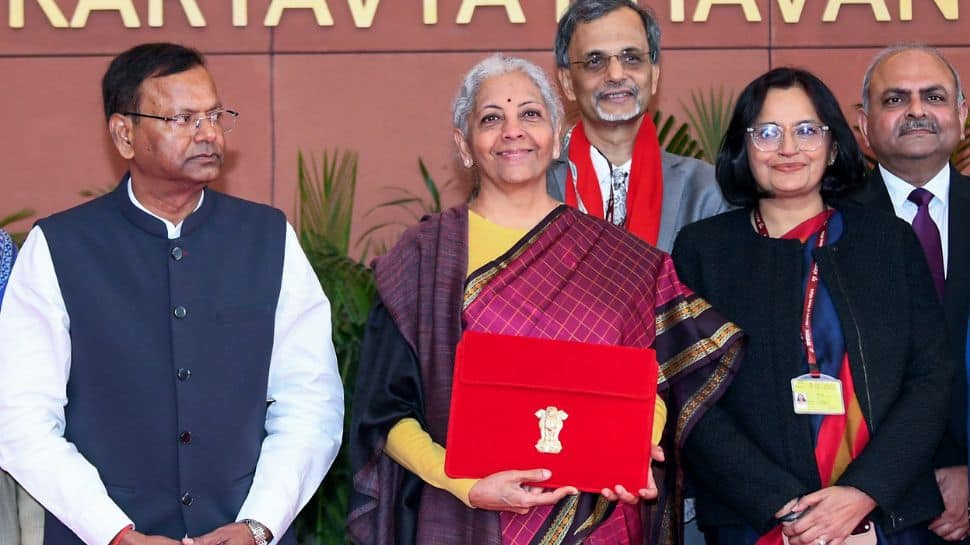
Earlier, FM Sitharaman met President Droupadi Murmu and offered her a copy of the digital budget. The President also offered ‘dahi-cheeni’ (curd and sugar) to Sitharaman when she arrived at the Rashtrapati Bhavan. The Finance Minister was seen carrying her trademark ‘bahi-khata’, a tablet wrapped in a red-coloured cloth bearing a golden-coloured national emblem on it.
Minister of State for Finance Pankaj Chaudhary, Chief Economic Advisor Dr V. Anantha Nageswaran, Central Board of Direct Taxes (CBDT) Chairman Ravi Agrawal and other officials were seen accompanying the Finance Minister. Sitharaman was set to present her ninth consecutive Union Budget in the Lok Sabha. In 2021, she switched to using a digital tablet to carry the Budget papers, further promoting a modern and eco-friendly approach.
The ‘bahi-khata’ is a red pouch that holds the digital tablet containing the Budget documents. This year, Sitharaman opted for a deep maroon Kanjeevaram saree from Tamil Nadu. The saree featured a deep maroon base with a contrasting border and subtle gold detailing, paired with a yellow blouse.
The Budget is likely to strike a deft balance of sustaining growth momentum and maintaining fiscal consolidation. It also needs to address near-term challenges emanating from unprecedented geopolitical flux, said economists. According to economists, the budget is likely to focus more on capital expenditure, especially in sectors deemed to be strategically important owing to prevailing geopolitical compulsions.
While the FY26 Budget was more tilted towards stimulating middle-class consumption with tax reliefs, the FY27 Budget’s approach to stimulating consumption will be selective, they added.


Over to you, City: Arsenal recover power and poise in classic Arteta win

Snowstorm disrupts travel in southern US as blast of icy weather widens

Philippines revises Q3 2025 GDP growth down to 3.9%

-
 Business1 week ago
Success Story: This IITian Failed 17 Times Before Building A ₹40,000 Crore Giant
-

 Fashion1 week ago
South Korea tilts sourcing towards China as apparel imports shift
-

 Sports5 days ago
PSL 11: Local players’ category renewals unveiled ahead of auction
-

 Sports1 week ago
Wanted Olympian-turned-fugitive Ryan Wedding in custody, sources say
-

 Tech1 week ago
Strap One of Our Favorite Action Cameras to Your Helmet or a Floaty
-

 Entertainment1 week ago
Three dead after suicide blast targets peace committee leader’s home in DI Khan
-

 Tech1 week ago
This Mega Snowstorm Will Be a Test for the US Supply Chain
-

 Sports1 week ago
Storylines shaping the 2025-26 men’s college basketball season