

Politics
Sometimes you have to use force, says Trump after US-Iran talks end with no deal

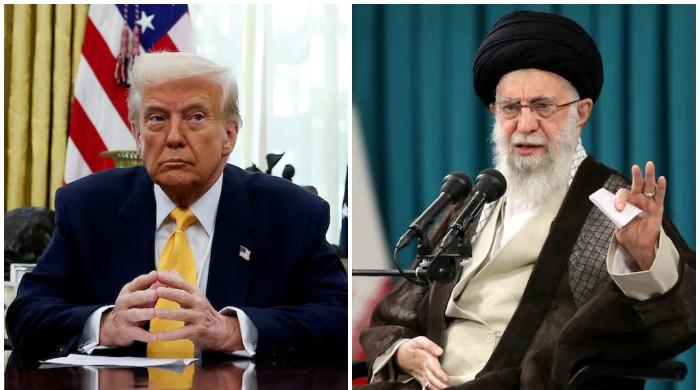
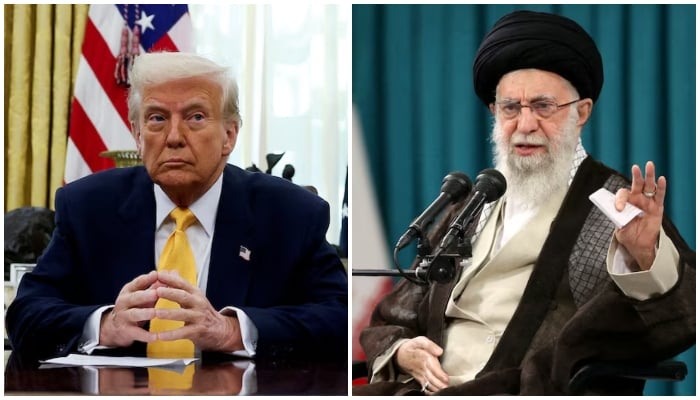
- Trump increases diplomatic and military pressure on Tehran.
- Iran denies it is seeking to develop nuclear weapons.
- We are not developing long range missiles, says FM Araghchi.
WASHINGTON: US President Donald Trump expressed disappointment about US negotiations with Iran over its nuclear programme and warned that “sometimes you have to use force,” amid a massive military presence in the region that could presage strikes on Tehran.
Trump has increased diplomatic and military pressure on Iran in the weeks since an Iranian crackdown on protesters, attempting to force the country’s rulers to forswear nuclear weapons and other activities Washington sees as destabilising.
After the latest round of talks on Thursday in Geneva ended without a deal, Trump’s patience appeared to be wearing thin, although he said he had not made a final decision on the use of force.
“They don’t want to say the key words, ‘We’re not going to have a nuclear weapon’,” Trump said on Friday before an event in Corpus Christi, Texas. “So I’m not happy with the negotiation’.
Iran denies it is seeking to develop nuclear weapons and wants any accord to include the lifting of US sanctions against it.
‘Deal within reach’
Trump spoke a day after negotiations between US envoys Steve Witkoff and Jared Kushner and Iranian officials in Geneva ended without news of a deal, although Omani Foreign Minister Sayyid Badr Albusaidi, who was a mediator, said the talks made significant progress.
Albusaidi told CBS earlier on Friday, before Trump’s latest remarks, that a “peace deal is within our reach […] if we just allow diplomacy the space it needs to get there.”
Iran has agreed in principle that it would never have nuclear material that could be used to create a weapon, Albusaidi said, adding that “if we can capture that and build on it, I think a deal is within our reach.”
A big US military force, including two aircraft carrier groups, is in the region waiting on Trump’s order.
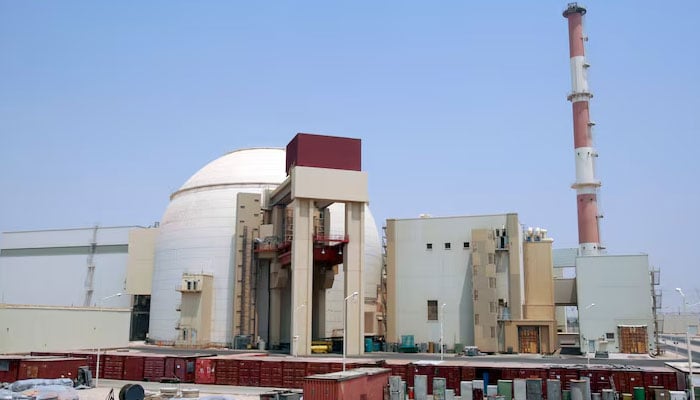
While Trump’s timing for a final decision is unclear, the State Department said Secretary of State Marco Rubio is to hold talks in Israel with Israeli Prime Minister Benjamin Netanyahu on Sunday and Monday.
The US joined Israel’s bombing campaign against Iran in June, striking major nuclear facilities.
Asked about the potential for use of force, Trump said the United States has the greatest military in the world.
“I’d love not to use it, but sometimes you have to,” he said.
More talks
Trump said more discussions on Iran would take place later in the day.
He did not specify with whom, but Oman, which has been acting as a mediator between the two countries, sent its foreign minister to Washington on Friday for discussions on the issue with US Vice President JD Vance, according to a source familiar with the matter.
Top US defence officials were at the White House on Thursday for talks.
US Secretary of State Marco Rubio said in a statement on Friday that the State Department had designated Iran as a “State Sponsor of Wrongful Detention”.
Rubio said for decades Iran has wrongfully detained Americans and citizens of other nations “to use as political leverage against other states,” adding that the US could consider additional measures, including a potential “geographic travel restriction on the use of US passports to, through, or from Iran.”
Trump planned events in Corpus Christi later on Friday and then was to fly to Palm Beach, Florida, for the weekend at his Mar-a-Lago club.
A source briefed on the internal White House deliberations told Reuters that Trump is “very clear-eyed on all the options before him.”
There is a recognition internally that taking on Iran would be more difficult than the US capture of Venezuelan leader Nicolas Maduro, and there was also internal pessimism as to whether negotiations would bear fruit, the source said.
“Nobody is super optimistic about the negotiations,” the source said.
‘Missile claim unsupported by US intelligence’
Meanwhile, President Trump’s claim that Iran will soon have a missile that can hit the US is not backed by US intelligence reports, and appears to be exaggerated, according to three sources familiar with the reports, casting doubt on part of his case for a possible attack on Tehran.
In his State of the Union address to Congress on Tuesday, Trump began making his case to the American public for why the US could launch strikes against Iran, saying Tehran was “working on missiles that will soon reach” the US.
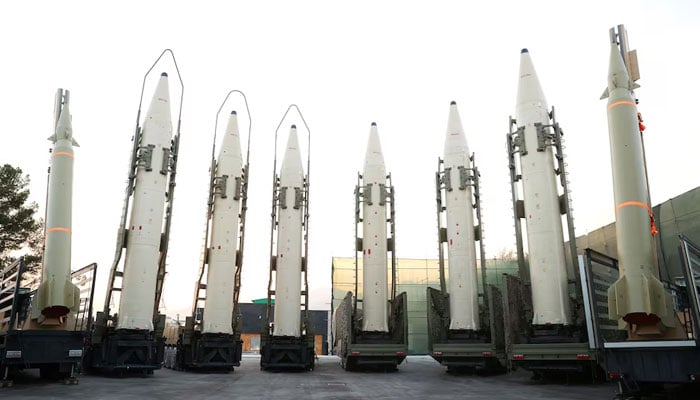
But there have been no changes, two sources said, to an unclassified 2025 US Defence Intelligence Agency assessment that Iran could take until 2035 to develop a “militarily viable intercontinental ballistic missile” (ICBM) from its existing satellite-lofting space-launch vehicles (SLV).
“President Trump is absolutely right to highlight the grave concern posed by Iran, a country that chants ‘death to America,’ possessing intercontinental ballistic missiles,” said White House spokesperson Anna Kelly.
Sources, who spoke on condition of anonymity in order to discuss sensitive intelligence, said they were unaware of any US intelligence assessments that Iran was developing a missile that could soon range the US homeland but did not rule out the possibility of a new intelligence report they were unaware of.
The New York Times first reported that US intelligence agencies believe Iran is probably years away from having missiles that can hit the US.
The US president has done little to explain publicly why he might be leading the US into its most aggressive action against the Islamic Republic since its 1979 revolution.
In his address on Tuesday, Trump, without providing evidence, said that Tehran was beginning to rebuild the nuclear programme that he claimed had been “obliterated” by US airstrikes last June on three major sites involved with uranium enrichment.
US Secretary of State Marco Rubio on Wednesday referred to Iran’s ballistic missile programme in less definitive terms than Trump, saying that Tehran is “on a pathway to one day being able to develop weapons that could reach the continental US”.
Iran denies seeking a nuclear arsenal, saying its enrichment of uranium — a process that produces fuel for power plants and nuclear warheads depending on its duration — is strictly for civilian uses.
In an interview with India Today TV released on Wednesday, Iranian Foreign Minister Abbas Araghchi denied that Iran was expanding its missile capabilities.
“We are not developing long-range missiles. We have limited range to below 2,000 kilometres intentionally,” he said. “We don’t want it to be a global threat. We only have [them] to defend ourselves. Our missiles build deterrence.”
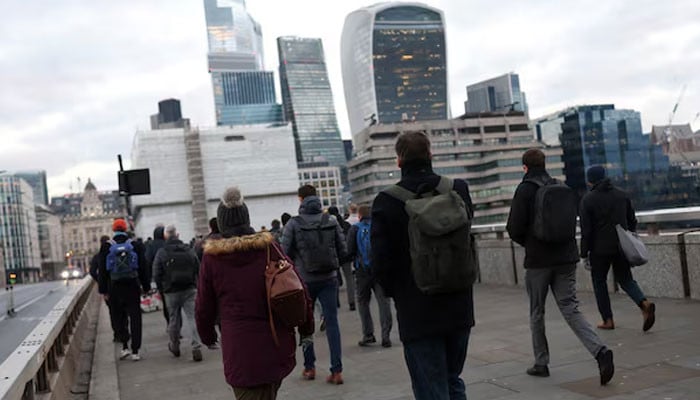
LONDON: A BBC undercover investigation has alleged that a network of immigration advisers, paralegals and associated intermediaries has been helping migrants fabricate asylum claims in the UK by falsely presenting themselves as gay, charging thousands of pounds for false narratives, staged evidence and interview coaching.
At least three law firms – one of these owned by Pakistanis – have been accused by the BBC of fabricating the asylum claims through illegal means.
The law firms include Law and Justice Solicitors and Connaught Law. Law and Justice is owned by Michael Oluyemi Makinde and Connaught Law is owned by Nauman Javid, Sheryar Khan, Zehra Tamkan and Awais Javed.
According to the BBC investigation, the abuse centres on migrants, particularly from Pakistan and Bangladesh, whose student, work or tourist visas are close to expiring and who are then allegedly advised to seek asylum on the basis of sexual orientation, as being gay or lesbian.
Using undercover reporters posing as international students from Pakistan and Bangladesh, the BBC said it tested whether immigration advisers would encourage false sexuality-based asylum claims.
It reported finding multiple individuals willing to discuss fake claims, suggest supporting evidence and quote fees for handling such cases. Among the findings were allegations that Connaught Law firm quoted up to £7,000 for a fabricated claim and described the chances of refusal as “very low”, while another adviser allegedly offered to arrange fake supporting letters, photographs and even a supposed sexual partner to back up an asylum application.
The BBC undercover reporter made an appointment with Aqeel Abbasi, a senior legal adviser at Connaught Law, which has its offices in Central London on Gray’s Inn Road.
Abbasi told the BBC reporter that he could help him stay in the country and appeared to be willing to direct him on how to fabricate evidence for a fake claim. He promised that the chance of refusal by the Home Office was “very low”.
He said his fee would be £7,000 and, once that had been paid, his office would contact the undercover reporter to guide them through the process and the kind of evidence required.
This would include advising him on “where to go or what specific actions to take”.
The legal adviser also suggested the undercover reporter would need to find someone willing to pretend to be his male/gay partner. When the reporter said he had a wife in Pakistan, Abbasi was quick to suggest a cover story to explain this, by saying that things were “more open” in the UK than in Pakistan and that he now had a male partner.
“We will prepare a statement for you, and once you read it, you will understand exactly how it is,” said Abbasi.
A significant part of the investigation focused on Worcester LGBT, a support organisation for gay and lesbian asylum seekers, which holds monthly meetings attended by large numbers of migrants from across the country.
The BBC traced the undercover reporter’s route to the group through Mazedul Hasan Shakil, a paralegal at Law and Justice Solicitors, an immigration firm based in Birmingham and London, who is also described as founder and chairman of Worcester LGBT.
The reporter received a call from a woman identified as Tanisa (Shakil’s associate), who, in Urdu, allegedly became much more direct about using a “gay case” as the only realistic route to stay in Britain.
When told the reporter was not gay, Tanisa replied: “There is nobody who is real. There is only one way out in order to live here now and that is the very method everyone is adopting.” The BBC identified her as Tanisa Khan, an adviser linked to Worcester LGBT.
The broadcaster then described an initial meeting in Forest Gate, east London, which took place in Tanisa’s home.
According to the report, she laid out a plan to fabricate an asylum claim on the grounds of same-sex orientation, warning that the applicant would have to memorise a false story convincingly for Home Office interviews. The report said she offered to obtain a letter from someone claiming to have had sexual relations with the applicant and said she would fully prepare him for the Home Office process.
She charged £2,500, with additional costs if the claim failed and went to appeal. The BBC also said she suggested that if the reporter later brought his wife from Pakistan to Britain, she too could make a false asylum claim by pretending to be lesbian.
The BBC showed its footage to immigration lawyer Ana Gonzalez, who has 30 years of experience. She said Tanisa appeared to be “committing fraud by manufacturing a claim” and warned that such conduct makes life harder for genuine asylum seekers, especially LGBT claimants whose cases are often difficult to prove objectively.
The report said precise figures for fabricated claims are impossible to establish, but Home Office data suggests a disproportionate number of sexuality-based asylum claims come from Pakistani nationals.
In 2023, there were 3,430 initial decisions on LGBT asylum claims and nearly 1,400 new claims based on sexual orientation. Of these, 42% were lodged by Pakistani nationals, who also accounted for the highest number in each of the previous five years. The article noted that Pakistanis were only the fourth most common nationality across all asylum applications and made up just 6% of total claims overall.
Nearly two-thirds of asylum seekers claiming persecution on grounds of sexual orientation had their claims granted at initial decision stage in 2023.
The Home Office told the BBC that making an asylum claim through deception is a criminal offence and that anyone convicted can face prison and deportation.
It said misuse of protections designed for people fleeing genuine persecution because of their sexuality was deplorable, but insisted that the asylum system includes safeguards and that claims are rigorously assessed.
The department added that abuse is actively investigated and procedures are continually reviewed.
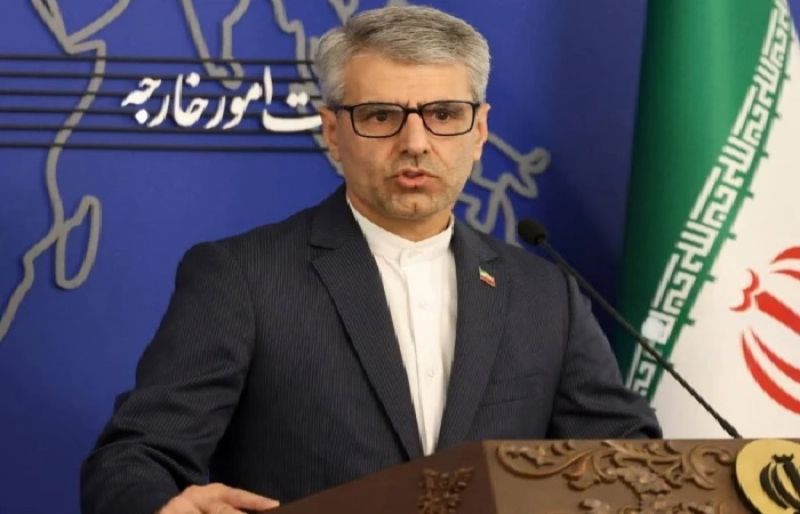
Iran will be hosting a high-ranking political and security delegation from Pakistan on Wednesday, as indirect exchanges of messages between Tehran and Washington continue, the Iranian Foreign Ministry spokesman announced.
Esmail Baghaei, speaking in response to a question from IRNA, confirmed that Tehran is expected to receive the Pakistani delegation today.
“Today, we are most likely hosting a delegation from Pakistan,” Baghaei said.
“Following the talks that took place in Islamabad, and also the discussions that the Pakistani side has had with the United States, our views have been conveyed and heard,” he said.
He added, “Naturally, during this visit, the two sides are expected to discuss their viewpoints in detail.”
Meanwhile, informed sources in Pakistan confirmed that a high-level security-political delegation, comprising prominent Pakistani figures, left Islamabad for Tehran a short while ago, IRIB news reported.
According to the sources, the delegation is carrying a new message from Washington for Tehran.
The delegation is scheduled to meet with Iranian officials to discuss future negotiations, the sources said.
The development comes as a two-week ceasefire between Iran and the United States will expire on April 22.
The United States and Israel launched their unprovoked war of aggression against Iran on February 28, assassinating the Leader of the Islamic Revolution and striking nuclear facilities, schools, hospitals and civilian infrastructure.
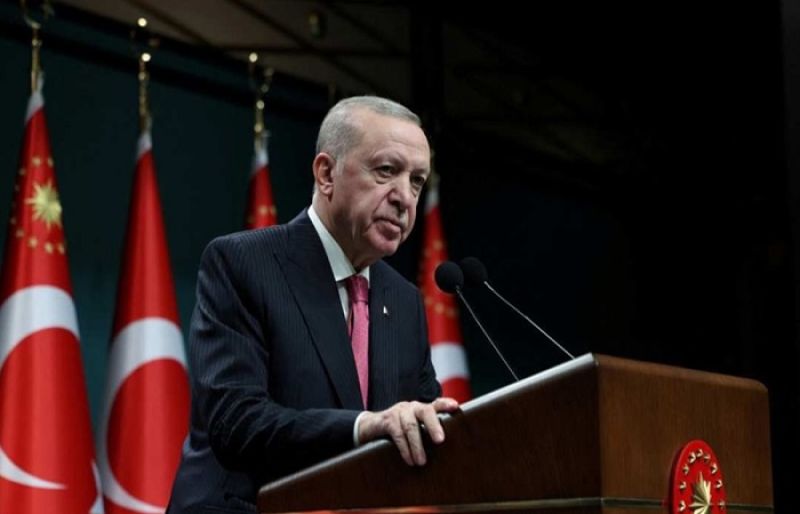
Turkish President Recep Tayyip Erdogan has warned against the Israeli regime’s attempts to sabotage a fragile ceasefire between the US and Iran, saying that Ankara will push for an extension of the truce and ensure peace talks continue in Pakistan.
Addressing a parliament session on Wednesday, Erdogan said that the Israeli prime minister’s cabinet, “which is known to be unhappy with the ceasefire process, must not be allowed to sabotage it.”
The Turkish leader said that his government is making the “necessary appeals and initiatives” to ease tensions and extend the ceasefire, which is set to expire on April 20.
The two-week ceasefire, announced last week, 40 days after the US and the Israeli regime launched their war of aggression against Iran, provided a fragile window for diplomacy. It will expire on April 22.
Over the weekend, high-level peace talks between US and Iranian officials took place in Pakistan’s capital, Islamabad. While the talks ended without an agreement, regional governments are urging both sides to return to the negotiating table.
Erdogan also urged the two sides to utilize “the window of opportunity opened by the ceasefire” before its expiration.
“If there is to be peace in our region, it will be despite the Zionist regime,” Erdogan said. “If stability is achieved, it will again be despite the Israeli government.”
The Turkish president also condemned the aggression against Lebanon, warning that continued airstrikes are harming hopes for peace.
He said that Turkey will continue “to be the follower of the cause of children killed in their sleep in Lebanon,” referring to Israel’s airstrikes that have killed more than 2,000 people—including many women and children—since early March, according to the Lebanese health ministry.
Despite the fact that the ceasefire between the US and Iran explicitly covered Lebanon, the Israeli regime continues its military aggression against the country, blatantly ignoring the terms of the truce.
This ongoing aggression is seen by regional observers as a deliberate attempt by Tel Aviv to sabotage the peace talks.


Tigers, rookie Kevin McGonigle reach 8-year, $150M extension

Goldman Sachs bond traders stumbled as Wall Street rivals thrived: ‘A fire is being lit under’ them

A culinary thriller with explosive star power

-

 Fashion1 week ago
India’s exports face reset as EU links trade to carbon metrics: EY
-

 Entertainment1 week ago
Queen Elizabeth II emotional message for Archie, Lilibet sparks speculation
-

 Entertainment1 week ago
Lamar Odom shocking response to Khloé Kardashian account of his overdose
-

 Tech1 week ago
Azure customers up in arms over ‘full’ UK South region | Computer Weekly
-

 Tech1 week ago
As the Strait of Hormuz Reopens, Global Shipping Will Take Months to Recover
-

 Fashion1 week ago
CII submits 20-pt agenda to Indian govt to back firms hit by Iran war
-

 Tech7 days ago
This AI Button Wearable From Ex-Apple Engineers Looks Like an iPod Shuffle
-

 Politics6 days ago
Indian airlines hit hardest after Dubai limits foreign flights until May 31