

Fashion
Stakeholders in T&A, retail weigh in on India’s GST 2.0 reform

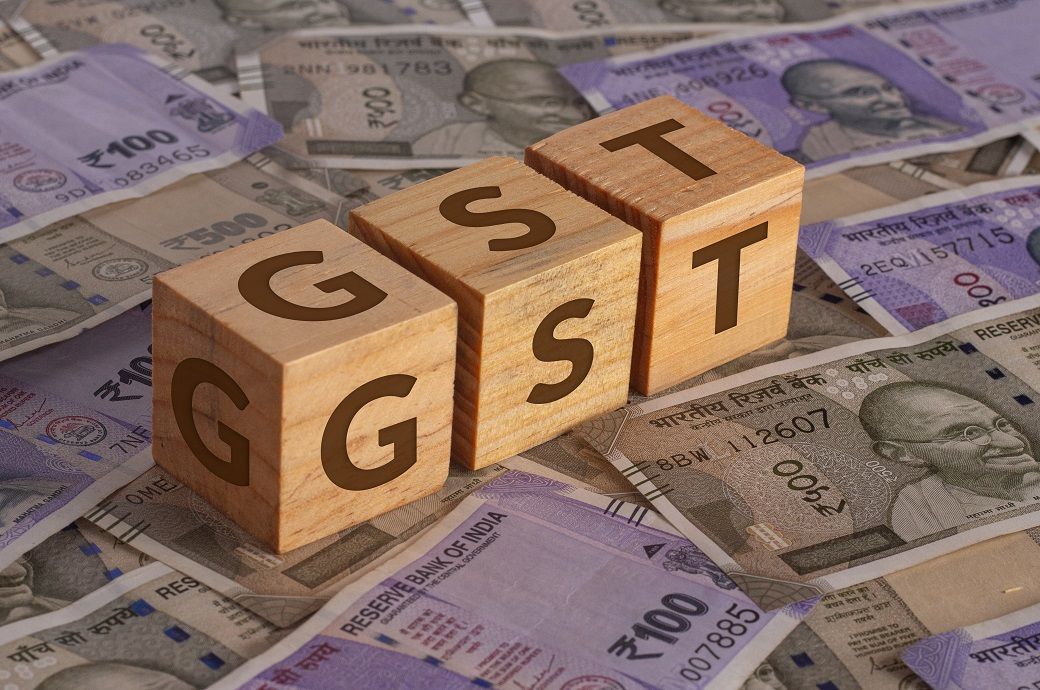
The 56th meeting of the GST Council held recently has culminated in a landmark restructuring of India’s indirect tax regime, with far-reaching implications across key sectors.
The earlier five-tier GST structure—comprising 0 per cent, 5 per cent, 12 per cent, 18 per cent, and 28 per cent slabs—has been replaced by a more streamlined framework featuring just two principal rates of 5 per cent and 18 per cent, supplemented by a new “sin and luxury” rate of 40 per cent for a narrow band of goods.
The revised GST rates are scheduled to take effect from September 22.
For the apparel and textile sector, the council has fixed a uniform 5 per cent GST rate on readymade garments and made ups, excluding items under HS codes 63053200, 63053300, and 6309.
In a significant rationalisation, the GST on manmade fibres has been slashed from 18 per cent to 5 per cent, while yarns have been brought down from 12 per cent to 5 per cent. This alignment effectively corrects the long-standing inverted duty structure (IDS) across the MMF value chain—fibre, yarn, and fabric—removing a key distortion that had undermined manufacturing competitiveness and locked up working capital.
Given that a substantial portion of MMF production takes place in the MSME segment, the rate cuts are expected to alleviate cost burdens, enhance liquidity, and improve cash flow efficiency.
More importantly, the move bolsters the global price competitiveness of Indian MMF-based garments, reinforcing the country’s strategic objective of becoming a dominant hub for synthetic textiles and MMF-based apparel.
The timing of the GST overhaul is particularly crucial, offering timely relief to an industry reeling from the impact of US President Donald Trump’s steep 50 per cent tariff on Indian goods.
While the Government has maintained that the GST reform has been in the works for over a year and is not a reactionary policy move to US tariffs, the revised GST structure is nonetheless seen as a much-needed support mechanism for export-oriented industries navigating severe external shocks.
Industry stakeholders largely welcomed the reform, viewing it as a long-overdue rationalisation of what many felt was an irrational tax structure.
S.K. Sundararaman, Chairman of the Southern India Mills Association (SIMA), reportedly noted that the prior tax regime—where MMF inputs were taxed higher than outputs—effectively made affordable clothing more expensive for end consumers. The rectification is expected not only to enhance affordability but also to reduce import dependency by promoting domestic value addition.
Rakesh Mehra, Chairman of the Confederation of Indian Textile Industry, echoed similar sentiments, emphasising that the alignment of tax rates across the MMF value chain is a critical step toward resolving longstanding working capital constraints faced by thousands of spinners and weavers.
Mehra reportedly also pointed out that over 70 per cent to 80 per cent of the textile and apparel ecosystem is comprised of MSMEs, many of which operate on tight margins and limited cash reserves. For them, any measure that eases input cost burdens and streamlines refunds has a direct bearing on operational viability and market competitiveness.
Some concerns have, however, emerged centring on the move to impose an 18 per cent GST on garments priced above ₹2,500.
The Clothing Manufacturers Association of India (CMAI), while fully endorsing the revised GST rate structure and commending the Government for accepting two key industry demands—the elimination of the inverted duty structure by applying a uniform 5 per cent GST across the entire value chain from fibre onward, and the adoption of a fibre-neutral approach by aligning MMF and cotton fibre chains—has urged the GST Council to address one anomaly: the imposition of 18 per cent GST on garments priced above ₹2,500.
CMAI stressed that this higher tax rate undermines affordability and creates an unnecessary burden on consumers, despite the broader positive intent of the reform.
The Retailers Association of India (RAI), while supportive of the move towards a simpler dual-rate GST system, also flagged the structural shortcomings of price-based tax slabs. The RAI has recommended the adoption of a uniform GST rate across product categories, cautioning that the 18 per cent GST on apparel items priced above ₹2,500 could distort consumer behaviour and suppress demand in key segments of the fashion retail market.
Some industry insiders also believe that the differential tax treatment based on price bands may inadvertently fuel the growth of the grey market, leading to an uptick in counterfeit and substandard goods as consumers seek cheaper alternatives.
Others have highlighted that apparel brands and retailers typically operate on razor-thin margins and may have no option but to pass on the higher tax burden to the consumers.
In such a scenario, the anticipated growth in domestic fashion retail could be impacted.
Notwithstanding the apprehensions, the on-ground impact of the new GST structure will become more apparent in the quarters following its implementation, most stakeholders felt, while underlining that with any policy overhaul of this magnitude, one cannot completely rule out transitional friction.
However, the broader consensus within the industry suggests that the benefits, particularly in terms of ease of doing business and improved cost efficiencies, might very well outweigh the short-term disruptions, if any.
The 56th GST Council meeting introduced a simplified regime, collapsing the earlier five-rate system into two primary slabs.
A uniform 5 per cent GST has been fixed for most garments and manmade fibres/yarns.
Some trade bodies have raised concerns over the 18 per cent GST on garments above ₹2,500; the majority, however, feel the reform will boost competitiveness and sectoral growth.
Fibre2Fashion News Desk (DR)











China will step up building a higher-level China-Vietnam community with a shared future that carries strategic significance, Chinese President Xi Jinping said while holding talks with visiting Vietnamese President To Lam.
China and Vietnam are accelerating efforts to navigate bilateral trade towards a more balanced and sustainable course.
President Xi Jinping recently held talks with visiting Vietnamese President To Lam.
During the visit, Vietnamese Minister of Industry and Trade Le Manh Hung called for a restructuring of production, trade and supply chains alongside stronger investment cooperation.
Xi said both countries should work together in their modernisation drive, accelerate the alignment of development strategies and prioritise infrastructure connectivity.
While meeting Chinese Minister of Commerce Wang Wentao during the state visit, Vietnamese Minister of Industry and Trade Le Manh Hung called for a restructuring of production, trade and supply chains alongside stronger investment cooperation.
Wang said both sides should focus on implementing the high-level common perceptions, including raising bilateral trade turnover to $500 billion in future.
Hung urged China to expand imports of Vietnamese goods, broaden the list of products eligible for tariff preferences and further open its market. He also called for the mutual recognition of quarantine results for agro-forestry-fishery products, facilitation of Vietnamese exports via cross-border e-commerce, and expansion of Vietnam’s trade promotion offices across Chinese localities, according to a Vietnamese news agency.
China will continue to support Vietnam in setting up additional trade promotion offices, following those already established in Chongqing, Hangzhou and Haikou, Wang responded.
China also expressed readiness to support Vietnam’s stronger exports through cross-border e-commerce, encouraging greater visibility of the Vietnam National Pavilion on Chinese e-commerce platforms beyond JD.com to better promote Vietnamese products to Chinese consumers.
China has consistently been Vietnam’s largest trading partner and second-largest export market, while Vietnam continues to be China’s biggest trading partner in the Association of Southeast Asian Nations (ASEAN).
Fibre2Fashion News Desk (DS)

British actors Simone Ashley and Tom Blyth star alongside models Alva Claire, Babacar N’Doye and Sacha Quenby and a cast of synchronised swimmers and divers.
Burberry’s High Summer 2026 campaign captures Britain’s nostalgic lido culture through a sunlit film featuring Simone Ashley and Tom Blyth.
Blending heritage check with pastel tones, the collection spans swimwear, relaxed tailoring, raffia bags and lightweight layers, evoking effortless, poolside summer style.
Directed by Francis Plummer, the campaign reflects a warm, communal British summer mood.
The campaign film is directed by Francis Plummer and shot by photographer Ryan McGinley. The cameras move from loungers to diving boards, catching mid-air dives and friends stretched out in the hazy afternoon light. Before long, the best spots by the pool are claimed with a Burberry towel. Summer has begun. The film is underscored by the TONE remix of ‘Beating’ by Tirzah.
‘A lido holds a particular kind of nostalgia for the British. The moment the sun comes out, we make the most of the weather. We wanted to bring to life a warm summer’s day spent in and around the water’s edge with friends.’ said Daniel Lee Chief Creative Officer, Burberry.
Key styles
The High Summer 2026 collection features the Burberry Check in heritage-inspired sand beige and pastel shades of aubergine purple and cornflower blue.
The iconic Burberry Check bikini is the beach essential, alongside matching swimsuits and men’s swim shorts trimmed with check.
Poolside separates include tops, skirts and shirts cut from cotton voile, plus cover-up dresses woven with a tonal Burberry Check and deckchair-inspired stripes. Ruffled trims and ties at the neckline capture the floaty, effortless feel of the collection. Festival
tank tops in ribbed cotton jersey are trimmed with check straps, while looks are wrapped in lightweight wool silk scarves.
For men, collared shirts and shorts are tailored to relaxed lines and finished with fresh interpretations of the Burberry Check, from textural weaves to intricate embroidered designs. The co-ord set is crafted from lightweight cotton poplin printed with a playful seahorse pattern in honeysuckle pink.
The classic cotton piqué polo shirt comes in a spectrum of vivid and neutral colours. Burberry Check is subtly placed at the placket and trims the collar of T-shirts in soft cotton jersey.
Lightweight hooded jackets are ideal for cooler evenings and unexpected showers, the new-season designs woven in aubergine purple and cornflower blue check.
In shoes, the new Knight Runner sneakers offer a streamlined, low-profile shape for summer. Sandals are elevated in the form of the whipstitched leather Baez and check-trimmed suede Urchin styles, while Burberry Check slides and Pavilion sandals are made for the beach.
Lightweight Margate bags are handcrafted in Madagascar from locally sourced raffia palm leaves, dyed in signature sand beige Burberry Check. Accessories include crocheted bucket hats and wraparound sunglasses, designed to shield from the sun.
Note: The headline, insights, and image of this press release may have been refined by the Fibre2Fashion staff; the rest of the content remains unchanged.
Fibre2Fashion News Desk (JP)


Some tankers cross Strait of Hormuz before shots fired, ship-tracking data shows

‘The Naked Gun’ actor Paul Walter Hauser bloodies opponent at Maple Leaf Pro’s first US show

Iran says no date set for next round of negotiations with US

-

 Politics1 week ago
Indian airlines hit hardest after Dubai limits foreign flights until May 31
-

 Entertainment5 days ago
Palace left in shock as Prince William cancels grand ceremony
-

 Sports5 days ago
The case for Man United’s Fernandes as Premier League’s best
-

 Politics1 week ago
Chinese, Taiwanese will unite, Xi tells Taiwan opposition leader
-
 Business5 days ago
UK could adopt EU single market rules under new legislation
-

 Entertainment1 week ago
Dua Lipa hits major career high ahead of wedding with Callum Turner
-
 Business1 week ago
He paid $248 in illegal tariffs for this coat. Will he ever get it back?
-

 Sports7 days ago
Lamar Jackson hits back at critics with faithful message on social media