

Business
Stellantis stock off 43% as Jeep maker turns five, executes turnaround


Stellantis North America COO and Jeep CEO Antonio Filosa speaks during the Stellantis press conference at the Automobility LA 2024 car show at Los Angeles Convention Center in Los Angeles, California, November 21, 2024.
Etienne Laurent | AFP | Getty Images
DETROIT — Five years after the transatlantic automaker Stellantis was formed through a merger, the business hasn’t necessarily panned out as investors hoped.
U.S. shares of the company — created through a $52 billion combination of Italian American automaker Fiat Chrysler and France-based Groupe PSA on Jan. 16, 2021 — are down roughly 43% in the past five years. Italian-listed shares also are off roughly 40%.
Since the combined company’s stock debuted on the New York Stock Exchange on Jan. 19, 2021, days after the merger was completed, shares of the automaker were largely in the black — up as high as 74% in March 2024 — until Stellantis reported troubling financial results that year amid cost-cutting efforts meant to support higher profits and its multibillion-dollar push into electric vehicles.
Many of those plans are being altered or eliminated under new Stellantis CEO Antonio Filosa, who succeeded Carlos Tavares last summer. Tavares, a longtime automotive executive, was largely credited with forming the company, but abruptly left Stellantis in December 2024.
Stellantis shares listed in the U.S. and Italy.
Filosa is executing a sales turnaround plan for the automaker and is particularly focused on its Jeep and Ram brands regaining U.S. market share following yearslong sales declines.
“The strategy that we have in front of us is a strong one and will lead us to growth if we execute well,” he told reporters Wednesday during the Detroit Auto Show. “So, I believe it’s a year of execution.”
Filosa did not rule out the possibility of regionally refocusing or shrinking the company’s vast portfolio of brands that also includes Italian nameplates Fiat and Alfa Romeo, which have not performed well domestically.
He said he believes the company should “stay together” following some speculation, including from Tavares, that it would be better to sell off assets or brands.
Filosa said the next step in the company’s plans will come during a meeting this month with more than 200 company executives that will focus on an upcoming capital markets day as well as company culture and 2026 execution.
PSA CEO Carlos Tavares and FCA CEO Mike Manley shake hands after signing a combination agreement that will lead to the creation of the world’s fourth-largest global automaker in terms of annual sales (8.7 million vehicles).
FCA
Investors have been eager to hear a new strategy for Stellantis after Tavares’ exit. He left amid troubling sales and financial results as the company strived to achieve 10% or greater profit margins and doubling net revenues under his “Dare Forward 2030” business plan.
U.S. shares of Stellantis since Filosa began as CEO on June 23 are up 2%. They closed Friday at $9.60 per share, down 4.2%.
Filosa this week declined to discuss the company’s past mistakes, but company executives previously told CNBC that Tavares’ fixation on cost reductions and profits hurt business, as well as the company’s products, employees and relationships with suppliers, unions and dealers.
Filosa has spent much of his time attempting to repair those bonds, especially with the company’s distraught U.S. franchised retailers. He’s also approved drastic changes to the company’s product plans, including reducing prices and reprioritizing products away from electrified vehicles.
“In the six months, I see the changes that we will make we need to make to create the bright future that we need,” he said regarding his tenure thus far as CEO.



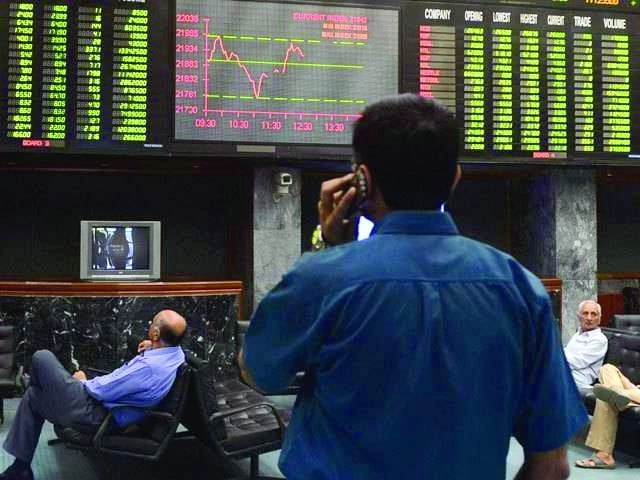


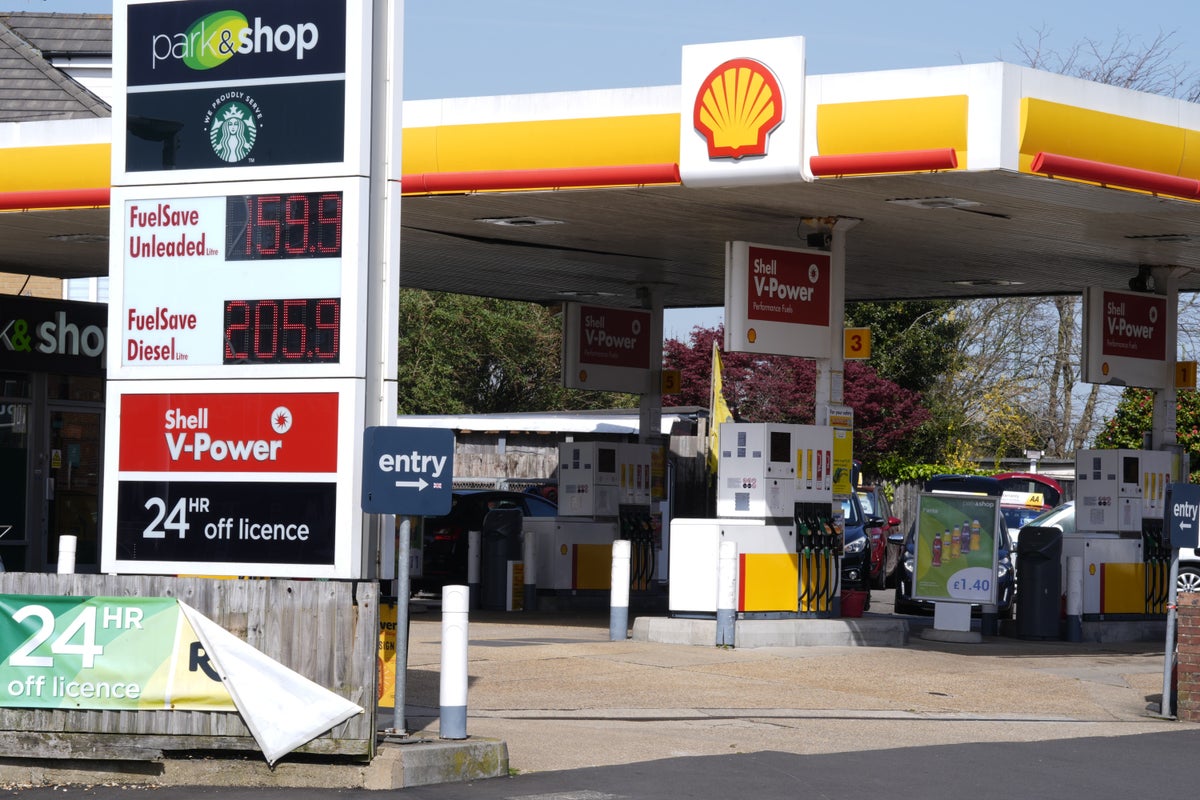
UK retail sales returned to growth last month as they were pushed higher by motorists stocking up on fuel as prices shot higher because of the Iran war, according to official figures.
The Office for National Statistics (ONS) said the total volume of retail sales, which measures the quantity bought, rose by 0.7% in March.
It compared with a 0.6% fall in February, which was revised slightly lower.
The latest reading was also stronger than expected, with economists having predicted a 0.1% dip for the month.
Statisticians said March’s increase was particularly driven by a spike in demand for fuel, which saw sales volumes jump by 6.1% for the month, the highest level since April 2021.
They indicated that this was especially linked to a short period, of less than a week, of particularly elevated sales as unfolding geopolitical events in the Middle East caused a significant rise in prices at the pump.
The value of sales, the amount of money spent, for fuel was up 11.6% amid the jump in petrol and diesel prices.
Recent data from the RAC shows that petrol prices have risen by 18.5% to 157.34 pence per litre, as recorded on Wednesday.
Meanwhile, diesel is up 33.4% to an average of 189.88 pence per litre.
Elsewhere, clothing stores also had a strong month, with sales volumes across the category rising by 1.2% in March amid a boost from better weather conditions.
Technology retailers also saw sales grow after they benefited from new products launches.
However, food sales were weaker, slipping by 0.8% for the month.
The ONS said overall retail sales volumes are up 1.6% for the first three months of 2026, as the industry was also supported by positive growth in January.
ONS senior statistician Hannah Finselbach said: “Retail sales rose in the three months to March, with commercial art galleries doing well earlier in the quarter and sales in beauty products stores rising as retailers reported launching new collections.
“Motor fuel sales were up on the quarter, with retailers commenting that many motorists had been filling up their tanks in March following the start of conflict in the Middle East.”
Elliott Jordan-Doak, senior UK economist at Pantheon Macroeconomics, said: “The first batch of hard data on consumers’ spending since the start of the Iran war was better than expected.
“Granted, stocking up on motor fuels drove headline sales higher, but even excluding petrol retail sales volumes nudged up showing that households largely brushed off the initial shock of higher energy prices.”
Business
Top stocks to buy today: Stock recommendations for April 24, 2026 – check list – The Times of India

Stock market recommendations: Bharat Electronics, and Colgate-Palmolive (India) have been recommended as the top stocks to buy today (April 24, 2026) by Bajaj Broking Research. Take a look at the target prices and expected returns:Bharat ElectronicsBuy in the range of ₹ 440.00-450.00
The stock is in structural up trend forming higher high and higher low in all time frame signaling strength and continuation of the uptrend. The entire up move of the last 8 months is in a rising channel as can be seen in the chart highlighting sustained demand at an elevated level.On the smaller time frame, the stock is at the cusp of generating a breakout above the bullish Flag like formation as post a sharp up move in the first 3 weeks of April the stock went into a consolidation phase in the last four sessions. It is seen resuming up move and is at the cusp of generating a breakout above the bullish Flag formation highlighting continuation of the up move and offers fresh entry opportunity.We expect the stock to extend the up move and head towards 495 levels in the coming months being the confluence of the 123.6% external retracement of the previous decline 473 – 400 and the upper band of the rising channel of the last 8 months.Colgate-Palmolive (India)Buy in the range of 2120-2160
The share price of Colgate-Palmolive has generated a breakout above bullish Flag pattern signaling continuation of the up move and offers fresh entry opportunity.We expect the stock to head higher towards 2330 levels in the coming months being the measuring implication of the bullish flag breakout.The daily 14 periods RSI is in buy mode thus supports the positive bias in the stock.(Disclaimer: Recommendations and views on the stock market, other asset classes or personal finance management tips given by experts are their own. These opinions do not represent the views of The Times of India)
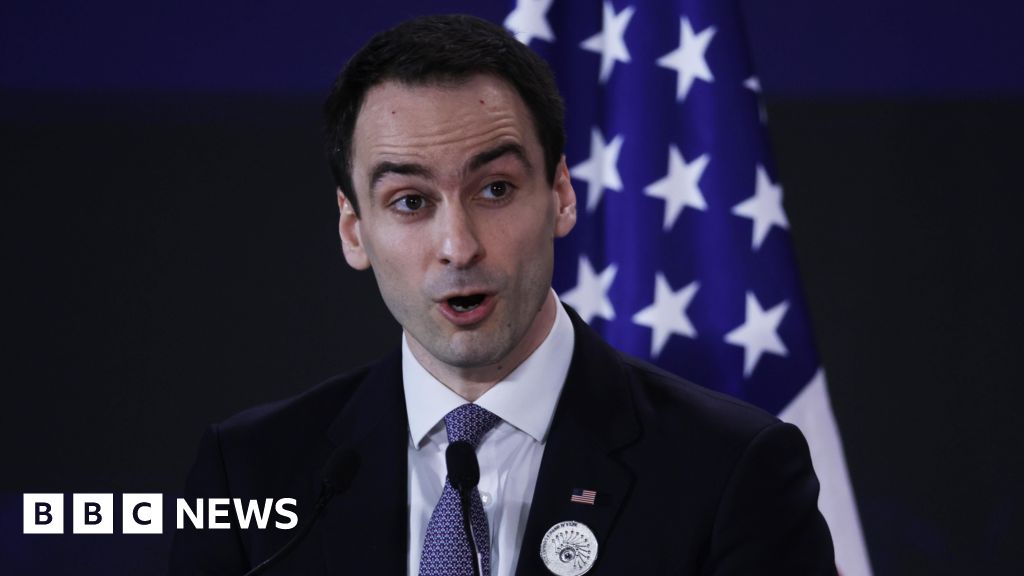
A memo from Michael Kratsios says firms, mainly in China, are wrongfully distilling US AI models.
Source link


Bangladesh, EU sign Partnership and Cooperation Agreement
UK retail sales rebound as motorists stock up on fuel

Pentagon email floats suspending Spain from Nato, other steps over Iran rift: source

-

 Fashion1 week ago
France’s LVMH Q1 revenue falls 6%, shows resilience amid Iran war
-

 Entertainment1 week ago
Is Claude down? Here’s why users are seeing errors
-

 Tech1 week ago
The Deepfake Nudes Crisis in Schools Is Much Worse Than You Thought
-

 Sports1 week ago
PSL 11: Peshawar Zalmi win toss, opt to field first against Quetta Gladiators
-
 Business1 week ago
Standard Life buys rival in £2b deal to create savings giant
-

 Tech1 week ago
CYBERUK ’26: UK lagging on legal protections for cyber pros | Computer Weekly
-
 Business1 week ago
PepsiCo earnings beat estimates as North American food business improves
-

 Fashion1 week ago
Raymond unveils luxury Chairman’s Collection Store in Mumbai