

Business
Stocks close down as oil rises and gold retreats

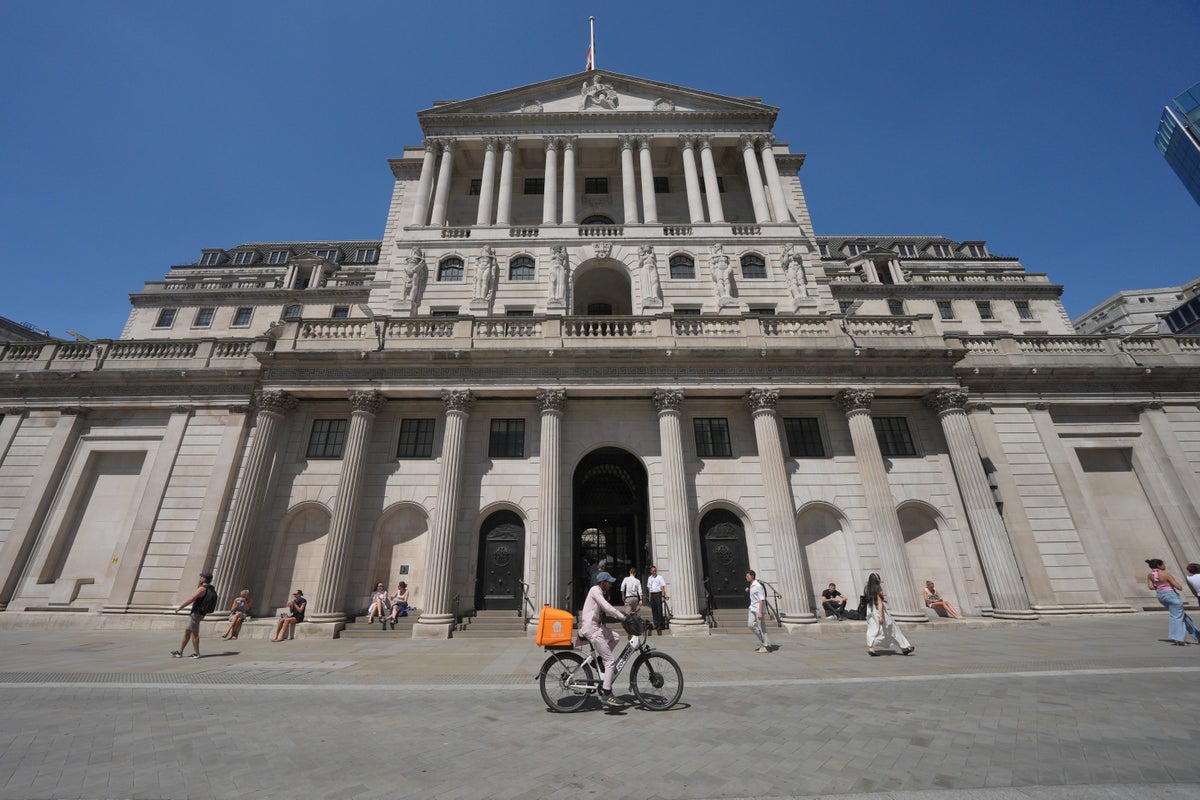
Stock prices in London and Europe closed firmly in the red on Thursday as markets continued to track developments in the Iran war, and digest this week’s interest rate decisions so far, before China’s is released later.
The US Federal Reserve left interest rates unchanged late on Wednesday, as did the European Central Bank and the Bank of England on Thursday. The People’s Bank of China releases its own rate decision at 1.15am UK time on Friday.
The World Trade Organisation (WTO) has warned, meanwhile, that the Middle East war could weigh heavily on already slowing global trade, with merchandise trade volume potentially growing just 1.4% this year, compared to 4.6% in 2025.
“Sustained increases in energy prices could increase risks for global trade, with potential spill-overs for food security and cost pressures on consumers and businesses,” WTO chief Ngozi Okonjo-Iweala warned.
Speaking of energy, US Treasury secretary Scott Bessent has said that Washington might “unsanction” Iranian oil that is already being shipped.
His comments to Fox Business came as energy prices made a renewed surge, after Iran hit the world’s biggest liquefied natural gas facility in Qatar and threatened to destroy the region’s energy infrastructure.
Mr Bessent added in the interview that the US government could also release more oil from its strategic reserves.
Meanwhile, President Donald Trump’s administration is not considering a ban on oil exports, a US official told news agency AFP, as the government scrambles to contain surging energy costs.
“Oil and gas export restrictions are not under consideration,” the Trump administration official said.
Brent oil was quoted at 110.46 US dollars a barrel at the time of the London equities close on Thursday from 108.21 dollars late on Wednesday.
The International Monetary Fund said it was monitoring the impacts of the war in Iran on global inflation and output, but that no countries had so far approached it for emergency assistance related to the conflict.
“If prolonged, higher energy prices will lead to higher headline inflation,” said IMF chief spokesperson Julie Kozack at a press briefing.
The FTSE 100 index closed down 241.79 points, 2.4%, at 10,063.50. The FTSE 250 was down 520.73 points, 2.4%, at 21,560.04, and the AIM all-share was down 25.36 points, 3.4%, at 727.85.
Oil major BP was the sole FTSE 100 riser, up 4.3%, while Shell lost 0.3%.
Gold miners were among the FTSE 100’s worst performers, with Endeavour down 7.9%, Fresnillo down 6.7%, and Antofagasta down 5.0%.
Gold was quoted lower at 4,603.53 dollars an ounce against 4,875.60 dollars.
While geopolitical tensions remain elevated, the resulting increase in energy prices has raised inflation concerns, reducing the likelihood of near-term rate cuts,” DHF Capital’s Bas Kooijman commented. “This has temporarily weighed on gold, as higher yields make non-interest-bearing assets less attractive.
“It is important to note that this movement reflects short-term market dynamics and profit-taking after record highs, rather than a change in gold’s long-term fundamentals.”
On AIM, Central Asia Metals lost 5.6%, after the miner reported a 2025 pre-tax loss of 58.5 million dollars (£43.7 million) from a 77.2 million dollars (£57.7 million) profit a year earlier, despite revenue rising, and declared a total dividend of 12p, down from 18p.
It also guided for between 12,000 and 13,000 tonnes of copper, 18,000 to 20,000 tonnes of zinc-in-concentrate, and 26,000 to 28,000 tonnes of lead-in-concentrate 2026 production. This compares with 13,311 tonnes of copper, 17,881 tonnes of zinc-in-concentrate, and 25,156 tonnes of lead-in-concentrate in 2025.
Sancus Lending soared 49%.
The alternative financial services provider said pre-tax profit jumped to £1.2 million in 2025 from £130,000 a year ago, while revenue climbed 32% to £22.1 million, and that the macroeconomic environment remained mixed while several structural trends supported its outlook.
Sancus cited continued undersupply of housing across the UK and Ireland, increasing regulatory pressure on traditional banks, and growing institutional and private wealth appetite for secured private credit strategies, among others.
Among small caps, gold exploration firm Mila Resources fell 9.6%, but announced that reverse circulation drilling is underway at its Yarrol gold project, with around half of the planned 1,600-metre programme completed despite adverse weather.
Mila said diamond drilling has extended the mineralised system to about 300 metres depth, confirming structural controls on gold mineralisation, with further assay results pending.
In other UK news, Prime Minister Sir Keir Starmer is sticking to his “red lines” on links with the EU, Downing Street said after the mayor of London, Sadiq Khan, called for Labour to pledge to rejoin the bloc at the next election.
However, Chancellor Rachel Reeves, earlier this week, set out plans to follow more of the EU’s rules, saying closer alignment would help bring down prices and inflation.
In European equities on Thursday, the CAC 40 in Paris closed down 2.0%, while the DAX 40 in Frankfurt ended down 2.8%.
Meanwhile, the dollar traded lower.
The pound was quoted at 1.3367 dollars at the time of the London equities close on Thursday, higher compared to 1.3334 dollars on Wednesday. Against the euro, sterling rose to 1.1597 euros from 1.1577 euros a day prior. The euro stood at 1.1527 dollars, higher against 1.1517 dollars. Against the Japanese yen, the dollar was trading lower at 158.09 yen compared to 159.45 yen.
Stocks in New York were lower. The Dow Jones Industrial Average was down 0.8%, the S&P 500 index down 0.7%, and the Nasdaq Composite down 0.8%.
The yield on the US 10-year Treasury was quoted at 4.27%, widening from 4.22%. The yield on the US 30-year Treasury was quoted at 4.84%, narrowing from 4.86%.
The Pentagon is seeking 200 billion dollars (£149.4 billion) in additional funds for the Iran war, a senior administration official has said, according to PA. The Washington Post first reported the request.
The department sent the request to the White House, according to the official, who spoke on condition of anonymity to discuss the private information.
Asked about the figure at a press conference on Thursday, defence secretary Pete Hegseth did not directly confirm the figure, saying it could change.
However, he said: “We’re going back to Congress and our folks there to ensure that we’re properly funded,” adding that it, “takes money to kill bad guys”.
Also, new US jobless claims fell more than expected last week, signalling continued resilience in the labour market, according to data released by the department of labour.
In the week ended March 14, initial claims for state unemployment benefits decreased by 8,000 to 205,000 from an unrevised 213,000 the week before. FXStreet had expected initial claims to stand at 215,000.
The highest stocks on the FTSE 100 were: BP, up 23.8p at 579.6p; Schroders, down 0.5p at 572.5p; Games Workshop, down 20.0p at 17,220.0p; Sage, down 1.40p at 835.8p; and Shell, down 11.5p at 3,450.0p.
The biggest fallers on the FTSE 100 were: Barratt Redrow, down 25.5p at 262.15p; NatWest, down 49.4p at 530.6p; Endeavour Mining, down 348.0p at 4,058.0p; M&G, down 23.6p at 278.5p; and Fresnillo, down 224.0p at 3,098.0p.
On Friday’s economic calendar, look out for UK public sector net borrowing, German producer inflation, and eurozone current account and trade data.
On Friday’s UK corporate calendar, JD Wetherspoon and Smiths Group report their half-year results.
Contributed by Alliance News

Containers at the Port of Oakland in Oakland, California, US, on Thursday, March 26, 2026.
David Paul Morris | Bloomberg | Getty Images
Months after the Supreme Court ruled some tariffs were unconstitutional, the first round of tariff refunds has begun flowing in.
Oshkosh Corporation CFO Matt Field confirmed to CNBC that the company has started receiving tariff refunds as of Tuesday.
“Following acceptance of our initial filing, we have begun receiving payments on our tariff refund claims, representing an initial portion of our total claims submitted,” Field said.
The company has not yet verified its total refund amount, Field added.
Basic Fun, the company behind Care Bears and Tonka trucks, also told CNBC it began receiving tariff refunds on Tuesday.
CEO Jay Foreman said the refunds so far have only represented 5% of the company’s total claim on its early invoices.
“We will utilize the refund dollars to help support our 2026 cash flow and invest in our team. This is the toughest time of the year for toy companies,” Foreman said in a statement. “We’ll also be announcing to our staff that we will be increasing salaries to help offset cost of living increase, announcing promotions and larger merit increases. We are reinvesting the funds in our business and people.”
Logistics companies UPS, FedEx and DHL have previously said that they will file for tariff refunds on behalf of their customers, requiring no further action from them. The first phase of tariff refunds only covers requests for entries that CBP finalized within the past 80 days, though that process could take months to reach customers.
The U.S. Customs and Border Protection said in a court filing that it anticipated paying refunds of $35.46 billion on 8.3 million shipments, as of Monday morning.
In February, the Supreme Court invalidated President Donald Trump‘s tariffs imposed under the International Emergency Economic Powers Act of 1977. In the months that followed, companies began filing for tariff refunds in a portal, called the Consolidated Administration and Processing of Entries.
In a radio interview with WABC on Tuesday morning, Trump called the tariff refund situation “crazy.”
“In theory, you have to pay the tariffs back. We’ll fight that,” Trump said. “We were taking in fortunes from people that hate us, countries and companies that hate us.”
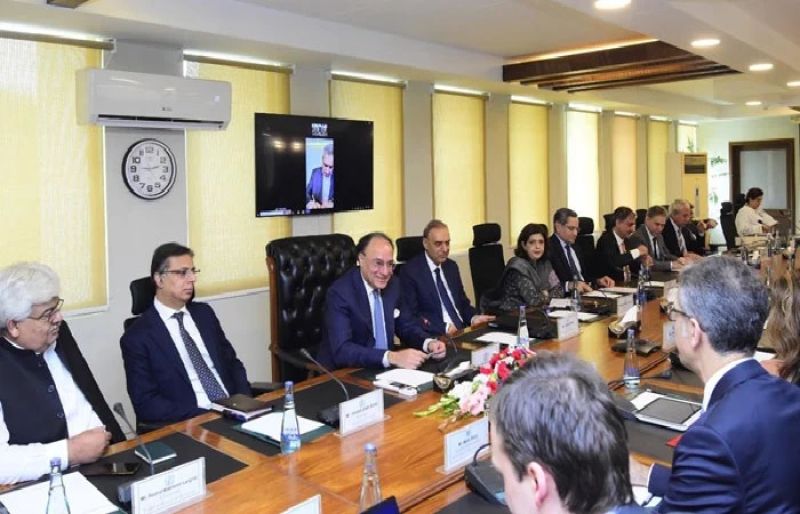
Finance Minister Muhammad Aurangzeb on Wednesday briefed the visiting International Monetary Fund (IMF) mission on the country’s macroeconomic outlook, fiscal strategy, reform priorities, and the government’s ongoing efforts to ensure sustainable economic stability and long-term growth.
The meeting with the visiting IMF mission, led by Mission Chief Iva Petrova, focused on Pakistan’s macroeconomic stabilisation efforts, preparations for the upcoming federal budget, and the broader reform agenda aimed at strengthening fiscal and external sustainability while fostering sustainable economic growth.
During the meeting, both sides exchanged views on maintaining reform momentum, preserving macroeconomic stability, and advancing structural reforms to promote investment, productivity, and export-led growth within a balanced and forward-looking policy framework.
The finance minister appreciated the IMF’s continued engagement and constructive dialogue with the government of Pakistan.
He particularly acknowledged the productive discussions initiated during the Spring Meetings held in Washington earlier this year.
Senator Aurangzeb shared encouraging developments regarding Pakistan’s external sector, highlighting positive trends in remittances and export performance.
He noted that recent data indicated improvement in exports on both a month-on-month and year-on-year basis, reflecting growing resilience in the economy and a gradual strengthening of macroeconomic fundamentals.
The minister emphasised that while economic stabilisation efforts had produced encouraging results, the government remained fully mindful of the structural challenges confronting the economy, particularly external liabilities and the need to accelerate sustainable, export-led growth.
He reiterated the government’s commitment to deepening reforms aimed at strengthening macroeconomic stability without compromising long-term growth prospects.
In this regard, he underscored the importance of moving Pakistan away from recurring boom-and-bust cycles through structural reforms, productivity enhancement, deregulation, and improved export competitiveness.
The minister further stated that the government’s reform agenda had been carefully calibrated in consultation with international experts and economists.
He emphasised that the ongoing policy measures were not driven by short-term considerations, but formed part of a broader and technically grounded economic transformation strategy endorsed at the highest level.
The IMF mission acknowledged the positive progress made by Pakistan in maintaining macroeconomic stability despite a challenging global and regional environment.
The Mission appreciated the government’s continued commitment to prudent economic management and reform implementation.
It emphasised the importance of sustaining reform momentum, maintaining fiscal discipline, and advancing structural reforms to support durable and inclusive economic growth.
Discussions during the meeting also focused on the broader macroeconomic framework, the government’s reform agenda, and priorities for the upcoming budget.
The mission reaffirmed its commitment to continued engagement and constructive cooperation with Pakistan in support of the country’s economic reform programme and long-term economic resilience.
Business
Tata Motors Q4 results: Net profit rises 34% to Rs 1,793 crore; revenue climbs on strong volume growth – The Times of India

Commercial vehicle maker Tata Motors Ltd on Wednesday reported a 33.8 per cent rise in consolidated net profit at Rs 1,793 crore for the fourth quarter ended March 31, 2026, driven by strong volume growth.The company had posted a consolidated net profit of Rs 1,340 crore in the corresponding quarter of the previous financial year, Tata Motors said in a regulatory filing, as reported PTI.Total revenue from operations in the January-March quarter rose to Rs 26,098 crore from Rs 21,863 crore in the year-ago period.Vehicle wholesales during the quarter stood at 1.32 lakh units, up 25 per cent year-on-year.Total expenses in the quarter under review stood at Rs 24,134 crore.For FY26, consolidated net profit stood at Rs 3,030 crore compared with Rs 3,195 crore in FY25. The company said annual profit was impacted by exceptional items related to the new labour code and demerger-related costs.Total revenue from operations for FY26 increased to Rs 83,855 crore from Rs 58,217 crore in the previous financial year.For the full 2025-26 fiscal, total wholesales stood at 4.28 lakh units, up 14 per cent year-on-year.Commenting on the performance, Tata Motors MD and CEO Girish Wagh said FY26 marked a “clear inflection point” for the commercial vehicles industry, with volumes surpassing the pre-FY19 peak, supported by GST 2.0 reforms and sustained infrastructure spending.“For Tata Motors Commercial Vehicles, FY26 was a landmark year as we delivered milestones of revenues and profits and reinforced industry leadership and strengthened our market position,” he said.Wagh said the underlying demand fundamentals remain resilient despite geopolitical uncertainties signalling some moderation in the near term.“With strong business fundamentals, proactive risk mitigation, disciplined execution and a refreshed portfolio offering industry-leading TCO (total cost of ownership) and smart digital solutions, we remain agile and well positioned to sustain momentum through customer-centric solutions to create long-term stakeholder value,” he added.The company’s board has recommended a final dividend of Rs 4 per fully paid-up ordinary share of Rs 2 each for FY26, subject to shareholders’ approval.


Christopher Nolan explained Travis Scott casting in ‘The Odyssey’

Geena Davis on “The Boroughs” and why she’s drawn to supernatural projects

Cricket legend Shahid Afridi conferred Hilal-e-Imtiaz

A new frontier: Identity stack evolves for agentic systems | Computer Weekly

‘Orbs,’ ‘Saucers,’ and ‘Flashes’ on the Moon: Pentagon Drops New UFO Files

India among most resilient large EMs, better placed for future global shocks; policy reforms & strong buffers help: Moody’s – The Times of India

-
 Tech5 days ago
A new frontier: Identity stack evolves for agentic systems | Computer Weekly
-
 Tech5 days ago
‘Orbs,’ ‘Saucers,’ and ‘Flashes’ on the Moon: Pentagon Drops New UFO Files
-
Business1 week ago
India among most resilient large EMs, better placed for future global shocks; policy reforms & strong buffers help: Moody’s – The Times of India
-

 Tech5 days ago
Nick Bostrom Has a Plan for Humanity’s ‘Big Retirement’
-

 Tech6 days ago
What Microsoft Executives Really Thought About OpenAI in 2018
-

 Sports5 days ago
Shaheen Afridi achieves landmark feat during opening Test against Bangladesh
-

 Fashion5 days ago
New orders in German manufacturing up 5% MoM in Mar 2026: Destatis
-

 Tech6 days ago
The Canvas Hack Is a New Kind of Ransomware Debacle