

Business
Stocks retreat as oil surge raises inflation fear


The FTSE 100’s decline accelerated on Tuesday, alongside European peers, amid fears that soaring energy prices will reignite inflationary pressures and hamper economic growth.
“European markets are being hit hard, as the full inflationary impact of the war in Iran truly comes home to roost,” said Joshua Mahony at Scope Markets.
The FTSE 100 index ended down 295.98 points, or 2.8%, at 10,484.13.
The FTSE 250 ended down 729.43 points, 3.1%, at 22,694.21 and the AIM All-Share closed 29.46 points lower, 3.6%, at 786.43.
New strikes were reported Tuesday across the Middle East, including Israeli bombardment on Lebanon and a drone attack on the US embassy in Saudi Arabia’s capital Riyadh.
The conflict started with US and Israeli strikes on Iran over the weekend, which sparked retaliatory Iranian attacks and showed no sign of abating as it entered its fourth day.
Iran has unleashed missiles and drones across the Middle East, including at Saudi Arabia, Qatar and Dubai, while threatening explicitly to drive up global energy costs.
A general in Iran’s Revolutionary Guards threatened to “burn any ship” seeking to navigate the Strait of Hormuz.
In European equities on Tuesday, the CAC 40 in Paris closed down 3.5%, as did the DAX 40 in Frankfurt.
On Wall Street, markets also fell heavily. The Dow Jones Industrial Average was down 1.7%, the S&P 500 index was 1.6% lower, while the Nasdaq Composite declined 1.7%.
Brent oil traded higher at 83.06 dollars a barrel on Tuesday afternoon, up from 77.92 dollars at same time on Monday.
“The longer oil and natural gas prices remain elevated, the greater the risk of a meaningful impact on inflation which could mean higher interest rates, an event that’s typically negative for equity markets,” said Dan Coatsworth, head of markets at AJ Bell.
Mr Mahony at Scope Markets explained the recent removal of insurance coverage for ships passing through the Strait of Hormuz provided an effective closure of the key shipping lane.
“While the US claims that the Strait of Hormuz remains open following the destruction of much of the Iranian navy, the cancellation of insurance coverage and Iranian threats that ships will be set ablaze for passing through the passage mean that journeys have slowed to a trickle,” he said.
“This means that oil prices are likely to rise as long as this conflict rages on, with this key bottleneck proving to be one of Iran’s most important points of leverage as they seek to pressure the US president through higher inflation and destruction of key facilities for US allies in the region.”
The dollar extended recent gains. The pound was lower at 1.3305 dollars on Tuesday afternoon, from 1.3360 dollars at the equities close on Monday.
The euro stood lower at 1.1585 dollars, from 1.1672 dollars. Against the yen, the dollar was trading slightly higher at 157.80 yen, compared with 157.73 yen.
In Europe, eurozone consumer price inflation surprisingly accelerated, a preliminary reading showed on Tuesday, as service price growth quickened.
Eurostat’s flash reading said the annual consumer price inflation rate in the single currency bloc picked up to 1.9% in February, from 1.7% in January. The rate of inflation had been expected to remain at 1.7%, according to consensus cited by FXStreet.
The yield on the US 10-year Treasury widened to 4.07% on Tuesday from 4.05% on Monday. The yield on the US 30-year Treasury stretched to 4.71% from 4.70%.
The yield on UK-10 year gilts leaped to 4.48% from 4.30% on Monday as rising energy prices dampened hopes for interest rate cuts. Late last week, the yield had fallen to around 4.24%.
The Middle East crisis overshadowed the Government’s spring statement.
Chancellor Rachel Reeves told MPs the Government has “the right economic plan for our country.”
“I am in no doubt how great the rewards will be if we stay the course,” she added.
She said the plan is even more important in a world that has, in the past few days, “become more uncertain”, noting events in the Middle East.
The Office for Budget Responsibility (OBR) lowered its growth forecast to 1.1% in 2026 from the 1.4% projection in November. But it raised projections for 2027 and 2028 to 1.6% from 1.5% before.
The OBR expects the Government to hit its 2% inflation target this year and sees unemployment peaking in 2026.
Ms Reeves said the OBR estimates fiscal headroom has risen to £23.6 billion from the £21.7 billion forecast in November.
Analysts at Lloyds Markets noted that relative to previous fiscal updates, the statement was “purposefully restrained”, consistent with Ms Reeves’ efforts to reduce its profile as a major event.
“The geopolitical situation in the Middle East further diminished its visibility, contributing to an overall sense that the statement was a routine fiscal update rather than a significant policy moment,” they noted.
“This approach underscores the government’s desire for stability in fiscal communications while retaining room for more substantial decisions in the autumn – the scale and direction of which are likely to depend heavily on how events in the Middle East evolve.”
The OBR itself stressed events in the Middle East could have “very significant impacts” on the global and UK economies.
On the FTSE 100, Smith & Nephew led a handful of gainers, among a sea of red, on further consideration of Monday’s results.
S&N rose 3.6%, with others in the green including oil major BP, up 1.1%, accountancy software provider Sage, up 0.9%, and defence contractor Babcock International, up 0.4%.
But British Airways owner IAG fell a further 5.4%, while easyJet fell 4.1%. On the FTSE 250, Wizz Air fell 6.5%. Travel retailer WH Smith declined 6.1%.
Fears that rising inflation will quash hopes for lower interest rates hit housebuilders with Persimmon down 6.0% and Barratt Redrow 4.2% lower.
Miners slumped as fears of slowing economic growth, and the strong dollar, hit metals prices.
Gold slumped to 5,114.94 dollars an ounce on Tuesday from 5,288.00 dollars on Monday. Silver fell 6.9% and copper 1.5%.
Fresnillo, which also reported annual results, fell 5.4%, Endeavour Mining fell 6.2%, Antofagasta fell 5.8% and Anglo American fell 3.8%.
On the FTSE 250, Keller rose 10% as it said it intends to launch a £100 million share buyback programme and reported higher earnings for 2025.
The London-based geotechnical specialist contractor said its results reflect “sustained improvement in operational and financial performance” helped by “geographic diversity, sector agility and resilience”.
The biggest risers on the FTSE 100 were Smith & Nephew, up 47.0p at 1,360.0p, BP, up 5.15p at 493.0p, Sage Group, up 7.4p at 847.4p, Relx, up 21.0p at 2,596.0p and Pearson, up 4.2p at 958.6p.
The biggest fallers on the FTSE 100 were Intertek, down 860.0p at 3,882.0p, DCC, down 325.0p at 4,840.0p, Endeavour Mining, down 319.0p at 4,866.0p, Persimmon, down 87.0p at 1,374.0p and Antofagasta, down 243.0p at 3,915.0p.
Wednesday’s global economic calendar has a slew of composite PMI readings, the Federal Reserve’s Beige Book plus the ISM services PMI in the US.
Wednesday’s UK corporate calendar has full-year results from insurer Beazley, housebuilder Vistry and engineering firm Weir Group.
– Contributed by Alliance News
Business
Hair oil, ACs, soaps become costlier: How FMCG companies are dealing with Middle East supply blow – The Times of India

Consumer goods companies in India are facing a sharp rise in input costs due to the ongoing war in the Middle East. Surging raw material prices are forcing firms to track costs on a near-daily basis, review pricing frequently, and focus on short-term decisions instead of long-term planning.As firms are struggling with volatile input costs, company executives have told ET that the sudden spike in inflation has made it harder to manage business, while also raising concerns that higher prices could hurt consumer demand. This comes at a time when consumption had started improving after the government reduced goods and services tax rates on several products last September.Havells India chief executive officer Anil Rai Gupta was cited by the financial agency as saying that the company is taking a cautious approach and reviewing the situation month by month. “I have not seen this kind of price escalation in the recent past or in recent memory. Usually, inflation happens, but it is neither so steep nor spread across all product categories… consumer offtake can get affected if the price hike is too sharp.” Bajaj Consumer Care managing director Naveen Pandey said the company is closely tracking input costs and taking decisions almost daily. Speaking during the company’s earnings call last week, he said costs across the business have gone up between 20% and 60%. He added that the war has created “extreme volatility” in the prices of light liquid paraffin and packaging materials. At the same time, prices of mustard and copra have not fallen as expected and are still at pre-war levels. The company is working on cutting costs across its operations.Industry executives said the war has pushed up commodity prices and crude-linked products, increased freight costs, and made imports more expensive due to the fall in rupee. They added that even after a ceasefire, prices have not come down, and uncertainty remains over whether the conflict could start again.In the past month, companies have already raised prices in several categories, including air-conditioners, refrigerators, soaps, detergents, hair oil, apparel, decorative paints and footwear. Some companies have also reduced pack sizes to deal with higher costs. More price hikes are expected by the end of this month.Parle Products vice president Mayank Shah said the pressure on input costs is very high and the uncertainty is “killing”.Retailers are also seeing more careful spending. Trent Ltd, which runs Westside and Zudio stores, said in an investor presentation that while demand was steady at the start of the January–March quarter, the current situation is affecting consumer behaviour.“Consumers are spending with caution, resulting in moderation of discretionary spending on the back of continuing macro uncertainties and potential increase in cost of living. Structurally the demand levels and the underlying market opportunities remain strong. However, the duration and intensity of disruptions in the Middle East along with its second order effect on supply chain, commodity prices and inflation in general has potential implications for near term demand,” the company said.AWL Agri Business executive deputy chairman Angshu Mallick said the company has already increased edible oil prices by Rs 7–10 per kg to pass on higher freight costs. “Being a staples company, we hike or reduce prices immediately. As we are in basic necessities, the volume impact is usually lower,” he said.Meanwhile, the Middle East conflict is inching closer towards the two month mark. The conflict began back on February 28, when the US and Israel launched joint strikes on Iran. In retaliation, Tehran choked the crucial Strait of Hormuz, a pipeline that carries 20% of global energy supplies, straining flow across the globe.
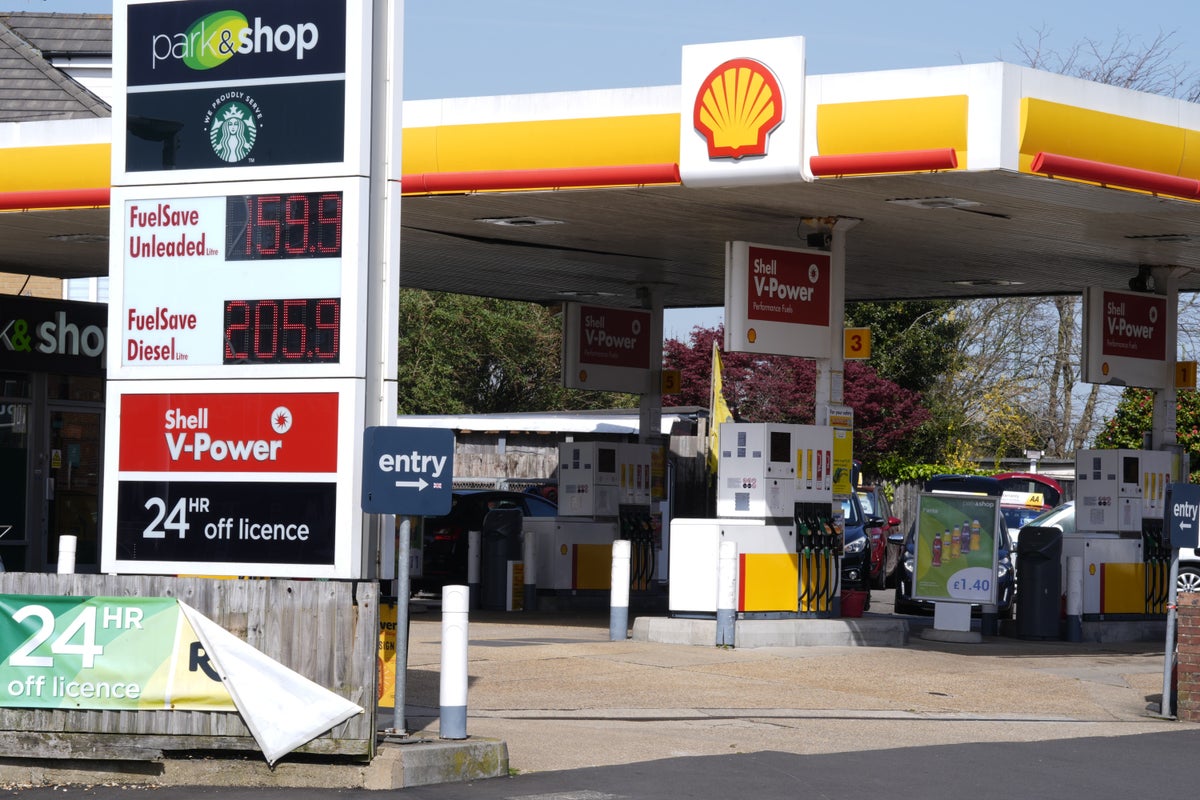
UK retail sales returned to growth last month as they were pushed higher by motorists stocking up on fuel as prices shot higher because of the Iran war, according to official figures.
The Office for National Statistics (ONS) said the total volume of retail sales, which measures the quantity bought, rose by 0.7% in March.
It compared with a 0.6% fall in February, which was revised slightly lower.
The latest reading was also stronger than expected, with economists having predicted a 0.1% dip for the month.
Statisticians said March’s increase was particularly driven by a spike in demand for fuel, which saw sales volumes jump by 6.1% for the month, the highest level since April 2021.
They indicated that this was especially linked to a short period, of less than a week, of particularly elevated sales as unfolding geopolitical events in the Middle East caused a significant rise in prices at the pump.
The value of sales, the amount of money spent, for fuel was up 11.6% amid the jump in petrol and diesel prices.
Recent data from the RAC shows that petrol prices have risen by 18.5% to 157.34 pence per litre, as recorded on Wednesday.
Meanwhile, diesel is up 33.4% to an average of 189.88 pence per litre.
Elsewhere, clothing stores also had a strong month, with sales volumes across the category rising by 1.2% in March amid a boost from better weather conditions.
Technology retailers also saw sales grow after they benefited from new products launches.
However, food sales were weaker, slipping by 0.8% for the month.
The ONS said overall retail sales volumes are up 1.6% for the first three months of 2026, as the industry was also supported by positive growth in January.
ONS senior statistician Hannah Finselbach said: “Retail sales rose in the three months to March, with commercial art galleries doing well earlier in the quarter and sales in beauty products stores rising as retailers reported launching new collections.
“Motor fuel sales were up on the quarter, with retailers commenting that many motorists had been filling up their tanks in March following the start of conflict in the Middle East.”
Elliott Jordan-Doak, senior UK economist at Pantheon Macroeconomics, said: “The first batch of hard data on consumers’ spending since the start of the Iran war was better than expected.
“Granted, stocking up on motor fuels drove headline sales higher, but even excluding petrol retail sales volumes nudged up showing that households largely brushed off the initial shock of higher energy prices.”
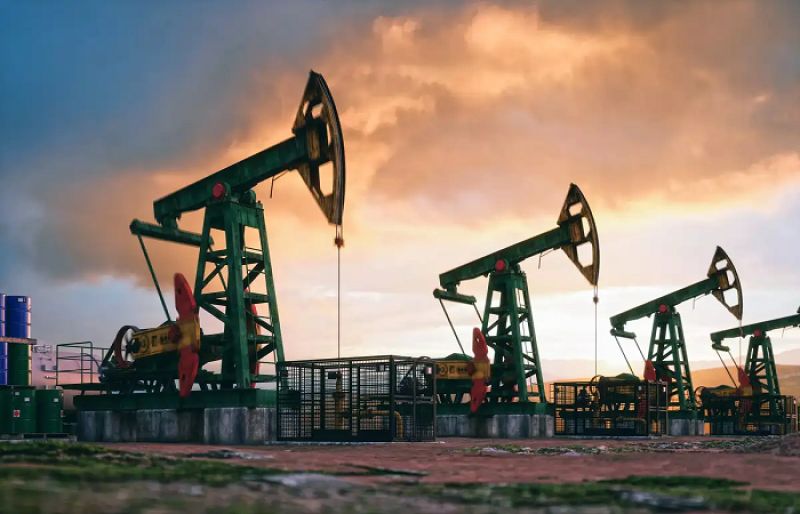
Oil prices rose on Friday morning over fears of renewed military escalation in the Middle East after Iran released footage of commandos boarding a cargo ship in the Strait of Hormuz and on reports that Tehran’s air defences had engaged “hostile targets”.
Brent crude futures rose $1.23, or 1.17%, to $106.3 a barrel, while West Texas Intermediate futures were up $1.07, or 1.12%, at $96.92.
Both benchmark contracts settled up more than 3% on Thursday and jumped $5 a barrel after reports that air defences were engaging targets over Tehran and of a power struggle between Iran’s hardliners and moderates.
US President Donald Trump said that Iran may have loaded up its weaponry “a little bit” during the two-week ceasefire, but added that the U.S. military could eliminate it in just a single day.
The ceasefire phase is increasingly looking like a preparatory phase for war, Haitong Futures said in a report.
If US-Iran talks fail to make key progress by the end of April and fighting resumes, oil prices could climb to new highs for the year, it added.
Iran on Thursday posted video of commandos in a speedboat storming a huge cargo ship after the collapse of peace talks, underlining its grip over the Strait of Hormuz through which 20% of global oil and gas usually flows.
As investors and governments around the world look for an enduring peace, Trump said he would not set a “timetable” for ending the conflict with Iran and that he wanted to make “a great deal.”
“Don’t rush me,” he said when asked how long he was willing to wait for a long-term peace deal with Iran.
Prolonged disruptions in the Strait of Hormuz could push global crude and refined-product inventories below five-year seasonal lows by late May or early June, adding a supply-risk premium back into oil prices, said Mingyu Gao, chief researcher for energy and chemicals at China Futures.
Trump also announced in a social media post on Thursday that Israel and Lebanon had agreed to extend their ceasefire by three weeks after a high-level meeting between representatives of both countries in the White House Oval Office.
Before that announcement, Israel warned that it was ready to restart attacks on Iran.


North India cotton yarn steady despite continued push by spinners

The WIRED Gear Team’s Tips on Ways to Save Money

Bangladesh, EU sign Partnership and Cooperation Agreement

-

 Fashion1 week ago
France’s LVMH Q1 revenue falls 6%, shows resilience amid Iran war
-

 Entertainment1 week ago
Is Claude down? Here’s why users are seeing errors
-

 Sports1 week ago
PSL 11: Peshawar Zalmi win toss, opt to field first against Quetta Gladiators
-

 Tech1 week ago
CYBERUK ’26: UK lagging on legal protections for cyber pros | Computer Weekly
-
 Business1 week ago
PepsiCo earnings beat estimates as North American food business improves
-

 Sports5 days ago
WWE WrestleMania 42 Night 2: Live match results and analysis
-

 Fashion1 week ago
Raymond unveils luxury Chairman’s Collection Store in Mumbai
-

 Sports5 days ago
NCAA men’s gymnastics championship: All-time winners list