

Business
Stocks tumble amid US banking fears

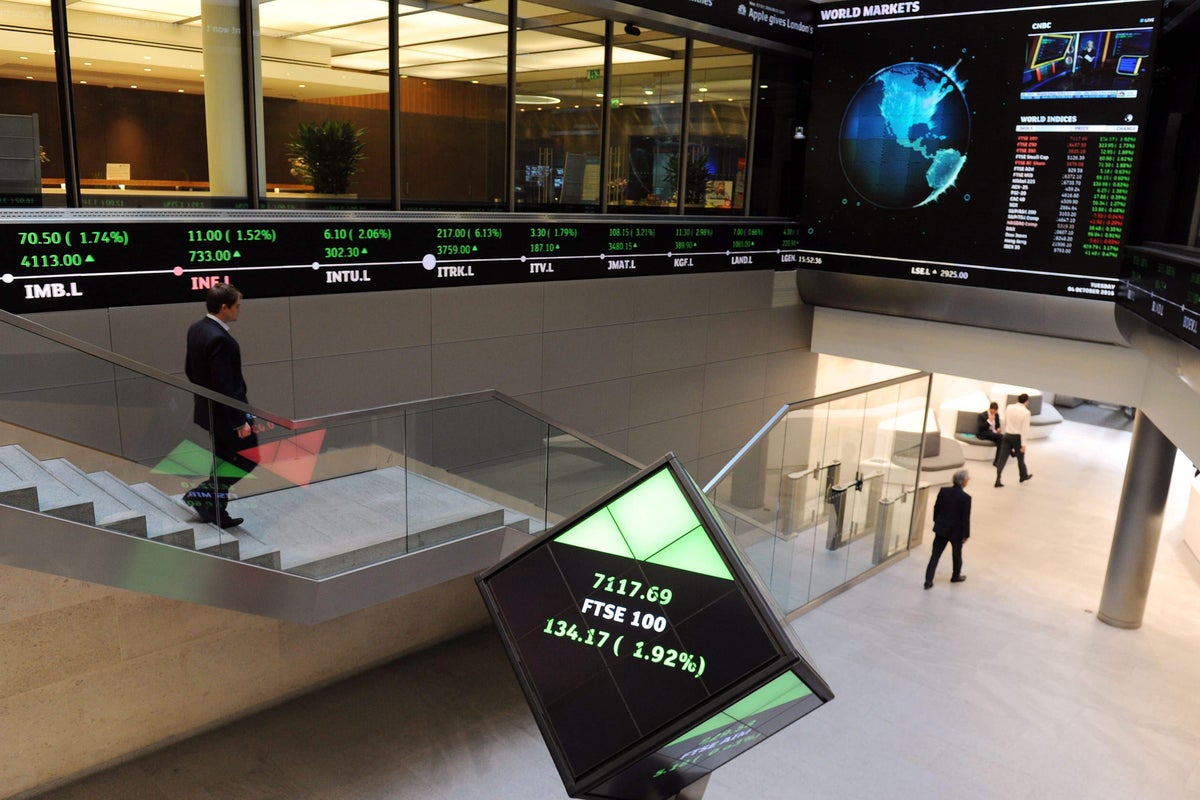
The FTSE 100 closed down sharply on Friday, although well above early lows, as investors weighed Thursday’s hefty falls on Wall Street sparked by fears surrounding US regional banks.
The FTSE 100 index closed down 81.52 points, 0.9%, at 9,354.57. It had earlier traded as low as 9,276.91.
The FTSE 250 ended 208.40 points lower, 1.0%, at 21,782.96 while the AIM All-Share shed 17.24 points, 2.2%, to 772.65.
For the week, the FTSE 100 was down 0.8%, the FTSE 250 was 0.1% lower, and the AIM-All Share declined 1.7%.
Wall Street took a tumble on Thursday and shares of regional banks took a hit after Zions Bancorp and Western Alliance said they had been victims of fraud on loans to funds that invest in distressed commercial mortgages.
Zions Bancorp said it would take a 50 million-dollar (£37 million) charge related to a loan issued by its California Bank & Trust division, while Western Alliance said it had begun legal proceedings over a bad loan.
“While everyone has been watching the tech sector for signs of a bubble, it’s the banking sector that’s the root cause of a minor market sell-off today,” said Russ Mould, investment director at AJ Bell.
Mr Mould noted “pockets” of the US banking sector including regional banks have given the market cause for concern.
“This includes Zions flagging an unexpected loss on two loans and Western Alliance alleging a borrower had committed fraud,” he added.
But he said the pullback in UK-listed banks will be “sentiment-driven”.
“Investors have been spooked and moved to trim positions in the sector, possibly opting to have lower exposure in case a crisis is brewing. There is no evidence of any issues with the London-listed core banking names, but investors often have a knee-jerk reaction when problems appear anywhere in the sector,” he added.
Barclays shed 5.7%, while Standard Chartered fell 3.5% and HSBC 2.5%. Lloyds Banking Group and NatWest ended down 2.4% and 2.9% respectively.
ICG, which has exposure private credit and asset backed finance fell 5.5%.
Stocks in New York were lower at the time of the London close. The Dow Jones Industrial Average was down 0.1%, the S&P 500 was 0.3% lower, while the Nasdaq Composite declined 0.6%.
Shares in Zions rallied 2.5% while Western Alliance firmed 0.9% at the time of the London equity market close, although both were well below opening highs.
Gold miners were also prominent fallers in London as the price of the yellow metal retreated from record highs.
Gold traded at 4,242.28 dollars an ounce on Friday, down from 4,270.73 dollars on Thursday.
The latest volatility saw Fresnillo fall 11% and Endeavour Mining drop 5.5%.
The pound was quoted lower at 1.3398 dollars at the time of the London equity market close on Friday, compared with 1.3429 dollars on Thursday.
The euro stood at 1.1664 dollars, lower compared with 1.1671 dollars. Against the yen, the dollar was trading at 150.31 yen, lower compared with 150.83 yen.
The yield on the US 10-year Treasury was quoted at 4.00%, trimmed from 4.03% on Thursday. The yield on the US 30-year Treasury stood at 4.60%, narrowed from 4.62% on Thursday.
In European equities on Friday, the CAC 40 in Paris closed ended 0.2% lower, while the DAX 40 in Frankfurt slid 1.7%.
Bucking the weaker trend in London, Pearson rose 2.3% as it said it remains on track to meet 2025 market expectations after reporting a pick-up in sales growth during the third quarter, driven by growth of its Virtual Learning segment.
The London-based educational materials publisher said underlying group sales rose 4% year-on-year in the third quarter, taking growth for the first nine months of 2025 to 2%. Pearson said it expects stronger sales growth in the fourth quarter due to “known business unit dynamics”.
Chief executive Omar Abbosh said Pearson is “well positioned for the opportunities that lie ahead”.
Smiths Group climbed 1.7% after announcing the sale of Smiths Interconnect to Molex Electronic Technologies Holdings, part of Wichita, Kansas-based Koch Industries, at an enterprise value of £1.3 billion.
The London-based engineering group said the sale price for its electronic connectors business represents 15.1 times headline earnings before interest, tax, depreciation and amortisation of £86.1 million for financial year 2025, which ended July 31.
Analysts at Jefferies said it is a “good price” and “marks a significant milestone in the group’s strategy of unlocking value across its portfolio of businesses”.
Despite Friday’s falls, Morgan Stanley said it is positive on UK equities from a European equity strategy perspective.
“Our call is less about UK macro, and more UK equities’ rising level of attractive, bottom-up drivers, growing interest from investors from relatively low levels this year, and the added benefit of the market’s low beta,” the bank said.
Morgan Stanley said investor interest in the UK is on the rise from relatively low levels, while even some of the “more challenged” portions of the UK equities market (discretionary, rate sensitive) are beginning to face relief as expectations start to pick-up that the November 26 budget will be “less bad than feared” for equities and rates markets.
“UK equities are low beta, underowned, and awash with idiosyncratic drivers,” the broker added.
Brent oil traded at 60.03 dollars a barrel, down from 61.70 dollars late on Thursday.
The biggest risers on the FTSE 100 were Pearson, up 25.5 pence at 1,119.5p, Haleon, up 6.7p at 351.8p, Reckitt Benckiser, up 106.0p at 5,910.0p, Coca-Cola HBC, up 62.0p at 3,556.0p and Smiths Group, up 40.0p at 2,406.0p.
The biggest fallers on the FTSE 100 were Fresnillo, down 276.0p at 2,352.0p, Barclays, down 21.45p at 357.8p, ICG, down 113.0p at 1,929.0p, Endeavour Mining, down 194.0p at 3,356.0p, and Antofagasta, down 124.0p at 2,663.0p.
Monday’s global economic diary sees retail sales and industrial production in China.
Later in the week inflation reports are due in the US, UK, Japan and Canada.
Next week’s UK corporate calendar sees third quarter results from lenders Barclays, Lloyds Banking Group and NatWest plus consumer goods groups Unilever and Reckitt Benckiser.
Contributed by Alliance News.
Heineken has announced a substantial investment exceeding £44 million into hundreds of its pubs across the UK, a move expected to create approximately 850 jobs.
The Dutch brewing giant’s Star Pubs operation, which manages 2,350 sites nationwide, is undertaking this significant financial commitment despite a challenging period for the pub sector.
The industry has faced considerable pressure over the past year, grappling with escalating labour costs and increases in national insurance contributions.
Concurrently, consumer spending has been constrained by concerns over inflation and rising unemployment, further impacting pub revenues. However, pubs did receive additional business rates support from the government last month, aimed at alleviating some of these financial burdens.
Lawson Mountstevens, managing director of Star Pubs, indicated that the investment strategy is partly designed to bolster revenues and help the group navigate the recent “sustained increases in running costs”.
This year, £44.5 million will be allocated to upgrades for 647 pubs. A notable 108 of these venues are earmarked for particularly significant cash injections, with each transformation costing at least £145,000.
Heineken clarified that while the majority of its pubs are group-owned, they are independently operated by local licensees. A key focus for this investment, particularly in the lead-up to the 2026 football World Cup, will be on sports-focused venues.
The pub firm and brewer has a history of significant investment in British pubs, having pumped £328 million into the sector since 2018. Work has already commenced at 52 locations, including eight projects dedicated to reopening boarded-up pubs that have endured lengthy closures.
Mr Mountstevens also urged the government to reduce the tax burden on pubs, arguing it would ease cost pressures and foster further job creation within the industry.
He stated: “We can only do so much; the root-and-branch reform of business rates that the industry has been calling for over many years is urgently required, as well as a lowering of the burden of taxation on pubs, including VAT and beer duty.”
He concluded with a direct appeal: “We are calling on the Government to support us in bringing out the best in the Great British pub.”
GameStop’s boss Ryan Cohen says he sees potential to make eBay a much bigger rival to Amazon.
Source link
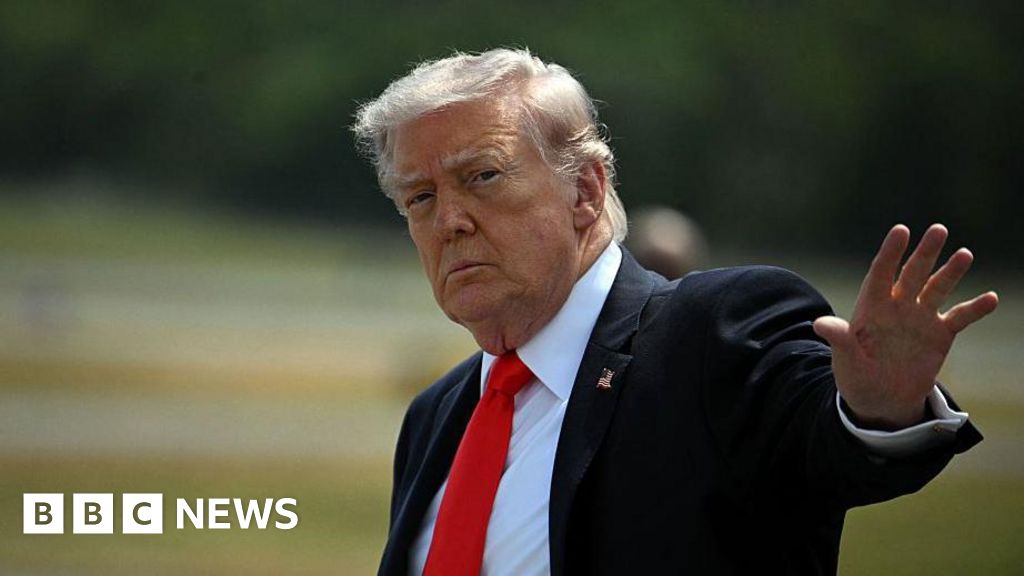
It comes as the US said on Monday it will begin to help “guide” vessels out of the Strait of Hormuz.
Source link


Met Gala 2026 “Costume Art” red carpet pictures from New York City

Jack Brooksbank opts for intimate celebration as new baby brings fresh focus

Tarik Skubal to undergo elbow surgery, sidelining Tigers ace for months ahead of free agency

-

 Tech1 week ago
A Brain Implant for Depression Is About to Be Tested in Humans
-

 Tech1 week ago
Almost 90% of women leave tech industry within 10 years | Computer Weekly
-
 Business1 week ago
Pakistan’s oil market is fuelling the crisis | The Express Tribune
-
 Business7 days ago
‘I had £20,000 stolen and had to fight a 13-month fraud reporting rule to get it back’
-

 Sports6 days ago
Pro wrestling star Steph De Lander reveals how colleague’s advice helped lead her to title triumph at ACW
-

 Entertainment1 week ago
Norway joins Type 26 Frigate Programme to boost NATO naval power
-

 Entertainment1 week ago
Melania Trump says ABC should ‘take a stand’ on late-night host Kimmel
-

 Tech7 days ago
This Ambitious Laptop Doesn’t Leave Much Room for Your Hands