

Tech
Student trust in AI coding tools grows briefly, then levels off with experience

How much do undergraduate computer science students trust chatbots powered by large language models like GitHub Copilot and ChatGPT? And how should computer science educators modify their teaching based on these levels of trust?
These were the questions that a group of U.S. computer scientists set out to answer in a study that will be presented at the Koli Calling conference Nov. 11 to 16 in Finland. In the course of the study’s few weeks, researchers found that trust in generative AI tools increased in the short run for a majority of students.
But in the long run, students said they realized they needed to be competent programmers without the help of AI tools. This is because these tools often generate incorrect code or would not help students with code comprehension tasks.
The study was motivated by the dramatic change in the skills required from undergraduate computer science students since the advent of generative AI tools that can create code from scratch. The work is published on the arXiv preprint server.
“Computer science and programming is changing immensely,” said Gerald Soosairaj, one of the paper’s senior authors and an associate teaching professor in the Department of Computer Science and Engineering at the University of California San Diego.
Today, students are tempted to overly rely on chatbots to generate code and, as a result, might not learn the basics of programming, researchers said. These tools also might generate code that is incorrect or vulnerable to cybersecurity attacks. Conversely, students who refuse to use chatbots miss out on the opportunity to program faster and be more productive.
But once they graduate, computer science students will most likely use generative AI tools in their day-to-day, and need to be able to do so effectively. This means they will still need to have a solid understanding of the fundamentals of computing and how programs work, so they can evaluate the AI-generated code they will be working with, researchers said.
“We found that student trust, on average, increased as they used GitHub Copilot throughout the study. But after completing the second part of the study–a more elaborate project–students felt that using Copilot to its full extent requires a competent programmer that can complete some tasks manually,” said Soosairaj.
The study surveyed 71 junior and senior computer science students, half of whom had never used GitHub Copilot. After an 80-minute class where researchers explained how GitHub Copilot works and had students use the tool, half of the students said their trust in the tool had increased, while about 17% said it had decreased. Students then took part in a 10-day-long project where they worked on a large open-source codebase using GitHub Copilot throughout the project to add a small new functionality to the codebase.
At the end of the project, about 39% of students said their trust in Copilot had increased. But about 37% said their trust in Copilot had decreased somewhat while about 24% said it had not changed.
The results of this study have important implications for how computer science educators should approach the introduction of AI assistants in introductory and advanced courses. Researchers make a series of recommendations for computer science educators in an undergraduate setting.
- To help students calibrate their trust and expectations of AI assistants, computer science educators should provide opportunities for students to use AI programming assistants for tasks with a range of difficulty, including tasks within large codebases.
- To help students determine how much they can trust AI assistants’ output, computer science educators should ensure that students can still comprehend, modify, debug, and test code in large codebases without AI assistants.
- Computer science educators should ensure that students are aware of how AI assistants generate output via natural language processing so that students understand the AI assistants’ expected behavior.
- Computer science educators should explicitly inform and demonstrate key features of AI assistants that are useful for contributing to a large code base, such as adding files as context while using the ‘explain code’ feature and using keywords such as “/explain,” “/fix,” and “/docs” in GitHub Copilot.
“CS educators should be mindful that how we present and discuss AI assistants can impact how students perceive such assistants,” the researchers write.
Researchers plan to repeat their experiment and survey with a larger pool of 200 students this winter quarter.
More information:
Anshul Shah et al, Evolution of Programmers’ Trust in Generative AI Programming Assistants, arXiv (2025). DOI: 10.48550/arxiv.2509.13253
Conference: www.kolicalling.fi/
Citation:
Student trust in AI coding tools grows briefly, then levels off with experience (2025, November 3)
retrieved 3 November 2025
from https://techxplore.com/news/2025-11-student-ai-coding-tools-briefly.html
This document is subject to copyright. Apart from any fair dealing for the purpose of private study or research, no
part may be reproduced without the written permission. The content is provided for information purposes only.












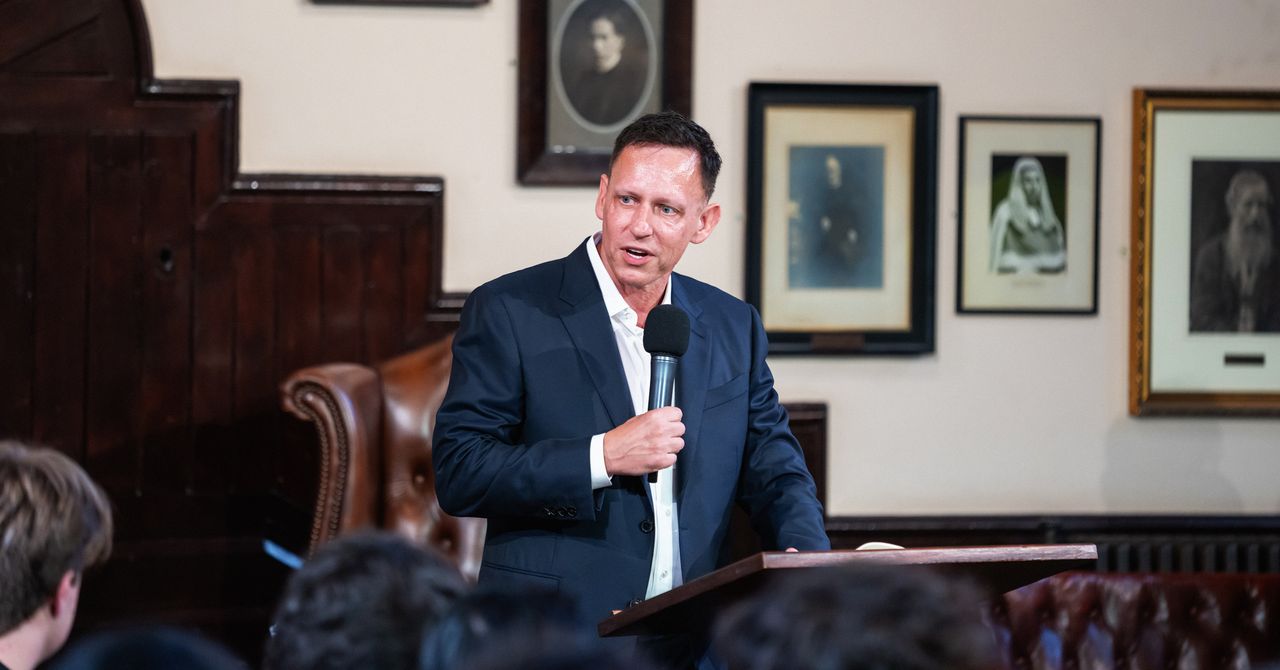
Peter Thiel—the billionaire venture capitalist, PayPal and Palantir cofounder, and outspoken commentator on all matters relating to the “Antichrist”—appears at least 2,200 times in the latest batch of files released by the Department of Justice related to convicted sex offender and disgraced financier Jeffrey Epstein.
The tranche of records demonstrate how Epstein managed to cultivate an extensive network of wealthy and influential figures in Silicon Valley. A number of them, including Thiel, continued to interact with Epstein even after his 2008 guilty plea for solicitation of prostitution and of procurement of minors to engage in prostitution.
The new files show that Thiel arranged to meet with Epstein several times between 2014 and 2017. “What are you up to on Friday?” Thiel wrote to Epstein on April 5, 2016. “Should we try for lunch?” The bulk of the communications between the two men in the data dump concern scheduling meals, calls, and meetings with one another. Thiel did not immediately return a request for comment from WIRED.
One piece of correspondence stands out for being particularly bizarre. On February 3, 2016, Thiel’s former chief of staff and senior executive assistant, Alisa Bekins, sent an email with the subject line “Meeting – Feb 4 – 9:30 AM – Peter Thiel dietary restrictions – CONFIDENTIAL.” The initial recipient of the email is redacted, but it was later forwarded directly to Epstein.
The contents of the message are also redacted in at least one version of the email chain uploaded by the Justice Department on Friday. However, two other files from what appears to be the same set of messages have less information redacted.
In one email, Bekins listed some two dozen approved kinds of sushi and animal protein, 14 approved vegetables, and 0 approved fruits for Thiel to eat. “Fresh herbs” and “olive oil” were permitted, however, ketchup, mayonnaise, and soy sauce should be avoided. Only one actual meal was explicitly outlined: “egg whites or greens/salad with some form of protein,” such as steak, which Bekins included “in the event they eat breakfast.” It’s unclear if the February 4 meeting ultimately occurred; other emails indicate Thiel got stuck in traffic on his way to meet Epstein that day.
According to a recording of an undated conversation between Epstein and former Israeli Prime Minister Ehud Barak that was also part of the files the DOJ released on Friday, Epstein told Barak that he was hoping to meet Thiel the following week. He added that he was familiar with Thiel’s company Palantir, but proceeded to spell it out loud for Barak as “Pallentier.” Epstein speculated that Thiel may put Barak on the board of Palantir, though there’s no evidence that ever occurred.
“I’ve never met Peter Thiel, and everybody says he sort of jumps around and acts really strange, like he’s on drugs,” Epstein said at one point in the audio recording, referring to Thiel. The former prime minister expressed agreement with Epstein’s assessment.
In 2015 and 2016, Epstein put $40 million in two funds managed by one of Thiel’s investment firms, Valar Ventures, according to The New York Times. Epstein and Thiel continued to communicate and were discussing meeting with one another as recently as January 2019, according to the files released by the DOJ. Epstein committed suicide in his prison cell in August of that year.
Below are Thiel’s dietary restrictions as outlined in the February 2016 email. (The following list has been reformatted slightly for clarity.)
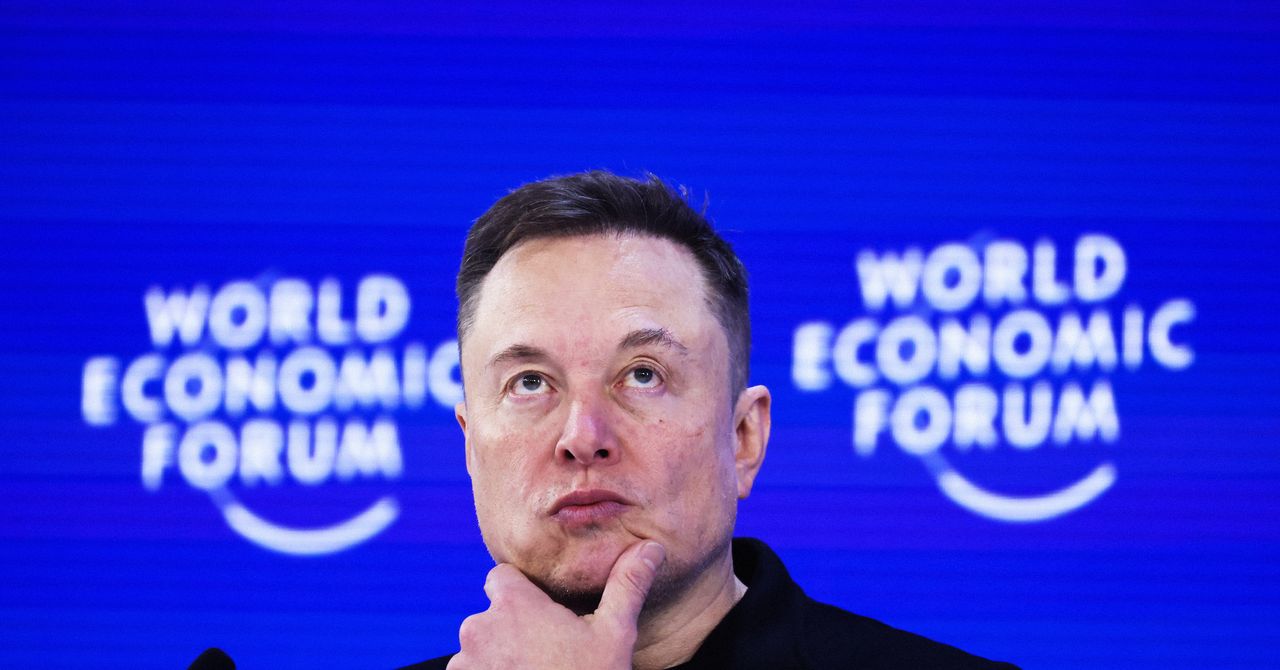
Elon Musk’s rocket and satellite company SpaceX is acquiring his AI startup xAI, the centibillionaire announced on Monday. In a blog post, Musk said the acquisition was warranted because global electricity demand for AI cannot be met with “terrestrial solutions,” and Silicon Valley will soon need to build data centers in space to power its AI ambitions.
“In the long term, space-based AI is obviously the only way to scale,” Musk wrote. “The only logical solution therefore is to transport these resource-intensive efforts to a location with vast power and space. I mean, space is called ‘space’ for a reason.”
The deal, which pulls together two of Musk’s largest private ventures, values the combined entity at $1.25 trillion, making it the most valuable private company in the world, according to a report from Bloomberg.
SpaceX was in the process of preparing to go public later this year before the xAI acquisition was announced. The space firm’s plans for an initial public offering are still on, according to Bloomberg.
In December, SpaceX told employees that it would buy insider shares in a deal that would value the rocket company at $800 billion, according to The New York Times. Last month, xAI announced that it had raised $20 billion from investors, bringing the company’s valuation to roughly $230 billion.
This isn’t the first time Musk has sought to consolidate parts of his vast business empire, which is largely privately owned and includes xAI, SpaceX, the brain interface company Neuralink, and the tunnel transportation firm the Boring Company.
Last year, xAI acquired Musk’s social media platform, X, formerly known as Twitter, in a deal that valued the combined entity at more than $110 billion. Since then, xAI’s core product, Grok, has become further integrated into the social media platform. Grok is featured prominently in various X features, and Musk has claimed the app’s content-recommendation algorithm is powered by xAI’s technology.
A decade ago, Musk also used shares of his electric car company Tesla to purchase SolarCity, a renewable energy firm that was run at the time by cousin Lyndon Rive.
The xAI acquisition demonstrates how Musk can use his expansive network of companies to help power his own often grandiose visions of the future. Elon Musk said in the blog post that SpaceX will immediately focus on launching satellites into space to power AI development on Earth, but eventually, the space-based data centers he envisions building could power civilizations on other planets, such as Mars.
“This marks not just the next chapter, but the next book in SpaceX and xAI’s mission: scaling to make a sentient sun to understand the Universe and extend the light of consciousness to the stars,” Musk said in the blog post.

Since last March, the Department of Health and Human Services has been using AI tools from Palantir to screen and audit grants, grant applications, and job descriptions for noncompliance with President Donald Trump’s executive orders targeting “gender ideology” and anything related to diversity, equity, and inclusion (DEI), according to a recently published inventory of all use cases HHS had for AI in 2025.
Neither Palantir nor HHS has publicly announced that the company’s software was being used for these purposes. During the first year of Trump’s second term, Palantir earned more than $35 million in payments and obligations from HHS alone. None of the descriptions for these transactions mention this work targeting DEI or “gender ideology.”
The audits have been taking place within HHS’s Administration for Children and Families (ACF), which funds family and child welfare and oversees the foster and adoption systems. Palantir is the sole contractor charged with making a list of “position descriptions that may need to be adjusted for alignment with recent executive orders.”
In addition to Palantir, the startup Credal AI—which was founded by two Palantir alumni—helped ACF audit “existing grants and new grant applications.” The “AI-based” grant review process, the inventory says, “reviews application submission files and generates initial flags and priorities for discussion.” All relevant information is then routed to the ACF Program Office for final review.
ACF staffers ultimately review any job descriptions, grants, and grant applications that are flagged by AI during a “final review” stage, according to the inventory. It also says that these particular AI use cases are currently “deployed” within ACF, meaning that they are actively being used at the agency.
Last year, ACF paid Credal AI about $750,000 to provide the company’s “Tech Enterprise Generative Artificial Intelligence (GenAI) Platform,” but the payment descriptions in the Federal Register do not mention DEI or “gender ideology.”
HHS, ACF, Palantir, and Credal AI did not return WIRED’s requests for comment.
The executive orders—Executive Order 14151, “Ending Radical and Wasteful Government DEI Programs and Preferencing,” and Executive Order 14168, “Defending Women From Gender Ideology Extremism and Restoring Biological Truth to the Federal Government”—were both issued on Trump’s first day in office last year.
The first of these orders demands an end to any policies, programs, contracts, grants that mention or concern DEIA, DEI, “equity,” or “environmental justice,” and charges the Office of Management and Budget, the Office of Personnel Management, and the attorney general with leading these efforts.
The second order demands that all “interpretation of and application” of federal laws and policies define “sex” as an “immutable biological classification” and define the only genders as “male” and “female.” It deems “gender ideology” and “gender identity” to be “false” and “disconnected from biological reality.” It also says that no federal funds can be used “to promote gender ideology.”
“Each agency shall assess grant conditions and grantee preferences and ensure grant funds do not promote gender ideology,” it reads.
The consequences of Executive Order 14151, targeting DEI, and Executive Order 14168, targeting “gender ideology,” have been felt deeply throughout the country over the past year.
Early last year, the National Science Foundation started to flag any research that contained terms associated with DEI—including relatively general terms, like “female,” “inclusion,” “systemic,” or “underrepresented”—and place it under official review. The Centers for Disease Control and Prevention began retracting or pausing research that mentioned terms like “LGBT,” “transsexual,” or “nonbinary,” and stopped processing any data related to transgender people. Last July, the Substance Abuse and Mental Health Services Administration removed an LGBTQ youth service line offered by the 988 Suicide & Crisis Lifeline.


India-US trade deal: Hope and uncertainty as Trump cuts tariffs

Christopher Nolan expresses concerns about Warner Bros-Netflix merger deal
MCX Silver Jumps 6% To Hit Upper Circuit After 46% Crash; Can India–US Deal Spark A Sustained Rally?

-

 Sports7 days ago
PSL 11: Local players’ category renewals unveiled ahead of auction
-

 Entertainment6 days ago
Claire Danes reveals how she reacted to pregnancy at 44
-

 Sports6 days ago
College football’s top 100 games of the 2025 season
-
 Business7 days ago
Banking services disrupted as bank employees go on nationwide strike demanding five-day work week
-

 Politics6 days ago
Trump vows to ‘de-escalate’ after Minneapolis shootings
-

 Sports6 days ago
Tammy Abraham joins Aston Villa 1 day after Besiktas transfer
-

 Tech7 days ago
Brighten Your Darkest Time (of Year) With This Smart Home Upgrade
-

 Entertainment6 days ago
K-Pop star Rosé to appear in special podcast before Grammy’s