

Sports
Supreme Court transgender athlete cases FAQ: What to expect

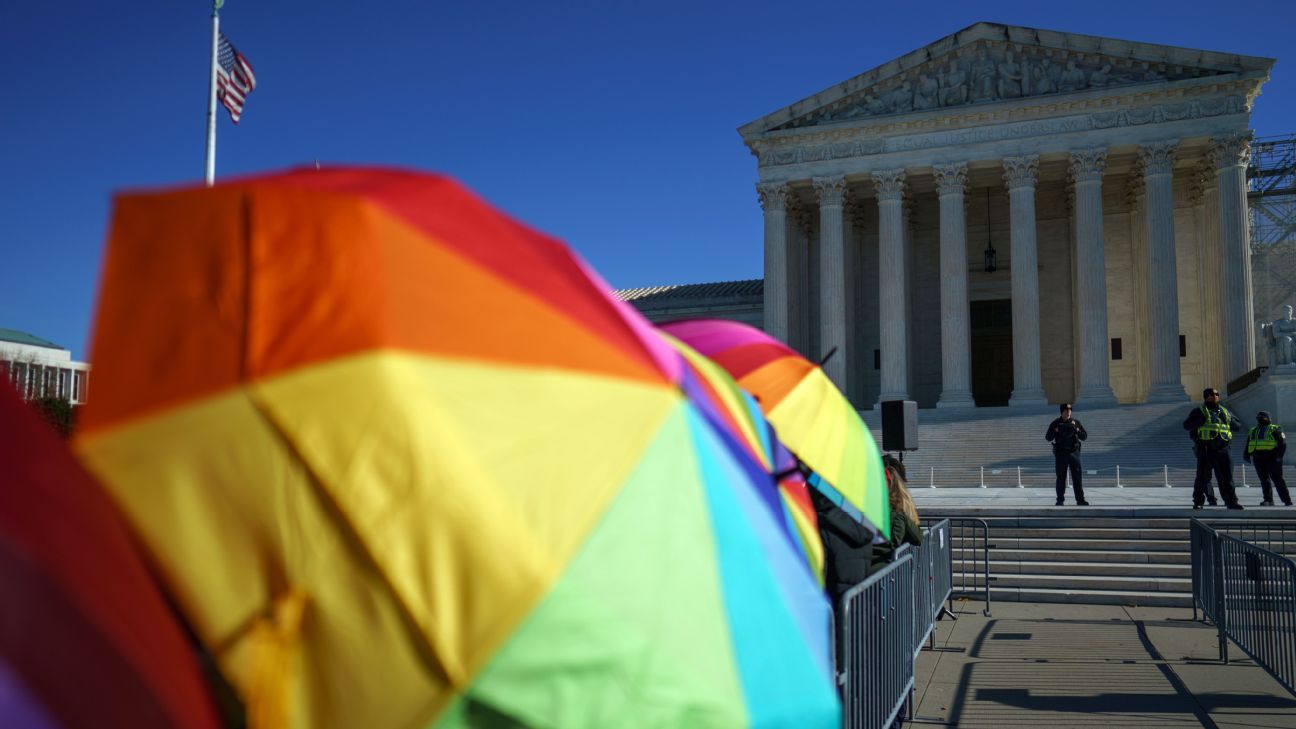
The U.S. Supreme Court will hear oral arguments in two cases pertaining to transgender athletes on Tuesday: Little v. Hecox and West Virginia v. B.P.J. The cases bring the national debate over whether transgender girls and women should be eligible to compete in girls’ and women’s sports to the country’s highest court.
Little v. Hecox is a dispute over the first state law, Idaho’s HB 500, that barred transgender girls and women from girls’ and women’s school and college sports. Gov. Brad Little signed the bill into law in March 2020, and Lindsay Hecox, a transgender woman, challenged it weeks later because she wanted to try out for Boise State’s women’s track and cross country teams. A U.S. district court in Idaho granted Hecox an injunction, and she tried out for the Broncos’ cross country team, but she did not make it. Hecox instead participated in women’s club soccer and running, which are also affected by HB 500. After a series of appeals by the state, the Supreme Court agreed last July to hear the case. Hecox’s attorneys argue, in part, that the Idaho law violates the equal protection clause of the 14th Amendment to the Constitution.
Similarly, West Virginia v. B.P.J. puts West Virginia’s HB 3293, one of 27 state laws that restrict transgender girls and women from sports, in front of the Supreme Court. Becky Pepper-Jackson, a 15-year-old transgender girl, was entering middle school when the law passed in April 2021. Pepper-Jackson wanted to compete on her school’s sports teams, but her school principal told the family the state law prevented her participation. Pepper-Jackson and her family challenged West Virginia’s law the summer before she began middle school, and she has since been allowed to participate in cross country and track and field. Pepper-Jackson’s attorneys argue, in part, that her right to compete on the girls’ teams is guaranteed by Title IX because her gender identity matches the category and she has undergone an estrogen-driven puberty. West Virginia argues, in part, that her participation on girls’ teams violates Title IX because her birth sex is not female. Last July, the Supreme Court agreed to hear the case.
The athletes will not testify during Tuesday’s oral arguments. Their lawyers will present their cases to the court on their behalf. Likewise, attorneys for Little and West Virginia will represent their side of the debate.
Here’s what you need to know about the cases before the Supreme Court hears oral arguments.
What’s at stake?
In simple terms: The future of transgender girls and women in girls’ and women’s sports.
Since Idaho passed HB 500, 26 other states have passed laws restricting access to girls’ and women’s sports for transgender students in schools and universities that receive public funds. In the past few years, a number of international federations have enacted similarly restrictive policies: World Aquatics (swimming, diving and water polo) allows only transgender women who never experienced testosterone-driven puberty to compete in the women’s category at elite events such as the world championships, and World Athletics (track and field and road running) bans all transgender women in the women’s category.
In the United States, President Donald Trump signed an executive order on Feb. 5, 2025, that said schools and states that allow transgender girls and women to participate in girls’ and women’s school sports are in violation of Title IX and risk federal funding. That led the NCAA to change its policy to align with the executive order. Additionally, United States Olympic and Paralympic Committee CEO Sarah Hirshland and president and chair Gene Sykes directed national governing bodies to update their transgender policies to “comply with federal expectations.” Many organizations under the USOPC have implemented new policies, and some impact youth sports opportunities.
When and how did the legal landscape change regarding transgender athlete participation?
Idaho state legislator Barbara Ehardt said she was inspired to write HB 500 after two transgender athletes won high school track and field state titles in Connecticut in 2018.
“It’s not just a bill that I sponsored, the entire idea was mine, and that’s why it took two years to finally come to pass,” Ehardt said. “And then each year to see so many states take it up and pass it … it has been a unique experience, and it’s been an incredibly gratifying one.”
Since HB 500 was signed into law in 2020, the debate over transgender participation made national news after former Penn student-athlete Lia Thomas, a transgender woman, won an NCAA Division I swimming national championship in 2022. The issue returned to the headlines after Blaire Fleming, also a transgender woman, played on San Jose State’s women’s volleyball team. Multiple teams in the Mountain West Conference chose to forfeit rather than play against SJSU in 2024, and SJSU captain Brooke Slusser joined a lawsuit against the NCAA, arguing that Fleming’s participation on the SJSU volleyball team posed a safety risk and violated Title IX.
What do the Idaho and West Virginia laws say about sports participation for transgender students?
Idaho’s HB 500 and West Virginia’s HB 3293 are not identical, but they do similar things. Both laws identify “interscholastic, intercollegiate, intramural, or club athletic teams” as the range of activities to which the restrictions for transgender athletes apply. Both laws establish three categories for sports: female, male and co-ed, and both laws restrict access to the female category by closing it to students defined as male. HB 3293 (West Virginia) defines biological sex as determined by an “individual’s reproductive biology and genetics at birth.” HB 500 (Idaho) does not formally define biological sex but says in the case of a dispute, a student can establish biological sex through physical exam and statement from their healthcare provider that bases their findings on at least one of these factors: “the student’s reproductive anatomy, genetic makeup, or normal endogenously produced testosterone levels.”
Why is the Supreme Court hearing two cases?
It’s not uncommon for the court to hear multiple cases that present similar, if not the same, legal questions, especially on a controversial or large issue.
“There are many other examples of when a big issue is up at the court, they will take two cases,” said ACLU senior counsel Joshua Block, who will present oral arguments for B.P.J. at the Supreme Court. “Another reason to do that is if they’re worried about a jurisdictional problem coming up in one of the cases that they have another one to go to.”
One possible issue that could arise on Tuesday is that Hecox asked the Supreme Court not to decide her case at all. She is no longer participating in sports in Idaho and therefore contends her case is “moot.” Idaho contends the case is not moot because the state and Boise State University still have an interest in enforcing HB 500.
Which federal laws and constitutional questions will be in play?
The primary questions are about Title IX and the equal protection clause of the 14th Amendment to the Constitution.
What is Title IX and how does it apply to transgender people?
Title IX was passed by Congress in 1972 and bars sex-based discrimination in schools receiving federal funds, including in school-sponsored programs and activities. It is largely credited with creating and expanding girls’ and women’s sports programs, but it applies to schools broadly. The law is 37 words, but in 1975, Congress approved regulations for Title IX’s application. Enforcement power belongs to the Department of Education.
Title IX does not say anything about transgender students or transgender athletes. But in May 2016, the Obama administration issued guidance stating Title IX applied to transgender students and that to be compliant with the law, transgender students should be allowed to access bathrooms, locker rooms and sports teams in accordance with their gender identities. This guidance never fully went into effect because multiple state governments sued the Obama administration. The first Trump administration rescinded that guidance, and then the Biden administration moved to expand transgender students’ rights, but the policy got tied up in court. The second Trump administration has issued multiple executive orders that roll back governmental recognition of transgender people in sports and beyond.
The Supreme Court has not ruled on the question of how Title IX applies to transgender students. But in June of 2021, the court declined to hear the case of Gavin Grimm, a transgender boy and student at Gloucester High School in Virginia. Grimm sued his school system because he was not allowed to continue to use the boys’ bathroom after school officials originally allowed him to do so. The Fourth Circuit, the same circuit that heard Pepper-Jackson’s case, ruled in Grimm’s favor twice. In declining to hear the case, the Supreme Court allowed the Fourth Circuit’s ruling to stand.
B.P.J. also argues that Title IX protects transgender students, though the case focuses on sports and not bathrooms. B.P.J. argues that West Virginia’s law violates Title IX because the law is a categorical ban that unfairly prohibits transgender girls and women who don’t have the physiological advantages associated with testosterone-driven puberty to be eligible for girls’ and women’s sports.
West Virginia counters with the argument that Title IX was enacted to provide equal opportunities and ensure fair competition for girls and women, as determined by birth sex, and gender identity should have nothing to do with it.
What is the equal protection clause and how does it apply to transgender people?
The equal protection clause — part of the 14th Amendment of the Constitution, ratified in 1868 — prohibits states from creating laws that violate the “privileges or immunities of citizens of the United States” and also cannot deny someone the “equal protection of the laws.”
Hecox argues that HB 500 violates the equal protection clause because the Idaho law rests “on overbroad generalizations about the sexes.”
Idaho rejects that argument. “Nothing in the Equal Protection Clause requires Idaho to treat males who identify as women as if they were female, in sports or elsewhere,” the state argues.
Additionally, Hecox argues that the Supreme Court needs to apply heightened scrutiny to HB 500 because it discriminates against a group of people. Heightened scrutiny requires states to prove that the government has a “substantial and clearly related interest” in creating a law that discriminates. Heightened scrutiny is a higher bar for states to clear.
Idaho argues against heightened scrutiny because “a sex classification does not become a transgender-status classification simply by failing to make exceptions based on gender identity.”
The Supreme Court recently rejected heightened scrutiny in a different case involving transgender youth. The court allowed a Tennessee law barring access to gender-affirming care for minors to stand in its June 2025 ruling in United States v. Skrmetti. In that case, the court rejected the argument that the law should be subjected to heightened scrutiny, ruling that it did not “classify on any bases that warrant heightened review.” Although those challenging laws barring access to gender-affirming care for minors argued that they discriminated against transgender people, the Supreme Court held that the laws regulated age and medical purpose, and therefore did not require heightened scrutiny. The impact of the decision was the court sidestepped one of the central tensions in both Little v. Hecox and West Virginia v. B.P.J.: Is transgender identity a classification protected by the equal protection clause?
What cases provide context and insight into how the Supreme Court will consider the arguments?
Bostock v. Clayton County, Georgia (2020) is frequently cited in the transgender athlete debate. In that case, the court ruled, in a 6-3 vote, that employers who fire employees for being gay or bisexual or transgender violate Title VII — part of the Civil Rights Act of 1964 that applies to employment discrimination — because doing so constitutes sex-based discrimination. That ruling generated questions about protections for LGBTQ+ individuals under Title IX.
Justice Neil Gorsuch addressed those concerns in the majority opinion. “The employers worry that our decision will sweep beyond Title VII to other federal or state laws that prohibit sex discrimination,” Gorsuch wrote. “But none of these other laws are before us; we have not had the benefit of adversarial testing about the meaning of their terms, and we do not prejudge any such question today.”
In other words, the Bostock ruling does not automatically apply to Title IX, even though both laws bar sex-based discrimination.
But in his dissent, Justice Samuel Alito specifically pointed to transgender athletes as a concern. “The effect of the Court’s reasoning may be to force young women to compete against students who have a very significant biological advantage,” Alito wrote, “including students who have the size and strength of a male but identify as female and students who are taking male hormones in order to transition from female to male.”
Since Bostock, the composition of the court has changed, and it’s unclear how relevant that vote will be to these proceedings. Skrmetti, which was a 6-3 decision by the current justices, allowed a gender-affirming health care ban for minors to stand.
Do the cases apply beyond sports?
Both proponents and opponents of restrictions on transgender women and girls in sports see the legislation as a gateway to legislation and policy affecting transgender people in other areas of life.
Ehardt, who sponsored Idaho’s HB 500, also was the floor sponsor for a bill during Idaho’s 2025 legislative session that limits access to single-sex facilities such as bathrooms, locker rooms, prisons and residence halls at public universities to those who are assigned that sex at birth. Gov. Little signed Ehardt’s bill into law on April 1.
“I also knew, and said so at the time, that it would be the sports issue that would open it up for all the other issues,” Ehardt said.
The American Civil Liberties Union, which represents both Hecox and Pepper-Jackson, sees that connection as well. The organization has been involved in multiple legal challenges to laws affecting transgender athletes and young people.
“Idaho wants to use this case as a jumping-off point for establishing a really broad principle that the government can discriminate against transgender people in all contexts,” Block said. “And that it should be treated as presumptively constitutional.”
How can the public follow the Supreme Court arguments?
Supreme Court arguments are not streamed or broadcast on TV. The Supreme Court website provides live audio starting at 10 a.m. ET and releases transcripts at the end of the day. The court will hear Little v. Hecox in the morning session. West Virginia v. B.P.J. is scheduled to begin at 1 p.m. ESPN will provide live updates from inside and outside the Supreme Court throughout the day,
What happens next?
After the cases are argued, the court will deliberate and publish an opinion, or opinions. The possible outcomes range from procedural dismissals, to narrow rulings, to landscape-altering orders. The decision’s timing is unknown. Opinions are generally published during non-argument sessions. According to the Supreme Court’s public calendar, the first non-argument session after oral arguments will be Feb. 20. There is one non-argument session in March, another in April, three in May and four in June. This is subject to change as the term continues, and more opinion days could be added.
NEWYou can now listen to Fox News articles!
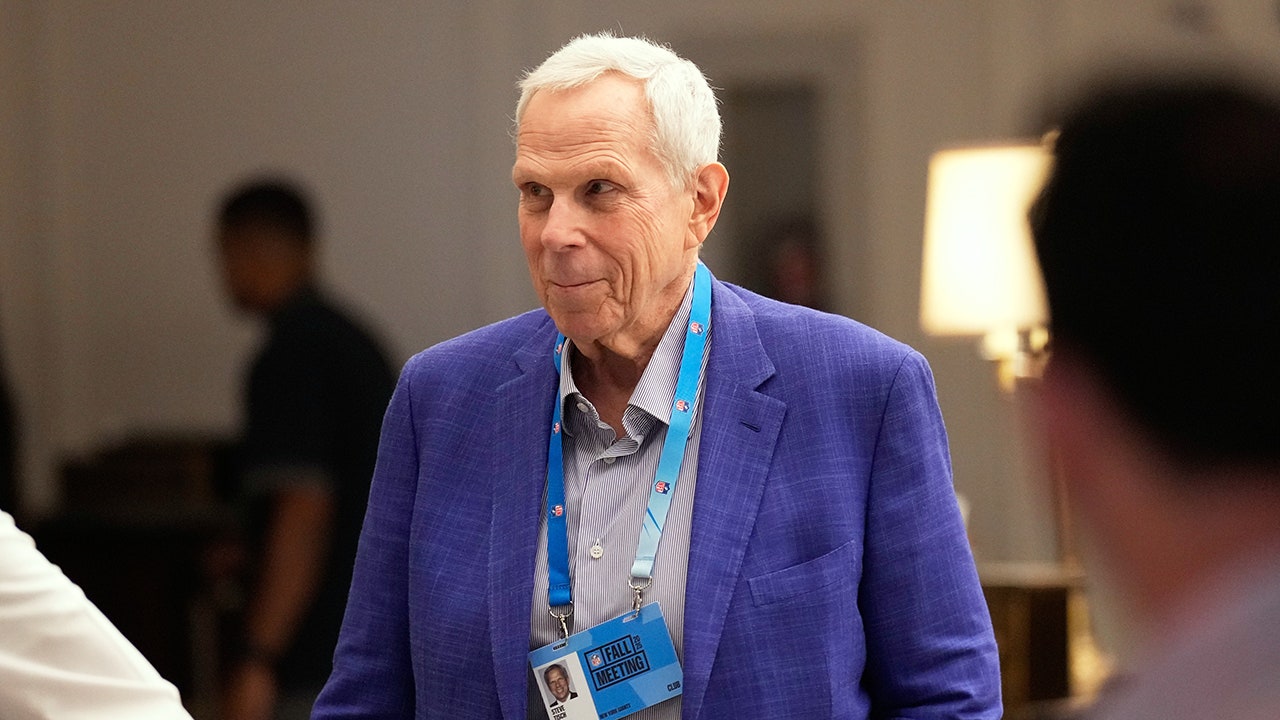
Cameras showed former New York Giants co-owner Steve Tisch in the team’s draft room Thursday night during the first round.
At one point, Tisch was seen standing near Giants head coach John Harbaugh. Despite no longer holding a majority stake in the NFL franchise, Tisch remains the Giants’ chairman of the board.
ESPN obtained an NFL memo last month detailing plans by Steve Tisch and his siblings to transfer their stake in the Giants to trusts for their children.
CLICK HERE FOR MORE SPORTS COVERAGE ON FOXNEWS.COM
New York Giants co-owner Steve Tisch warms up before the NFL game between the Washington Redskins and New York Giants at Met Life Stadium in East Rutherford, N.J., on Oct. 28, 2018. (Rich Graessle/Icon Sportswire)
“Prior transfers to these Trusts were completed pursuant to 2023 and 2024 Finance Committee approvals,” the memo stated. “The Sellers now propose to transfer their entire remaining interests, totaling 23.1% of the Club, to the Trusts. … Following the transactions, the Sellers will no longer own any interest in the Club.”
It was not clear if the transfer requests were in any way related to Tisch’s name appearing in the Epstein files released by the U.S. Justice Department in January. Tisch’s name came up more than 400 times in the files. Tisch at the time said he knew Epstein but denied visiting Epstein’s island.
As for draft night, the Giants made what some viewed as an unconventional pick at No. 10, selecting offensive lineman Francis Mauigoa.
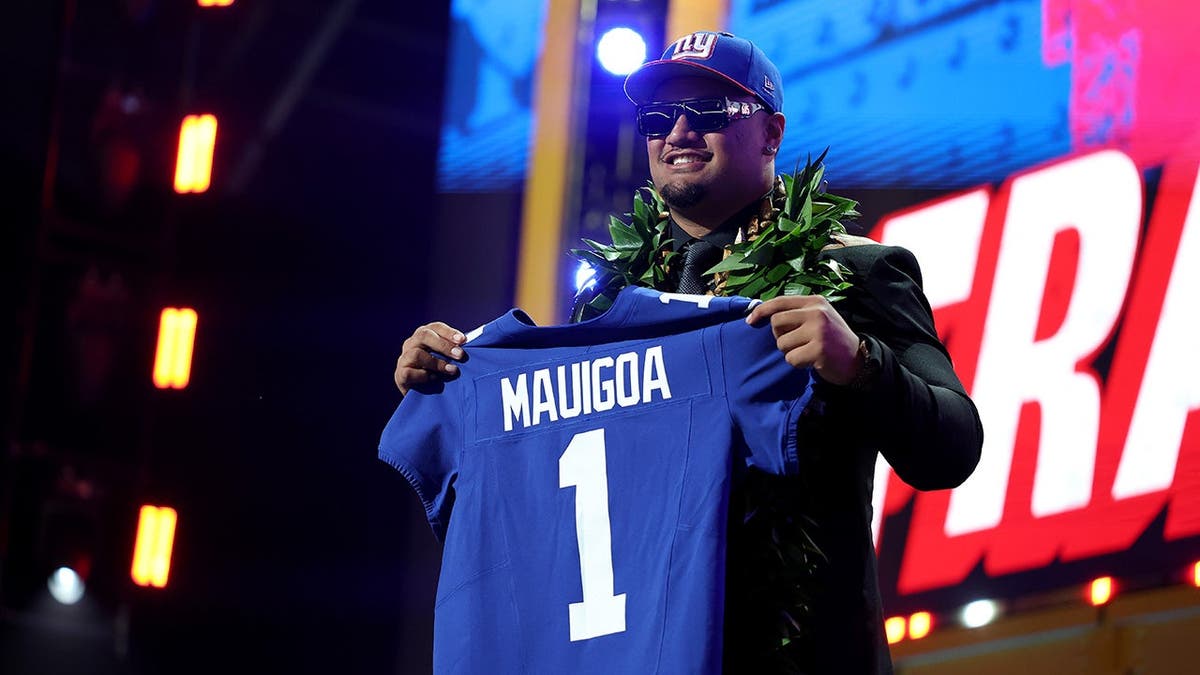
Francis Mauigoa of Miami celebrates after being selected as the tenth overall pick by the New York Giants during the first round of the 2026 NFL Draft at Acrisure Stadium in Pittsburgh, Pa., on April 23, 2026. (Emilee Chinn/Getty Images)
Before that, the Giants added another piece to their pass rush, selecting hybrid edge/off-ball linebacker Arvell Reese at No. 5.
Reese earned All-American honors at Ohio State and finished his first season as a full-time starter with 6.5 sacks.
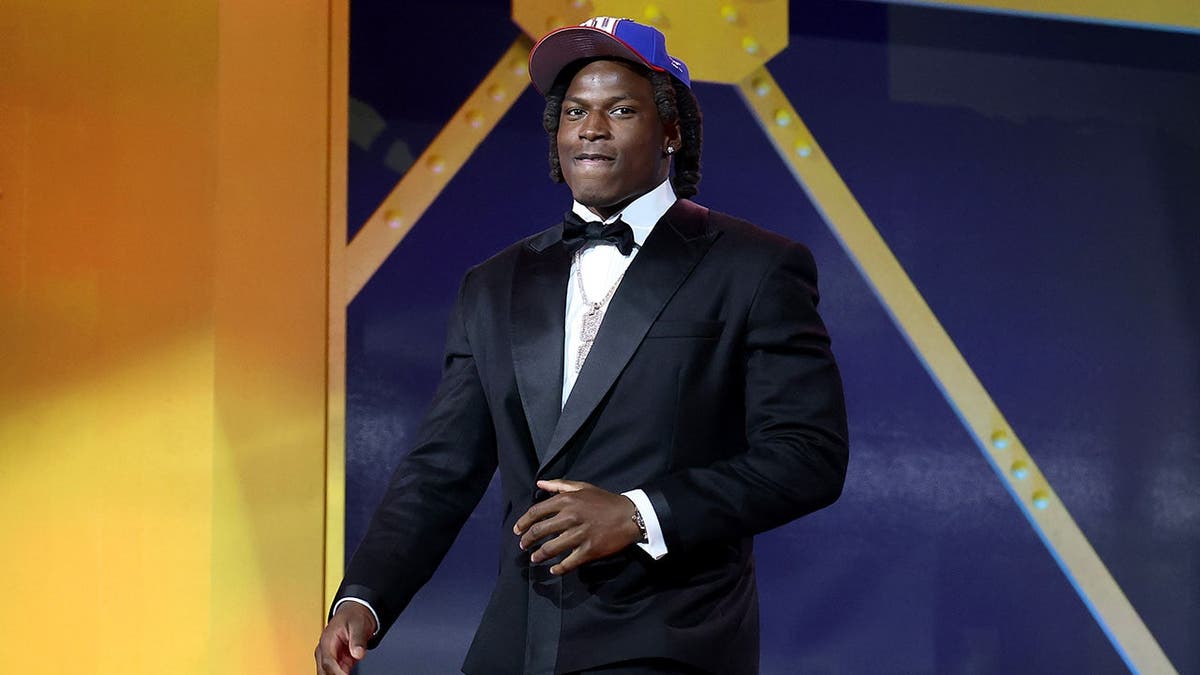
Arvell Reese of Ohio State celebrates after being selected as the fifth overall pick by the New York Giants during the first round of the 2026 NFL Draft at Acrisure Stadium in Pittsburgh, Pa., on April 23, 2026. (Emilee Chinn/Getty Images)
CLICK HERE TO DOWNLOAD THE FOX NEWS APP
Reese is set to join a pass rush that includes Brian Burns, Abdul Carter and, likely, Kayvon Thibodeaux.
Follow Fox News Digital’s sports coverage on X, and subscribe to the Fox News Sports Huddle newsletter.
NEWYou can now listen to Fox News articles!
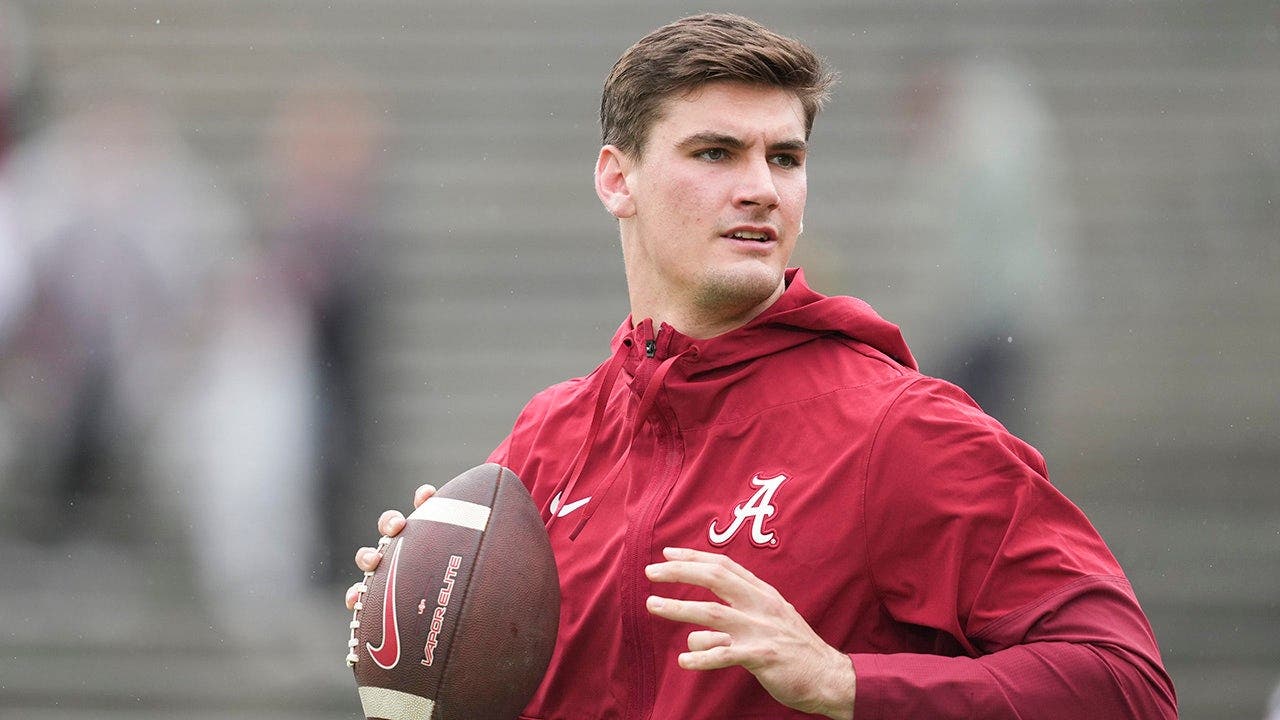
One of the most intriguing stories entering the first round of the NFL Draft was where Alabama quarterback Ty Simpson might land. Well, fans got their answer sooner than they expected.
The Los Angeles Rams surprisingly selected Simpson with the No. 13 pick in the 2026 NFL Draft.
The selection isn’t completely out of left field and is arguably the best-case scenario for Simpson. The Rams have Matthew Stafford as their starter for 2026, but Stafford has flirted with the idea of retirement each of the past two offseasons. It’s clear the clock is ticking on his NFL career.
CLICK HERE TO DOWNLOAD THE FOX NEWS APP
The Los Angeles Rams pulled a stunner and drafted Alababam QB Ty Simpson with the No. 13 pick in the NFL Draft. (CFP/Getty Images)
Now, Simpson gets to sit behind one of the NFL’s best veteran quarterbacks, learn the position while adapting to life in the NFL, and not face immediate pressure to succeed. Additionally, the Rams are one of the most well-run franchises in the league right now. Sean McVay is an elite head coach who led the team to a Super Bowl victory to cap the 2021 season and just had the team within one win of another Super Bowl berth before falling to the Seattle Seahawks in the NFC Championship.
ZERO BS. JUST DAKICH. TAKE THE DON’T @ ME PODCAST ON THE ROAD. DOWNLOAD NOW!
The most surprising aspect is the Rams looking toward the future, quite frankly. This is a team that has had no problem trading away first-round picks to make its team the best it can be each season. It seemed most likely the team would use the No. 13 pick to improve its team for next season, which could be Stafford’s last. Instead, the team decided to put itself in position for Stafford’s retirement without skipping a beat.
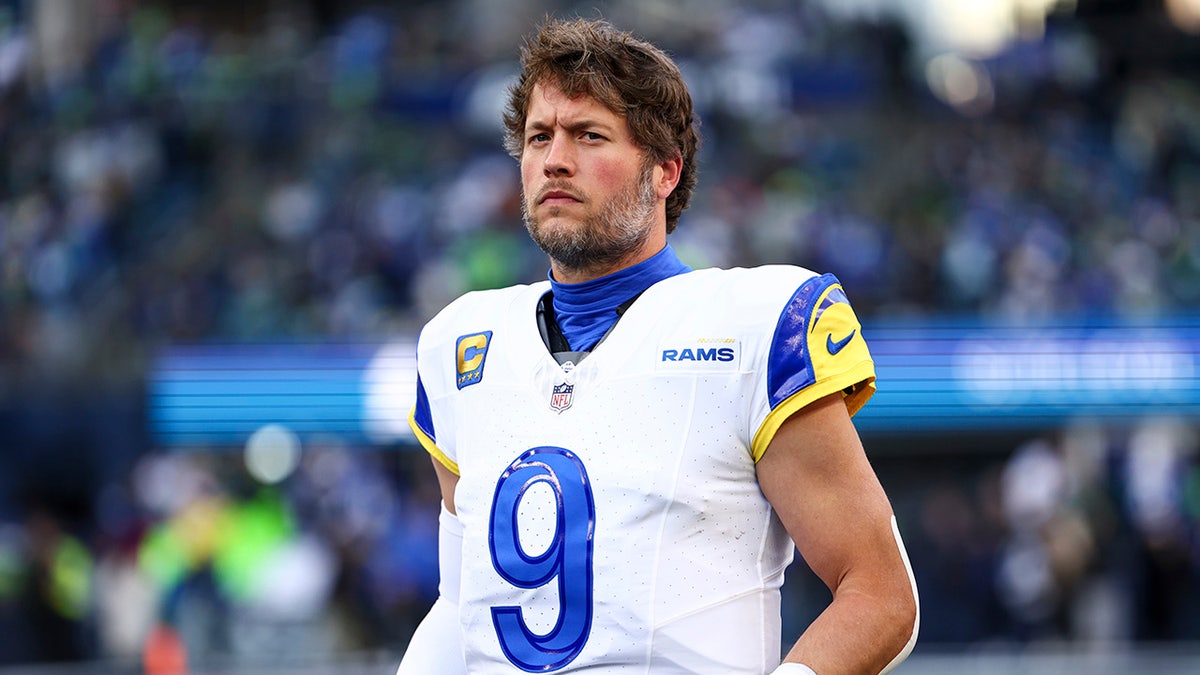
Los Angeles Rams QB Matthew Stafford, now 38-years-old, has flirted with retirement after each of the past two seasons. (Kevin Sabitus/Getty Images)
There were several surprises in the first 13 picks of the 2026 NFL Draft: the Cardinals taking Notre Dame running back Jeremiyah Love at No. 3, the Titans selecting Ohio State wide receiver Carnell Tate at No. 4, the Kansas City Chiefs trading up to take LSU cornerback Mansoor Delane at No. 6 and even the Cowboys trading up one spot to make sure they drafted Ohio State safety Caleb Downs at No. 11.
CLICK HERE FOR MORE SPORTS COVERAGE ON FOXNEWS.COM
But the Rams completely abandoning their recent strategy (usually trading away first-round picks and loading up for now) to select Stafford’s heir apparent is easily the biggest early shock of the 2026 NFL Draft.
Sports
Yankees owner Hal Steinbrenner considering factors before debuting new alternate uniforms: report
NEWYou can now listen to Fox News articles!
The choice for the New York Yankees to wear their new alternate uniform is ultimately up to owner Hal Steinbrenner, who has shown a knack for change in recent years.
And according to The Athletic, Steinbrenner and others in the front office will decide when the time is right based on some factors.
The outlet noted that economic impact, how often they’ll be worn, and how fans feel about the jerseys will all be key considerations in deciding if, and perhaps when, the jerseys will be worn.
CLICK HERE FOR MORE SPORTS COVERAGE ON FOXNEWS.COM
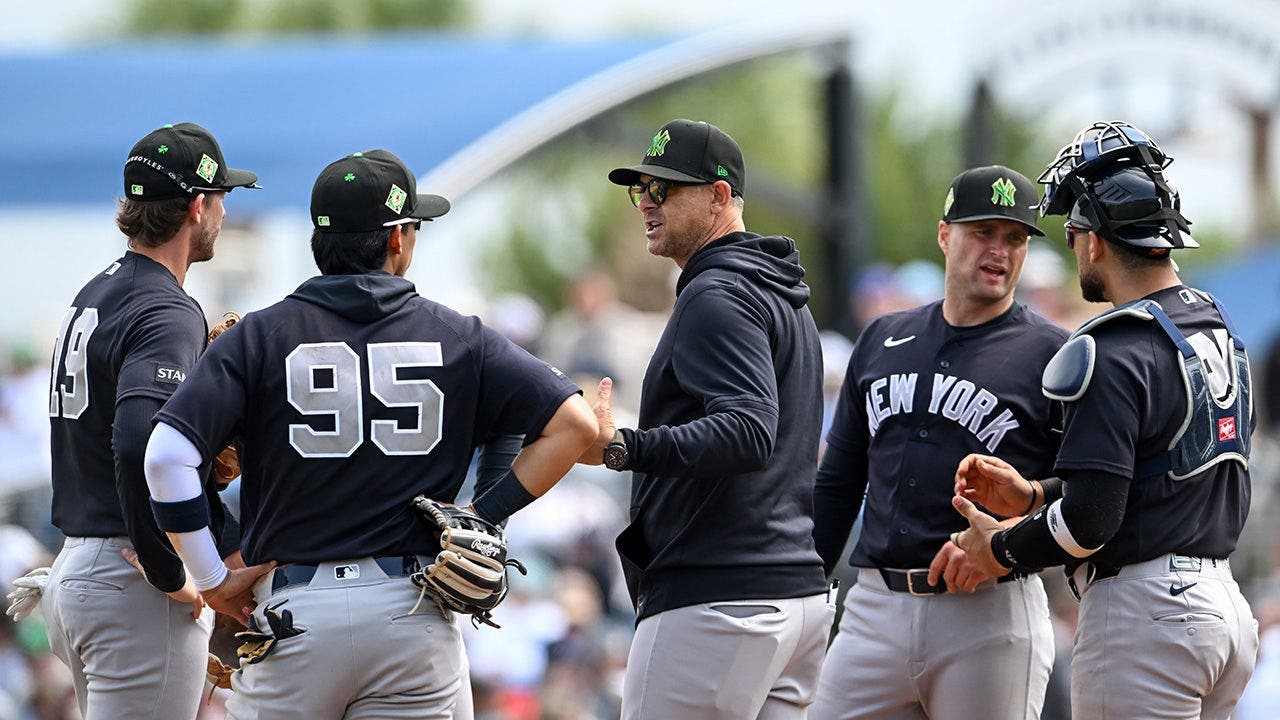
Manager Aaron Boone of the New York Yankees makes a pitching change during the fifth inning of a spring training game against the Tampa Bay Rays at Charlotte Sports Park in Port Charlotte, Florida, on March 17, 2026. (Nick Cammett/Diamond Images)
Hours after The Athletic reported that players had gone to higher-ups about the idea, it was revealed that an alternate jersey had in fact been approved prior.
The Yankees’ navy blue batting practice tops, similar to their road spring training uniforms, were the ones that were approved to be worn in games.
The Yankees have taken part in wearing different jerseys in the past, including Players’ Weekend from 2017 through 2019, a nod to the 1912 team while playing in Boston on the 100th anniversary of Fenway Park’s opening, and jerseys commemorating the Black Yankees in 1996. The Yankees also wore replicas of their 1921 road uniforms for the first Field of Dreams game in 2021.
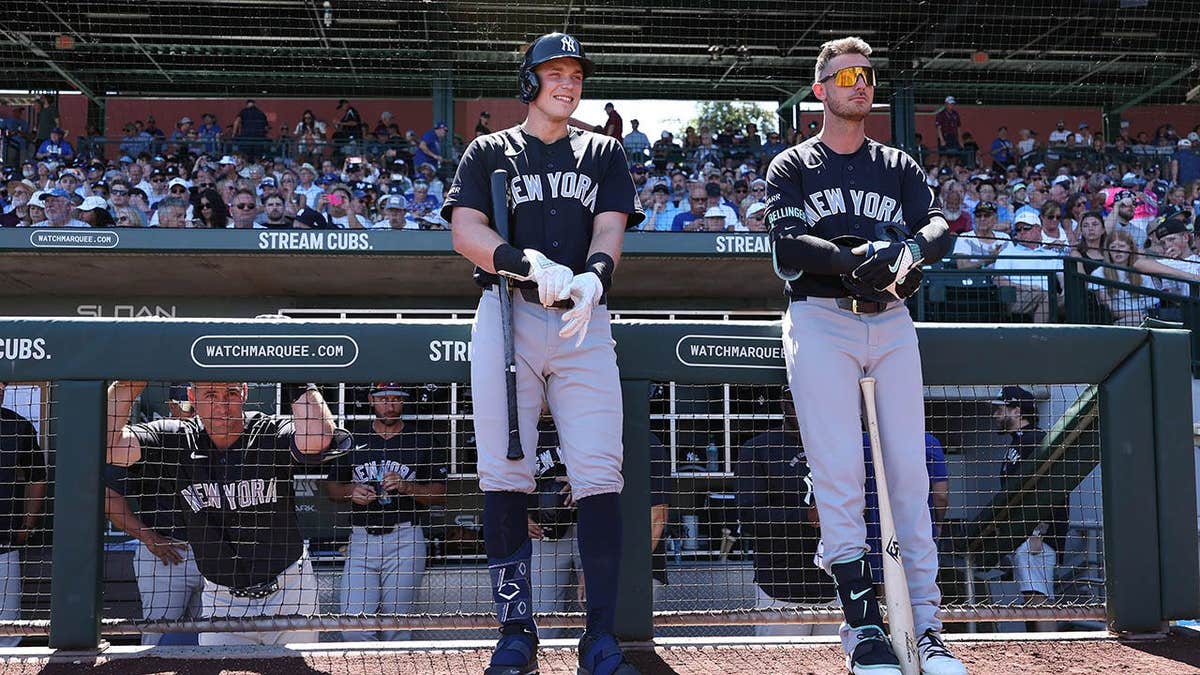
Paul Goldschmidt, Ben Rice and Cody Bellinger of the New York Yankees wait for the start of a spring training game against the Chicago Cubs at Sloan Park in Mesa, Arizona, on March 24, 2026. (Chris Coduto/Getty Images)
YANKEES ANNOUNCER SAYS TEAM SHOULD WIN A WORLD SERIES BEFORE BREAKING LONGSTANDING JERSEY TRADITION
However, none of those jerseys were ever officially put into the rotation, leaving them with just a home and road uniform from day one.
The Yankees also remain the only team to have no last names on the back of their jerseys, home or away, and they are also one of two teams, including the Athletics, without a City Connect jersey.
The Yankees added an advertisement patch on their jerseys in 2023, and beginning last year, “well-groomed” facial hair below the lip was reintroduced after a 50-year ban by Steinbrenner’s father, George.
Yankees players reportedly said they want the home pinstripes untouched and would wear the alternates on the road.
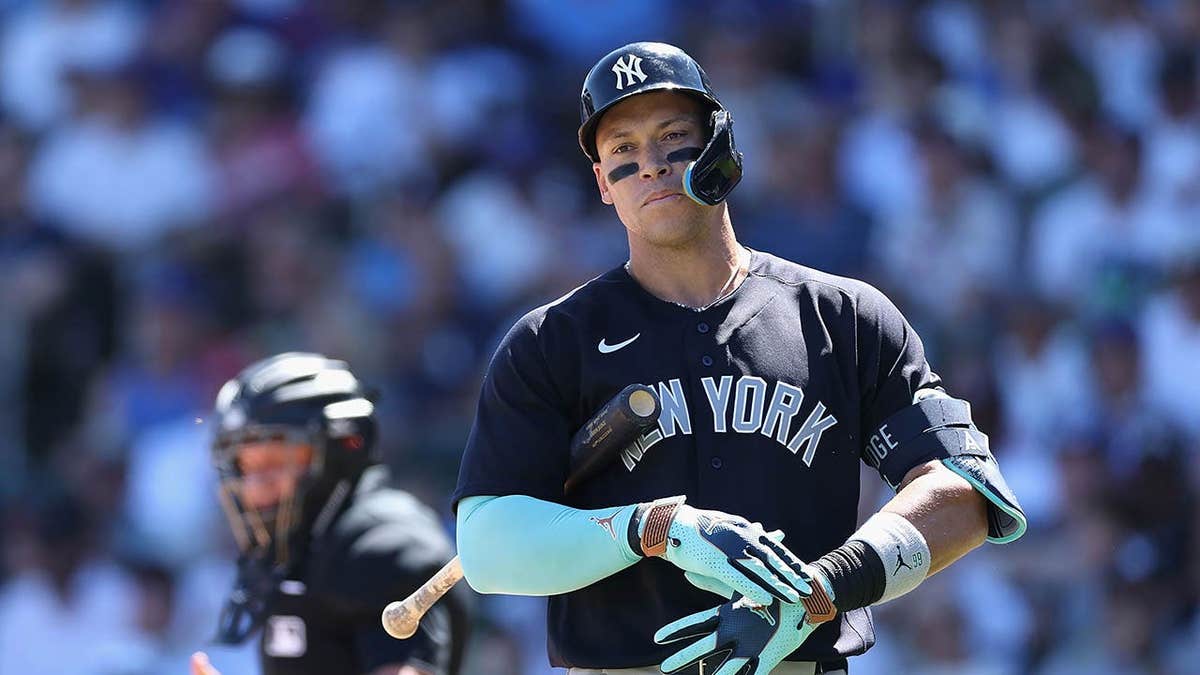
Aaron Judge of the New York Yankees bats against the Chicago Cubs during the first inning of a spring training game at Sloan Park in Mesa, Arizona, on March 23, 2026. (Christian Petersen/Getty Images)
CLICK HERE TO DOWNLOAD THE FOX NEWS APP
The Yankees sell navy blue “shirseys” that mimic the tone of their spring training uniforms, but the pinstripes have been even more prevalent in home spring games in Florida.
Follow Fox News Digital’s sports coverage on X, and subscribe to the Fox News Sports Huddle newsletter.


Bangladesh, EU sign Partnership and Cooperation Agreement

UK retail sales rebound as motorists stock up on fuel

Pentagon email floats suspending Spain from Nato, other steps over Iran rift: source

-

 Fashion1 week ago
France’s LVMH Q1 revenue falls 6%, shows resilience amid Iran war
-

 Entertainment1 week ago
Is Claude down? Here’s why users are seeing errors
-

 Sports1 week ago
PSL 11: Peshawar Zalmi win toss, opt to field first against Quetta Gladiators
-

 Tech1 week ago
The Deepfake Nudes Crisis in Schools Is Much Worse Than You Thought
-
 Business1 week ago
Standard Life buys rival in £2b deal to create savings giant
-

 Tech1 week ago
CYBERUK ’26: UK lagging on legal protections for cyber pros | Computer Weekly
-
 Business1 week ago
PepsiCo earnings beat estimates as North American food business improves
-

 Fashion1 week ago
Raymond unveils luxury Chairman’s Collection Store in Mumbai