

Tech
SWISSto12 opens Switzerland’s largest GEO satellite production site | Computer Weekly

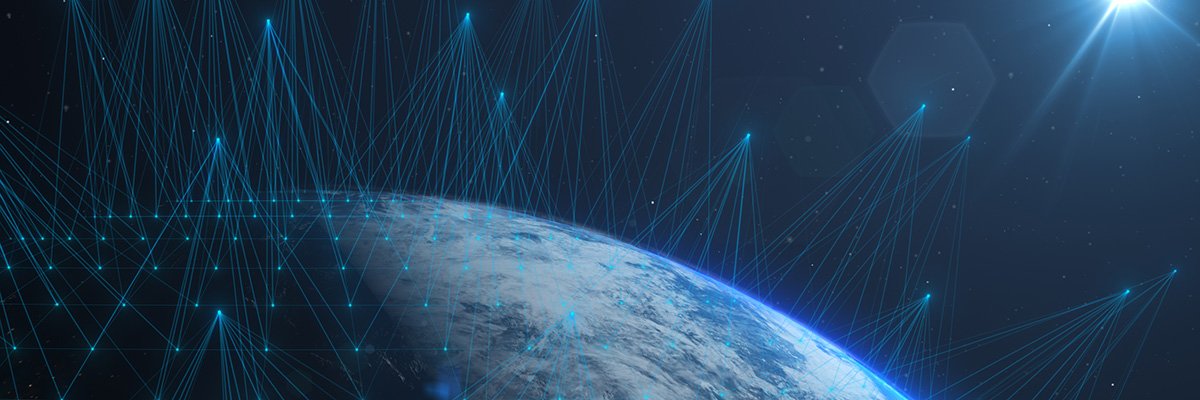
Just weeks after securing €73m in financial support from European Space Agency (ESA) member states to accelerate the development and industrialisation of its HummingSat space programme, aerospace and satellite systems manufacturer Swissto12 has opened a purpose-built assembly facility at its headquarters in Renens, Switzerland, to support the industrial-scale production of the geostationary Earth orbit (GEO) craft.
Founded in 2011, Swissto12 has established contractual relationships with leading global satellite operators and works in partnership with the European Space Agency.
In its core mission, the company said it is enabling a transformational shift in the global satellite communications industry, away from legacy large, purpose-built, expensive and slow-to-deploy services towards smaller, faster, cheaper assets that leverage software-defined, reconfigurable payload architectures and agile, multi-orbit capabilities.
The HummingSat platform is described as a new class of geostationary satellites that are said to be “significantly” smaller and more cost-efficient than conventional GEO craft. HummingSat is seen as offering new economics for the geostationary satellite market, unlocking faster builds, lower costs and ride-share launches. It is also said to offer a telecoms-grade service backbone that plugs directly into the 3GPP non-terrestrial networks standard, designed for mass-market adoption.
Swissto12 also believes its form factor can support cost-effective production and ride-share launch opportunities with its proprietary, space-qualified additive manufacturing technology and advanced radio frequency (RF) systems, further enhancing payload performance, streamlining production, and reducing manufacturing time and cost.
The craft was developed in collaboration with the ESA through its public-private partnership programme. The company’s RF products are said to benefit from unique and patented 3D printing technologies and associated radio frequency product designs that deliver lightweight, compact, high-performing and “competitive” RF functionality. First deliveries are scheduled for 2027.
The new dedicated cleanroom is said to be Switzerland’s first end-to-end manufacturing hub for satellites of this class and is seen by the company as acting as a key impetus to bolster efforts in catering to customers who require quick, reliable deployment.
The additional 1,000m² cleanroom facility complements SWISSto12’s existing 5,500m² development and production facility in Renens, and the move is said to mark a major expansion of the company’s capabilities and establish the first end-to-end, domestic manufacturing hub for satellites of this class.
Commenting on the opening of the new facility, SWISSto12 CEO Emile de Rijk said: “Bringing this integration capability for our advanced satellite payloads and HummingSat in-house is central to our strategy to reduce the time and cost of building our products. This agility brings value to our customers who need cutting-edge products and innovation delivered at speed.”
The ESA funding is part of the HummingSat Advanced Research in Telecommunications Systems (Artes) partnership project, and is designed to see Swissto12 scaling up its manufacturing capacity and accelerating new product innovations. These initiatives also aim to address increasing global demand for cost-effective, agile and sovereign communications in both government and commercial sectors.
Additionally, the investment is targeted at allowing Swissto12 to further develop its phased-array antenna technologies to be used onboard low Earth orbit (LEO), medium Earth orbit (MEO) and GEO satellite payloads, and ground products such as user terminals.
“Tavajoh! Tavajoh! Tavajoh!” a man’s voice announces, before going on to narrate a string of numbers in no apparent order, slowly and rhythmically. After nearly two hours, the calls of “Attention!” in Persian stop, only to resume again hours later.
The broadcast has been playing twice a day on a shortwave frequency since the start of the US-Israel attack on Iran on February 28.
According to Priyom, an organization which tracks and analyses global military and intelligence use of shortwave radio, using established radio-location techniques, the broadcast was first heard as the US bombing of Iran began. It has since played on the 7910 kHz shortwave frequency like clockwork—at 02.00 UTC and again at 18.00 UTC.
Over the weekend, Priyom said it had identified the likely origin of the broadcast. Using multilateration and triangulation techniques, the group traced the signal to a shortwave transmission facility inside a US military base in Böblingen, southwest of Stuttgart, Germany.
The site lies within a restricted training area between Panzer Kaserne and Patch Barracks, with technical operations possibly linked to the US army’s 52nd Strategic Signal Battalion, headquartered nearby.
That identification narrows the field, but it does not reveal who is behind the transmissions or who they are meant for.
The two-hour-long transmission is divided into five to six segments, each lasting up to 20 minutes. Each opens with “Tavajoh!” before shifting into a string of numbers in Persian, sometimes punctuated with an English word or two. Five days into the broadcast, radio jammers were heard attempting to block the frequency. The following day, the transmission shifted to a different frequency—7842 kHz.
Radio communication experts believe the broadcast is likely part of a Cold War–era system known as number stations.
The Return of the Numbers
Number stations are shortwave radio broadcasts that play strings of numbers or codes that sound random—like the one now heard in Iran. “It is an encrypted radio message used by foreign intelligence services, often as part of a complex operation by intelligence agencies and militaries,” says Maris Goldmanis, a Latvian historian and avid numbers stations researcher.
Number stations are most commonly associated with espionage. “For intelligence agencies, it is important to communicate with their spies to gather intelligence,” says John Sipher, a former US intelligence officer who served 28 years in the CIA’s National Clandestine Service. “This is not always possible in person due to political constraints or conflict. This is where number stations come in.”
While the use of number stations can be traced back to the First World War, they gained prominence during the US-Soviet Cold War. As espionage grew more sophisticated, governments used automated voice transmissions of coded numbers to communicate with agents, Goldmanis says. Citing declassified KGB and CIA documents, he adds that number stations were widely used during this period, often as Morse code transmissions and, in many cases, as two-way communications, with agents reporting back using their own shortwave transmitters.
“Nowadays, you have various satellite and encrypted communications technologies,” Sipher says. “But during the Cold War and even before that, governments had to find ways to do this without being noticed, and broadcasting coded messages was one way to communicate with your assets discreetly.”
The apparent randomness of the numbers means they can be understood only with a codebook, Sipher adds. “Nobody can make heads or tails of it or understand what it says unless you have the codebook that can give you hints to decrypt the code,” he says, noting that such systems must be set up and coordinated in advance.
A Signal Without a Sender
While the likely origin of the signal may now be clearer, its purpose and intended recipient remain unknown.
Because the broadcasts are encrypted and designed to be covert, those details may remain unclear for years, Goldmanis says. The structured nature of the transmission—its fixed schedule and consistent use of frequencies—further suggests it is part of a planned operation.
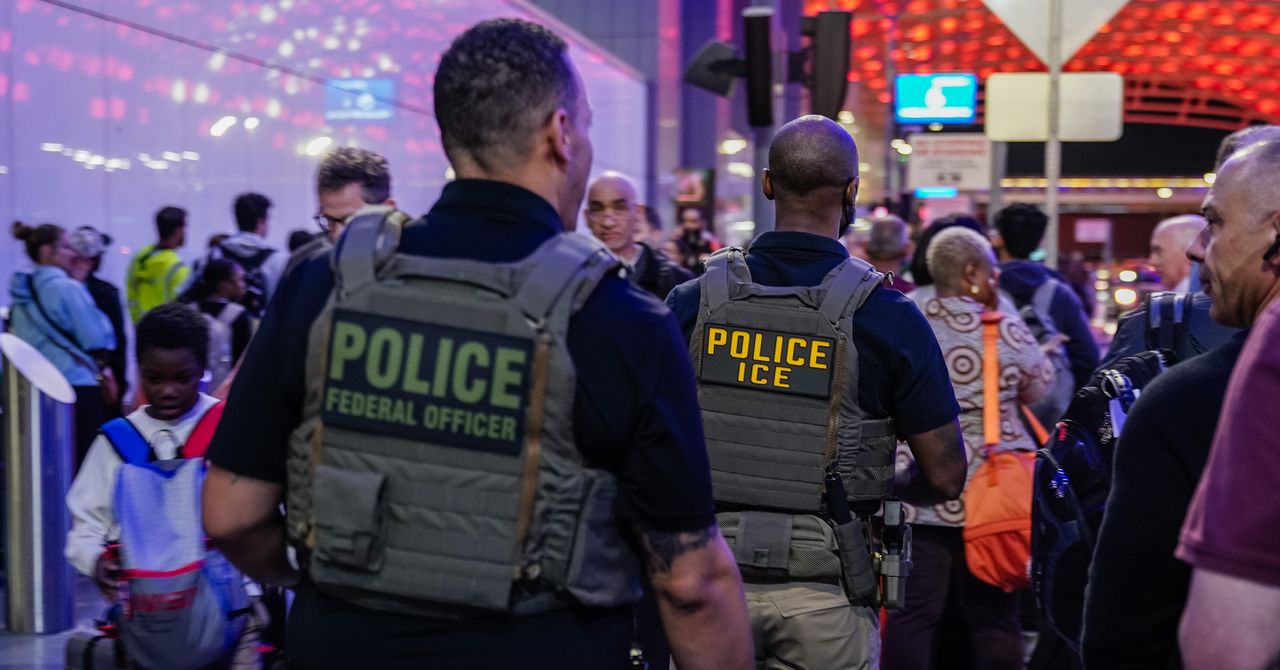
Over the last 24 hours, Immigration and Customs Enforcement (ICE) agents have invaded airports across the United States.
At Atlanta’s Hartsfield-Jackson, the world’s busiest airport, videos and photographs show ICE agents standing next to security screening lines. At Chicago’s O’Hare airport, ICE agents are scattered around check-in counters, according to videos shared online. At Newark Liberty International Airport in New Jersey, ICE officers were seen walking through the main United Airlines terminal, wearing vests that said “ICE.” And at San Francisco International Airport, multiple videos show what appear to be plainclothes law enforcement officers forcibly detaining a young woman as dozens of onlookers watch and film.
According to reporting from The New York Times, ICE is being deployed to 14 airports across the country, including John F. Kennedy airport and LaGuardia airport in New York, as well as airports in Houston, New Orleans, Philadelphia, and Phoenix.
One of the eyewitnesses who captured the incident at San Francisco’s airport tells WIRED she began filming after hearing a “horrible” scream while walking to her gate. The woman, who did not want to be named due to privacy concerns, said it appeared that “two unidentified men” were grabbing “a woman trying to hold onto her child.”
“I ran up and asked who they are with and if they are agents and for proof of who they are,” the witness said. She said they never let her see their badge numbers, and she eventually called the police. “When [the San Francisco Police Department] arrived they surrounded the men detaining the woman and [wouldn’t] speak to anyone in the crowd asking for answers—just stared blankly ahead. SFPD all had visible badge numbers so I asked them why can I see their badge numbers and what agency they are with but not these two unidentified men. They never identified themselves and eventually police pushed the crowds away and I left to catch my flight.”
In other videos of the incident, the officers appear to create a blockade between the individuals arresting the woman and the onlookers. “People around were visibly upset and shaken. Yelling at agents, calling them Nazis,” she said.
“It was absolutely horrifying to witness and I felt sick to my stomach,” the eyewitness told WIRED. “I didn’t sleep last night once I got home.”
A spokesperson for San Francisco International Airport confirmed to NBC San Francisco that federal agents detained a woman at the airport on Sunday, but said it was unrelated to the wider deployment of ICE agents to airports. SFPD did not respond to a request for comment.
The ICE agents are ostensibly at these airports to assist with long security lines caused by the partial government shutdown. Thousands of Transportation Security Administration (TSA) agents have gone without pay since the end of January, and many have stopped showing up to work or quit as a result.
White House border czar Tom Homan said the deployment of ICE to US airports would assist with filling these gaps, though in a Truth Social post on March 21, President Donald Trump said that ICE agents would be doing “security like no one has ever seen before, including the immediate arrest of all Illegal Immigrants who have come into our Country, with heavy emphasis on those from Somalia.” The Trump administration has targeted the Somali American community, particularly in Minnesota, after allegations of fraud in some of the state’s childcare centers led the administration to deploy some 3,000 immigration agents to the state.

The Irish government has released a National Strategy on the Resilience of Critical Entities, a comprehensive framework designed to protect essential public services – including digital and web infrastructure and datacentres – and critical national infrastructure (CNI) from cyber attacks and other disruptions.
Owned by Ireland’s Department of Defence (An Roinn Cosanta) and Office of Emergency Planning, the document sets out an overarching vision and a set of strategic objectives aimed at strengthening resilience across Ireland.
It was devised to comply with the European Union’s (EU’s) Critical Entities Resilience (CER) Directive, which obliges Member States to take specific measures to ensure essential services for economic and social functions are protected. The provisions laid down in CER are to be transferred into national law across the EU by the middle of October 2026.
“A resilient society is essential for our national security, as well as our economic and social well-being,” said Helen McEntee, Ireland’s minister for defence.
“This resilience relies on the continuous availability of a wide range of essential services including the water we drink, the food we eat, the energy that lights and heats our homes, the transport we depend on, and the health services that keep us healthy. Certain entities that provide these services are vital to the functioning of our society and are therefore classified as critical.
“These Critical Entities are significant, and they are increasingly interconnected and interdependent,” she said. “Many of them are provided by private industry in partnership with the State. While the resilience of critical infrastructure has always been part of our emergency strategy in Ireland, we now recognise the need for a more strategic approach to enhance this area.”
At the core of the strategy lie five strategic goals: to enhance the national risk assessment methodology to identify essential services; to embed a governance and coordination framework for critical entity resilience; to drive appropriate improvements in the resilience of critical entities; to enhance the Department of Defence’s strategic oversight of critical infrastructure dependencies across all sectors; and to ensure consistency with cyber security, maintaining an approach to resilience that aligns with Ireland’s national cyber objectives, and its obligations under EU laws such as NIS 2, Dora and so on.
Dublin hopes that besides improving public service resilience based on a better understanding of the risks such bodies face, the framework will also ensure a national and sector-wide perspective on risk, and support critical entities in meeting their obligations.
People across Ireland experienced the devastation of a successful cyber attack on an essential public service in May 2021, when the Health Service Executive (HSE) infamously fell victim to a Conti ransomware attack causing significant disruption.
The incident forced frontline clinical staff to fall back on pen and paper amid cancelled appointments and, significantly, downed Ireland’s Covid-19 testing referral system.
It took months for Ireland’s health system to recover, with millions of Euros spent on response and remediation efforts.
Clarity on CNI is welcome
David Ferbrache, managing director at Beyond Blue, an Edinburgh-based cyber risk and resilience consultancy, said it was encouraging for Ireland to establish a clear plan for CER compliance, and the document demonstrated its commitment to protecting both CNI and citizens. Clarity on intent, he added, would be valuable for the government, regulators and service operators.
“The CER Directive is widely regarded as the sister regulation to NIS2,” he said. “However, it takes a broader, all-hazards approach to resilience, extending beyond cyber threats to also address physical risks and third parties supporting critical industries. This ultimately helps safeguard essential services against outages and disruption, regardless of how an incident occurs or who it is targeted at.
“This is a positive step, particularly as recent disruptions to critical national infrastructure have been varied in cause, spanning malicious action, technology failures and natural hazards.”
Holistic
While the EU’s CER Directive does not apply to the UK, Ferbrache said it raised an important question as to whether the UK should adopt a similar approach reflecting the reality of today’s interconnected world and recognising that disruption takes many forms, not just cyber.
“While the Cyber Security and Resilience Bill (CSRB) is currently progressing through Parliament, it places a strong emphasis on cyber security, but gives less attention to broader resilience concerns,” he said. “These concerns cannot be ignored, protecting the availability of critical infrastructure cannot be achieved by only looking through the cyber lens. A more holistic approach is needed which bridges the cyber security and operational resilience disciplines.
“This all-hazards approach may require broader legislation and alignment of regulatory expectations on operators of essential services and their suppliers,” said Ferbrache. “While it’s unlikely that such provisions will be incorporated into the CSRB at this late stage, the UK government cannot afford to overlook this challenge in future.”


Zinedine Zidane reaches verbal agreement to take France job – sources
A Mysterious Numbers Station Is Broadcasting Through the Iran War

Meghan Markle’s Aussie visit could be a soft launch for ‘As Ever’

-
 Entertainment1 week ago
Iran at war
-

 Sports1 week ago
Japan suffers shocking collapse to Venezuela in World Baseball Classic
-

 Entertainment1 week ago
Strategic oil stocks to be released ‘immediately’ in Asia and Oceania: IEA
-
 Business1 week ago
‘Gruesome’ war bets fuel calls for Kalshi Polymarket crackdown
-
 Business1 week ago
New Income Tax Act 2025 To Take Effect From April 1: 10 Key Changes That Will Affect Your Money
-

 Sports1 week ago
Transfer rumors, news: Real Madrid open to Camavinga exit, as Premier League clubs circle
-

 Sports1 week ago
Chinese Grand Prix LIVE: Latest updates as Antonelli stays in lead, Russell overtakes Hamilton
-

 Sports1 week ago
PCB files complaint over allowing Bangladesh to take review on penultimate ball – SUCH TV