

Fashion
System-wide improvements could boost textile recycling rate: BCG

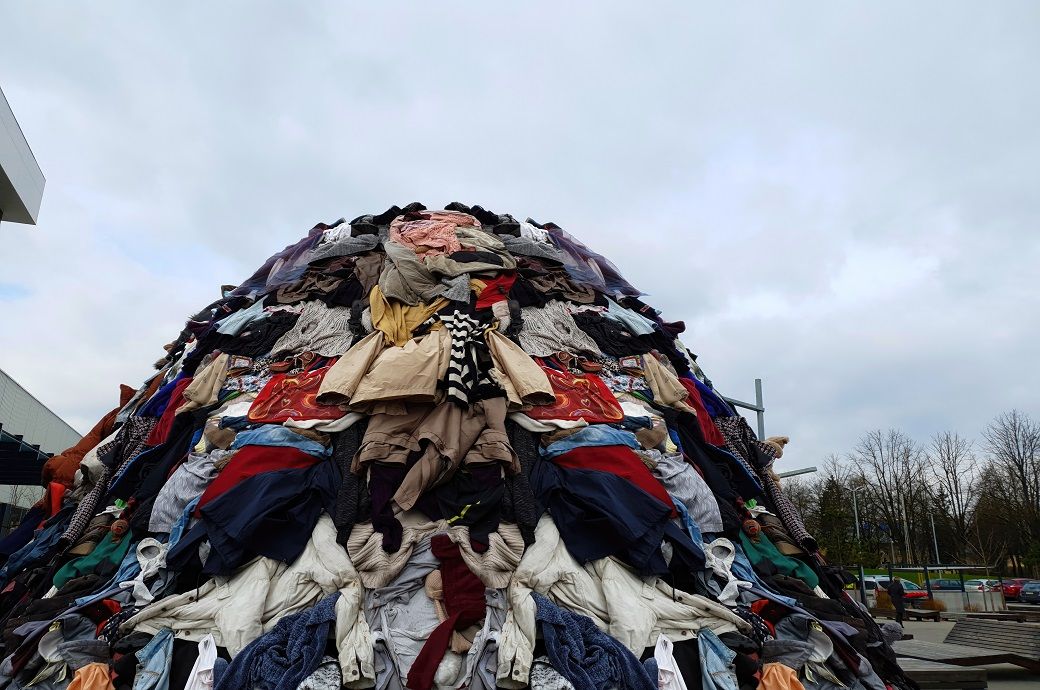
Reaching that level will require industry-wide changes, including expanding efforts to collect discarded textiles, adopting new technologies, increasing operational efficiency and boosting investments, it noted.
It will also require more companies to make and sell products created from recycled materials—and more people to buy them.
System-wide improvements could boost textile recycling rate with a raw material value of more than $50 billion, a Boston Consulting Group commentary said.
Reaching that level will require industry-wide changes, including expanding efforts to collect discarded textiles, adopting new tech, raising operational efficiency, boosting investments and making more companies sell recycled products, it noted.
In 2024, discarded clothing worldwide reached 120 million metric tonnes—a clear indication of how dramatically fashion consumption has changed. As a direct result of these trends, global fibre production has more than doubled since 2000, amplifying both consumption patterns and waste.
The increase in textile waste imposes significant economic and environmental burdens. In 2024, approximately 80 per cent of discarded clothing ended up in landfills or incinerators, while only 12 per cent was reused, and substantially less than 1 per cent was recycled into new textile fibres.
The environmental toll is particularly high, the commentary by Rohan Sajdeh, Catharina Martinez-Pardo, Alexander Meyer zum Felde, Tom Lange, Eleonora Tieri and Elian Evans observed.
Producing textiles accounts for 92 per cent of the fashion industry’s greenhouse gas emissions. Disposal exacerbates such emissions. Open dumping adds another layer of risk, releasing harmful micro-plastics into the environment.
The authors expect demand for recycled textiles to exceed supply by 30 to 40 million metric tonnes by 2030.
Despite the growing momentum for change, the existing textile value chain includes many barriers to recovering and reusing more waste. Three, in particular, pose challenges to meaningful change, the authors said.
First, several factors often make recycled materials less desirable economically and practically than virgin fibres. While enthusiasm for recycled fibers is rising, concerns about quality, availability and integration into established supply chains can make them less appealing.
Moreover, the cost disparity is significant: recycled polyester can be more than twice as expensive as virgin polyester, and recycled cotton usually commands a higher price as well.
Second, today’s textile waste management infrastructure falls short. Current textile recycling systems simply weren’t designed for the immense volumes the world generates. Most collection channels primarily support resale markets, both charitable and commercial, rather than recycling initiatives.
Consequently, sorting processes rely heavily on manual labour that is optimised for resale rather than recycling. These manual processes cannot efficiently categorize textiles by recyclability, fabric composition, and colour, or effectively remove disruptors like buttons and zippers. Consumer confusion further complicates this already strained system.
Third, complex fabrics require innovating beyond current recycling capabilities. Most modern fabrics are made from blends of different fibre types. However, most existing industrial recycling solutions, which are primarily mechanical, can handle only single-material textiles.
This mismatch between waste and technology has led to an urgent need for innovative solutions that can handle a broad range of modern textile waste and deliver products that are competitive in cost and quality, the authors wrote. Such techniques have yet to reach the scale necessary to tackle current waste volumes.
To build a profitable system for all stakeholders, the industry should focus on five key actions designed to work across all of the barriers mentioned above: promote demand for textiles with recycled fibres; collect more waste; modernise sorting; scale effective recycling solutions; and invest in innovation, they said.
Success will also depend on creating meaningful economic incentives for businesses and consumers, and harnessing synergies across the value chain, the authors added.
Fibre2Fashion News Desk (DS)











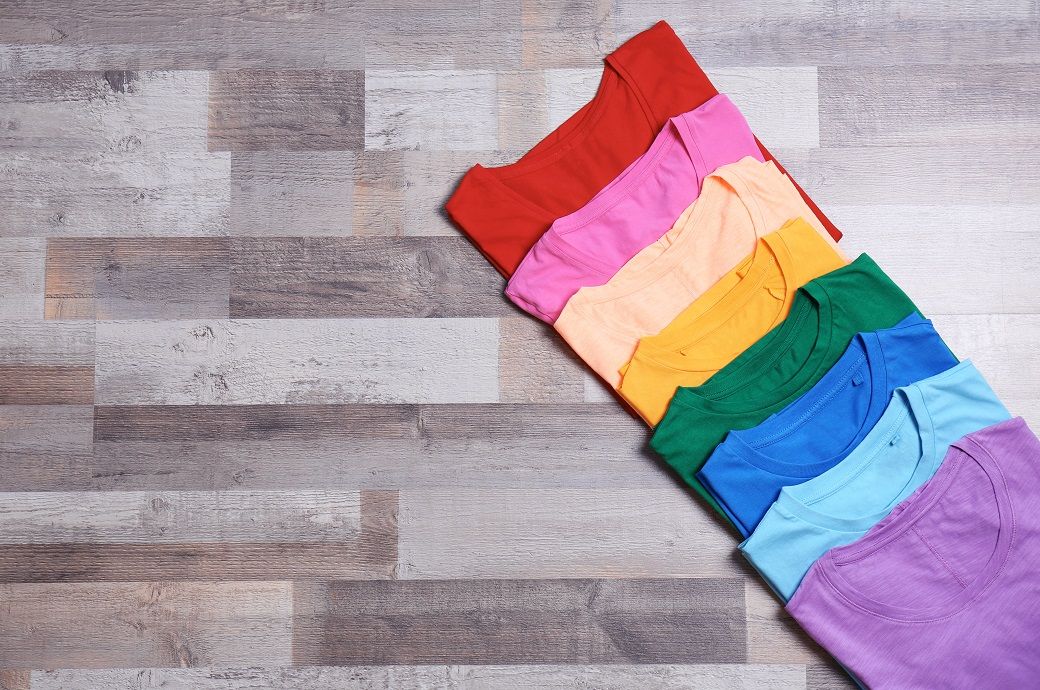
Imports of knitted apparel and clothing accessories (Chapter **) were valued at $***.*** million in January ****, slightly lower than $***.*** million a year earlier. The imports of non-knitted apparel and clothing accessories (Chapter **) totalled $***.*** million, down *.** per cent from $***.*** million in January ****.
South Korea typically exports fabrics and textile materials while importing readymade garments. During January ****, exports of man-made filaments, strips and similar materials (Chapter **) were valued at $***.*** million, down *.** per cent from $***.*** million a year earlier. Exports of knitted or crocheted fabrics (Chapter **) reached $***.*** million, easing *.** per cent from $***.*** million.

The additional week in the fourth quarter of fiscal 2025, compared to the fourth quarter of fiscal 2024, contributed approximately $37.0 million in consolidated net sales. On a comparable week basis, net sales grew 3.4 per cent. On a reported basis including the extra week in fiscal 2025, the US retail, international, and US wholesale segments grew 9.4 per cent, 10.2 per cent, and 3.4 per cent, respectively. US retail comparable net sales increased 4.7 per cent. Changes in foreign currency exchange rates used for translation in the fourth quarter of fiscal 2025, as compared to the fourth quarter of fiscal 2024, had a favourable effect on consolidated net sales of approximately $3.0 million, or 0.3 per cent.
Carter’s reported Q4 fiscal 2025 sales of $925.5 million, up 7.6 per cent, boosted by a $37 million extra week; on a comparable basis, sales rose 3.4 per cent.
Growth spanned US retail, international, and wholesale segments.
Operating income edged up to $84.7 million, though margin dipped to 9.2 per cent.
Full-year sales increased 1.9 per cent to $2.9 billion.
Operating income increased $1.5 million, or 1.8 per cent, to $84.7 million, compared to $83.2 million in the fourth quarter of fiscal 2024. Operating margin decreased 50 basis points to 9.2 per cent, reflecting incremental tariff costs, investments in product mix and make, and higher performance-based compensation provisions, partially offset by higher pricing, lower corporate expenses, and an asset impairment charge in the prior year period.
“Carter’s delivered improved fourth quarter results with each of our business segments posting sales growth over last year. We see momentum building behind our products and demand creation initiatives, which have driven an improvement in the rate of traffic, new customer acquisition, higher realised pricing, and increased penetration of the best portions of our product assortments. All of this gives us confidence that our strategies are gaining traction,” said Douglas C Palladini, chief executive officer & president.
“2025 was a year of meaningful progress in stabilising our business while responding to significant new tariffs. We took actions to right-size our cost structure and we launched several important initiatives to improve the productivity of our merchandise assortments and store fleet. We also strengthened our balance sheet and liquidity with the successful refinancing of our long-term debt and a new asset-based revolving credit facility in place,” Palladini added.
Consolidated net sales increased $54.3 million, or 1.9 per cent, to $2.90 billion, compared to $2.84 billion in fiscal 2024, reflecting growth in our US retail and international segments that were partially offset by a decline in the US wholesale segment. The additional week in fiscal 2025, compared to fiscal 2024, contributed approximately $37.0 million in consolidated net sales. On a comparable week basis, net sales grew 0.6 per cent. On a reported basis including the extra week in fiscal 2025, the company’s US retail and international segments grew 3.5 per cent, and 6.3 per cent, respectively, while US wholesale net sales declined 2.0 per cent. US retail comparable net sales increased 1.4 per cent. Changes in foreign currency exchange rates used for translation in fiscal 2025, as compared to fiscal 2024, had an unfavourable effect on consolidated net sales of approximately $6.7 million, or 0.2 per cent, the company said in a press release.
“While we are encouraged by our progress, much work remains. Excluding the recent tariff developments, for 2026 we are planning growth in net sales as we build on the momentum of our product and demand creation strategies. We are also planning growth in operating income. We will remain focused and disciplined in our investments and overall spending and expect solid contributions from productivity initiatives. We believe the recent news regarding tariffs will be net positive for Carter’s, but it will take some time to fully understand the implications for our business and the broader marketplace. Our talented and dedicated teams and I are committed to returning Carter’s to long-term sustainable, profitable growth over time,” Palladini concluded.
Fibre2Fashion News Desk (RR)

The model will be fuelled by both domestic and foreign direct investment. The country’s tax-to-GDP ratio currently sits at the bottom level globally.
Rashed Al Mahmud Titumir, Prime Minister’s Adviser Finance and Planning, recently outlined a comprehensive road map to overhaul the country’s economic framework, setting a target to raise the tax-GDP ratio to 15 per cent by 2035, while taking the nation forward on a path of investment-led growth.
A key pillar of this transition is a significant increase in internal resource mobilisation, he said.
A key pillar of this transition is a significant increase in internal resource mobilisation, he said.
“The previous consumption-led growth model was unsustainable and had left the country burdened by a mountain of debt accumulated particularly between 2009 and 2024,” he told a recent roundtable on the government’s priorities in the short-to-medium term.
The roundtable was organised by the Centre for Policy Dialogue (CPD) and The Daily Star newspaper.
There is a need for a tax culture rooted in investment, production and employment, he was cited as saying by domestic media reports.
He identified several systemic maladies in the current revenue structure that require urgent reform.
The government intends to move from greenfield incentives (based on identity and influence) to performance-based subsidies (ex-post subsidies), he said, adding that this model, which proved successful in the garments sector, will reward actual results rather than potential.
Fibre2Fashion News Desk (DS)


Holly Willoughby spotted with Nicole Appleton as she prepares for Youtube comeback

Want To Buy A House In Karnataka? Know About The ‘Namma Mane’ Scheme With Affordable Housing & Subsidies

South Korea’s apparel imports slightly lower at $1 billion in January
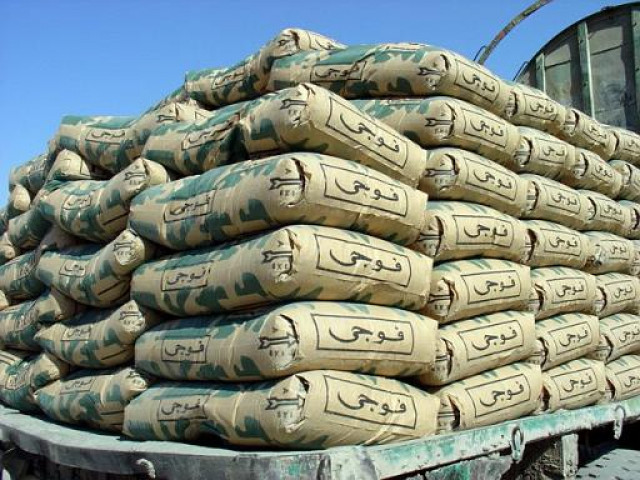
Attock Cement’s acquisition approved | The Express Tribune

What are Iran’s ballistic missile capabilities?

India Us Trade Deal: Fresh look at India-US trade deal? May be ‘rebalanced’ if circumstances change, says Piyush Goyal – The Times of India

-
Business1 week ago
Attock Cement’s acquisition approved | The Express Tribune
-

 Fashion1 week ago
Policy easing drives Argentina’s garment import surge in 2025
-
 Politics1 week ago
What are Iran’s ballistic missile capabilities?
-
Business1 week ago
India Us Trade Deal: Fresh look at India-US trade deal? May be ‘rebalanced’ if circumstances change, says Piyush Goyal – The Times of India
-

 Sports1 week ago
LPGA legend shares her feelings about US women’s Olympic wins: ‘Gets me really emotional’
-

 Fashion1 week ago
South Korea’s Misto Holdings completes planned leadership transition
-

 Entertainment1 week ago
Bobby J. Brown, “The Wire” and “Law & Order: SUV” actor, dies of smoke inhalation after reported fire
-

 Fashion1 week ago
Texwin Spinning showcasing premium cotton yarn range at VIATT 2026