

Politics
Taliban internet cut sparks Afghanistan telecoms blackout

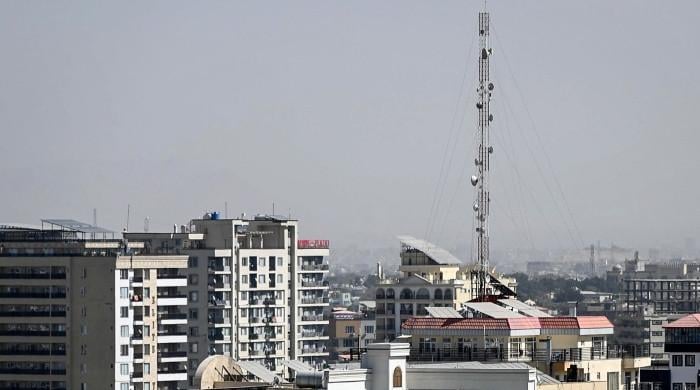
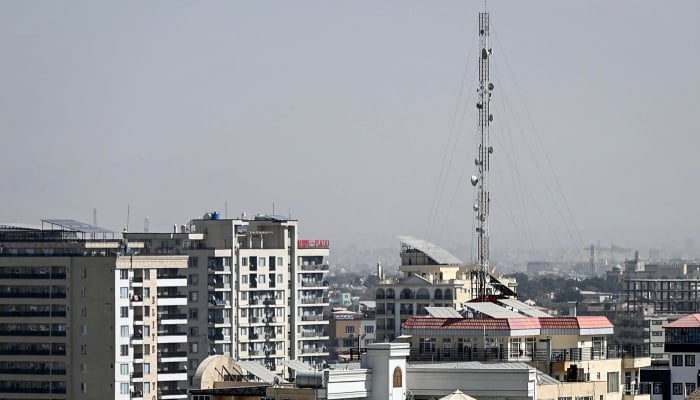
- All flights cancelled at Kabul airport on Tuesday.
- Online businesses and banking systems frozen.
- UN operations fall back to radio communications.
KABUL: The United Nations called on Afghanistan’s Taliban authorities Monday to immediately restore internet and telecommunications in the country, 24 hours after a nationwide blackout was imposed.
The government began shutting down high-speed internet connections to some provinces earlier this month to prevent “vice”, on the orders of its leader Hibatullah Akhundzada.
Mobile phone signal and internet service were weakened on Monday night until connectivity was less than 1% of ordinary levels.
Afghans are unable to contact each other, online businesses and the banking systems have frozen, and the diaspora abroad cannot send crucial remittances to their families.
All flights were cancelled at Kabul airport on Tuesday, AFP journalists saw.
“The cut in access has left Afghanistan almost completely cut off from the outside world, and risks inflicting significant harm on the Afghan people, including by threatening economic stability and exacerbating one of the world’s worst humanitarian crises,” the UN Assistance Mission in Afghanistan (UNAMA) said in a statement.
“The current blackout also constitutes a further restriction on access to information and freedom of expression in Afghanistan,” it added.
It is the first time since the Taliban government won its insurgency in 2021 that communications have been shut down in the country.
“We are blind without phones and the internet,” said 42-year-old shopkeeper Najibullah in Kabul.
“All our business relies on mobiles. The deliveries are with mobiles. It’s like a holiday, everyone is at home. The market is totally frozen.”
The telecommunications ministry refused to let journalists enter the building in Kabul on Tuesday.
Minutes before the shutdown on Monday evening, a government official warned AFP that the fibre optic network would be cut, and affect mobile phone services.
“Eight to nine thousand telecommunications pillars” would be shut down, he said, adding that the blackout would last “until further notice”.
“There isn’t any other way or system to communicate […] the banking sector, customs, everything across the country will be affected,” said the official, who asked not to be named.
Radio communications
Diplomatic sources told AFP on Tuesday that mobile networks were mostly shut down.
A UN source, meanwhile, said “operations are severely impacted, falling back to radio communications and limited satellite links”.
Telephone services are often routed over the internet, sharing the same fibre optic lines, especially in countries with limited telecoms infrastructure.
Over the past weeks, internet connections have been extremely slow or intermittent.
On September 16, Balkh provincial spokesman Attaullah Zaid said the ban had come from the Taliban leader’s orders.
“This measure was taken to prevent vice, and alternative options will be put in place across the country to meet connectivity needs,” he wrote on social media.
At the time, AFP correspondents reported the same restrictions in the northern provinces of Badakhshan and Takhar, as well as in Kandahar, Helmand, Nangarhar, and Uruzgan in the south.
The Taliban leader reportedly ignored warnings from some officials this month about the economic fallout of cutting the internet and ordered authorities to press ahead with a nationwide ban.
Netblocks, a watchdog organisation that monitors cybersecurity and internet governance, said the blackout “appears consistent with the intentional disconnection of service”.
On Tuesday, it said connectivity had flatlined below 1%, with no restoration of service observed.
In 2024, Kabul had touted the 9,350-kilometre (5,800-mile) fibre optic network — largely built by former US-backed governments — as a “priority” to bring the country closer to the rest of the world and lift it out of poverty.
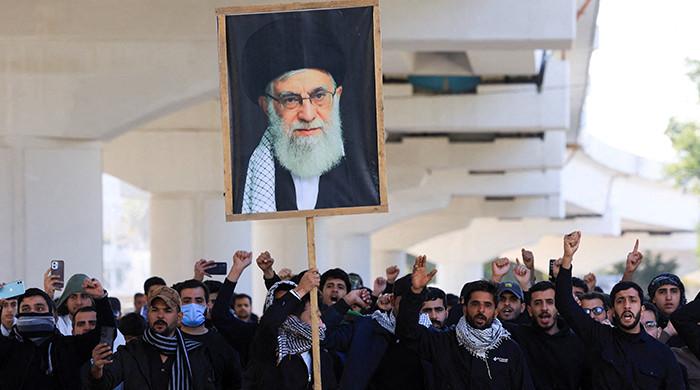
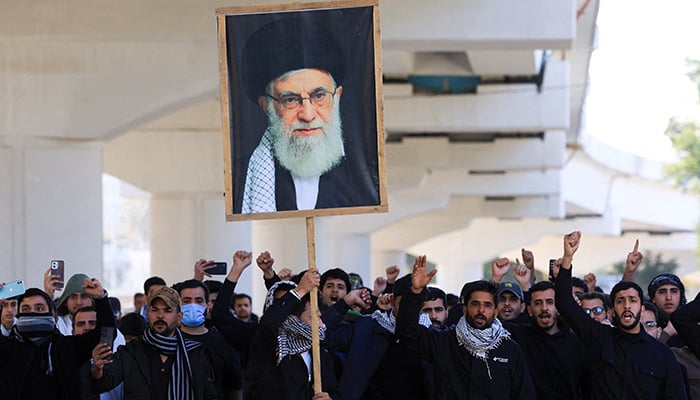
A number of Iranian senior leaders, including Supreme Leader Ayatollah Ali Khamenei, have embraced martyrdom in the “unprovoked and unwarranted” airstrikes by Israel and the United States.
As crowds gathered in Tehran, explosions rang out, and the Israeli military announced that it was again striking targets in the heart of the city — as more blasts were heard in Jerusalem, Riyadh, Dubai, Doha and Manama.
Iran’s President Masoud Pezeshkian declared Khamenei’s assassination a “declaration of war against Muslims” and warned: “Iran considers it its legitimate duty and right to avenge the perpetrators and masterminds of this historic crime.”
Iranian state media have confirmed the killing of several senior figures:
1. Ayatollah Ali Khamenei, supreme leader of Iran
2. Ali Shamkhani, representative of the Supreme Leader in the Supreme Defence Council
3. General Abdolrahim Mousavi, Iran’s Armed Forces chief of staff
4. Major General Mohammad Pakpour, commander-in-chief of the Islamic Revolution Guards Corps (IRGC)
5. Aziz Nasirzadeh, Minister of Defence
6. Gholamreza Rezaian, police intelligence chief of Iran
Separately, the daughter, son-in-law, and granddaughter of Ali Khamenei also embraced martyrdom in the US and Israeli airstrikes.
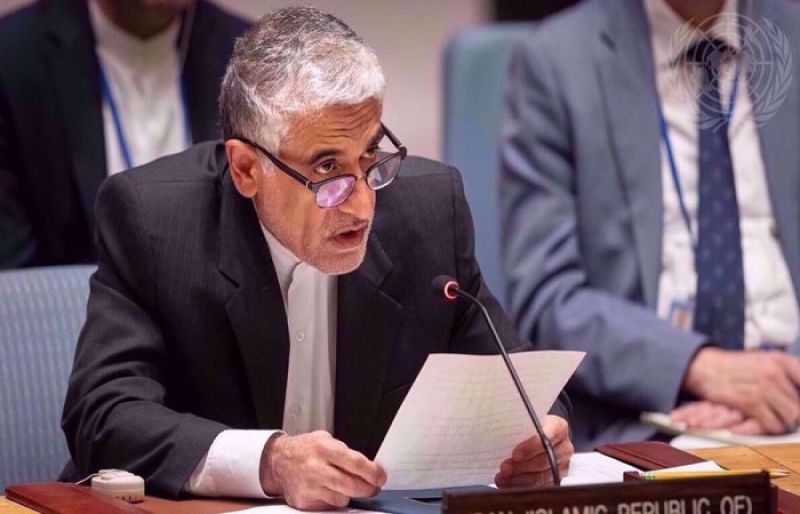

Iran’s permanent ambassador to the United Nations has vehemently denounced the fresh and unprovoked Israeli-American war on the Islamic Republic, asserting that the country will continue to act in self-defense until the end of the unlawful aggression.
Amir-Saeid Iravani made the remarks at a UN Security Council meeting on Sunday regarding the joint strikes that were launched against the country earlier on Saturday.
The nation, he stated, was facing armed aggression and a war against international law, which could not be justified by any excuse.
Referring to Iran’s decisive and ongoing retaliatory strikes, under the codename Operation True Promise 4, the envoy said it serves as a legitimate act of self-defense.
The Islamic Republic would continue to exercise its legitimate right to self-defense until the aggression ends, Iravani told the world body.
The Islamic Revolution Guards Corps (IRGC) has so far launched at least five waves of counterstrikes against numerous Israeli and American targets in response to the aggression.
IRGC has pledged to sustain the counterstrikes until the enemies’ “complete defeat,” while noting that the reprisal exceeds by far the proportions of its previous round of retaliations against Tel Aviv’s and Washington’s imposed war on the nation last June.
Addressing the same meeting, Russia’s UN envoy said Iran had been once again “stabbed in the back,” referring to the country’s coming under fresh aggression, while engaging in indirect talks with the United States aimed at resolving standing issues.
Vasily Nebenzya condemned an attack on a school in Iran that took place as part of the renewed aggression, claiming the lives of more than 100 people, calling it a sign of “unjustified aggression” by the Israeli regime and the United States against a UN member state.
He described the atrocities as “unjustifiable” and a “betrayal of diplomacy.”
- PM Modi describes accident as “deeply distressing”.
- Maharashtra CM terms it “extremely unfortunate.”
- Industrial accidents are common in India.
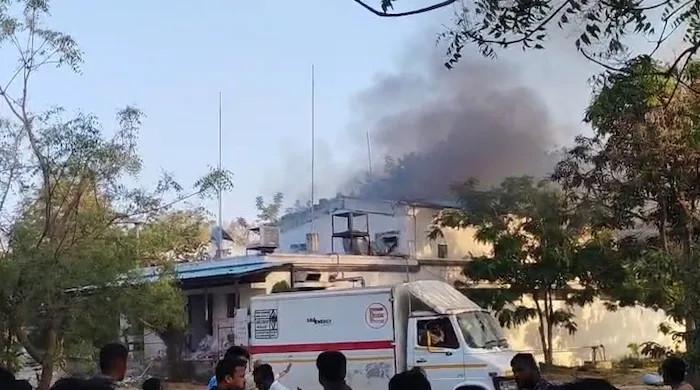
A blast at an explosives factory killed at least 17 people and injured 18 others on Sunday, officials in the western Indian state of Maharashtra said.
Prime Minister Narendra Modi said the accident was “deeply distressing” and wished a speedy recovery to the survivors.
Maharashtra state chief minister Devendra Fadnavis called the incident “extremely unfortunate and tragic” in a post on X.
The accident happened in Nagpur, about 800 kilometres (500 miles) from state capital Mumbai.
“Rescue operations have been accelerated, and so far, 17 people have lost their lives,” Fadnavis said, adding 18 others were injured.
An investigation has been ordered into the incident.
On Saturday, 21 people were killed in an explosion at a firecracker factory in the southeastern Indian state of Andhra Pradesh.
Industrial accidents are common in India, often due to disregard for safety requirements and lax enforcement.
Last year, a firework factory explosion in western India killed 21 people.


Anna Cathcart teases big changes in ‘XO, Kitty’ season 3

Transfer rumors, news: MLS an option for Liverpool’s Salah

Make the Most of Chrome’s Toolbar by Customizing It to Your Liking

-
 Business1 week ago
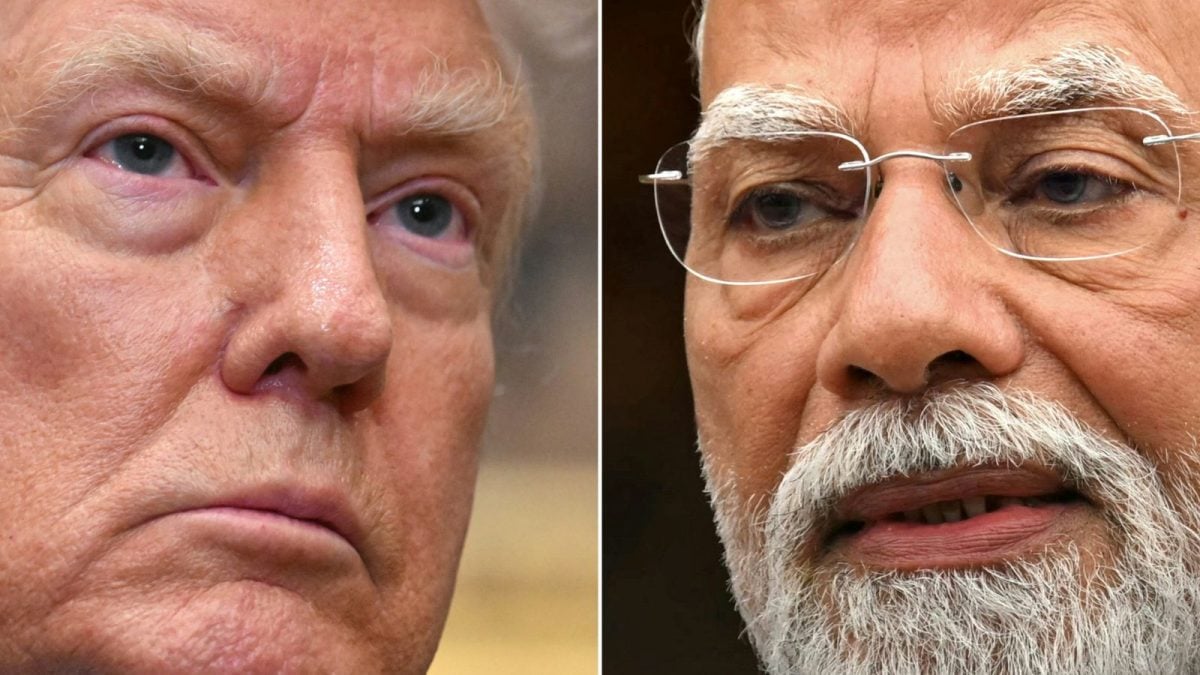
US Top Court Blocks Trump’s Tariff Orders: Does It Mean Zero Duties For Indian Goods?
-

 Fashion1 week ago
ICE cotton ticks higher on crude oil rally
-

 Entertainment1 week ago
The White Lotus” creator Mike White reflects on his time on “Survivor
-
 Politics1 week ago
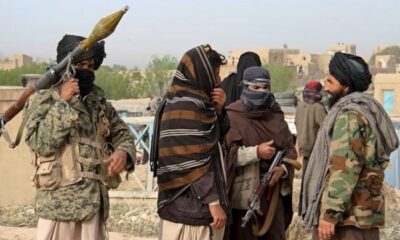
Pakistan carries out precision strikes on seven militant hideouts in Afghanistan
-
 Business1 week ago
Eye-popping rise in one year: Betting on just gold and silver for long-term wealth creation? Think again! – The Times of India
-

 Sports1 week ago
Brett Favre blasts NFL for no longer appealing to ‘true’ fans: ‘There’s been a slight shift’
-

 Entertainment1 week ago
Viral monkey Punch makes IKEA toy global sensation: Here’s what it costs
-

 Sports1 week ago
Kansas’ Darryn Peterson misses most of 2nd half with cramping