

Entertainment
Talking minerals and megawatts

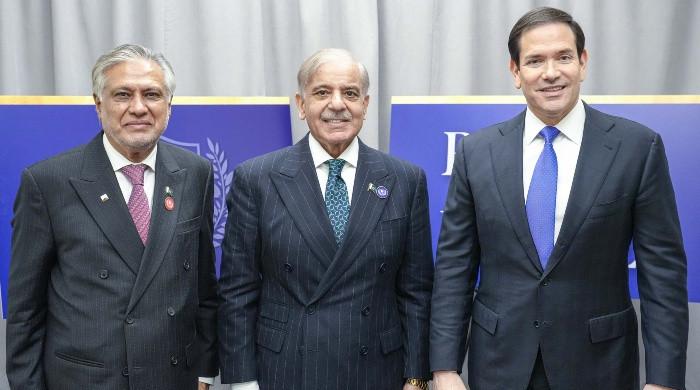
When Prime Minister Shehbaz Sharif met US Secretary of State Marco Rubio in Washington this week, the official language was measured and diplomatic. Yet the themes reportedly discussed – critical minerals, energy and counterterrorism – revealed far more than routine diplomacy.
They pointed to a familiar pattern in Pakistan’s external engagements: moments when global strategic priorities converge with Islamabad’s economic needs, creating an opening that is at once promising and risky. The meeting took place after Pakistan’s participation in the inaugural Critical Minerals Ministerial in Washington earlier this month, an event bringing together dozens of nations to discuss the future of resources that now underpin technology, clean energy transitions and defence industries. For Pakistan, this was an attempt to reposition itself in a rapidly shifting global economy that is increasingly driven by supply chains and strategic commodities.
Critical minerals have become the oil of the 21st century. Copper, lithium, rare earth elements and related resources are essential for electric vehicles, renewable energy technologies, batteries, advanced electronics and even military systems. Countries across the world are scrambling to secure access to these inputs as they seek technological and economic resilience. Pakistan’s decision to participate in the ministerial reflected recognition that its largely untapped mineral reserves might offer a rare opportunity to diversify its economic base. Officials highlighted reserves of copper, gold and rare earth elements and signalled openness to American investment alongside engagement with other partners, including China.
The message was clear: Pakistan wishes to be seen as a credible destination for mineral development rather than a peripheral observer in a new resource race. Yet optimism over minerals should be tempered by caution. Pakistanis know from experience that natural wealth does not automatically translate into public prosperity. Indeed, one of the most important issues raised implicitly by the Washington discussions concerns transparency. The details of extraction remain largely outside public scrutiny.
Past resource deals have often been announced with grand promises but limited disclosure, leaving citizens uncertain about the long-term implications. In countries where extractive industries have succeeded in fostering development, openness about contracts, royalties and environmental impact has been central. Where secrecy prevailed, resource wealth frequently deepened inequality rather than reducing it. Pakistan’s own history provides a cautionary example. The natural gas reserves of Sui in Balochistan were extracted for decades and used across the country, powering industries and homes far beyond the province where the resource originated. Yet Balochistan itself remained economically underdeveloped.
The lesson is not that natural resources should remain untouched, but that extraction without inclusive planning creates long-term political and social consequences. As Pakistan now seeks to market its mineral potential to foreign investors, the question of how benefits are shared will determine whether these projects become symbols of opportunity or sources of renewed tension. The mineral conversation also intersects with broader economic realities.
Pakistan enters this new phase amid rising poverty and economic stress. Recent estimates suggest that nearly 28.8% of the population was living below the poverty line in 2024–25, up from around 21.9% six years earlier. Inflation, repeated IMF stabilisation programmes, floods, slow growth and declining purchasing power have eroded living standards for most households. Against this backdrop, announcements about billions of dollars in mineral investments can appear disconnected from daily life unless they are clearly linked to employment, education and long-term development.
Energy was the second major issue discussed with Rubio – and here too Pakistan stands at a crossroads. The country’s energy landscape has changed dramatically over the past decade. Large-scale projects, many built with Chinese assistance under the China-Pakistan Economic Corridor, helped reduce the crippling electricity shortages that once defined daily existence. Yet these gains came with financial obligations that now contribute to high tariffs and a growing circular debt problem. The result is a system in which capacity exists, but affordability has become the primary challenge. Consumers face rising bills while policymakers struggle to balance investor commitments with public pressure.
At the same time, Pakistan has witnessed a remarkable grassroots shift towards solar power. Households and businesses increasingly install rooftop solar panels, driven by economic necessity rather than government planning. This quiet energy revolution reflects both entrepreneurial adaptation and public frustration with conventional electricity pricing. Ironically, while citizens have embraced solar energy as a means of survival, regulatory debates and policy changes have discouraged its rapid growth. Concerns about net metering, tariff adjustments and new conditions have fuelled perceptions that decentralised energy is being constrained rather than supported. The contradiction is striking: while officials discuss energy cooperation abroad, domestic policy is undermining one of the most promising local solutions to the energy crisis.
If energy cooperation with the US is to produce lasting benefits, it should move beyond traditional project financing and focus on structural reform. Grid modernisation, transparent pricing, support for renewable innovation and long-term planning that reduces dependence on imported fuels are essential. Energy policy cannot continue oscillating between expensive mega-projects and short-term fixes. Pakistan needs a system that rewards efficiency, encourages innovation and protects consumers from perpetual instability. External partnerships can help, but only if domestic governance aligns with these goals.
The third pillar of the Washington discussions, counterterrorism, reflects an older dynamic in US-Pakistan relations. For more than four decades, security cooperation has shaped the bilateral relationship, from the Afghan jihad of the 1980s to the post-9/11 era. The US State Department statement referenced condolences for recent attacks in Balochistan and Islamabad and reaffirmed cooperation against terrorism. Such language is familiar; indeed, counterterrorism has often defined how Pakistan is viewed internationally. Yet many Pakistanis have grown weary of a narrative that repeatedly casts the country primarily as a security partner rather than an economic or technological actor. There is a risk that the new mineral partnership could become entangled with this old security framework.
Moving forward, the challenge is to ensure that security cooperation does not overshadow broader goals of economic stability, institutional reform and social progress. Counterterrorism may remain necessary, but it should no longer dominate the entire engagement narrative. Diplomatically, Islamabad appears to be pursuing a balancing strategy. Pakistan has invited both the US and China to its upcoming Minerals Investment Forum in Islamabad, signalling an intention to avoid choosing sides in major-power competition.
This pragmatic approach reflects geopolitical realities. Minerals have become a global arena of competition, and countries rich in resources often find themselves under pressure from rival powers. The best outcome for Pakistan would be to diversify partnerships while maintaining consistent regulatory standards that apply equally to all investors. Such consistency would reduce suspicion and strengthen credibility. However, diversification alone is not sufficient. The real test lies in governance at home. Transparency must become more than a rhetorical commitment. Contracts should be publicly accessible; environmental and social impact assessments must be independently reviewed; local communities should have a voice in decision-making.
Sustainable development means ensuring that resources are not sacrificed for short-term financial relief. Mining projects have long timelines and the consequences of poor decisions today can last generations. The desire to attract foreign investment should not lead to agreements that undervalue national assets or ignore environmental responsibilities. Sustainable development also requires thinking beyond extraction. Countries that have successfully leveraged natural resources have invested heavily in human capital, using resource revenues to diversify their economies. Pakistan’s history suggests that relying on a single sector, whether textiles, remittances or security-related aid, leaves the economy vulnerable.
Minerals could become an important component of growth, but only if they help finance a broader transformation rather than becoming another isolated revenue stream. The poverty figures highlight the urgency of getting this right. When nearly one-third of the population struggles to meet basic needs, policy decisions about resources and energy take on moral as well as economic significance. Citizens are unlikely to embrace new mining projects if they perceive them as benefiting distant elites while local conditions remain unchanged. Economic diplomacy abroad must therefore be matched by accountability and inclusion at home.
The writer is dean of the faculty of liberal arts at a private university in Karachi. He tweets/posts @NaazirMahmood and can be reached at: [email protected]
Disclaimer: The viewpoints expressed in this piece are the writer’s own and don’t necessarily reflect Geo.tv’s editorial policy.
Originally published in The News

Sean Diddy Combs filed a new appeal in the court for his immediate release with a new argument against his allegedly unfair trial.
The 56-year-old disgraced music mogul presented the argument through his legal team Alexandra Shapiro and Nicole Westmoreland in New York on Thursday, April 9.
They claimed that the Bad Boy Records founder ought to be freed under the First Amendment, according to the details obtained by Page Six.
Shapiro and Westmoreland argued that Diddy was wrongfully convicted under the Mann Act, while he was involved in the creation of independent adult tapes, which is legal under US laws for freedom of speech.
The Last Night rapper’s legal team claimed that the Judge Arun Subramanian who was in-charge of the case, used the wrong allegations against Combs to sentence him strongly.
“We made it abundantly clear. The District Court should not consider the acquitted conduct,” Shapiro said, adding that Combs’ sentence is the “highest sentence ever imposed on a Mann Act defendant under the same-based defence level.”
The attorneys demanded immediate acquittal and release of the music mogul or at least his freedom and resentencing to lesser time.
However, Assistant US Attorney Christy Slavik called the whole argument “meritless” marking the distinction between Diddy and adult filmmakers.
He also doubled down on Judge Subramanian’s “correctly applied” ruling given the “aggravated manner in which [Combs] committed his Mann Act offenses.”
Combs was was convicted of transportation for prostitution in July 2025 after his arrest in September 2024.

As the Artemis II mission crew heads back toward Earth following a history-making trip around the moon this week, NASA dropped the astronauts‘ highly anticipated morning playlist.
“You asked for it. Here it is,” NASA wrote Wednesday on social media, sharing the list via Spotify. “Each track was selected by the Moon crew, continuing a tradition that started more than 50 years ago. Stay tuned to find out which songs they’ll choose next.”
The list includes:
- “Sleepyhead” by Young & Sick
- “Green Light (feat. André 3000)” by John Legend and André 3000
- “In a Daydream” by Freddy Jones Band
- “Pink Pony Club” by Chappell Roan
- “Working Class Heroes (Work)” by CeeLo Green
- “Good Morning” by Mandisa and TobyMac
- “Tokyo Drifting” by Glass Animals and Denzel Curry
- “Under Pressure” by Queen and David Bowie
- “Lonesome Drifter” by Charley Crockett
Artemis II commander Reid Wiseman, Victor Glover, Christina Koch and Canadian astronaut Jeremy Hansen were launched into space on April 1 for their 10-day moon mission. Earlier this week, they completed a lunar flyby, becoming the first astronauts to loop around the moon in more than half a century. The crew captured stunning photos of Earth, the far side of the moon and an eclipse in space.
NASA
The astronauts are the first humans to have seen with their own eyes large swaths of the far side of the moon in daylight, and they traveled farther from Earth than any humans in history, reaching a maximum distance from Earth of 252,756 miles.
The crew has woken up to music each day — “Under Pressure” played Wednesday and “Lonesome Drifter” on Thursday — which is a tradition held over from previous Apollo missions.
Why does NASA use music for wake-up calls?
In 2015, Colin Fries of the NASA History Division compiled a chronology of wake-up calls.
“There have always been inquiries about flown items and mission events as we all know, and those about wakeup calls and music played in space encompassed a steady stream (no pun intended)!” he wrote.
In his chronology, Fries referenced a letter from Lynn W. Heninger, then NASA’s acting assistant administrator for congressional relations, to a lawmaker in 1990 in which Heninger wrote: “Use of music to awaken astronauts on space missions dates back at least to the Apollo Program, when astronauts returning from the Moon were serenaded by their colleagues in mission control with lyrics from popular songs that seemed appropriate to the occasion.”
“The common element of all these selections is that they promote a sense of camaraderie and esprit de corps among the astronauts and ground support personnel. That, in fact, is the sole reason for having wake-up music; and it is the reason that NASA management has neither attempted to dictate its content nor allowed outside interests to influence the process,” Heninger wrote to Illinois Rep. Robert H. Michel.
What are past crews’ wake-up songs?
The Apollo 10 mission crew’s wake-up songs in 1969 included “The Best Is Yet To Come” by Tony Bennett and “It’s Nice to Go Trav’ling” by Frank Sinatra, and “Come Fly With Me” when Apollo 10 woke up Mission Control.
The Apollo 15 mission in 1971 had a sense of humor, selecting the theme song from “2001: A Space Odyssey.”
What song will the Artemis II crew wake up to on their final day in space?
NASA hasn’t said just yet, but in the past, several crews have woken up on their final day in space to Dean Martin’s popular song “Going Back to Houston.”
The Artemis II crew’s final day in space is Friday, when the Orion capsule is expected to splash down off the California coast near San Diego.
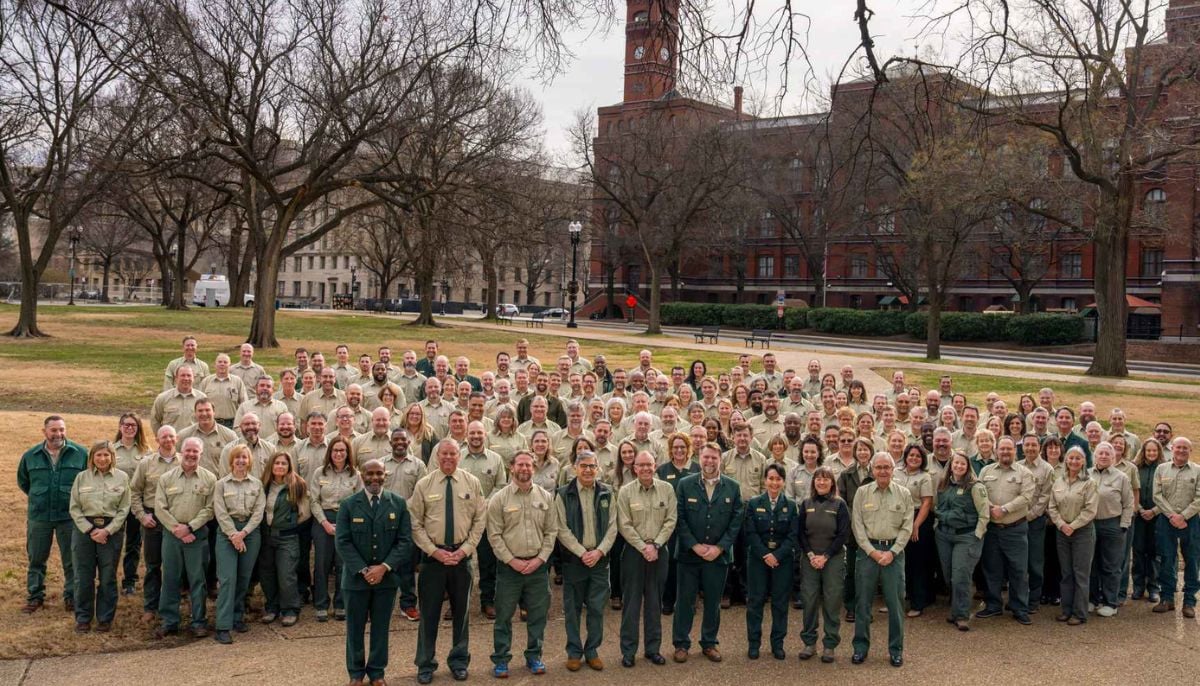
The Trump administration has made a sweeping reorganisation of the U.S. Forest Service.
Critics referred to this as the most catastrophic attack on the 121-year-old agency in its history.
In a major dismantling, the headquarters are shifted to Utah, and all ten regional offices have been shut down.
The restructuring was announced on Tuesday, April 7, via a press release announcing that the Agency’s headquarters are shifting from Washington, DC, to Salt Lake City.
Ten regional centers will be shut down to make way for fifteen political appointees referred to as “state directors.”
Additionally, more than fifty scientific centers located in thirty-one different states will also be abolished. It is important to note that according to scientists, any attempt to relocate the decades’ worth of long-term ecological research will result in its death.
It is believed that there is a systematic effort to demolish. Already, the current government has reduced by over 25% of the number of staff members within the land management agencies. A reduction in the budget for the Forest Service by one-third has been proposed.


Bangladesh garment exports down, March sees steeper drop

South Korea’s apparel imports rise slightly to $1.9 bn in Jan-Feb

Khamenei says Iran does not want war but ‘criminal agressors’ won’t go unpunished

-
 Business1 week ago
Jaguar Land Rover sees sales recover after cyber attack
-
Uncategorized1 week ago
[CinePlex360] Please moderate: “Trump signals p
-

 Entertainment6 days ago
Joe Jonas shares candid glimpse into parenthood with Sophie Turner
-

 Tech6 days ago
Our Favorite iPad Is $50 Off
-

 Sports6 days ago
UConn Final Four run could trigger a $50M furniture giveaway for Massachusetts-based Jordan’s Furniture
-

 Entertainment6 days ago
Blake Lively reacts to harassment claims dismissal against Justin Baldoni
-

 Fashion1 week ago
China’s Anta Sports posts record $11.62 bn revenue in 2025
-

 Sports7 days ago
PSL 11: Lahore Qalandars defeat Multan Sultans in rain-shortened clash