

Fashion
Tariffs drive down US import volumes, NRF warns of economic strain

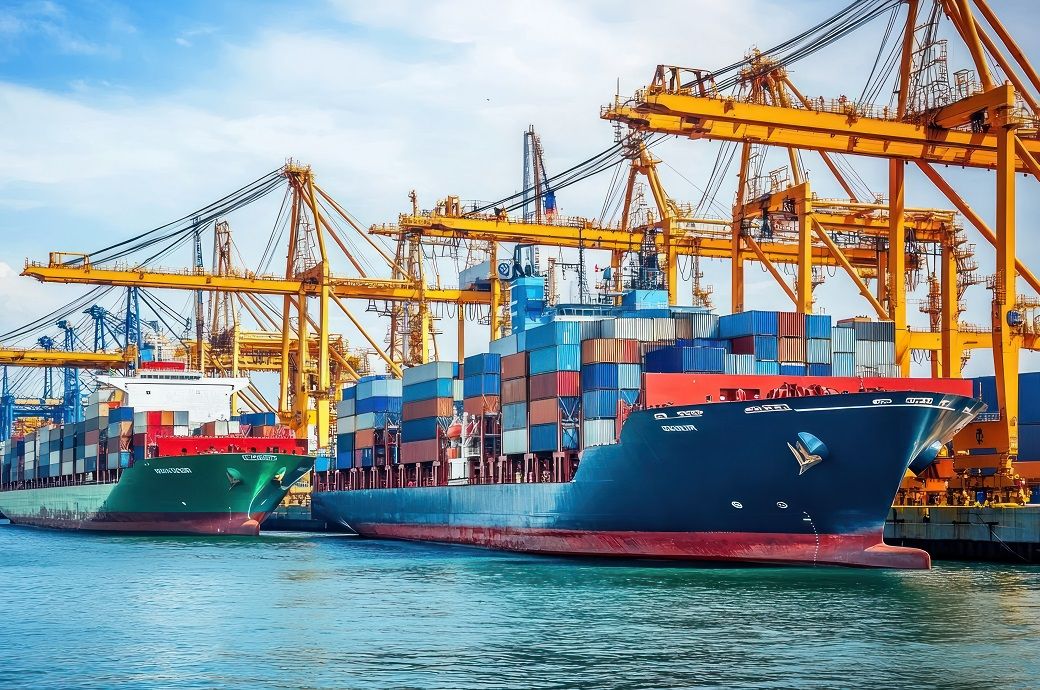
The forecast comes as tariffs on dozens of countries around the world that had been announced, postponed and then finally enacted after months of negotiations and deals began to take effect this week.
Major US ports’ import volumes in 2025 are forecast to end 5.6 per cent below 2024 as new tariffs bite, according to NRF and Hackett Associates.
July likely surged to 2.3 million TEU on pull-forward, with August–December sharply lower YoY.
H1 2025 rose 3.6 per cent to 12.53 million TEU, but the full-year outlook is 24.1 million TEU, reflecting policy uncertainty and inflated late-2024 comps.
The ports have not yet reported numbers for July, but Global Port Tracker projected that the month surged to 2.3 million Twenty-Foot Equivalent Units (TEU) as retailers brought in merchandise ahead of this month’s tariffs. That would be the highest number in a year, up 17.3 per cent from June and down just 0.5 per cent YoY, according to the Global Port Tracker report released by the NRF and Hackett Associates.
August is forecast at 2.2 million TEU, down 5 per cent YoY, and September at 1.83 million TEU, down 19.5 per cent YoY. October is forecast at 1.82 million TEU, down 18.9 per cent YoY; and November at 1.71 million TEU, down 21.1 per cent for the lowest total since 1.78 million TEU in April 2023. December is forecast at 1.72 million TEU, down 19.3 per cent YoY.
While the falling aggregate totals in September through December are related to pulling cargo forward during the first half of the year due to tariffs, the large YoY percentage declines are partly because imports in late 2024 were elevated due to concerns about East Coast and Gulf Coast port strikes.
The first half of 2025 totalled 12.53 million TEU, up 3.6 per cent YoY. Volume forecast for the remainder of the year would bring 2025 to a total of 24.1 million TEU, down 5.6 per cent from 25.5 million TEU in 2024, added the report.
US ports covered by Global Port Tracker handled 1.96 million TEU—one 20-foot container or its equivalent—in June, the latest month for which final data is available. That was up 0.7 per cent from May but down 8.4 per cent YoY.
“While this forecast is still preliminary, it shows the impact the tariffs and the administration’s trade policy are having on the supply chain,” said Jonathan Gold, NRF vice president for supply chain and customs policy. “Tariffs are beginning to drive up consumer prices, and fewer imports will eventually mean fewer goods on store shelves. Small businesses especially are grappling with the ability to stay in business. We need binding trade agreements that open markets by lowering tariffs, not raising them. Tariffs are taxes paid by US importers that will result in higher prices for US consumers, less hiring, lower business investment and a slower economy.”
“The hither-and-thither approach of on-again, off-again tariffs that have little to do with trade policy is causing confusion and uncertainty for importers, exporters and consumers,” said Ben Hackett, founder at Hackett Associates. “Friends, allies and foes are all being hit by distortions in trade flows as importers try to second-guess tariff levels by pulling forward imports before the tariffs take effect. This, in turn, will certainly lead to a downturn in trade volumes by late September because inventories for the holiday season will already be in hand. Meanwhile, US exporters are being left with unsold products as counter tariffs are applied.”
Fibre2Fashion News Desk (SG)












The package establishes a modern framework for both sides, enabling frictionless access to a market of 460 million consumers in key sectors, delivering economic benefits to both parties.
European Commission President Ursula von der Leyen and Swiss President Guy Parmelin yesterday signed a broad package of agreements aimed at deepening and expanding EU-Switzerland ties.
By aligning standards and rules in closely integrated areas, it will provide legal certainty, simplify trade in goods like medical devices and food products, and ease cross-border supply for businesses on both sides.
By aligning standards and rules in closely integrated areas, it will provide legal certainty, simplify trade in goods like medical devices and food products, and ease cross-border supply for businesses on both sides of the border.
Additionally, it will ensure more consistent rules for individuals who live, work or study across the EU-Swiss border. Switzerland will contribute to the development of legislation in the areas covered by the package and will have the opportunity to influence these rules as they are being designed.
“By modernising and deepening our ties across key sectors, from trade and transport to health and energy—we are strengthening legal certainty, fostering innovation and creating new opportunities for our citizens and businesses,” von der Leyen said in a release from the Commission.
The package includes updates to four already existing agreements, which already give Switzerland access to the EU internal market, regarding air transport, land transport, the free movement of persons and mutual recognition of conformity assessment.
New agreements on food safety, electricity, health and Switzerland’s participation in the EU Agency for the Space Programme were signed. A new agreement introduced a permanent and fair financial contribution by Switzerland to economic and social cohesion within the EU.
Apart from a protocol on parliamentary cooperation, the package includes also a joint declaration on the establishment of a high-level dialogue on the broad bilateral package.
Fibre2Fashion News Desk (DS)

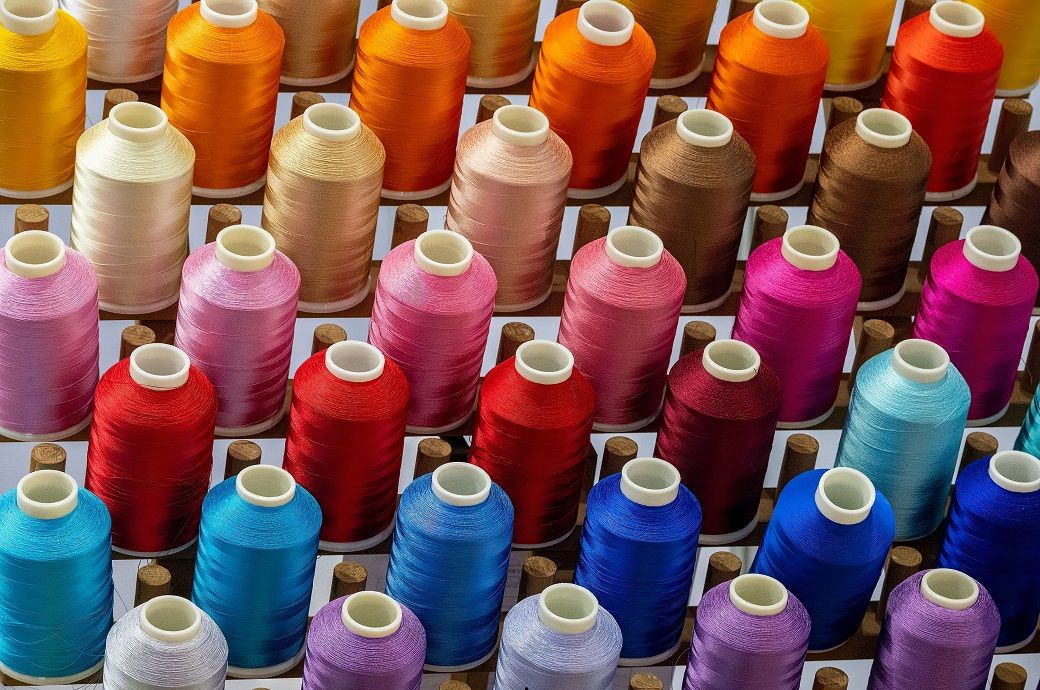
Following earlier increases in purified terephthalic acid (PTA), melt and PSF, Indian producers have now raised PFY prices. POY, FDY and PTY prices have been increased by ****;* per kg across all deniers and lustres with effect from March *, reflecting rapid cost pass-through amid heightened volatility in crude-linked value chains, according to the market sources.
In the previous weekly revision effective February **, ****, PTA was increased by ****;*.** per kg to ****;**.** per kg, while monoethylene glycol (MEG) was retained at ****;**.** per kg. Polyester melt prices were raised by ****;*.** per kg to ****;**.** per kg. Downstream PSF prices were also revised upward by ****;*.** per kg from March *.


The Colorful MacBook Neo Is Apple’s Cheapest Laptop Ever

Apple debuts $599 MacBook Neo to challenge Chromebooks, Windows PCs

Reeves to stress commitment to end windfall tax in talks with North Sea bosses

India Us Trade Deal: Fresh look at India-US trade deal? May be ‘rebalanced’ if circumstances change, says Piyush Goyal – The Times of India

Households set for lower energy bills amid price cap shake-up

What are Iran’s ballistic missile capabilities?

-
Business5 days ago
India Us Trade Deal: Fresh look at India-US trade deal? May be ‘rebalanced’ if circumstances change, says Piyush Goyal – The Times of India
-
Business1 week ago
Households set for lower energy bills amid price cap shake-up
-

 Politics6 days ago
US arrests ex-Air Force pilot for ‘training’ Chinese military
-
 Politics6 days ago
What are Iran’s ballistic missile capabilities?
-
 Business6 days ago
Attock Cement’s acquisition approved | The Express Tribune
-

 Fashion6 days ago
Policy easing drives Argentina’s garment import surge in 2025
-

 Sports1 week ago
Top 50 USMNT players of 2026, ranked by club form: USMNT Player Performance Index returns
-

 Sports6 days ago
Sri Lanka’s Shanaka says constant criticism has affected players’ mental health