

Fashion
Tariffs top concern in fashion, how to unlock efficiency 2nd: Survey

Research indicates that some of the larger brands are less well represented and covered on AI assistants, while many disruptive challenger brands feature more prominently, Anita Balchandani, the report’s co-author and senior partner at McKinsey in London, told a recent webinar.
This year’s dominant themes in the global fashion industry include agentic AI, the growth of the resale market, the quest for operational efficiency and strategic renewal in the luxury sector, according to The State of Fashion 2026 published by McKinsey and the Business of Fashion.
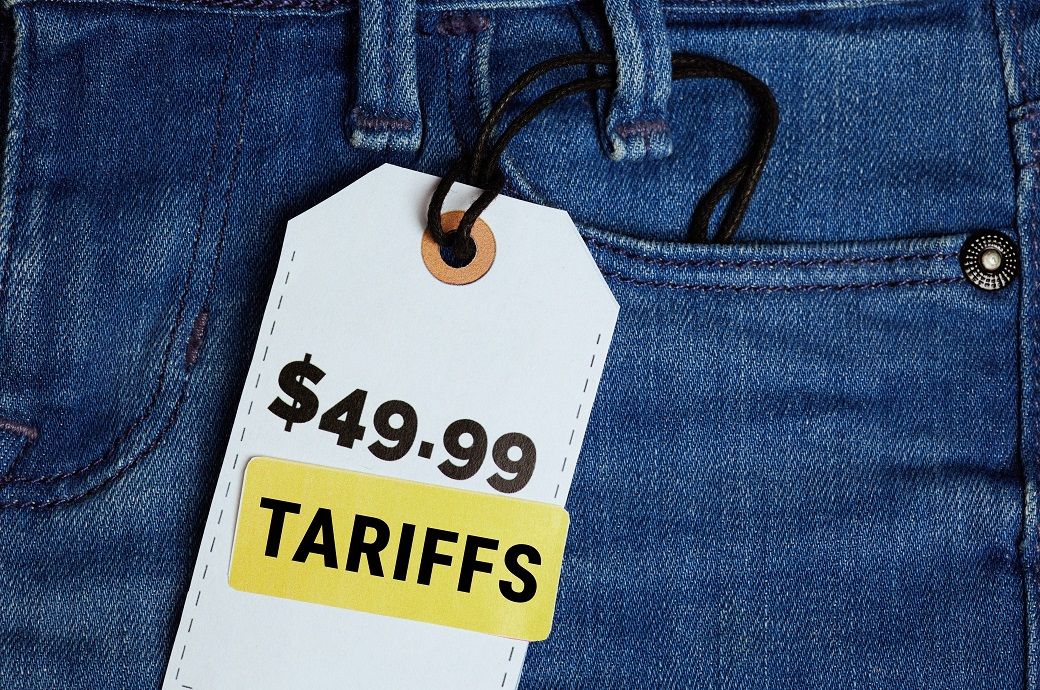
Tariffs are the top concern of executives surveyed, and the second-most-cited concern was how to unlock efficiency.
A second variant of this is agentic search on brand websites. The brands and retailers doing more in this space are absolutely seeing a lot of customer growth in agentic search traffic, she noted.
Nine in ten consumers cite being part of a like-minded community as a top driver of brand connection. Therefore, brands must think about the shift from attention to retention, said Gemma D’Auria, another co-author and senior partner at McKinsey in Milan.
“We also see that consumers expect more from the brands they interact with; short-lived interactions and the “dopamine hits” are losing their allure. Consumers are looking for more meaningful, sustained connections with brands that reflect their values and evolving identities,” she noted.
Resale is set to grow two to three times faster than the first-hand market in 2027, she said, noting that brands have started to embrace this channel, and some of the early concerns—about authenticity and lack of control over product—have abated.
Tariffs are the top concern of executives surveyed, and the second-most-cited concern was how to unlock efficiency, said Colleen Baum, the third co-author and senior partner at McKinsey in New York.
“The levers that the industry has traditionally relied on—a little improvement in sourcing and in full-price sell-through—will no longer be sufficient to deliver lasting efficiency. The focus here is on finding the next step—through technology, AI, and innovation—that will allow not only investment back into the business but also some of that margin to reach the bottom line,” Baum told the webinar.
Tariffs have increased prices for apparel and leather goods by roughly 35 per cent from a first-cost perspective, and the sector is among the most affected by tariffs in an inflationary market, she said.
In parallel, consumers are becoming more value conscious, with 70 per cent saying they plan to spend less and 80 per cent indicating value-seeking behaviour—waiting for sales or perhaps shopping around at different retailers for an item that they want. These factors have significantly affected working capital and inventory days on hand, she added.
Fibre2Fashion News Desk (DS)













The agreement was finalised during a meeting between Bangladesh Commerce Minister Khandaker Abdul Muktadir and visiting UK Trade Envoy Baroness Rosie Winterton, an official release said.
The UK and Bangladesh have agreed to reactivate the bilateral trade and investment dialogue to further consolidate economic ties and explore new avenues for strategic cooperation.
This was decided when visiting UK Trade Envoy Baroness Rosie Winterton met Commerce Minister Khandaker A Muktadir.
Muktadir urged the UK to ensure the continued provision of preferential market facilities under the DCTS scheme.
Winterton praised the administration’s focus on investment-friendly policies and its clear initiatives aimed at securing stable, long-term growth. These steps are vital for building investor confidence, she observed.
Muktadir urged the UK government to ensure the continued provision of preferential market facilities for Bangladesh products under the UK’s Developing Countries Trading Scheme.
Fibre2Fashion News Desk (DS)
“Just because retailers don’t import a lot of merchandise from the Middle East doesn’t mean the US supply chain isn’t affected by the turmoil there,” said Jonathan Gold, NRF vice president for Supply Chain and Customs Policy.
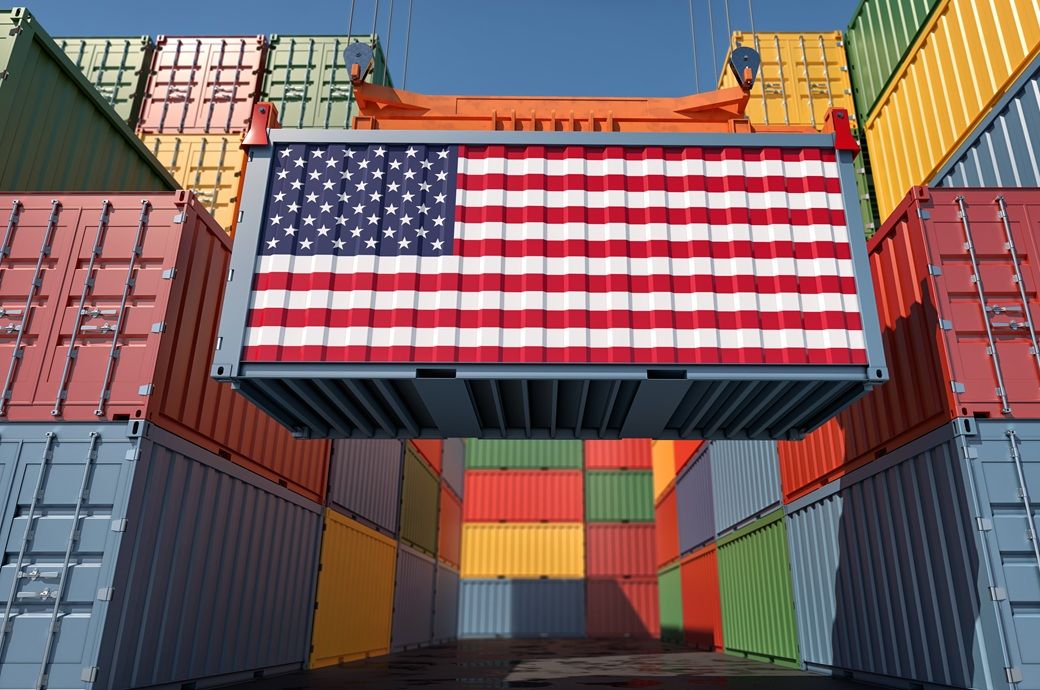
US container imports remain largely unaffected by the Iran conflict, though rising fuel costs are increasing shipping expenses.
Tariffs and policy uncertainty continue to pressure trade, while global supply chain disruptions pose indirect risks.
February volumes fell 7.5 per cent MoM to 1.95 million TEU.
Despite short-term fluctuations, imports in H1 2026 are projected to decline 1.8 per cent YoY.
He added that the supply chain is global and disruptions anywhere along it can have ripple effects whether it’s rerouting of vessels, equipment out of position, higher fuel costs for shippers or rising gas prices that leave less money in consumers’ pockets.
“Retailers are monitoring the situation on a daily basis and working with their transportation partners to minimize any impact,” he said, adding retailers continue to face rising tariffs and continued trade policy uncertainty, which put downward pressure on imports and upward pressure on prices.
Hackett Associates Founder Ben Hackett said volume at US container imports has been slowed by tariffs but is not being significantly affected by the situation in Iran because little US container cargo comes from the region. Nonetheless, the blockage of the Strait of Hormuz is driving up the price of fuel for container ships worldwide at the same time consumers are paying more for gasoline, he said.
In addition, ports in Asia depend on fuel from the Persian Gulf and could see shortages if the conflict is not resolved soon. It is too soon to assess the impact of the two-week ceasefire announced on Tuesday, Hackett further said.
“The United States is less impacted operationally as there is no shortage of fuel at US ports, but the price of fuel here is based on international pricing,” added Hackett. “Higher fuel costs drive up the price of shipping a container for either import or export and ultimately have an inflationary impact on consumers and other end users.”
The report noted that US ports covered by Global Port Tracker handled 1.95 million Twenty-Foot Equivalent Units (TEU)—one 20-foot container or its equivalent—in February, although the Port of New York/New Jersey has not yet reported its data. That was down 7.5 per cent from January and down 4.2 per cent year over year (YoY). February is traditionally the slowest month of the year because of Lunar New Year factory shutdowns in Asia.
Ports have not reported March numbers, but Global Port Tracker projected the month at 1.97 million TEU, down 8.3 per cent YoY. April is forecast at 2.08 million TEU, down 5.6 YoY; May at 2.09 million TEU, up 7.3 per cent; June at 2.1 million TEU, up 6.9 per cent; July at 2.2 million TEU, down 8 per cent, and August at 2.18 million TEU, down 6 per cent.
Those numbers would bring the first half of 2026 to 12.3 million TEU, down 1.8 per cent from 12.53 million TEU during the same period in 2025. The YoY increases in May and June are largely because of the sharp drop-off in imports during those months last year after ‘Liberation Day’ tariffs were announced in April 2025.
Imports totalled 25.4 million TEU in 2025, down 0.3 per cent from 25.5 million TEU in 2024.
Fibre2Fashion News Desk (SG)
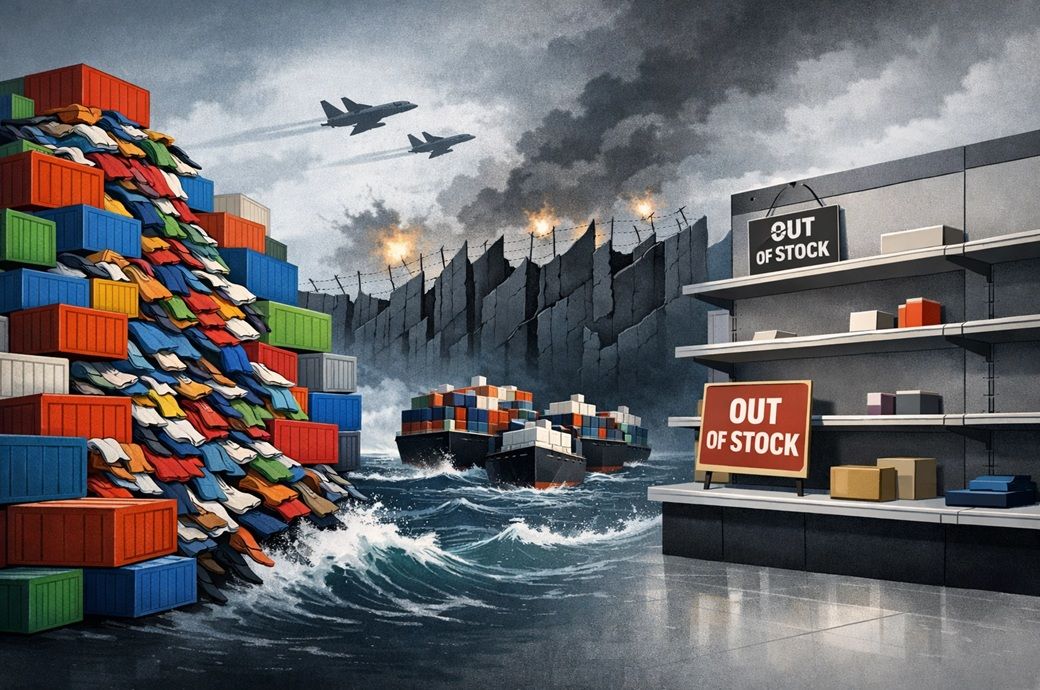
Fast fashion faces a dual squeeze from longer transit times and rising input costs, weakening both speed and affordability.
Supply chain bottlenecks are creating a mismatch: inventory is piling up at origin while destination markets remain understocked.
Shipping delays are eroding seasonal relevance, which may force retailers to discount higher-margin products that miss peak selling windows.
Source link


Tehran accused of ‘weaponising’ Hormuz as oil gains ahead of US-Iran talks

Global bets surge ahead of US-Iran dialogue

UK, Bangladesh to reactivate trade, investment dialogue

-
 Business1 week ago
Jaguar Land Rover sees sales recover after cyber attack
-
Uncategorized1 week ago
[CinePlex360] Please moderate: “Trump signals p
-

 Entertainment7 days ago
Joe Jonas shares candid glimpse into parenthood with Sophie Turner
-

 Tech7 days ago
Our Favorite iPad Is $50 Off
-

 Sports7 days ago
UConn Final Four run could trigger a $50M furniture giveaway for Massachusetts-based Jordan’s Furniture
-
 Business7 days ago
Video: Why Is the Labor Market Stuck?
-

 Entertainment7 days ago
Blake Lively reacts to harassment claims dismissal against Justin Baldoni
-

 Politics7 days ago
Iran can sustain Strait of Hormuz closure for years, will cut US military logistics: Official