

Business
Tata Trusts vice-chairman Vijay Singh exits Tata Sons board – The Times of India

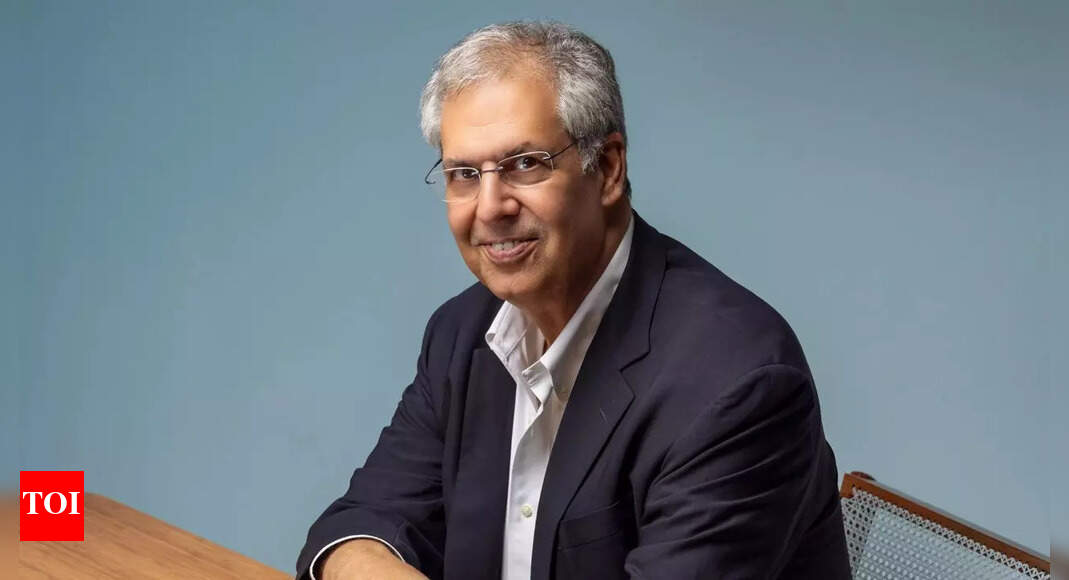
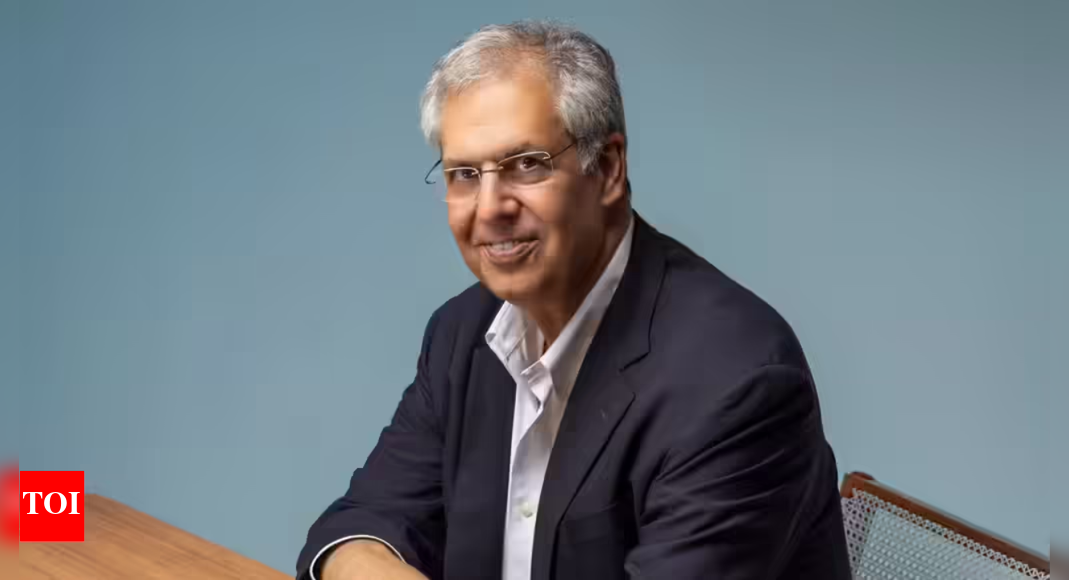
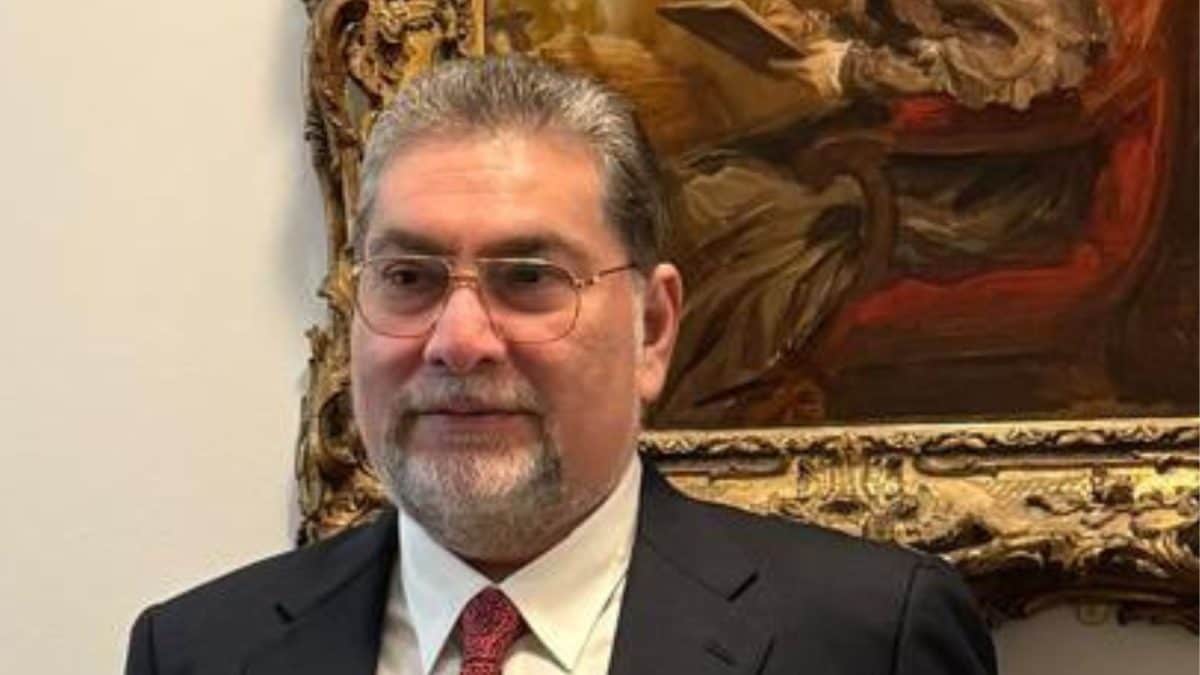
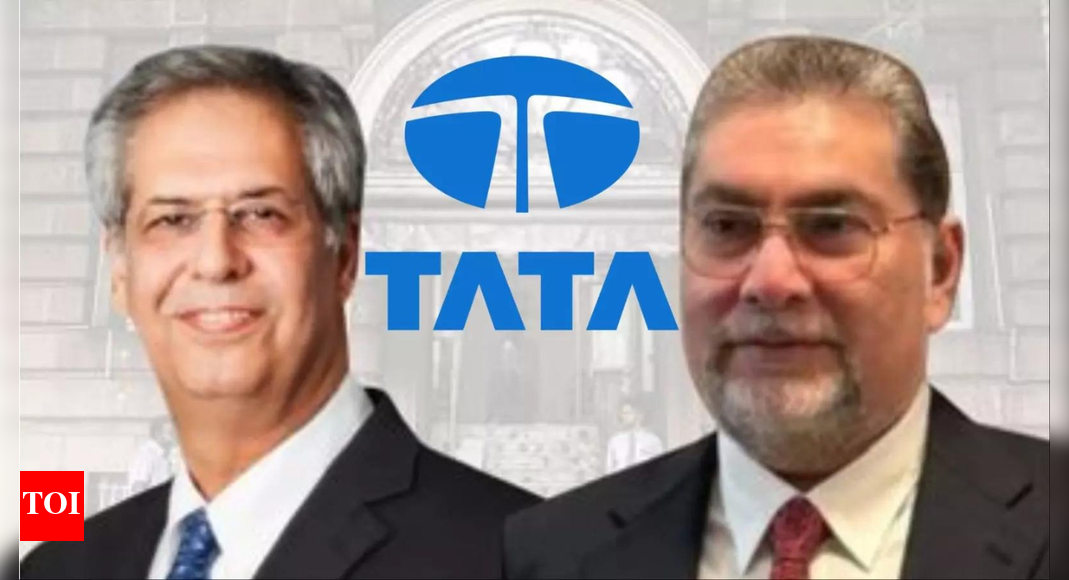
MUMBAI: In an abrupt move, Tata Trusts vice-chairman Vijay Singh (77) has resigned from the board of Tata Sons, a day before the holding company’s directors were to meet, and amid an impending RBI-mandated IPO deadline.Two main units of Tata Trusts – Sir Dorabji Tata Trust and Sir Ratan Tata Trust – collectively hold approximately 52% in Tata Sons, the parent of the $165-billion Tata Group, which has a diverse portfolio ranging from aviation to automobiles.Singh served as a nominee director of Tata Trusts on Tata Sons board. He will continue to be a trustee of Tata Trusts. The move comes as a surprise since nominee directors of Tata Trusts do not have a retirement age, unlike other directors on Tata Sons board. For instance, executive, non-executive, and independent directors of Tata Sons retire at the ages of 65, 70, and 75, respectively.However, a resolution by Tata Trusts dated Oct 17, 2024, stipulates that nominated directors on Tata Sons board who reach the age of 75 must be reviewed annually. During Tata Trusts board meeting on Thursday, the nominated directors’ ages were reviewed.The majority of the trustees supported the review and the induction of younger individuals onto the Tata Sons board. The other two nominee directors on Tata Sons board are Tata Trusts chairman Noel Tata (69) and vice-chairman Venu Srinivasan (72). Singh declined to comment, when contacted.This was Singh’s second stint at Tata Sons board. The former defence secretary was initially appointed to the board in June 2013, but stepped down in July 2018 upon reaching 70 years. At that time, the retirement age for Tata Trusts nominees was 70.He was reappointed to the board in Feb 2022 at the age of 74. This was possible as former Tata Trusts chairman Ratan Tata had introduced an unspecified retirement age for nominated directors.Tata Sons and Tata Trusts have been using retirement age as a tool to either extend or end the term of a board member at the company. For instance, in the past, the retirement age for non-executive directors was revised to 75 from 70, which had allowed Ratan Tata to continue as chairman of Tata Sons until that age. Singh earned Rs 3.2 crore as commission from Tata Sons in FY25. Singh’s departure, along with the recent end of tenures of two other Tata Sons directors – former JLR CEO Ralf Speth and Piramal Enterprises boss Ajay Piramal – opens up opportunities for new members. These changes have left Tata Sons board with six members. According to Tata Sons’ articles of association, Tata Trusts can nominate one-third of the directors. However, this requirement (two of six board seats) is currently fulfilled by Noel and Srinivasan.The development occurs as Tata Sons’ board is scheduled to meet on Friday, with the looming RBI-mandated IPO deadline for both the company and its subsidiary Tata Capital approaching by the end of this month. Tata Capital has sought a short extension for the launch of its $1.9-billion IPO from the RBI, while Tata Sons has applied to RBI to surrender its core investment company registration to avoid the IPO. Tata Capital intends to launch the IPO in the first half of Oct, which will make it the largest in the country.
Business
India-US trade deal: 25% penal tariffs linked to Russian oil gone? Here’s what we know – The Times of India
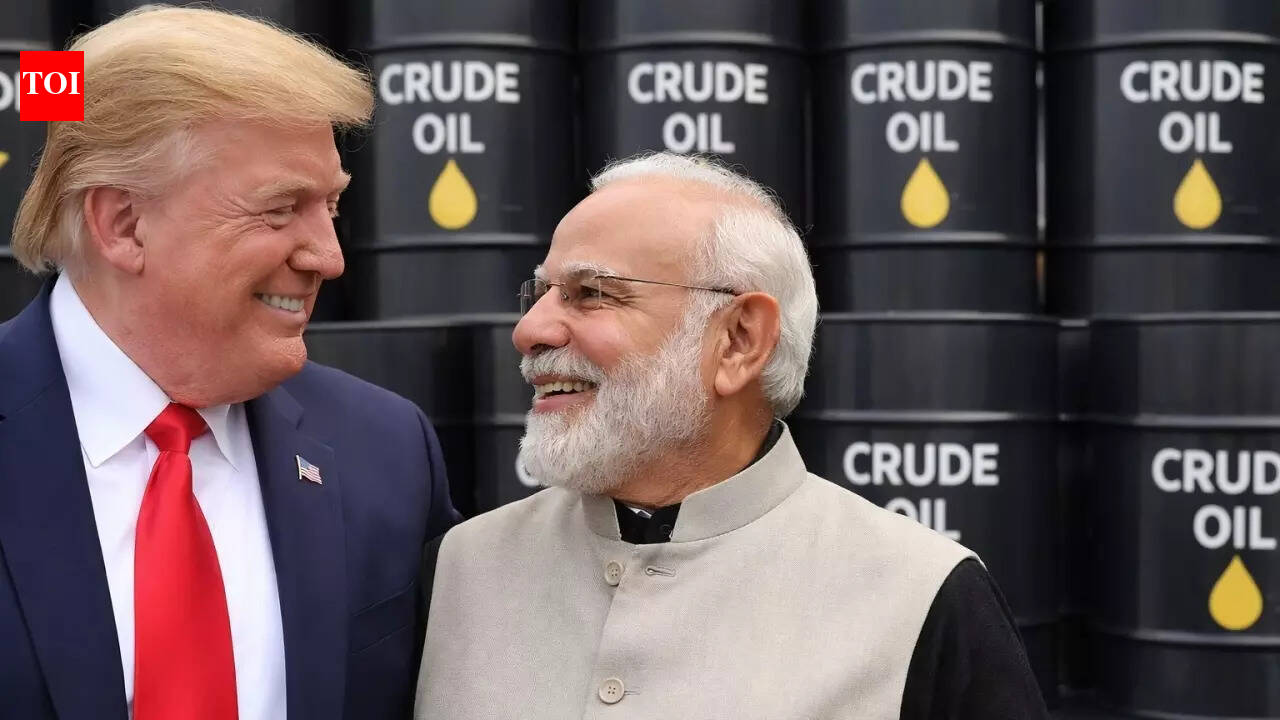
US President Donald Trump has reportedly agreed to remove the 25% tariff America imposed on India for its crude oil imports from Russia. A New Delhi–based source quoted in a Bloomberg report said that the US has agreed to withdraw the 25% penal tariff for India’s Russian oil procurement. In the meantime, India and the US have announced a trade deal, with the Trump administration lowering the tariffs on Indian exports to 18%. Trump took to social media platform Truth Social to announce the trade deal, which was later confirmed by PM Narendra Modi confirming it via X (Twitter). However, India is yet to confirm the details of the trade deal shared by Trump in his post.
Also Read | India-US trade deal announced by US President Donald Trump; check detailsUS Ambassador to India Sergio Gor also told a TV channel that the final figure of tariff on India will be 18%, indicating that the 25% penal tariff linked to Russian crude has also been removed.He also said that the 18% tariff rate is effective immediately, and that India would buy $500 billion worth of US energy, coal, technology and agricultural products.Russia has been the largest supplier of crude for India since the start of the former’s war with Ukraine. The share in India’s oil import basket has gone up to almost 40%. But recently, after US sanctions on Russian oil firms, Indian refiners had been forced to reduce Russian crude oil purchases.
India-US Trade Deal: What PM Modi, Trump said
PM Modi posted on X, “Wonderful to speak with my dear friend President Trump today. Delighted that Made in India products will now have a reduced tariff of 18%. Big thanks to President Trump on behalf of the 1.4 billion people of India for this wonderful announcement. When two large economies and the world’s largest democracies work together, it benefits our people and unlocks immense opportunities for mutually beneficial cooperation. President Trump’s leadership is vital for global peace, stability, and prosperity. India fully supports his efforts for peace. I look forward to working closely with him to take our partnership to unprecedented heights.”Before Trump had posted on social media, “It was an Honor to speak with Prime Minister Modi, of India, this morning. He is one of my greatest friends and, a Powerful and Respected Leader of his Country. We spoke about many things, including Trade, and ending the War with Russia and Ukraine. He agreed to stop buying Russian Oil, and to buy much more from the United States and, potentially, Venezuela. This will help END THE WAR in Ukraine, which is taking place right now, with thousands of people dying each and every week! Out of friendship and respect for Prime Minister Modi and, as per his request, effective immediately, we agreed to a Trade Deal between the United States and India, whereby the United States will charge a reduced Reciprocal Tariff, lowering it from 25% to 18%. They will likewise move forward to reduce their Tariffs and Non Tariff Barriers against the United States, to ZERO. The Prime Minister also committed to “BUY AMERICAN,” at a much higher level, in addition to over $500 BILLION DOLLARS of U.S. Energy, Technology, Agricultural, Coal, and many other products. Our amazing relationship with India will be even stronger going forward. Prime Minister Modi and I are two people that GET THINGS DONE, something that cannot be said for most. Thank you for your attention to this matter!”

People walk in front of Cinderella’s Castle at the Magic Kingdom Park at Walt Disney World on May 31, 2024, in Orlando, Florida.
Gary Hershorn | Corbis News | Getty Images
All is well in the Magic Kingdom — and all of Disney’s other theme parks, too.
The company’s experiences division, which includes its parks, cruise ships, hotels and consumer products, posted record revenue for the fiscal first quarter, topping $10 billion for the first time in Disney’s more than 100-year history. It also reported operating income of $3.3 billion, a 6% bump from the same period a year ago.
Growth in this segment has supercharged in the wake of the Covid pandemic. It often accounts for the lion’s share of the company’s profits. For the period ended Dec. 27, experiences represented 38% of Disney’s total revenue, yet generated a whopping 71% of its operating income.
Company executives expect those good times to continue, forecasting high-single-digit growth in operating income for the segment for fiscal 2026.
“When you look at the footprint of the business today, it’s never been more broad or more diverse,” Bob Iger, CEO of Disney, said during Monday’s earnings call. “And the projects that we have underway are going to make it even more so.”
The strong parks performance comes against the backdrop of a CEO succession competition that could see Chairman of Disney Experiences Josh D’Amaro step in for Iger. The Disney board is meeting this week and is expected to vote on its next CEO, according to people familiar with the matter who spoke on the condition of anonymity about internal matters.
Industry insiders and Disney sources expect D’Amaro to be appointed Iger’s successor, though the decision ultimately lies with the Disney board and won’t be final until directors vote.
“The board has not yet selected the next CEO of The Walt Disney Company and once that decision is made, we will announce it,” a Disney spokesperson said in a statement, declining to comment on the timing of the next board meeting.
Parks expansion
Much of the experiences division’s success comes from major investments to expand the footprint of Disney theme parks, refurbish existing rides and themed areas of its parks, add cruise ships to its fleet and grow its digital gaming presence. This new evolution of the segment is being fueled by Disney’s library of franchises and iconic intellectual property.
Disney has long pulled from its portfolio of content. Disneyland opened its doors more than 70 years ago with rides based on “Alice in Wonderland,” “The Adventures of Ichabod and Mr. Toad,” “Peter Pan” and “Snow White.”
While those classic attractions remain, the company’s more recent developments have been fueled by Iger’s strategic acquisitions of four major film studios — Pixar in 2006, Marvel in 2009, Lucasfilm in 2012 and 20th Century Fox in 2019. This brought coveted franchises under the House of Mouse roof, including Star Wars, Toy Story, the Avengers and Avatar.
“As we added IP to our stable … we gained access to intellectual property that had real value in terms of parks and resorts, and enabled us to lean into more capital spending because of the confidence level we had in improving returns,” Iger said.
Having the film and television rights to these properties allows the company more control over production and how that translates into rides, experiences and merchandise.
And that work continues as part of a 10-year, $60 billion investment effort that launched in 2023.
“We have expansion projects underway at every one of our theme parks,” Iger said.
He touted the upcoming opening of the World of Frozen in Disneyland Paris and the launch of a new cruise ship, the Disney Adventure, which will make berth in Asia.
On the horizon is also a new villains land coming to Magic Kingdom as well of the reshaping of “Rivers of America,” “Tom Sawyer Island” and the “Liberty Square Riverboat” into an area called “Piston Peak” — a second Cars-themed land modeled after America’s natural parks. At Hollywood Studios there will be a new “Monsters Inc.” land while the Muppets will take over the Rock ‘n’ Roller Coaster attraction. Animal Kingdom will host an “Encanto” ride and a new Indiana Jones ride.
At Disneyland, Avengers Campus, the Marvel-themed area, will get two new attractions, guests will get a glimpse at the Land of the Dead from “Coco” and Disney will build a new Avatar area inspired by the scenery in “Avatar: Fire and Ash.”
Internationally, Disney has struck a deal to bring a new park and resort to Yas Island in the United Arab Emirates.
International headwinds
The company’s commitment to bringing beloved IP into its parks is paying off, according to Iger, particularly outside the U.S.
“The percentage of people that go to Shanghai Disneyland just to go to Zootopia Land is very, very high,” he said Monday.
Revenue from international theme parks and experiences grew 7% during the fiscal first quarter, to $1.75 billion.
Of course, the company is still facing headwinds from the decline of international visitors to its domestic parks.
It’s a trend that many theme park destinations in America are contending with, as overall tourism to the United States fell 6% in 2025. Industry analysts point to higher travel costs and fees, ongoing trade frictions and geopolitical unease for the drop in demand for travel stateside.
Despite this, domestic theme park and experiences revenue grew 7% during the quarter, to $6.91 billion.
New offerings at Disney’s international parks, the launch of a cruise ship that services Asia and the new Abu Dhabi park are all ways that Disney can tap into that foreign market and engage with consumers that are not making the trek to the company’s domestic destinations.
— CNBC’s Julia Boorstin and Alex Sherman contributed to this report.

The annual tradition of “Dry January” turned into “Damp Monday” at one supermarket, with shoppers returning to alcohol consumption in the middle of the month.
Waitrose said that the month was “not so dry after all,” identifying January 12 as “Damp Monday” after sales of wines, beers, and spirits surged by 11 per cent compared to the week before.
The grocer noted a “significant softening” of the Dry January trend over the past five years, suggesting a more balanced “Damp January” approach is now prevalent.
While alcohol sales in January 2022 were 42 per cent lower than other months, this year saw a reduced drop of just 25 per cent.
Notably, Argentinian and Chilean wine sales experienced a considerable boost last month, rising by 25 per cent and 27 per cent respectively compared to the previous year.
Compared to this time last year, searches on Waitrose.com for “Argentinian wine”, “red wine” and “Chilean wine” were up 300%, 63% and 18% respectively.
Pierpaolo Petrassi, head of beers, wines and spirits at Waitrose, said: “Damp is the new dry, as we’re seeing customers move away from the ‘all-or-nothing’ mentality and instead look towards more mindful, ‘damp’ moderation rather than quit entirely.
“This shift sees the likes of a luxury Argentinian Cabernet sitting comfortably alongside premium non-alcoholic spirits as sophisticated sips, proving that the modern palate values flavour profiles and social connection over the buzz alone.
“No doubt the no and low trend skyrocketed in 2022 as the result of the ‘pandemic reset’ transitioning out of the final lockdowns, as well as the ‘sober curious’ movement going mainstream on social media.
“Now, 2026 is the ‘lifestyle’ year, with customers finding balance as part of a more tempered, year-round approach to drinking.”
Data reported by The Spirits Business trade publication from early this year suggested that while 58% of the UK public aimed to cut back, a significant portion – roughly 31% – had opted for a “damp January” – reducing intake rather than cutting it out entirely.


Iran ready for diplomacy, but not under pressure: Foreign Minister Araghchi
India-US trade deal: 25% penal tariffs linked to Russian oil gone? Here’s what we know – The Times of India

Trump lowers tariffs as India pledges to stop buying Russian oil

-

 Sports6 days ago
PSL 11: Local players’ category renewals unveiled ahead of auction
-

 Entertainment6 days ago
Claire Danes reveals how she reacted to pregnancy at 44
-

 Tech1 week ago
ICE Asks Companies About ‘Ad Tech and Big Data’ Tools It Could Use in Investigations
-
 Business6 days ago
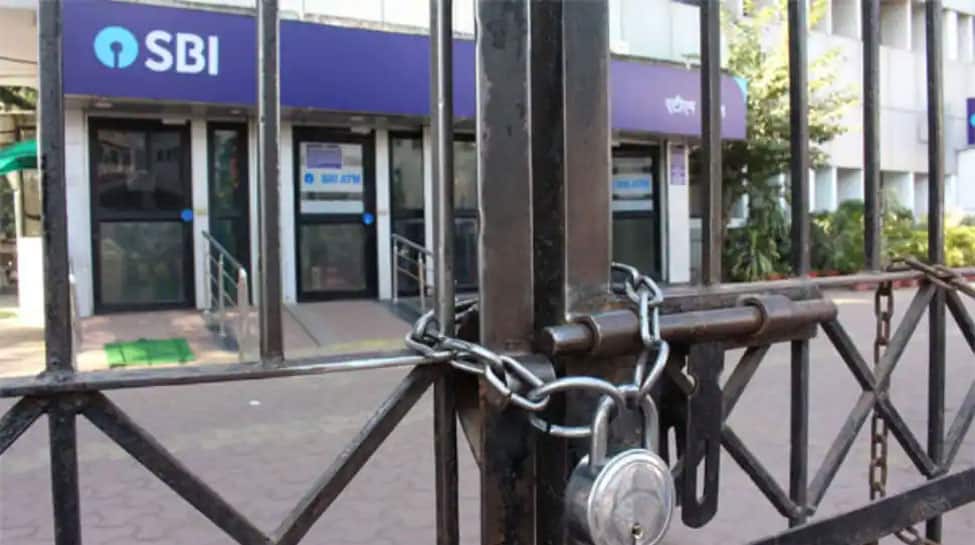
Banking services disrupted as bank employees go on nationwide strike demanding five-day work week
-

 Fashion1 week ago
Spain’s apparel imports up 7.10% in Jan-Oct as sourcing realigns
-

 Sports6 days ago
College football’s top 100 games of the 2025 season
-

 Politics1 week ago
Fresh protests after man shot dead in Minneapolis operation
-
 Politics6 days ago
Trump vows to ‘de-escalate’ after Minneapolis shootings