Connect with us

Business

Textile policy to make industry competitive | The Express Tribune

Published

on

Textile policy to make industry competitive | The Express Tribune



ISLAMABAD:

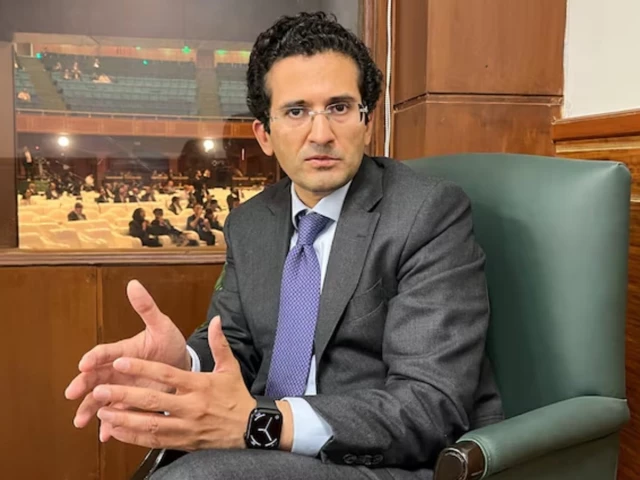
Federal Minister for Commerce Jam Kamal Khan has announced that the government is finalising a comprehensive textile and apparel policy and a national industrial policy for the next five years aimed at making Pakistan’s industry regionally competitive, removing trade barriers and ensuring long-term export growth.

In a meeting with Aamir Fayyaz Sheikh, CEO Kohinoor Mills, Kamran Arshad, Chairman All Pakistan Textile Mills Association (Aptma), Rehman Naseem, CEO Fazal Cloth and Shahid Sattar, Executive Director Aptma at the Ministry of Commerce, Jam Kamal underlined that the textile and apparel policy would be designed in such a way that it would reduce the cost of manufacturing, improve resource productivity and optimise processes, promote research & development and product/market diversification, and enhance Pakistan’s share in the global market.

He said that Pakistan must rely on export growth and the government was committed to ensuring that all decisions were taken in consultation with stakeholders. For the first time, the government and the industry are aligned in their determination to enhance the export growth momentum.

Welcoming the industry’s proposal to analyse the policies of regional competitors, the minister shared observations from his recent visit to Dhaka, where he witnessed Bangladesh’s success in industrial development.


Source link

Continue Reading
Click to comment

Leave a Reply

Your email address will not be published. Required fields are marked *

Business

RMB valuation and limits of traditional exchange rate models | The Express Tribune

Published

on

RMB valuation and limits of traditional exchange rate models | The Express Tribune


Global focus is on the Chinese currency, sparking debate over whether it is overvalued or undervalued

Foreign exchange reserves have started increasing on the back of recent loans by the AIIB, World Bank, and ADB. The reserves stand over $8.2 billion, and the IMF board is also expected to approve a $700 million tranche this Thursday. photo: file


KARACHI:

China’s merchandise trade surplus surged by $111.7 billion in November, reaching an impressive $1.08 trillion for the first 11 months of the year, a 22.1% increase compared to the same period of last year, according to official data. Western media has described the massive trade surplus as “remarkable,” but also warned that it could be “unsustainable,” citing concerns over China’s undervalued renminbi (RMB).

The soaring surplus has raised eyebrows among economists, many of whom have called on Beijing to allow the renminbi to appreciate more gradually over the next five years. They argue that a stronger currency could help boost China’s imports while providing relief to global competitors in Europe, the US, and other regions, who are increasingly losing market share to Chinese exports.

Global market attention has long been fixed on the trajectory of the renminbi, with renewed debate over whether the Chinese currency is overvalued or undervalued. Recent studies, relying on traditional neoclassical exchange-rate models, suggest that the RMB is deviating from its “equilibrium value.” However, economists warn that these conclusions are heavily influenced by the analytical frameworks used and may fail to account for the crucial role that modern financial forces play in shaping currency values.

Judging whether an exchange rate is misaligned is not simple. It’s inherently complex. Conventional neoclassical frameworks – such as the purchasing power parity (PPP) and the Balassa-Samuelson hypothesis – focus on real-economy fundamentals, including productivity, prices and the current account. These models generally view capital flows and foreign-exchange trading as short-term reactions to real economic factors, rather than as independent forces that can influence long-term exchange-rate trends.

That assumption is increasingly called into question in modern highly financialised global economy. Annual foreign-exchange trading volumes are now many times larger than global trade in goods and services, suggesting that frameworks focused primarily on trade balances and relative prices may be far removed from market realities.

Conversely, (post)-Keynesian approaches argue that capital flows, financial cycles and shifts in expectations lie at the heart of exchange-rate movements. While these approaches do not dismiss the importance of the real economy or the current account, they contend that under modern financial systems, capital movements can influence both short-term fluctuations and long-term currency trends. Exchange rates implied by PPP, they argue, may never be reached and can diverge persistently in one direction.

The two approaches, according to economists, need not be viewed as mutually exclusive. Yet continued reliance on a purely neoclassical lens risks producing serious misjudgments, particularly during periods of heightened financial volatility. A comprehensive analysis, they argue, must account for both real-economy fundamentals and financial forces, with the latter often playing a decisive role.

The renminbi clearly exemplifies this debate. When China’s position in the financial cycle is taken into account – rather than focusing narrowly on the current account or productivity – recent movements in the currency appear less anomalous. Once financial-cycle dynamics are incorporated, the RMB may not deviate significantly from any plausible notion of an “equilibrium exchange rate”, assuming such a benchmark exists at all.

Neoclassical exchange-rate theory is based on several core assumptions: efficient markets, rational agents, flexible prices and wages, and the neutrality of money. Within this framework, trade imbalances are expected to self-correct through exchange-rate adjustments. A country running a persistent current-account deficit should see its currency depreciate, while surplus countries should experience appreciation. Over time, exchange rates are assumed to converge towards levels determined by real fundamentals.

However, real-world evidence frequently contradicts these predictions. The United States, for example, has run large and persistent trade deficits for decades without experiencing a corresponding long-term decline in the dollar. In the 1990s, the US trade deficit widened even as the dollar strengthened. Similarly, China’s own experience has shown that the relationship between the RMB and the current account has been far from stable, despite the presence of capital controls.

(Post-)Keynesian economists argue that these anomalies reflect the growing dominance of financial forces. According to data from the Bank for International Settlements (BIS), daily global foreign-exchange trading reached about $7.5 trillion in 2022, dwarfing annual global trade flows of roughly $32 trillion. In such an environment, exchange rates are shaped primarily by financial transactions, capital flows and expectations rather than by trade fundamentals alone.

Under this view, exchange rates are not anchored to a stable long-run equilibrium. Instead, they reflect the cumulative outcome of short-term movements driven by investor sentiment, risk perceptions and shifts in global liquidity. Capital flows can sustain currency misalignments for extended periods, and there is no automatic mechanism ensuring that current-account imbalances are corrected through exchange-rate changes.

China’s post-2005 experience offers a case in point. Following reforms to the exchange-rate regime, the RMB underwent a period of nominal appreciation alongside rising domestic prices, resulting in sustained real effective exchange-rate appreciation. This pattern is difficult to reconcile with PPP-based mean-reversion models but is consistent with a financial-cycle perspective, in which capital inflows, rising asset prices and credit expansion reinforce one another.

More recently, the picture has shifted. Despite steady improvements in manufacturing capability and productivity upgrades, the RMB’s real effective exchange rate has depreciated. BIS data show that between January 2022 and October 2025, the RMB’s real effective exchange rate declined by around 16%. This outcome runs counter to predictions based on the Balassa-Samuelson hypothesis, which would expect productivity gains to translate into real appreciation.

Economists attribute this divergence to China’s position in a downswing of the financial cycle. As credit growth slowed, domestic demand weakened and price pressures eased, the extent to which productivity gains could support currency strength is limited. At the same time, reduced incentives for holding RMB-denominated assets contributed to periods of depreciation against the dollar.

Signs are now emerging that the financial-cycle adjustment may be nearing its end. As conditions stabilise, incentives for capital allocation into RMB assets are beginning to recover, a shift that has already been reflected in recent currency movements. Against this backdrop, analysts argue that claims of significant RMB undervaluation based solely on traditional models may be overstated.

The broader lesson, economists say, is that exchange-rate analysis must evolve with the structure of the global economy. In an era dominated by finance, capital flows and expectations, frameworks that marginalise these forces risk misreading both the causes and consequences of currency movements.

The writer is an independent journalist with a special interest in geoeconomics


Source link

Continue Reading

Business

HDFC Bank Changes Lounge Access Norms For Debit Cards From January 10– Details Here

Published

on

HDFC Bank Changes Lounge Access Norms For Debit Cards From January 10– Details Here


New Delhi: If you often use your HDFC Bank debit card for free airport lounge access, this update is important for you. The bank has changed how complimentary lounge entry works on its debit cards. Instead of simply swiping your card at the lounge, customers will now need a digital voucher to get access. Also, the minimum spending requirement has been increased, reported Moneycontrol. These new rules will come into effect from January 10, and will apply to eligible debit cardholders going forward.

How the New Lounge Voucher System Works

Once your eligibility is confirmed, HDFC Bank will send you an SMS or email with a link to claim your lounge access voucher. You’ll need to verify your request by entering an OTP sent to your registered mobile number. You will receive a voucher code or QR code after successful verification which must be shown at the airport lounge to get entry.

Add Zee News as a Preferred Source


Minimum Spend Requirement Increased

Under the revised rules, HDFC Bank debit card users will now need to spend at least Rs 10,000 in a calendar quarter to be eligible for complimentary airport lounge access. Earlier, the minimum spend required was Rs 5,000.

However, this condition will not apply to HDFC Infiniti Debit Card holders. Customers using the Infiniti card will continue to enjoy free lounge access without any minimum spending requirement.

Eligible Transactions and Free Lounge Visits by Card Type

Only purchase transactions made using the debit card will be considered while calculating the quarterly spending requirement. Other types of transactions will not be counted, as noted by Moneycontrol.

Meanwhile, the number of complimentary lounge visits remains unchanged and continues to depend on the debit card variant:

Millennia Debit Card: 1 free visit per quarter

Platinum Debit Card: 2 free visits per quarter

Times Points Debit Card: 1 free visit per quarter

Business Debit Card: 2 free visits per quarter

GIGA Debit Card: 1 free visit per quarter

Infiniti Debit Card: 4 free visits per quarter

This means cardholders should check both their spending eligibility and card type to know how many lounge visits they can enjoy.

Which Transactions Count and Voucher Validity Explained

Only purchase transactions made using the debit card will be counted towards the quarterly spending requirement. As per Moneycontrol, the following transactions will not be included:

ATM cash withdrawals

UPI or wallet payments (GPay, PhonePe, Paytm, etc.)

Credit card bill payments made via debit card

Debit card EMI transactions

New debit cardholders will also need to meet the Rs 10,000 spending requirement to become eligible for complimentary lounge access.

Voucher Validity: 

Once issued, the lounge access voucher will remain valid till the end of the next calendar quarter, after which it will expire if not used.

What This Means for Debit Card Users

With the updated lounge access rules, HDFC Bank is clearly encouraging higher card usage and digital verification. Customers who regularly use complimentary lounge benefits will now need to keep a close watch on their quarterly spending and complete the voucher process in advance. As per Moneycontrol, physical debit card swipes will no longer work from January 10, making it important for travellers to switch to the new digital voucher system.


Source link

Continue Reading

Business

NPS Changes In 2025: Know New Rules On Exit, Withdrawal, Lock-In And Entry

Published

on

NPS Changes In 2025: Know New Rules On Exit, Withdrawal, Lock-In And Entry


Source link

Continue Reading

Trending