

Politics
Thailand’s next PM reaffirms fresh polls promise

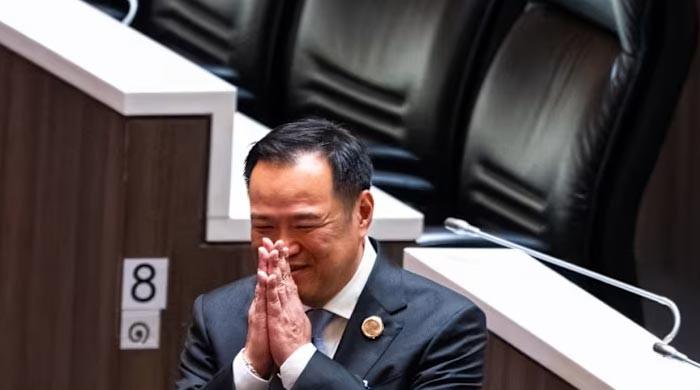
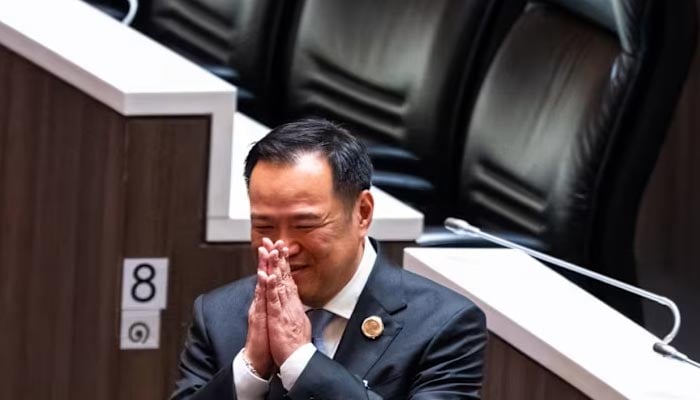
- Parliament confirms Anutin as PM ending week-long power vacuum.
- PM receives backing of People’s Party, which holds plurality of seats.
- Apex court due to rule on Tuesday over Thaksin’s hospital stay.
Thailand’s next prime minister has pledged to make good on his promise to lead the fractured interim government to new polls.
Conservative tycoon Anutin Charnvirakul was confirmed by parliament on Friday, ending a week-long power vacuum following the ouster of his predecessor, Paetongtarn Shinawatra.
The construction magnate cobbled together a coalition of opposition blocs to shut out Pheu Thai, the electoral vehicle of the once-dominant Shinawatra dynasty’s patriarch Thaksin.
He received the backing of the People’s Party, which holds a plurality of seats, on condition that he dissolve parliament within four months for fresh elections.
“I will follow all agreements,” he said Friday outside his party headquarters.
“We must bring back the spirit of the ‘Land of Smiles’ to our country during my short time in office,” he said, adding that he was known to dislike conflict.
Anutin addressed Thaksin’s unexpected flight from the kingdom the night before Friday’s vote — and days before a court case — bound for Dubai, where he said he would visit friends and seek medical treatment.
“There will be no favouritism, no persecution, and no revenge,” Anutin said.
The Supreme Court is due to rule on Tuesday in a case over Thaksin’s hospital stay following his return from exile in August 2023, a verdict some analysts say could see him jailed.
Anutin´s right-wing Bhumjaithai party went into coalition with Pheu Thai in 2023, but pulled out in June over Paetongtarn’s alleged misconduct in a leaked phone call with Cambodian ex-leader Hun Sen.
The Shinawatras have been a mainstay of Thai politics for the past two decades, sparring with the pro-monarchy, pro-military establishment that views them as a threat to the kingdom´s traditional social order.
But they have faced a series of setbacks, including Paetongtarn´s removal last week.
Anutin previously served as deputy prime minister, interior minister and health minister — but is perhaps most famous for delivering on a promise to legalise cannabis in 2022.
His elevation to premiership still needs to be endorsed by Thailand’s king to become official.
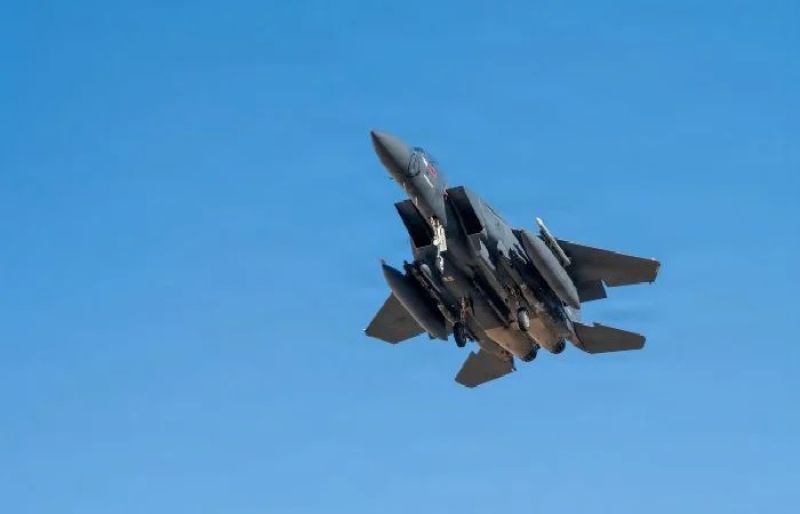
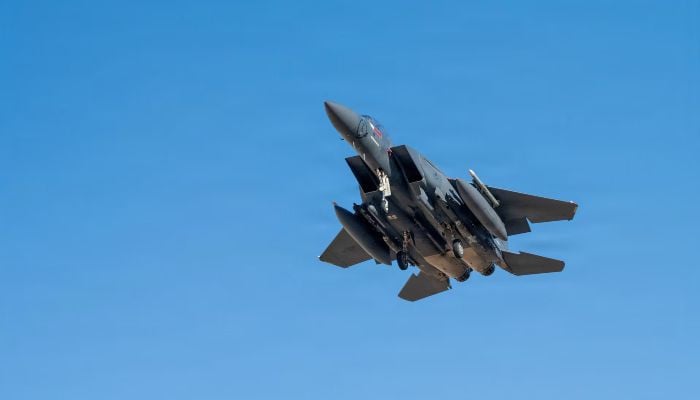
US forces staged the audacious rescue of an airman behind enemy lines after Iran downed his fighter jet, officials said on Sunday, resolving a crisis for President Donald Trump as he weighs escalating the war, now in its sixth week.
The airman rescued by special operations forces, who Trump said was a colonel, was the weapons-systems officer on the downed F-15, a US official told Reuters.
“Over the past several hours, the United States Military pulled off one of the most daring Search and Rescue Operations in US History,” Trump said in a statement, adding that the airman was injured but “he will be just fine.”
The officer was the second of two crew members on the warplane that Iran said on Friday had been brought down by its air defences. Iran’s Revolutionary Guards said several aircraft were destroyed during the US rescue mission, Tasnim news agency reported.
Reuters reported on Friday that the first crew member had been retrieved, triggering a high-profile search by both Iran and the United States for the remaining airman.
Iranian officials had urged citizens to help find him, hoping to gain leverage against Washington in the war Trump and Israel launched on February 28.
Trump has threatened to escalate the conflict in the coming days with attacks on Iran’s energy infrastructure.
Had Iran captured the airman, the ensuing hostage crisis could have shifted American public perception of a conflict that opinion polls show was already unpopular.
Trump said the airman was rescued “in the treacherous mountains of Iran” in what he said was the first time in military memory that two US pilots had been rescued, separately, deep in enemy territory.
The official told Reuters that as the weapons-systems officer was moved from near a mountain to a transport aircraft parked within Iran, US forces had to destroy at least one of the aircraft because it had malfunctioned.
US aircraft hit
The rescue effort, involving dozens of military aircraft, encountered fierce resistance from Iran.
Reuters reported on Friday that two Black Hawk helicopters involved in the search were hit by Iranian fire but escaped from Iranian airspace.
Separately, a pilot ejected from an A-10 Warthog fighter aircraft after it was hit over Kuwait and crashed, the officials said, though the extent of crew injuries was unclear.
“The fact that we were able to pull off both of these operations, without a SINGLE American killed, or even wounded, just proves once again, that we have achieved overwhelming Air Dominance and Superiority over the Iranian skies,” he said in his statement.
US air crews are trained in what to do if they go down behind enemy lines, measures known as Survival, Evasion, Resistance and Escape, but few are fluent in Persian and face a challenge in staying undetected while seeking rescue.
The conflict has killed 13 US military service members, with more than 300 wounded, US Central Command said, adding no US troops have been taken prisoner by Iran.
While Trump has repeatedly sought to portray the Iranian military as being in tatters, they have repeatedly been able to hit US aircraft.
Reuters reported on US intelligence showing that Iran retains large amounts of missile and drone capability. Until just over a week ago, the US could only determine with certainty that it had destroyed about one-third of Iran’s missile arsenal.
The status of about another third was less clear, but bombings probably damaged, destroyed or buried those missiles in underground tunnels and bunkers, Reuters sources said.
The US and Israeli war on Iran has spread across the Middle East, killing thousands and hitting the global economy with soaring energy prices that are fueling fears of inflation.
- Rescue operation faced heavy Iranian resistance.
- US helicopters, A-10 aircraft hit during missions.
- War has driven up global energy prices, roiling markets.
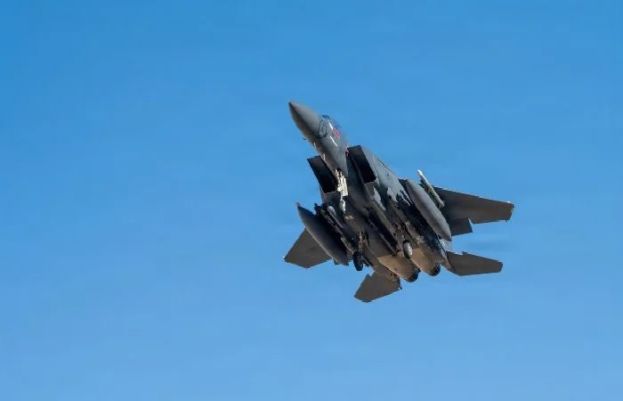
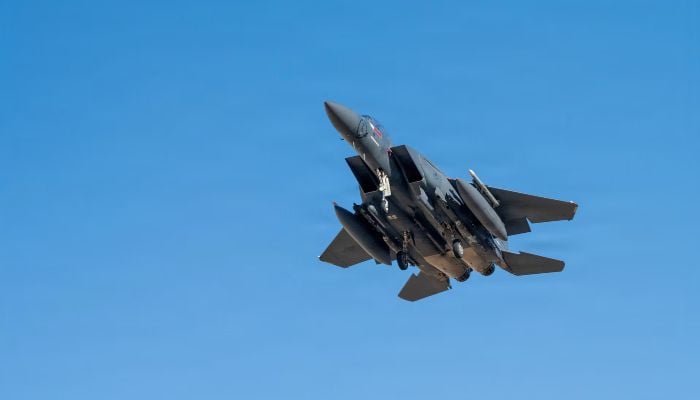
WASHINGTON: US forces staged the audacious rescue of an airman behind enemy lines after Iran downed his fighter jet, officials said on Sunday, resolving a crisis for President Donald Trump as he weighs escalating the war, now in its sixth week.
The airman rescued by special operations forces, who Trump said was a colonel, was the weapons-systems officer on the downed F-15, a US official told Reuters.
“Over the past several hours, the United States Military pulled off one of the most daring Search and Rescue Operations in US History,” Trump said in a statement, adding that the airman was injured but “he will be just fine.”
The officer was the second of two crew members on the warplane that Iran said on Friday had been brought down by its air defences. Iran’s Revolutionary Guards said several aircraft were destroyed during the US rescue mission, Tasnim news agency reported.
Reuters reported on Friday that the first crew member had been retrieved, triggering a high-profile search by both Iran and the United States for the remaining airman.
Iranian officials had urged citizens to help find him, hoping to gain leverage against Washington in the war Trump and Israel launched on February 28.
Trump has threatened to escalate the conflict in the coming days with attacks on Iran’s energy infrastructure.
Had Iran captured the airman, the ensuing hostage crisis could have shifted American public perception of a conflict that opinion polls show was already unpopular.
Trump said the airman was rescued “in the treacherous mountains of Iran” in what he said was the first time in military memory that two US pilots had been rescued, separately, deep in enemy territory.
The official told Reuters that as the weapons-systems officer was moved from near a mountain to a transport aircraft parked within Iran, US forces had to destroy at least one of the aircraft because it had malfunctioned.
US aircraft hit
The rescue effort, involving dozens of military aircraft, encountered fierce resistance from Iran.
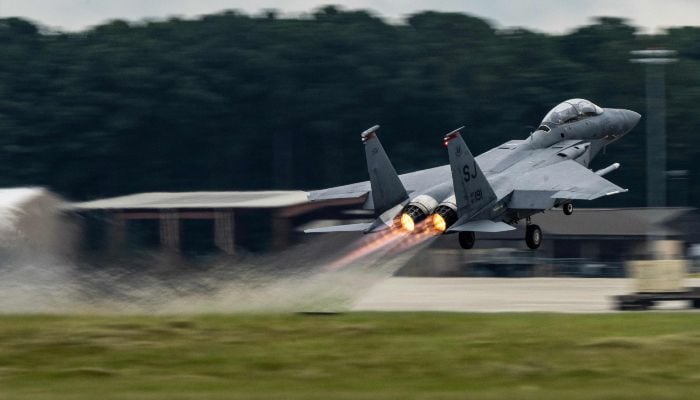
Reuters reported on Friday that two Black Hawk helicopters involved in the search were hit by Iranian fire but escaped from Iranian airspace.
Separately, a pilot ejected from an A-10 Warthog fighter aircraft after it was hit over Kuwait and crashed, the officials said, though the extent of crew injuries was unclear.
“The fact that we were able to pull off both of these operations, without a SINGLE American killed, or even wounded, just proves once again, that we have achieved overwhelming Air Dominance and Superiority over the Iranian skies,” he said in his statement.
US air crews are trained in what to do if they go down behind enemy lines, measures known as Survival, Evasion, Resistance and Escape, but few are fluent in Persian and face a challenge in staying undetected while seeking rescue.
The conflict has killed 13 US military service members, with more than 300 wounded, US Central Command said, adding no US troops have been taken prisoner by Iran.
While Trump has repeatedly sought to portray the Iranian military as being in tatters, they have repeatedly been able to hit US aircraft.
Reuters reported on US intelligence showing that Iran retains large amounts of missile and drone capability. Until just over a week ago, the US could only determine with certainty that it had destroyed about one-third of Iran’s missile arsenal.
The status of about another third was less clear, but bombings probably damaged, destroyed or buried those missiles in underground tunnels and bunkers, Reuters sources said.
The US and Israeli war on Iran has spread across the Middle East, killing thousands and hitting the global economy with soaring energy prices that are fueling fears of inflation.
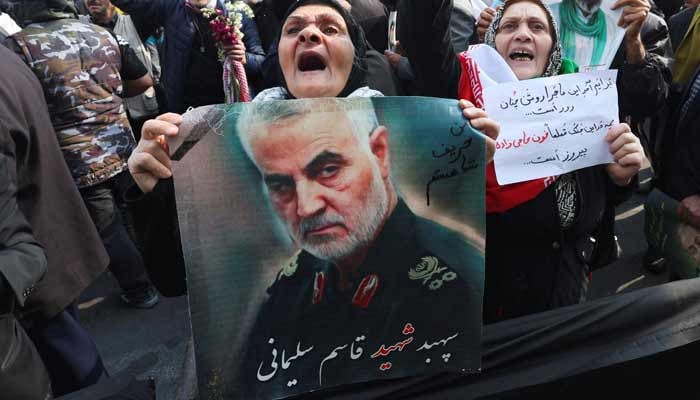
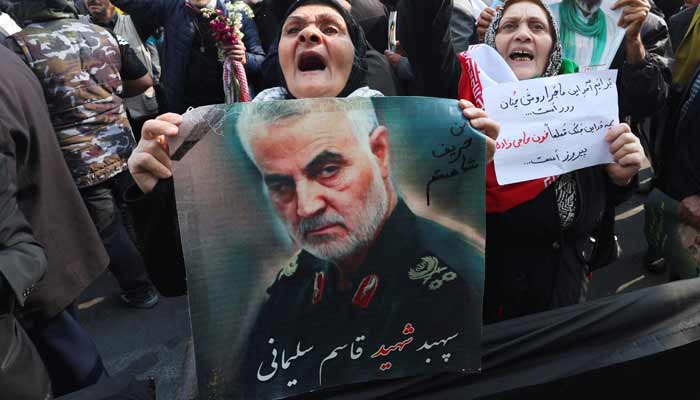
- Afshar supports Iran’s govt and its propaganda, says State Dept.
- Official says Afshar’s husband barred from entering US.
- Marco Rubio revoked their lawful permanent resident status.
US federal agents have detained the niece and grandniece of late Iranian military commander Qassem Soleimani after Secretary of State Marco Rubio revoked their lawful permanent resident status, the State Department said on Saturday.
“Hamideh Soleimani Afshar and her daughter are now in the custody of US Immigration and Customs Enforcement,” the State Department said in a statement, saying also that Rubio revoked their green cards.
Soleimani was killed in a January 2020 US airstrike in Baghdad during President Donald Trump’s first term in office.
The State Department said Afshar supported Iran’s government and its propaganda. It also said Afshar’s husband was barred from entering the US.
The detention came as the US-Israeli war against Iran entered its sixth week .
The State Department added that earlier this month, Rubio terminated the legal status of Fatemeh Ardeshir Larijani, the daughter of veteran Iranian politician Ali Larijani, and her husband Seyed Kalantar Motamedi. Ardeshir Larijani and Motamedi are no longer in the US and are barred from future entry, according to the State Department.
Ali Larijani, an architect of Iran’s security policy, was killed in mid-March by a US-Israeli air attack.
In his second term in office, Trump’s administration has stepped up deportation attempts against immigrants, calling them threats. Rights advocates have raised concerns about free speech and due process. Many immigrants detained by ICE have been released following court orders.


With One Million Displaced, Lebanon Turns to Digital Wallets for Aid

Trump confirms rescue of airman whose F-15 was downed in Iran

Jack Black celebrates major moment with his ‘Saturday Night Live’ return

-
 Business1 week ago
How do you spot a fake online review?
-

 Sports1 week ago
Illinois defense gets tough, ousts Houston to reach Elite Eight
-

 Entertainment1 week ago
Lee Sang-bo dies at 45: Funeral details revealed
-

 Sports1 week ago
USMNT handed reality check by Doku, Belgium ahead of World Cup
-

 Sports1 week ago
2026 NCAA men’s hockey tournament: Schedule, results
-

 Fashion1 week ago
China rolls out tariff cuts on Congo imports from April 1
-

 Fashion1 week ago
EU apparel imports slump 15.48% YoY in Jan; Bangladesh hardest hit
-
Uncategorized6 days ago
[CinePlex360] Please moderate: “Further tariff