

Tech
The Best GoPro and Camera Deals for Black Friday

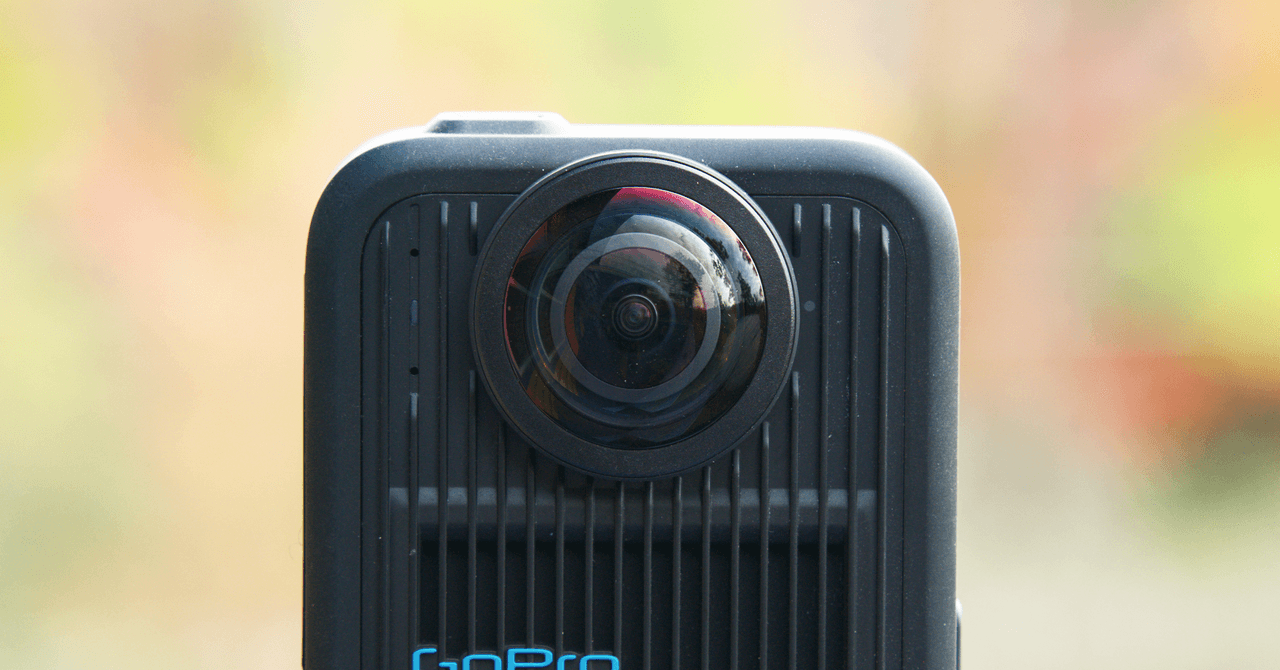
If you’re in the market for a new camera, this holiday season is the time to buy. There are some great Black Friday camera deals available right now, including one on our favorite GoPro, the GoPro Hero 13 Black. There are plenty of other GoPro camera deals, along with some good buys on cameras from Insta360, DJI, Fujifilm, and more.
For more info about action cams, check out our complete guide. Also, be sure to read our guide to the Best GoPros, Best 360 Cameras, Best Instax Cameras, Best Travel Cameras, and Best Mirrorless Cameras. Head to our full roundup for more Black Friday deals.
Updated November 28: We’ve added a new section of mirrorless camera deals, along with a deal on Polaroid’s latest Now camera.
Do You Need a New Camera?
Probably not. Probably what you need to do is spend a lot more time with the one you have, but if buying a new camera makes you feel like maybe you’re getting better at photography, far be it for me to stop you. Hitting too close to home? I feel you. I mean I want a new camera. I want the Sony A7C R, which is an amazing camera. The autofocus is light year’s ahead of my A7R II, the sensor is bigger, the dynamic range is better, and it’s smaller and lighter. What’s not to love? But it isn’t going to instantly make me take better pictures.
To make better images you have to spend time at it. It takes practice, shooting everyday, even if you only have 10 minutes. Walk around the neighborhood and play with different compositions, try shooting in ways you normally don’t. Experiment with different light at different times of the day. Just get out an shoot more. Most of it will be garbage, but you’ll be learning.
If you need a new camera to get you to do that, then carry on, there are some truly great deals to be had right now.
The Best Action Camera Deal
-
Photograph: Scott Gilbertson
-
Photograph: Scott Gilbertson
-
Photograph: Scott Gilbertson
-
Photograph: Scott Gilbertson


GoPro did not release a new model of its Hero action camera this year. Last year’s Hero 13 is still the latest, but it’s on sale for Black Friday anyway. Last year’s GoPro Hero 13 was the first significant change for GoPro’s flagship action camera in many years. The company added an interchangeable lens system, along with Macro, Ultra Wide, and Anamorphic lenses, plus a set of four neutral density filters. The new interchangeable lens system opens up shooting possibilities that simply don’t exist with other action cameras. For some reason, this camera often gets overlooked. It’s just fun to shoot with.
I think the slickest part of the Hero 13’s new lens and filter system is that the Hero 13 Black autodetects which lens is attached and changes the Hero 13’s settings accordingly. This is especially nice for those who don’t want to fiddle with fine-tuning their camera settings every time they change lenses or pop on a neutral density filter. I’ve been using all three lenses for over a year now, and they’re all nice, but the Ultra Wide is my favorite. I mainly use my GoPro to shoot from the handlebars of my bike, so the wider the shot, the better and more immersive the footage becomes, hence my love of the Ultra Wide. The Hero Black ultrawide edition is also on sale.
Everything that made GoPro a household name is here as well, with industry-leading hypersmooth stabilization, all kinds of helpful shooting modes, and support for GoPro’s Quik app. Also note that if you buy through gopro.com, the company includes a year’s worth of GoPro Premium, the company’s subscription cloud storage service. If the GoPro has a shortcoming, it’s the battery life. It’s OK, but not great. I suggest grabbing an extra battery.
So, given that there was no Hero 14 this year, how future-proof is the Hero 13? I would say very future-proof. I will admit, the newly announced DJI Action 6, which has a variable aperture lens, is very interesting, but it’s still an automated aperture rather than giving you a full aperture priority mode. I’m also a little leery of DJI products, given the ban on imports that starts December 23, 2025. The Insta360 Ace Pro 2 below is also on sale, and I do love that camera as well, especially with the new accessories that turn it into something more like a point-and-shoot. But in the end, when I head out the door for a ride, or a paddle, or, right now, some snowshoeing, the action camera I reach for remains the GoPro Hero 13 Black.
Other Great Action Camera Deals
Deals on Action Camera Accessories
The Best 360 Camera Deal
-
Photograph: Scott Gilbertson
-
Photograph: Scott Gilbertson


The GoPro Max 2 is the best 360 camera you can buy, and it’s currently $100 off. The dual 14 mm (35 mm equivalent) lenses of the Max 2 each record to a 1/2.3-inch chip, the largest available in a 360 camera. This gives what GoPro calls “True 8K” video, by which the company means that the actual recorded area of the sensor is 8K, whereas other 360 cameras have an 8K sensor, but only record about 6K or 7K worth of that sensor as the actual image. The short story is that the Max 2’s video is sharper and clearer. Couple this with support for 10-bit color in Log files, and you have footage that the competition just can’t match.
Other 360 Camera Deals
A Fun, Screen-Free Digital Camera
-Reviewer-Photo-SOURCE-Nena-Farrell.jpg)
Photograph: Nena Farrell
What if there were a film camera that captured digital images? That’s what the Camp Snap camera is, the screen-free aspect means that, like film, you don’t know how your images look until later— you can keep photographing without getting pulled out of the moment as much. The Camp Snap can hold up to 2,000 photos on the preinstalled memory card, and it comes with a USB-C cable to download the photos onto your computer. This one is a fun gift to give too.
The Best Deals on Instant Cameras

Photograph: B&H Photo
Fujifilm’s Instax Mini 99 is the best Instax camera for those who love manual controls and creative effects. The Mini 99 offers some manual focus and exposure controls, as well as some fun color effects, like the ability to simulate light leaks just like those thrift store cameras collecting dust on your shelf. There are two dials on top of the Mini 99. One acts like an exposure compensation dial, allowing you to adjust exposure value (EV) two stops brighter and two stops darker. I found the L (Lighten) and L+ useful when shooting against snow, which has a tendency to overwhelm small sensors like this one. It’s also good for strongly backlit scenes, though those are still not Instax’s strong suit. The Mini 99 has a 60-mm lens made of plastic. It works out to roughly the same field of view as a 35-mm lens in 35-mm format (or if you prefer, somewhere between 1x and 2x on your iPhone). The shutter is fixed at f/12.7, which means you’ll be relying on the flash in all but bright, sunny, outdoor shots. That said, unlike quite a few other Instax models, with the Mini 99 you can turn off the flash for those well-lit shots, and that means far fewer washed-out images.

Courtesy of Polaroid
Polaroid’s standard Now camera is close enough to the classic Polaroid that you probably won’t notice the difference. The Gen 3 version is an incremental update of the Gen 2, bringing better auto focus and improved flash. Otherwise, it’s the same basic design we love, with a nice chunky body and easy-to-find buttons.
Other Instant Camera Deals
Deals on Mirrorless Cameras

Photograph: Scott Gilbertson
Nikon
Zf Mirrorless Camera
The Nikon Zf is the camera I would buy if I were in the market for a new camera. It’s all about the knobs and dials. Every setting you need to make an image is accessible on a dial or knob: ISO, aperture, shutter speed, and exposure compensation. There’s also a switch to change shooting modes and another to change to black-and-white mode or video mode. Pair that with a great 24-MP sensor and reasonably fast autofocus speeds, and you have a fantastic, reasonably priced camera. The best deal of the bunch here is Adorama’s lens bundle, which comes with a charger, memory card, lens filters, and cleaning kit.
Other Mirrorless Camera Deals
The Best Deals on Our Favorite Photo Printing Services
A photograph isn’t a photograph until you print it. Strong words, but I’ll stand by them. Luckily, there are some great deals right now that will let you print your images without spending a fortune.

Photograph: Mpix
Our favorite place to print photos is holding a 30 percent off sale on its print services. Mpix makes high-quality prints at a reasonable price, even when it’s full price, which makes this a great deal. Mpix prints on Kodak Endura paper and offers a variety of paper options. I tested the E-surface, which renders rich, deep blacks and true-to-life colors. It holds up well over time; the images we printed in 2013 look exactly like they did when we got them. We also like Mpix’s books and calendars.
If you need to print gifts for your family, Shutterfly is having a sitewide 50 percent off sale. We’re fans of Shutterfly’s book printing service, which had the best results so far in our testing of photo printing services. We also like the calendars. The printing is good enough, especially for the price, and shipping is generally speedy.
The highest-quality prints in our testing came from Adorama’s Printique service. It would be the top pick in our print services guide if it were a bit cheaper, which, with this deal, it is. You can choose from a range of papers, and they’re listed by their actual names, like Kodak Endura or Fujifilm Matte. I also like the option to print the date and file name on the back of each image.
Power up with unlimited access to WIRED. Get best-in-class reporting and exclusive subscriber content that’s too important to ignore. Subscribe Today.











HOKA’s max-stacked Rocket X Trail combines road race shoe energy with boosted grip from a 3-mm lugged outsole. If you’re looking for a fast shoe to go on the attack, this is it. It’s also fantastic for all round comfort. In testing, I laced up the Rocket X Trail and ran 3 hours (just short of 19 miles) fresh out of the box, across roads, forest gravel trails, some grass and through some serious water. It delivered efficiency and energy whether I was moving at marathon pace or with heavier, tired, ragged footfalls in the latter miles.
The rockered, supercritical midsole uses HOKA’s liveliest foam, similar to those you find in its race-ready road shoes, along with a carbon plate. That combines for a really fun ride that’s smooth, springy and fast and really consistent. It’s also highly cushioned, so you will sacrifice a lot of ground feel for that big stack springy softness. It’s also less stable over very lumpy terrain. But on open, flat, runnable mixed terrain, it’s excellent.
The lightweight uppers have a race-shoe-ready feel and after running through ankle-deep flooded sections, they shed water really quickly. This is a pricey road-to-trail shoe, it’s versatile and there’s plenty of winter road potential, too.
| Specs | |
|---|---|
| Weight | 9.45 oz |
| Heel-to-toe drop | 6 mm |
| Lug depth | 3 mm |
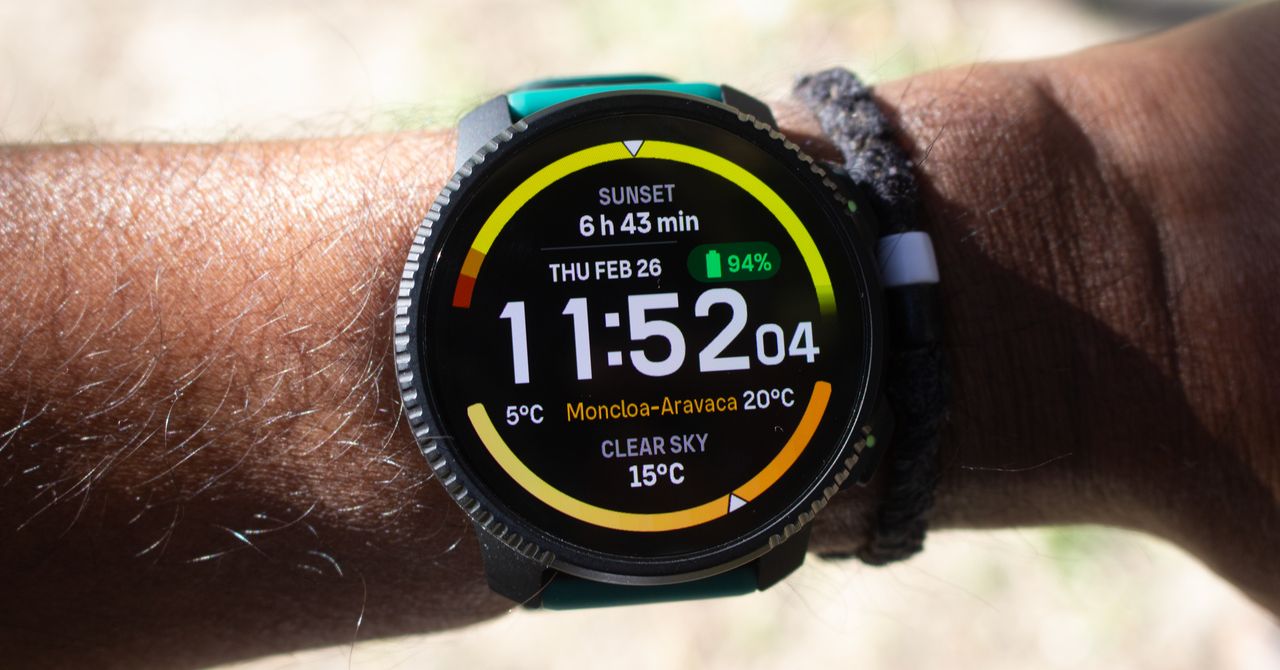
It’s always pleasing to see an array of physical buttons, and you get sizable ones too. You’re not going to miss these wide flat ones even when picking the pace up. The silicone strap has a nice stretch to it and while the button clasp is a bit awkward to get into place, this watch does not budge.
Suunto has jumped on the flashlight trend, with an LED light strip sat on the front of the case. You can adjust brightness levels and there’s SOS and alert modes to emit a very noticeable pulsating light pattern. This is a light I found useful rooting around indoors as well as on nighttime outings.
The biggest change is the introduction of a 1.5-inch, 466 x 466 AMOLED display. This replaces the dull, albeit very visible, memory-in-pixel (MIP) display. Suunto also ditched the solar charging that did require spending a significant amount of time outside to reap its battery benefits.
Adding AMOLED screens to outdoor watches has been contentious. The older MIP displays are just more power-efficient. The Vertical 2 is down by about 10 days from the older Vertical for what Suunto calls daily use.
Still, even if you’re putting its tracking and mapping features to use, you’re not going to be reaching for the charger every few days. After two hours of tracking in optimal GPS mode, the battery only dropped by 2 to 3 percent. The battery drop outside of tracking is also small and the standby performance is excellent as well.
Software Updates
Photograph: Michael Sawh
A more streamlined set of smartwatch features helps reserve battery for when it really matters. Unfortunately, I probably got better battery life because you don’t get phone notifications or responses if it’s paired to an iPhone instead of an Android. There’s also no onboard music player, but you do get a pretty slick set of music playback controls that are accessible during tracking.

Every NHS trust in England needs an electronic patient record (EPR) system in place by March 2026, as part of a government push to digitise the healthcare system.
In many ways, this is long overdue: some trusts have still been using pen-and-paper record-keeping until very recently.
EPRs have the potential to massively improve efficiency in the NHS. If working properly, they allow doctors to keep all of their records in one place, speed up prescribing and diagnostics, and make it easier for patients to access their own health information.
But these roll-outs have not been without problems. Concerns have been raised about how far these benefits can actually be realised. Some NHS trusts have experienced issues with integrating new systems and training staff on how to use them.
In the extreme, there have been reports of EPRs creating new problems for hospitals, with evidence suggesting these systems may have contributed to serious harm and even deaths among patients.
NHS trusts have been put in charge of procuring their own EPRs, meaning there are numerous different technology companies involved. Some providers of these systems are large US firms. This includes Oracle Health, provided by the Larry Ellison-led tech giant, and Epic, a tech firm based in Wisconsin.
Contracts can run into nine figures: Guy’s and St Thomas’, a trust in South London, launched a £450m system from Epic in late 2023. Some parts of the NHS have been using them for more than a decade, but a handful are still set to miss the government’s March deadline.
Data access
Pritesh Mistry is a fellow at the King’s Fund, where he researches the impact of digital transformation in the NHS. He says it has had “both positive and negative impacts”.
“In the last few years, we’ve seen doubling down on the focus around digital records,” says Mistry. These are now in place in more than 90% of all trusts, and every GP practice.
“That means we’ve now got [new] data that’s within the healthcare system, which allows us to do other things, like treat populations, and understand and track patient safety,” he says.
Despite this, he cautions some patients are still struggling to get hold of their own data.
“We’ve got a lot of data that’s in silos,” says Mistry. “It doesn’t flow. That’s the biggest challenge: making the data accessible and usable for patients and healthcare professionals to be able to provide care in a way that is joined up and meets with modern expectations.”
He says complaints with new technology haven’t just come from patients.
“We need to recognise that staff are really frustrated,” says Mistry. “Software often crashes. Computers are really slow, and technology adds to their workload, instead of simplifying things.” He caveats that some parts of the NHS are better than others on this.
Safeguarding patient data
Mistry adds that there are safeguards in place to ensure patient data isn’t ending up where it shouldn’t be – such as through data protection rules and procurement requirements.
However, he warns that “we need to make sure we move with the times in terms of what technology is available”. Mistry is more concerned about medical staff inadvertently putting personal information into a large language model, for instance.
“Digital exclusion remains a barrier as well,” he says, adding that these systems have the potential to widen inequalities in healthcare. Those less able to use new technology might struggle to access their records.
“People tend to assume it’s old people [who are most impacted], but that isn’t necessarily true,” says Mistry, instead highlighting the impact of poverty and deprivation, with some still unable to afford internet access.
He argues the NHS should be working to meet people where they are, and provide more “tailored” technology services.
Patient safety
Nick Woodier is a doctor and investigator at the Health Services Safety Investigations Body (HSSIB), which looks into issues with healthcare in the UK. He sees problems arising from how EPRs are deployed by trusts, especially when medical staff overestimate their capabilities.
He uses the example of prescribing medicines: “There’s an assumption that these electronic prescribing systems will stop you [from] doing something catastrophic.”
But this isn’t always the case. In one investigation, the HSSIB found a child had been prescribed nearly 10 times the recommended dose of an anti-coagulant medication, with doctors having assumed the EPR would flag an issue. The child ended up with a bleed on their brain.
Woodier also worries hospitals are not always picking up on when these systems are at fault.
“We will often see where incidents have happened and the contribution of the electronic system has not been recognised,” he says.
Woodier sees this as coming from a culture which prefers to put the blame for safety failures on individuals.
A 2024 investigation by the BBC found there were more than 126 instances of serious harm registered by NHS trusts across 31 trusts, including three deaths related to EPR problems.
The HSSIB has also encountered problems from patients being unable to access their digital records.
“We’ve seen in general practice, for example, some patients telling us that they’ve gone without care – because in their mind, they thought the only way they could access their GP was to fill in an electronic form,” says Woodier.
A spokesperson for NHS England says EPRs are “already having a significant impact on improving safety and care for patients”, for instance, by helping to identify conditions such as sepsis, and preventing medication errors.
“They have replaced outdated and often less-safe paper-based systems, and we are working closely with NHS trusts to ensure they are implemented safely alongside other systems with appropriate training – and are used to the highest quality and safety standards,” the spokesperson adds.
Interoperability
The EPR roll-out has also been criticised for problems with “interoperability” – the ability of different programs and modes of data collection to converse with each other. The patchwork of different systems used by different trusts means data stored in one system might not be useful for a system used by a different part of the NHS.
Woodier says this often happens in communications between hospitals and GP surgeries. This can involve someone manually inputting information from one system to another, which can create risks when data is not being transferred properly, or is missed completely.
“When you introduce a manual operation, that risk increases,” he warns. “The odds are that at some point, somebody won’t do the right thing, because that’s the reality of being human.”
Alex Lawrence, a fellow at the Health Foundation, describes interoperability as a “significant challenge”, which the NHS and technology companies have been “grappling with for a really long time”.
“Some trusts have found it much harder to access their own EPR data than they anticipated, because of where that data is stored,” she adds, referring to research the organisation carried out in 2024.
“If it’s taking you days to pull the data that you need, then it’s already not going to be useful for a lot of the purposes that you might want it for.”
However, Lawrence adds that there have been some steps made in the right direction, notably with the Data (Use and Access) Act, which was passed last year.
“The government is making information standards mandatory for EPR providers, as well as trusts, with the Secretary of State potentially having more powers to enforce those standards,” she says.
The longer term
Going forward, Lawrence would like to see a system involving “patients being empowered with access to their own data, and as far as appropriate, clinicians being able to see all of the history that they need for their patients”.
In an ideal system, different parts of the healthcare system would be able to “share a patient’s data where necessary and appropriate, in an easy and timely way”.
She says they have the “potential to offer enormous value”, but much of their functionality is going unused. “What our qualitative research suggested was that a lot of these systems are still functioning as digital notebooks,” says Lawrence.
Matthew Taylor is the head of the NHS Confederation and NHS Providers, membership bodies for healthcare organisations.
“NHS leaders say the gap between trusts on digital maturity is still stark – and it’s shaping how quickly organisations can move to modern EPRs,” he says.
This gap – combined with the organisational complexity of the healthcare system – means interoperability has “long been a thorn in the NHS’s side”.
Taylor adds that EPRs are not a “once-and-done” job, and argues they will result in savings in the long term, but that it may take around five years to see the benefits.
“Hospitals are housing a huge amount of paper records, and the cost of storing, retrieving and managing those records can run into millions of pounds each year,” he says.
These systems are part of a larger picture, and one facet of the conversation, around the use of artificial intelligence in the NHS. AI models for areas such as research and diagnostics will require extensive and standardised medical data.
Mistry warns these AI tools operate on the basis of “garbage in, garbage out”.
“There is a risk that we roll out AI tools without the underpinning data quality it needs,” he says, adding that this could exacerbate inequalities or biases from using AI.
As Woodier puts it: “We’ve got organisations who are still using archaic computers, have got infrastructure that’s not working, are still on old web systems, or have EPRs that don’t talk to each other. A few [trusts] don’t have EPRs.
“So, actually, are we trying to run before we’ve even managed to walk?”


US-Israel attack on a premier Tehran hospital targeted newborns, destroyed IVF center

Athletics GM ‘always open’ to Kyler Murray reunion ahead of expected Cardinals release

US mortgage rates rise to 6% after three-week slide as oil-driven bond yields climb – The Times of India

What are Iran’s ballistic missile capabilities?

India Us Trade Deal: Fresh look at India-US trade deal? May be ‘rebalanced’ if circumstances change, says Piyush Goyal – The Times of India

US arrests ex-Air Force pilot for ‘training’ Chinese military

-
 Politics1 week ago
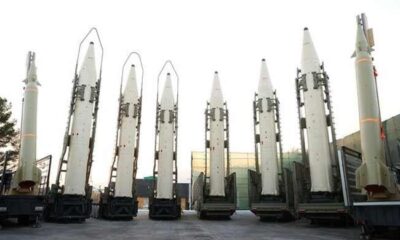
What are Iran’s ballistic missile capabilities?
-
Business6 days ago
India Us Trade Deal: Fresh look at India-US trade deal? May be ‘rebalanced’ if circumstances change, says Piyush Goyal – The Times of India
-
 Politics1 week ago
US arrests ex-Air Force pilot for ‘training’ Chinese military
-
 Business1 week ago
Attock Cement’s acquisition approved | The Express Tribune
-
 Business1 week ago
Households set for lower energy bills amid price cap shake-up
-

 Fashion7 days ago
Policy easing drives Argentina’s garment import surge in 2025
-

 Sports6 days ago
LPGA legend shares her feelings about US women’s Olympic wins: ‘Gets me really emotional’
-

 Fashion7 days ago
Texwin Spinning showcasing premium cotton yarn range at VIATT 2026