

Business
The Chinese box office isn’t the Hollywood kingmaker it used to be. Here’s why


Posters of films are on display at a cinema in Shanghai, Aug. 31, 2025.
Vcg | Visual China Group | Getty Images
Hollywood has lost one of its most lucrative theatrical markets. It’s unclear if it will ever win it back.
The Chinese box office was once a coveted space for American-made movies, so much so that studios produced films that would appeal directly to this international audience. But in the postpandemic cinema landscape, Hollywood hasn’t generated the strong ticket sales it once saw for its biggest blockbusters — and a waning relationship with Chinese cinemas is at least partly to blame.
The U.S.-China Film Agreement, struck in 2012 between the two governments, guaranteed 34 U.S. films would be released in China each year. That pact ended in 2017 and was never renewed or renegotiated. At the same time, China began expanding its local film production and instituting blackout dates to promote viewership of its homegrown titles.
Add in strict censorship policies from the China Film Administration and recent political strains between the U.S. and China, and Hollywood films have faced several hurdles just to get distribution in the country post-Covid.
“I think that the kind of euphoria about the world’s largest market and thinking about China as a place that always creates a larger market for U.S. [intellectual property] is not accurate,” said Aynne Kokas, a professor at the University of Virginia and the author of “Hollywood Made in China.”
“[There are] constraints on the market in a couple of ways, first related to content control and not just content control in terms of censorship, but also in terms of control of distribution channels by the party,” Kokas said.
She said the film bureau will “turn on and off the levers of distribution based on the needs of the market.” If local Chinese films are doing well, the country will limit distribution access for foreign films. If there are gaps in film releases or releases aren’t selling as many tickets, it will open up the market.
In 2019, nine U.S. titles each generated more than $100 million at the Chinese box office, with Disney and Marvel Studio’s “Avengers: Endgame” collecting more than $600 million in the region, according to data from Comscore.
In the past five years combined, however, only 10 American films have generated more than $100 million in China, with only two topping $200 million.
The outlier is Disney’s “Zootopia 2,” which tallied a record-breaking $650 million in the country following its 2025 release.
Box office analysts tell CNBC that this feat is likely an anomaly and studios and Wall Street shouldn’t expect a sudden resurgence of ticket sales for American-made fare in the region even as major franchises launch ahead of the key summer movie season.
Market nuances
What performs well in the U.S. isn’t guaranteed to succeed in China, despite the massive audience potential.
“There’s not necessarily a one-to-one correlation between popular IP in the U.S. and popular IP in China,” Kokas said.
In some cases, it’s a lack of nostalgia on the part of Chinese audiences. Kokas noted that when Star Wars was introduced in the region with the sequel trilogy in 2015, it fell flat because the previous films from the original and prequel trilogies were never released in China, so the later installments didn’t have the boost of a built-in fanbase.
Distribution experts told CNBC that the Chinese film bureau and audience tend to gravitate toward features that are visual spectacles and apolitical.
Films that have performed well in the region since the pandemic include entries from the Fast & Furious saga, Jurassic World flicks and installments from the Godzilla and King Kong franchises.
Even with the recent lull in ticket sales from Chinese releases, studios aren’t deterred from launching titles in the region. One distribution expert told CNBC that China remains a major theatrical opportunity for American-made films.
“China remains an essential component in any international strategy by U.S.-based studios because there are many hundreds of millions of dollars potentially to be earned there due to an undeniable appetite in the region for the big Hollywood movies,” said Paul Dergarabedian, head of marketplace trends at Comscore.
Universal’s “The Super Mario Galaxy Movie” is the next U.S. entrant into the country, due in theaters this weekend.
The franchise’s first film, “The Super Mario Bros. Movie,” tallied more than $1.3 billion globally in 2023, but only $25 million of that total came from China.
One distribution expert told CNBC that console games, like Nintendo’s Super Mario franchise, are not as prevalent in the region, meaning the nostalgia that drove $575 million in domestic ticket sales was not a major factor over in China.
Meanwhile, in Japan, where Super Mario is a cultural icon, the film generated $102 million.
Still, the Chinese market helps bolster the overall haul of a film and has the potential to cement a breakout hit. So studios are still willing to give titles a theatrical release in the region.
Also on the docket for distribution in China this year is Universal’s “Michael,” Warner Bros.’ “Mortal Kombat II” and Disney’s “The Devil Wears Prada 2.”
Because of China’s strict censorship policies, films must be completed and screened by the film bureau before they are considered for distribution. Therefore, the Hollywood slate in China is not set in stone in the same way the domestic movie slate is.
But box office analysts expect titles like Disney and Pixar’s “Toy Story 5” and Warner Bros.’ “Dune: Part Three,” as well as Disney and Marvel’s “Avengers: Doomsday” to also land in Chinese theaters this year.




Business
Stock markets outlook: Dalal Street braces for swings as RBI MPC decision, war risks weigh on sentiment–Check key triggers – The Times of India

Domestic equities are expected to remain volatile this week as investors track the Reserve Bank’s monetary policy decision, global macroeconomic cues and evolving developments in the West Asia conflict, analysts said, according to PTI.Market participants will also keep a close watch on crude oil price movements and foreign fund flows, which continue to influence sentiment.Vinod Nair, Head of Research at Geojit Investments Ltd, said the RBI’s Monetary Policy Committee (MPC) meeting will be the key domestic trigger, with investors focusing on the central bank’s stance on inflation and growth.“A rate pause is near-certain consensus, the central bank walks a tightrope between crude-driven inflation risks and a four-year low Manufacturing PMI signalling a softening growth impulse. The governor’s commentary on the rate cycle trajectory and FY27 projections will be closely monitored.“Globally, the US March CPI reading will carry significant importance, as it buries residual Fed rate-cut hopes, strengthens the dollar and tightens financial conditions for emerging markets, including India,” Nair said.He added that geopolitical developments in West Asia will remain the dominant factor shaping market direction.“Indian markets return after a three-day gap and remain acutely vulnerable to weekend war developments, with crude trajectory and any credible ceasefire signal being the decisive variable that could either trigger a sharp relief rally or extend the current sell-on-rise mode,” he said.In the previous holiday-shortened week, the BSE Sensex declined 263.67 points, or 0.35%, while the NSE Nifty fell 106.5 points, or 0.46%.Siddhartha Khemka, Head of Research (Wealth Management) at Motilal Oswal Financial Services Ltd, said investor sentiment will remain closely linked to developments in the West Asia conflict.Brent crude prices have stayed elevated near $107 per barrel, fuelling concerns around imported inflation. Currency pressures have also intensified, with the rupee weakening sharply before recovering towards Rs 93 against the US dollar following RBI intervention, he noted.Foreign institutional investor (FII) outflows remain a key overhang, with March witnessing heavy selling of Rs 1.2 lakh crore, among the highest monthly outflows in recent years.“Investors will monitor the US Federal Open Market Committee (FOMC) meeting minutes, GDP data, and initial jobless claims for further cues on growth and the policy trajectory.“Overall, markets are expected to remain volatile as geopolitical developments, crude price movements, FII flows and global macro data continue to drive sentiment,” Khemka said.Analysts said any signs of de-escalation in the West Asia conflict could ease crude prices and stabilise the currency, offering relief to markets, while further escalation may prolong risk aversion and keep pressure on foreign flows.

One elderly couple had to find £1,000 for an oil delivery and suppliers are not giving quotes, a councillor says.
Source link
Business
Middle East conflict may hit India’s exports beyond region if prolonged, says government – The Times of India
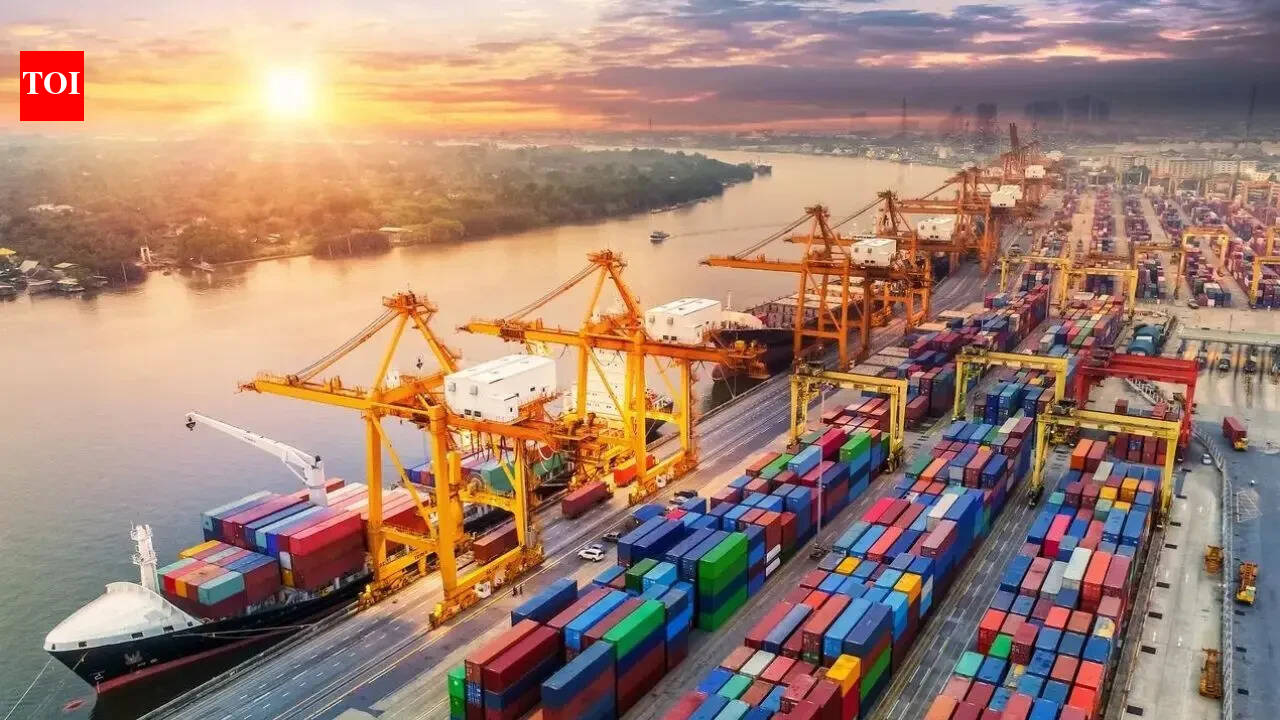
A prolonged conflict in Middle East could begin to hurt India’s exports not just to the region but also to other global markets, as disrupted supply chains ripple outward, commerce secretary Rajesh Agrawal said on Saturday, He also urged the pharmaceutical industry to reduce dependence on imported raw materials and build more resilient export and import linkages.Speaking on the sidelines of ‘Chintan Shivir – Scaling Up Pharma Exports’ in Hyderabad, Agrawal said the government has already seen an impact on both imports and exports over the past month because of the Middle East crisis, with energy imports and regional trade flows under pressure.
“Middle East is also an important market. Around 12-13 per cent of our exports go to the region. So, that will directly get impacted. And if it goes on for long, maybe our exports to other parts of the world will also get impacted as some of the value chains will rotate back. We are cognizant of it,” Agrawal told reporters, as per news agency PTI.He said the exact impact of the conflict on India’s trade would become clearer in the next couple of weeks, but indicated that both exports and imports could see some decline.“And I assume, it will not only be a one-way traffic, in terms of export going down, but it will also be imports having some downfall,” he said.Agrawal cautioned that even if the war ends soon, the disruption may linger for months or even years, depending on the extent of damage to supply chains and infrastructure.“So, at this juncture, it will be very difficult to take a very long-term view on it,” he said.He said the Centre is trying to ensure that supply chains face the minimum possible disruption, while acknowledging that some trade numbers may soften in the near term.
Pharma sector already feeling supply pressure
The commerce secretary said the pharmaceutical sector has already seen some impact in the availability of key intermediates and solvents because supply chains are getting affected by the regional crisis.Agrawal said all arms of the government are working to prioritise limited LPG supply and are attempting to ease the situation by diversifying imports and sourcing from alternative suppliers.“So, as we are able to resolve that overall supply, we will try to alleviate some of the pain in every sector. The Pharma sector will be one of the priority sectors,” he said.He added that the government and industry are jointly working on ways to make supply chains more resilient.
Call for self-reliance in APIs, bulk drugs and intermediates
At the same event, Agrawal asked the pharmaceutical industry to use the current geopolitical uncertainty as a trigger to reduce dependence on critical imported inputs and strengthen domestic capacity.Addressing industry stakeholders in Hyderabad, he stressed “the importance of ensuring greater self-reliance by meeting 80-90 per cent (or higher) of domestic pharmaceutical requirements through indigenous production, while reducing critical import dependencies in APIs, bulk drugs, and intermediates”.He also emphasised the “importance of insulating import supply chains in a geopolitically fragmented world, where availability may be important”.Agrawal called for a broader strategic repositioning of India as a global hub for quality, affordable pharmaceuticals, saying that quality would remain the decisive factor in healthcare. He urged the sector to build a stronger quality ecosystem to enhance global trust and align with emerging areas such as biologics and biosimilars.He also encouraged the industry to shift from a volume-driven to a value-driven model, with greater focus on innovation and new patents, while maintaining India’s strength in generics.
Exports remain on positive path despite uncertainty
Despite the geopolitical overhang, Agrawal said India’s exports in the last financial year were expected to remain on a positive trajectory.The broader pharmaceutical export picture remains resilient. India’s pharma exports stood at $30.47 billion in 2024-25, up 9.4 per cent over the previous year.During April–February 2025-26, pharma exports reached $28.29 billion, registering growth of over 5 per cent compared with the corresponding period of the previous year.India remains the third-largest producer of pharmaceuticals globally by volume and 14th by value, underscoring both the sector’s scale and the stakes involved in insulating it from external shocks.


4/5: Sunday Morning

Royal Family out in full bloom with Kate and Charlotte like two peas in pod

The sublime perfection of Raphael

-

 Sports1 week ago
USMNT handed reality check by Doku, Belgium ahead of World Cup
-

 Sports1 week ago
2026 NCAA men’s hockey tournament: Schedule, results
-

 Fashion1 week ago
EU apparel imports slump 15.48% YoY in Jan; Bangladesh hardest hit
-
Uncategorized6 days ago
[CinePlex360] Please moderate: “Further tariff
-
Uncategorized1 week ago
[CinePlex360] Please moderate: “Apple scrapping
-

 Entertainment1 week ago
The Avett Brothers’ bassist explains why he wrote a book about John Quincy Adams
-

 Sports1 week ago
Man City show why they are worthy WSL title winners as tired United wilt
-

 Entertainment1 week ago
Demystifying the PTI