

Politics
The dark side of US political group chats

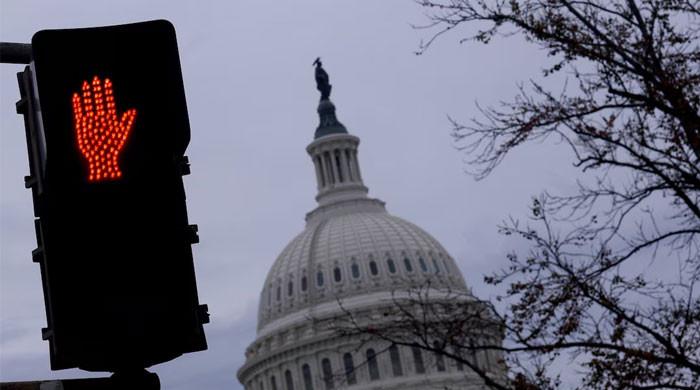
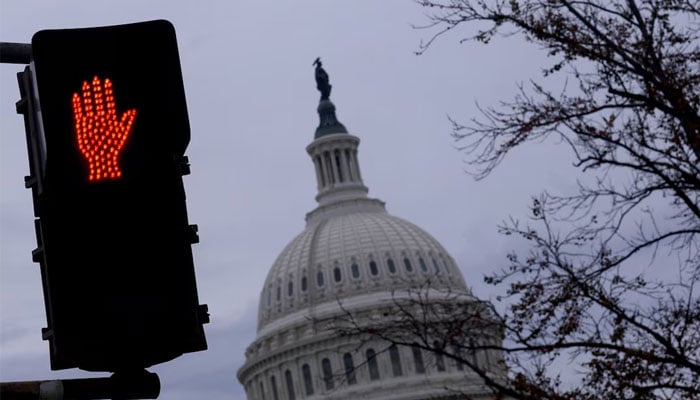
Three separate controversies involving leaked text messages from private online group chats have rocked US political circles this month, revealing racist, antisemitic, and violent statements from figures across the ideological spectrum.
The messages — sent privately but now public — include racial slurs, praise for Nazis, and threats of political violence, raising questions about why those involved felt comfortable expressing such views despite the risk of exposure and censure.
The online posts have also deepened concern among civil society groups and political language experts that violent rhetoric and racist hate speech are becoming normalised in America, particularly after decades of hard-fought civil rights victories that sought to dismantle such ideologies.
People have long expressed violent or racist views in private settings, but experts say the leaks of the text messages are noteworthy because they surfaced the unfiltered — and to many shocking — views of political figures.
A Politico report on October 14 revealed that a group of about a dozen Young Republican leaders had been sending racist and antisemitic messages to each other on Telegram between January and mid-August, referring to Black people as monkeys and with one declaring, “I love Hitler.”
On October 3, leaked texts published by National Review revealed that Jay Jones, the Democratic candidate to be Virginia’s top law enforcement official, sent a private text in 2022 saying a state Republican should be shot dead and that he would urinate on the graves of political opponents.
And this week, President Donald Trump’s nominee to lead a federal watchdog agency, Paul Ingrassia, withdrew from consideration after he lost support among key Republican lawmakers following reports that he had described himself as having a “Nazi streak” in a private text message exchange.
Experts in online culture and political discourse, including a professor from the City University of New York and Alex Turvy, a sociologist who writes for publications including “Social Media and Society”, say the persistence of inflammatory group chats reflects a false sense of privacy and safety, despite the fact that the messages form a permanent record and can be leaked.
At the same time, members in group chats sometimes falsely assume they can trust their fellow participants when allegiances, ambitions, and motivations can shift over time, especially in politics, said Turvy.
“There is an illusion of intimacy,” Turvy said. “It feels like it’s private speech. But you’re betting that all of the members in the group chat are going to protect you forever.”
Provocative language
The experts said an increasingly powerful social media presence among more extreme elements of both parties, and a phenomenon — especially among younger people — to push rhetorical boundaries, have exacerbated private hate speech.
Reece Peck, an associate professor of media culture at the City University of New York, said Trump’s own rhetoric and attacks on progressive causes have led many conservatives to believe that language that would have been deemed unacceptable before Trump first took office in 2017 is now permissible.
While campaigning last year, Trump accused people in the US illegally of “poisoning the blood of the country.” As president, he has called some of them “criminals,” and described illegal border crossings as an “invasion,” while his White House has posted memes online that critics say have coarsened political rhetoric.
“They feel Trump has seized popular culture, and the Democrats are out of touch. The throughline is anti‑woke,” Peck said. “If you can be edgy – say something inappropriate – you establish group membership. That dynamic is central to Trumpism.”
Turvy said this is known as “Edgelord culture,” an online phenomenon where people deliberately post shocking or taboo content to stay relevant within the chat group.
The Black Conservative Federation, a grassroots group that sought to court Black voters for Trump’s second term, called on Republican leaders to denounce the Young Republican group chat texts “without hesitation or excuse.”
Hakeem Jefferson, an assistant professor of political science at Stanford University, also said Trump has helped “give some cover” to some of the speech contained in the texts.
“This is how the president of the United States speaks, and I do think it has opened a space for these people to mimic his behavior,” Jefferson said.
Abigail Jackson, a White House spokeswoman, said, “President Trump is right to call out heinous criminal aliens who have invaded our country and have murdered innocent Americans.”
Jackson cited the case of a man in the US illegally who allegedly killed three people while driving a truck this week under the influence of drugs in California.
She said White House memes were successfully communicating Trump’s agenda against people in the country illegally who are committing crimes against Americans.
The White House did not respond to a request for comment on the content of the Young Republican group chat and the alleged private text messages by Ingrassia.
Trump has criticised Jones for his text messages, saying that he shouldn’t be allowed to run for office.
“You would think he’s totally discredited – anybody would be put in prison for what he said,” Trump told reporters on Air Force One on October 19.
Firings, resignations
The text scandals brought widespread condemnation from across the political spectrum, although Vice President JD Vance – while calling the Young Republican texts “truly disturbing” – also accused critics of “pearl clutching” and referred to the chat participants as “kids”. Most were in their 20s and 30s.
Vance instead drew attention on X to the texts by Jones.
Jones, in his 2022 text, said former Virginia Republican House Speaker Todd Gilbert should get “two bullets to the head,” and mused about his children dying in their mother’s arms.
Jones’ campaign referred Reuters to a statement he issued on October 3 in which he said he was “embarrassed, ashamed, and sorry” about his texts and had sought to apologise to Gilbert and his family.
A Washington Post-Schar School poll of Virginia voters released on Thursday showed that support for Jones has tumbled since the texts were made public, and a race he had led in public opinion polls is now a tie.
Many of the Young Republicans involved in their group chat have since lost their jobs as political aides or lost their positions as Young Republican leaders. One, a state senator from Vermont, has resigned.
Republican group disbanded
Across 2,900 pages of chats, Black people were referred to as “the watermelon people,” one member talked about raping enemies, and there was talk of sending people to the gas chamber.
Several members of the group were from the New York Young Republicans Club, which was disbanded by the state’s Republican executive committee last week. At least two members from the group, which also included members from states including Kansas, Arizona and Vermont, have apologised.
Hayden Padgett, chairman of the Young Republican National Federation, referred Reuters to a statement the group released on X on October 3, in which its board of directors called on all involved to resign.
“Such behavior is disgraceful, unbecoming of any Republican, and stands in direct opposition to the values our movement represents,” the statement said.
Ingrassia, a former right-wing podcaster, was Trump’s nominee to head the Office of Special Counsel, which investigates claims of retaliation against government whistleblowers.
His nomination imploded after Politico reported on Monday that Ingrassia told Republican operatives and social media influencers in a text chat last year that “I do have a Nazi streak in me from time to time.” He also said the January holiday celebrating Black civil rights leader Martin Luther King Jr. “should be ended and tossed into the seventh circle of hell where it belongs.”
A lawyer for Ingrassia, Edward Andrew Paltzik, said in a statement to Reuters that the messages could have been manipulated. He added that if they were authentic, they “clearly read as self-deprecating and satirical humor.”

An investigative reporter best known for exposing fraud at Silicon Valley blood-testing startup Theranos sued Elon Musk’s xAI, Anthropic, Google, OpenAI, Meta Platforms and Perplexity on Monday for using copyrighted books without permission to train their artificial intelligence systems.
New York Times reporter and “Bad Blood” author John Carreyrou filed the lawsuit in California federal court with five other writers, accusing the AI companies of pirating their books and feeding them into the large language models (LLMs) that power the companies’ chatbots.
The lawsuit is one of several copyright cases brought by authors and other copyright owners against tech companies over the use of their work in AI training. The case is the first to name xAI as a defendant.
Spokespeople for the defendants did not immediately respond to requests for comment on the lawsuit.
Unlike other pending cases, the writers are not seeking to band together in a larger class action – a type of lawsuit they said favours defendants by allowing them to negotiate a single settlement with many plaintiffs.
“LLM companies should not be able to so easily extinguish thousands upon thousands of high-value claims at bargain-basement rates,” the complaint said.
Anthropic reached the first major settlement in an AI-training copyright dispute in August, agreeing to pay $1.5 billion to a class of authors who said the company pirated millions of books.
The new lawsuit said class members in that case will receive “a tiny fraction (just 2%) of the Copyright Act’s statutory ceiling of $150,000” per infringed work.
Monday’s complaint was filed by attorneys at law firm Freedman Normand Friedland, including Kyle Roche, whom Carreyrou profiled in a 2023 New York Times article.
During a November hearing in the Anthropic class action, US District Judge William Alsup criticised a separate law firm Roche co-founded for gathering authors to opt out of the settlement in search of “a sweeter deal.” Roche declined to comment on Monday.
Carreyrou told the judge at a later hearing that stealing books to build its AI was Anthropic’s “original sin” and that the settlement did not go far enough.

- Bill limits most gun owners to four firearms, 10 for farmers.
- Main opposition Liberal party backs amendments.
- Three-quarters of Australians want tougher gun laws, shows poll.
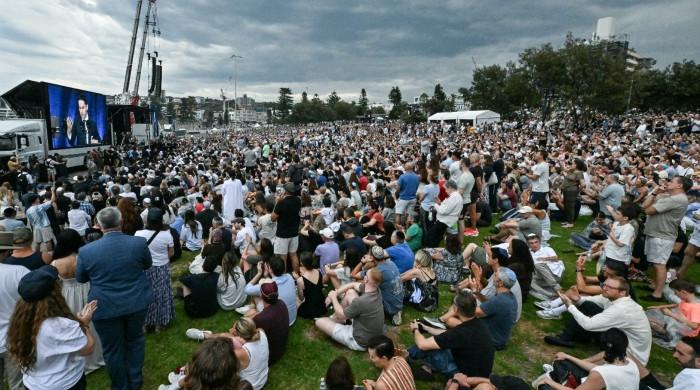
Australia’s most populous state is set to pass tougher gun laws, ban the display of terrorist symbols and curb protests after the state parliament’s lower house cleared a bill late on Monday in an emergency sitting following the Bondi mass shooting.
The terrorism and other legislation amendment bill won support from the opposition Liberal Party in New South Wales state, and is expected to clear the upper house on Tuesday.
The ruling centre-left Labour government has proposed capping most individual gun licences at four firearms and allowing up to 10 for farmers.
Fifteen people were killed and dozens were injured in the mass shooting at a Jewish Hanukkah celebration at Bondi on December 14, a shock attack that has prompted calls for tougher gun laws and stronger action against antisemitism.
Police said one alleged gunman, Sajid Akram, 50, who was shot dead by officers, owned six firearms. His 24-year-old son Naveed, faces 59 charges, including murder and terrorism.
Although Australia tightened gun laws after a 1996 shooting that killed 35 people, a police firearms registry showed more than 70 people in New South Wales, which includes Sydney, each own over 100 guns. One licence holder has 298 guns.
A Sydney Morning Herald poll on Tuesday found three-quarters of Australians want tougher gun laws. The rural-focused National Party opposed the gun reforms in New South Wales, saying the amendments would disadvantage farmers.
The federal government has also pledged reforms, including tighter gun controls and a gun buyback plan but has resisted calls to set up a royal commission, the most powerful type of government inquiry, into the attack.
Instead, Prime Minister Anthony Albanese, who is facing mounting criticism from opponents who argue his government has not done enough to curb a rise in antisemitism, has announced an independent review of intelligence and law enforcement agencies.
“We need to get to these answers quickly, and we cannot be waiting around for years, which is what a royal commission would take,” Defence Minister Richard Marles told ABC News on Tuesday.


US President Donald Trump described Pakistan’s Chief of Army Staff (COAS) and Chief of Defence Forces (CDF) Field Marshal Syed Asim Munir as a “highly respected general” while reiterating claims that he helped prevent a war between Pakistan and India.
“We stopped a potential nuclear war between Pakistan and India,” reiterated Trump while responding to a question during an event in Florida alongside Secretary of Defence Pete Hegseth and Secretary of the Navy John Phelan on Monday.
He went on to say that “highly respected general […] he is a field marshal” and also the prime minister of Pakistan credited him with saving 10 million lives by stopping the war.
“You know, eight planes were shot down [during the Pakistan-India war]. That war was going to rage,” Trump said.
The US president claimed that he has stopped eight wars so far.
He made these remarks while addressing a press conference in Florida to unveil his plans for a new “Trump class” of battleships, marking the start of an expanded naval buildup.
Trump has repeatedly claimed credit for easing tensions between the nuclear-armed rivals, which have fought three wars since independence and remain locked in a dispute over Indian Illegally Occupied Jammu and Kashmir (IIOJK).
In May, Pakistan and India engaged in a military showdown, the worst between the old foes in decades, which was sparked by a terrorist attack on tourists in IIOJK’s Pahalgam area, which New Delhi said was backed by Pakistan.
Islamabad denied involvement in the Kashmir attack, which killed 26 men and was the worst assault on civilians in India since the Mumbai attacks in 2008.
After the incident, India killed several innocent civilians in unprovoked attacks on Pakistan for three days before the Pakistan Armed Forces retaliated in defence with the successful Operation Bunyanum Marsoos.
Pakistan downed seven IAF fighter jets, including three Rafale, and dozens of drones. After at least 87 hours, the war between the two nuclear-armed nations ended on May 10 with a ceasefire agreement brokered by the US.
US-Pakistan ties have warmed under Trump after Washington had for years viewed Pakistan’s rival India as a counter to China’s influence in Asia.
Following the brief conflict between Pakistan and India, the US president held a rare one-on-one meeting with Field Marshal Munir over lunch at the White House Cabinet Room in June, where he thanked the army chief to thank him for ending the war with India.
In September, Trump met Prime Minister Shehbaz Sharif and COAS Munir at the Oval Office.
Ahead of the Oval meeting, which lasted for more than an hour, the US president, while speaking to the media, called PM Shehbaz and Field Marshal Munir “great” people.
Later, Trump showered praises on the Pakistani army chief once again, calling him a “great fighter” while speaking at a luncheon during the Asia-Pacific Economic Cooperation (APEC) summit in Gyeongju, South Korea, in October.
Trump commended PM Shehbaz and COAS Munir’s efforts in promoting regional stability.
“I’m doing a trade deal with India, and I have great respect and love for Prime Minister Modi. We have a great relationship,” he said.
“Likewise, the Prime Minister of Pakistan is a great guy. They have a Field Marshal. You know why he’s a Field Marshal? He’s a great fighter. And so I know them all.
“I’m reading that seven planes were shot down. These are two nuclear nations. And they’re really going at it,” he added.
The Pakistan-India conflict eventually ended via a US-brokered ceasefire for which Islamabad has credited President Trump, while also nominating him for the Nobel Peace Prize.
Since then, Islamabad and Washington have been engaged with each other in high-level interactions between both civil and military leadership and have also finalised a much-hyped trade deal, reflecting improving relations between the two countries.

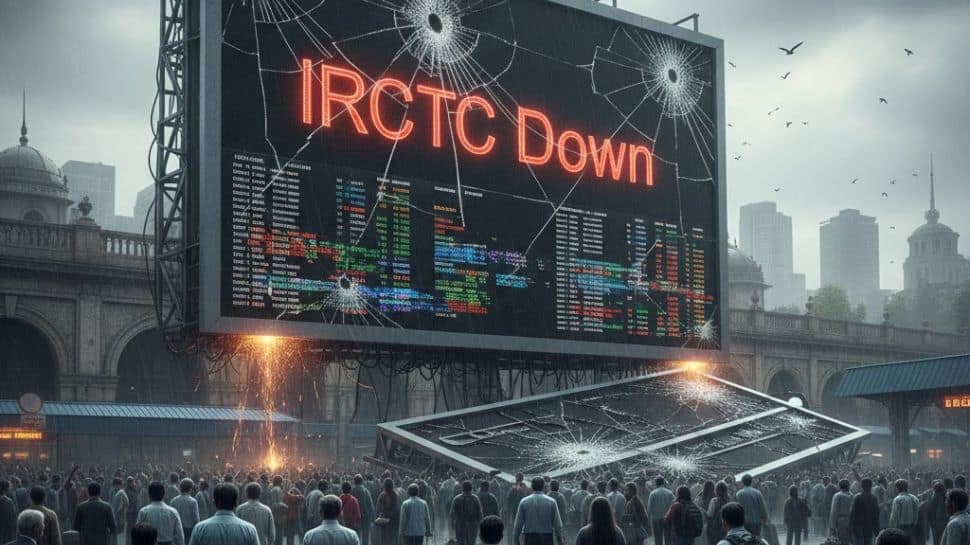
IRCTC Down? Tatkal Ticket Users Complain Of Repeated ‘Error’ Messages On App; Netizens React; How to Book Train Tickets Online

Chiefs agree to deal to move to Kansas in 2031

Viral videos falsely link Pakistan to Bondi Beach attack

-
 Business1 week ago
Studying Abroad Is Costly, But Not Impossible: Experts On Smarter Financial Planning
-

 Fashion5 days ago
Indonesia’s thrift surge fuels waste and textile industry woes
-
 Business1 week ago
KSE-100 index gains 876 points amid cut in policy rate | The Express Tribune
-
 Business5 days ago
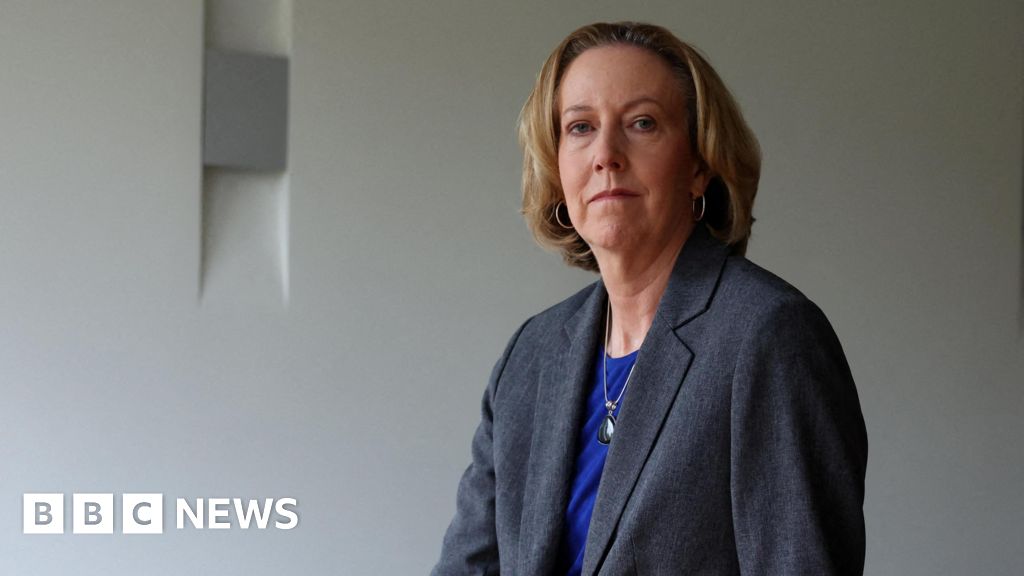
BP names new boss as current CEO leaves after less than two years
-

 Sports1 week ago
Jets defensive lineman rips NFL officials after ejection vs Jaguars
-

 Entertainment1 week ago
Prince Harry, Meghan Markle’s 2025 Christmas card: A shift in strategy
-
 Tech5 days ago
T-Mobile Business Internet and Phone Deals
-

 Sports5 days ago
PKF summons meeting after Pakistani player represents India in kabaddi tournament