

Fashion
The hidden $1.62 war tax now embedded in every garment you source

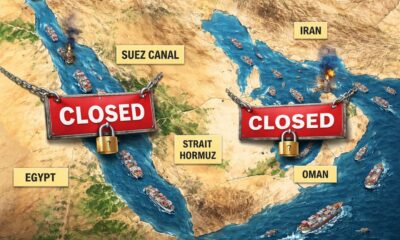
This is not a geopolitics story. It is a commercial repricing event. Every apparel brand, textile manufacturer, and sourcing office that ships through or near the Persian Gulf is now operating under a fundamentally different cost structure—one built on three stacking surcharge layers that function as a de facto war tax on every garment moving from East to the West.
Layer * — War Risk Insurance. The London insurance market’s Joint War Committee expanded designated war-risk zones across the Persian Gulf. All major P&I clubs cancelled war risk cover effective midnight March *. New policies emerged at * per cent of vessel hull replacement value — up from *.** per cent pre-conflict, a fourfold increase. Some premiums surged over *,*** per cent. The crisis grew so acute that Washington launched a $** billion reinsurance programme through the Development Finance Corporation (DFC), with Chubb as lead underwriter, according to the DFC.






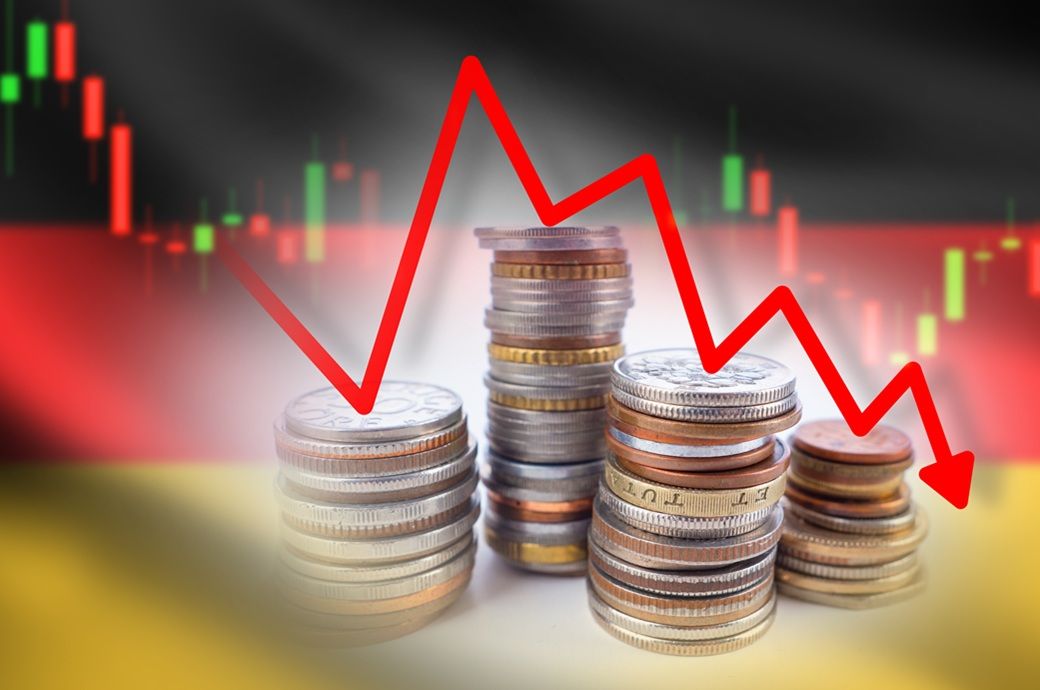
The sharp fall reflects growing concerns over rising energy prices and inflationary pressures linked to the ongoing conflict, ZEW said in a press release.
“The ZEW Indicator has collapsed,” said Achim Wambach, president of ZEW, noting that the escalation in the Middle East is fuelling energy costs and increasing risks to Germany’s fragile economic recovery. He added that financial market experts remain sceptical about a swift resolution to the conflict, raising uncertainty over the economic outlook.
Germany’s economic sentiment plunged in March 2026, with the ZEW index falling 58.8 points to -0.5 amid Middle East tensions driving energy and inflation concerns.
While the current situation improved slightly to -62.9, it remained weak.
Around 80 per cent expect rising inflation.
Eurozone sentiment also declined sharply, with expectations at -8.5 and conditions worsening to -29.9.
In contrast, the assessment of Germany’s current economic situation showed a modest improvement. The corresponding indicator rose by 3 points to -62.9, although it remains firmly in negative territory, signalling continued weakness in overall economic conditions.
Inflation concerns have intensified, with around 80 per cent of respondents anticipating increased price pressures in both Germany and the broader eurozone.
The negative sentiment extended across the eurozone, where the expectations index fell by 47.9 points to -8.5, slipping into negative territory. Meanwhile, the assessment of the current economic situation in the eurozone declined further to -29.9 points, down by 16.3 points from February.
Fibre2Fashion News Desk (SG)
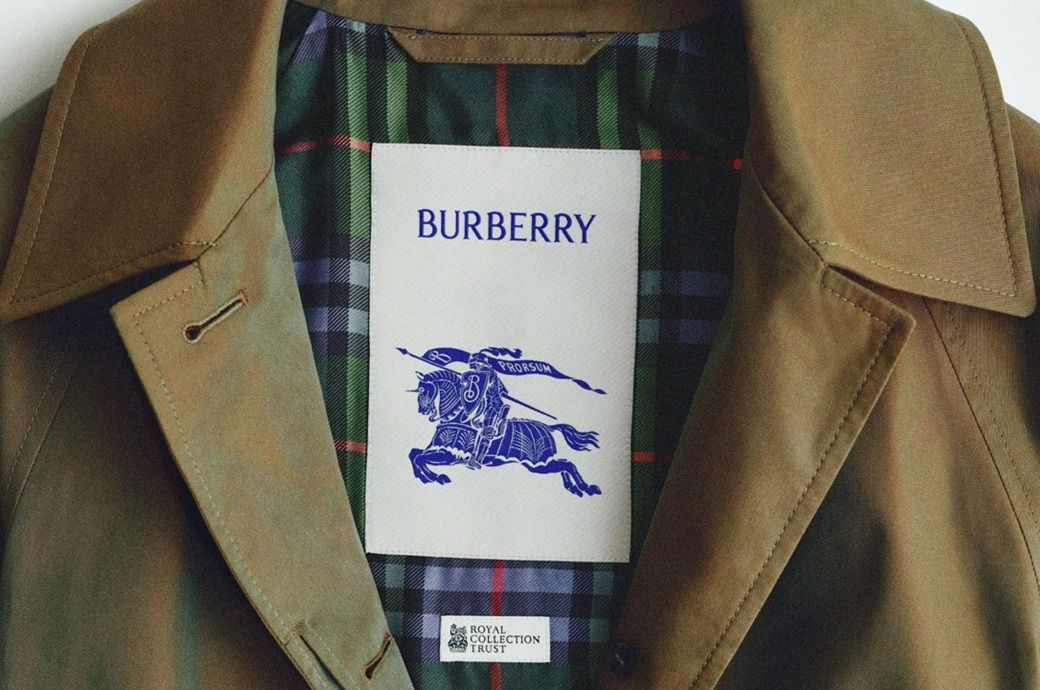
The brand has a longstanding association with the late monarch, who wore Burberry throughout her reign. The company was awarded a Royal Warrant in 1955, and the Queen frequently chose Burberry for outdoor pursuits, reflecting the brand’s heritage in protective outerwear.
Burberry has unveiled a capsule collection with the Royal Collection Trust to mark the birth centenary of Queen Elizabeth II.
Launching in March 2026, the four designs draw on the late monarch’s wardrobe and outdoor style.
The range features signature outerwear, Scottish-woven cashmere and accessories, including a belted car coat and a corgi-shaped brooch.
The capsule collection draws inspiration from the Queen’s iconic wardrobe and features signature outerwear alongside Scottish-woven cashmere pieces. The collaboration also precedes the largest-ever exhibition dedicated to the fashion of Queen Elizabeth II, set to open at The King’s Gallery in April. The exhibition will showcase several Burberry designs worn by the late Queen.
A key piece in the capsule is a belted car coat, a style favoured by Queen Elizabeth II. Crafted in Castleford, Yorkshire, the coat is made from lightweight cotton gabardine in holly green, woven with contrasting yarns to create an iridescent effect. The material is certified organic cotton and is complemented by an organic silk lining.
Burberry has also introduced a new colourway of its iconic House Check specifically for the capsule. Presented in a holly green palette, the check is inspired by a tartan worn by the Queen, the Old Stewart Tartan. The pattern appears on the silk lining of the car coat, a Scottish-woven cashmere scarf, and along the border of a silk twill scarf featuring a hand-painted depiction of Balmoral Castle, the Highland residence of the Royal Family.
In jewellery, the collection includes a gold-plated brooch shaped like a corgi wearing an enamelled check coat. The piece is adorned with the Burberry Knight motif set on a freshwater pearl.
Fibre2Fashion News Desk (JP)

An energy supply shock will hit most economies in the Asia-Pacific (APAC) region, given their net energy importing status. Economies with high energy import dependence relative to gross domestic product (GDP) face greater vulnerability, it noted.
India’s low strategic stockpiles to its energy needs poses a risk, while Japan’s relatively thin gas reserves could expose weaknesses, particularly for sectors reliant on gas supplies, S&P Global said.
An energy supply shock will hit most APAC economies, given their net energy importing status.
Energy supply gaps are somewhat mitigated as these broadly have some strategic crude oil stockpiles.
Thailand, South Korea, Vietnam, Singapore and India have high energy import needs relative to GDP.
While China’s energy imports are moderate relative to GDP, it is large in absolute terms—making it the region’s largest energy importer, it said..
Energy supply gaps are somewhat mitigated as APAC economies broadly have some strategic crude oil stockpiles to smooth over any short-term disruption in crude supplies.
China, South Korea, Singapore, Taiwan and Japan hold particularly large stockpiles (combination of crude and gas) relative to consumption.
With these stockpiles held across both government and commercial sectors, tapping into such resources may be less forthcoming, S&P Global said.
The fuel crunch may prompt governments to impose more prudent measures around energy consumption. Following that, economies may need to access the energy markets at potentially disruptive pricing, it remarked.
Amid shortages, governments may prioritise the essential needs of citizens over industries. A longer halt in manufacturing could weigh on growth.
Energy price surge could squeeze corporations and households, triggering a global slowdown, it said. For corporations, the pain is two-fold: the dimmer outlook hits revenue growth, while higher inputs hit margins. The ability to pass through cost to consumers will be tested.
Downstream sectors, particularly transportation, logistics, industrial and petrochemicals, and agriculture, will face an outsized squeeze on margins and credit drags, S&P Global added.
Inflation may rise for Asian consumers, who had benefitted from a period of contained energy prices and China’s export of disinflation.
Fibre2Fashion News Desk (DS)


Germany’s ZEW index falls to -0.5 in March amid Middle East tensions

Ryan Gosling reacts to viral NFL meme that won’t die

Eli Lilly’s next-generation obesity drug retatrutide clears first late-stage diabetes trial
Stock market crash today (March 12, 2026): Nifty50 opens below 23,600; BSE Sensex down over 900 points on continuing US-Iran war – The Times of India

UK’s Topshop unveils Tolu Coker capsule collection

India’s textile recycling market may reach $3.5 bn by 2030: Report

-
Business1 week ago
Stock market crash today (March 12, 2026): Nifty50 opens below 23,600; BSE Sensex down over 900 points on continuing US-Iran war – The Times of India
-
 Fashion1 week ago
UK’s Topshop unveils Tolu Coker capsule collection
-
 Fashion1 week ago
India’s textile recycling market may reach $3.5 bn by 2030: Report
-
 Tech1 week ago
Meta Developed 4 New Chips to Power Its AI and Recommendation Systems
-
 Business1 week ago
US ignites Iran war, but Gulf Arab states pay the price | The Express Tribune
-

 Sports1 week ago
Bangladesh crush Pakistan in ODI series opener | The Express Tribune
-
 Entertainment1 week ago
Gas, food, household prices explained
-

 Tech1 week ago
I Used Google’s New Gemini-Powered ‘Help Me Create’ Tool in Docs. It’s Great at Corporate-Speak