

Sports
The Luka trade: Four questions on the one-year anniversary

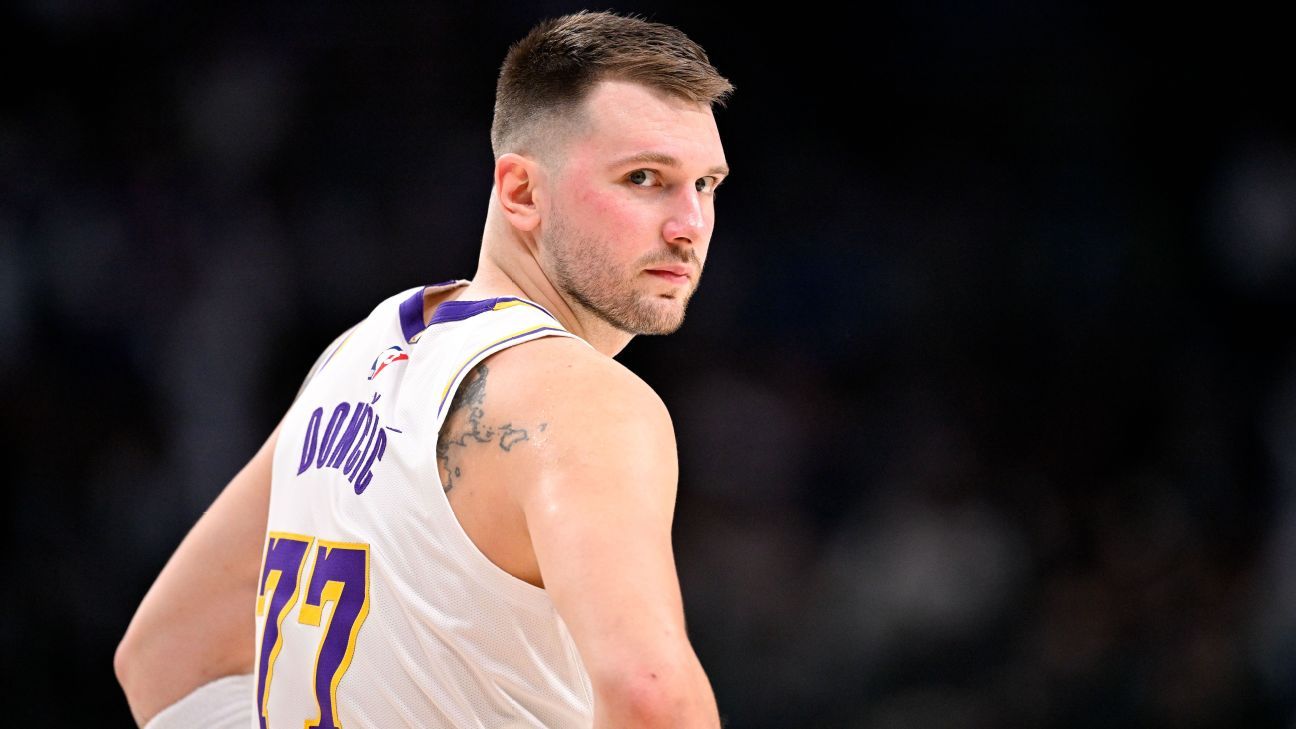
There had never been a trade like it in NBA history.
A perennial MVP candidate being blindsided and sent away midseason? In the season after carrying his franchise to the NBA Finals? As he’s approaching his prime?
One year later, the deal that sent Luka Doncic to the Los Angeles Lakers is still a stunner. And people around the league are still scratching their heads about the Dallas Mavericks getting what’s widely perceived as a pennies-on-the-dollar return, with all due respect to 10-time All-Star Anthony Davis.
“I’ve never seen a transaction that caused so much collective shock and confusion around the league,” a prominent agent, who didn’t have a client involved in the deal, recently told ESPN.
Our NBA insiders tackle four of the biggest questions facing the Lakers, Mavericks and the rest of the league on the one-year anniversary of one of the NBA’s most stunning deals.
Are the Lakers any closer to a title one year after the trade?
Hours before the trade went down last season, a Lakers’ win over the New York Knicks on Feb. 1 lifted their record to 28-19. This season, they came into New York on Feb. 1 with a nearly identical 29-18 record.
Does that mean the trade was a wash? Well, of course not.
The similar records have more to do with Doncic, LeBron James and Austin Reaves playing only eight games together this season because of injuries.
If there hadn’t been a trade, and Davis’ body suffered the same string of injuries over the past year — he has played 29 games total as a Maverick, while Doncic has played in 67 for the Lakers over two seasons — Los Angeles’ struggles this season could have been far more pronounced than they’ve been thus far.
It’s hard to see the Lakers as a contender — even with Doncic leading the league in scoring with 33.7 points per game — unless they can dramatically improve upon their 25th-ranked defensive rating.
That isn’t to say the Lakers can’t improve upon their spot in the West — they sit in fifth as Doncic, James and Reaves have returned to the court again. It isn’t suggesting that they won’t be a tough out in the playoffs, either, with those three calling the shots.
But, the only way this team gets significantly closer to a title this season is if it can pull off another early February trade ahead of Thursday’s deadline to address its 3-and-D deficiencies. — Dave McMenamin
How do the Mavericks move on from the short-lived AD era?
The “AD era” never really started in Dallas.
The second half of last season was an extended mourning period for Mavs fans. It took a remarkable stroke of lottery luck to resuscitate any hope for enthusiastic support from the morose fan base.
As soon as the Mavs cashed in those 1.8% odds to win the No. 1 pick, it was clear that Cooper Flagg — not Davis — would be the franchise’s priority for the foreseeable future. Then the early-season firing of general manager Nico Harrison eliminated any doubt about the direction of the franchise.
In that sense, the Mavericks have moved on. Every personnel decision from this point will be viewed through the prism of maximizing the Mavericks’ potential to build around their teenage prodigy and his future.
That’s why the Mavs have spent the past few months exploring the trade market for the 32-year-old Davis, who clearly doesn’t fit the franchise’s long-term outlook.
Dallas — and specifically governor Patrick Dumont, who makes the franchise’s final decisions — needs to determine the threshold for pulling the lever on a Davis trade.
The ideal return in a Davis deal includes first-round draft compensation, young talent and financial relief in the form of expiring contracts. But don’t hold your breath waiting for that to happen before the deadline as Davis recovers from yet another injury — ligament damage in his left hand is expected to sideline him until at least late this month.
There are some within the organization who would be in favor of trading Davis even if the return is only expiring contracts, simply because they value the flexibility it would give the franchise as it builds around Flagg.
That idea would be hard to sell to Dumont, who feels no pressure to trade Davis now, sources told ESPN. — Tim MacMahon
How has the trade affected this year’s deadline?
To start, the architect of the trade, Mavericks GM Harrison, was fired in November.
The Mavericks under Harrison acquired Kyrie Irving, Daniel Gafford, PJ Washington and Davis over three consecutive deadlines.
With Harrison no longer in charge, the “win now” time frame — centered on Irving and Davis — is replaced with a focus on retooling the roster around Flagg and a potential lottery pick in June’s draft.
A decision on Davis’ future probably will wait until the offseason but that doesn’t rule out the Mavericks exploring options to reduce payroll in the future and opening a roster spot to convert two-way player Ryan Nembhard.
0:43
Windhorst: Mavs fired Nico Harrison to ‘save their brand’
Brian Windhorst explains the reactions and reasoning to the decision to dismiss GM Nico Harrison.
As for the Lakers, the Doncic trade has them operating on two timelines at the deadline.
The current timeline is adding to a roster with Doncic, James and Reaves while focusing on financial flexibility in future years. The Lakers have over $40 million of expiring contracts consisting of Rui Hachimura, Gabe Vincent and Maxi Kleber. They also have a 2031 or 2032 first-round pick to trade if needed. The future timeline is building a roster around Doncic and Reaves.
With Doncic under contract for the next three seasons, the Lakers could have up to $50 million in cap space this offseason and nearly double that amount in 2027.
They will also have three first-rounders (2026, 2031 and 2033) available to trade starting the night of the draft. — Bobby Marks
What are league insiders saying one year later?
The consistent theme I get back from people around the NBA whenever the trade comes up is the ongoing amazement that it happened — as well as how Dallas might dig its way out of the aftermath.
Harrison was fired as a result of the deal and the fallout from it, but Davis’ future is an ongoing talking point — his value is nowhere near what it was perceived to be when Harrison made him the centerpiece of the deal.
Fortunately for the Mavericks, they did get lucky to land Flagg in last year’s draft. Without Flagg, the franchise would be a desolate wasteland in a consistently competitive Western Conference.
At several points over the past few months, sources have reiterated to ESPN some variation of, “Can you imagine where Dallas would be if it hadn’t won the lottery?”
On the other side of the deal, the Lakers continue to be a work in progress. The irony of the Doncic trade is that over the couple of years preceding it, Dallas had done an excellent job surrounding him with exactly the sort of talent required to maximize his skills: a pair of rim-running, shot-blocking centers; 3-and-D guards and forwards to play defense and hit 3s around him; and another high-level shot creator to take pressure off him when he’s on the court while running the team when he’s not.
Los Angeles has the last part in Reaves (if he’s retained as a free agent this summer), but they are essentially starting from scratch on the rest of it.
And while they are the Lakers, and they’ll have cap space to build this team around Doncic, putting together a championship-level team in the West is a lot easier said than done. — Tim Bontemps
-
Dan Graziano
Close
Dan Graziano
senior NFL national reporter
- Dan Graziano is a senior NFL national reporter for ESPN, covering the entire league and breaking news. Dan also contributes to Get Up, NFL Live, SportsCenter, ESPN Radio, Sunday NFL Countdown and Fantasy Football Now. He is a New Jersey native who joined ESPN in 2011, and he is also the author of two published novels.
-
Jeremy Fowler
Close
Jeremy Fowler
senior NFL national reporter
- Jeremy Fowler is a senior national NFL writer for ESPN, covering the entire league including breaking news. Jeremy also contributes to SportsCenter both as a studio analyst and a sideline reporter covering for NFL games. He is an Orlando, Florida native who joined ESPN in 2014 after covering college football for CBSSports.com.
Multiple Authors
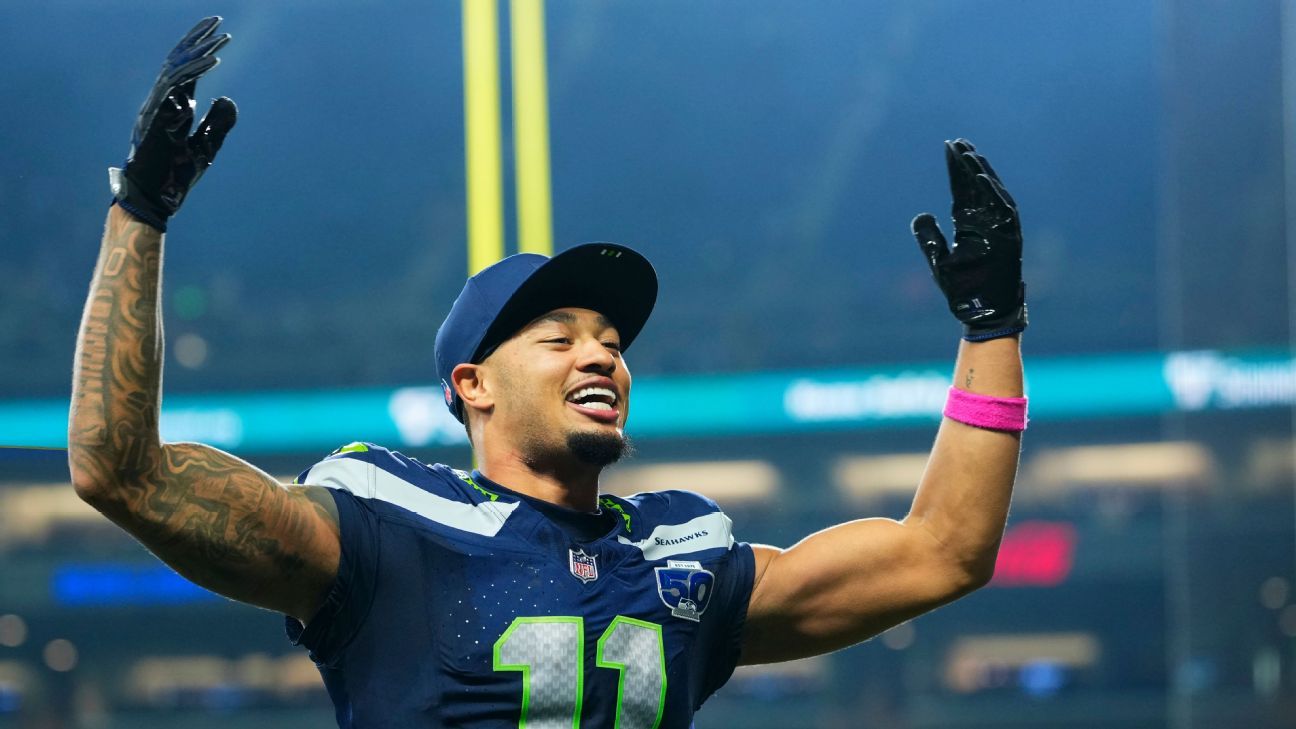
The Seattle Seahawks made Jaxon Smith-Njigba the NFL’s highest-paid receiver on Monday — and they did it without a whiff of the acrimony that came with other megadeals in their recent past.
The last time they made a nonspecialist the top-paid player at his position, it ended a monthslong contract dispute with safety Jamal Adams, who sat out the first three weeks of training camp in 2021.
In 2019, linebacker Bobby Wagner staged his own offseason hold-in while awaiting a top-of-the-market deal. It got done early in training camp, but with Wagner serving as his own agent, negotiations with one of the best players in franchise history got awkward.
Earlier that same year, quarterback Russell Wilson set an April 15 deadline for an extension, saying he’d play out the final year of his deal if a new one wasn’t secured by then. General manager John Schneider had to bounce between draft meetings and the negotiating table before an agreement was reached at the 11th hour to make Wilson the highest-paid player in the NFL.
There was no such drama between the Seahawks and Smith-Njigba, 24, as the two sides worked toward a deal that tops Wilson’s for the richest in team history. According to ESPN’s Adam Schefter, it’s a four-year, $168.6 million extension that includes over $120 million in guarantees.
Given the history, that a contract of this magnitude got done as quickly as it did might be surprising. At the same time, it makes sense given the player in question.
Smith-Njigba is an embodiment of the “Mission Over Bulls—“ mantra the Seahawks adopted last season during their run to Super Bowl LX. Those who know Smith-Njigba well say he’s genuinely more invested in the team’s success than his personal accomplishments.
After leading the NFL in receiving in 2025, making his second straight Pro Bowl and being named AP Offensive Player of the Year, Smith-Njigba helped the Seahawks claim the second Lombardi Trophy in the franchise’s history.
Now he has a record-setting contract to go with it.
NFL Nation Seahawks reporter Brady Henderson and senior NFL national reporters Jeremy Fowler and Dan Graziano break down what Smith-Njigba’s deal means for the Seahawks … and a rival West Coast receiver who is also waiting for an extension.

Why did the Seahawks extend JSN now, after exercising his fifth-year option last week?
The Seahawks always planned to pick up Smith-Njigba’s fifth-year option and negotiate an extension. The timing of this deal, though, is atypical for an organization that usually waits until later in the offseason to work out extensions, as was the case in recent years with players such as right tackle Abraham Lucas (2025), safety Julian Love (2024), outside linebacker Uchenna Nwosu (2023) and wide receiver DK Metcalf (2022).
Perhaps the Seahawks were motivated to get ahead of the wide receiver market, securing an extension for Smith-Njigba lest they wait and have to top whatever number Puka Nacua gets on his megadeal from the Los Angeles Rams. — Henderson
What does this mean for CB Devon Witherspoon and subsequent moves for Seattle?
With the Smith-Njigba deal done, expect the Seahawks to turn their attention to an extension for Witherspoon, a fellow 2023 first-round pick and a tone setter on the NFL’s top-ranked scoring defense. Seattle also picked up Witherspoon’s fifth-year option last week at a projected cost of around $21.12 million for 2027.
The Rams gave Trent McDuffie a four-year, $124 million extension after acquiring him in a trade with the Kansas City Chiefs — which complicates things for the Seahawks. The deal makes McDuffie the league’s top-paid corner at an average of $31 million per season, a number Witherspoon is now in position to top.
Witherspoon’s résumé is stronger than McDuffie’s, with an initial-ballot Pro Bowl berth in each of his first three seasons. Had it not been for running back Kenneth Walker III totaling 161 yards in Super Bowl LX, Witherspoon — with a sack and another hit that led to a pick-six — might have been the game’s MVP.
Seattle may have already been prepared to make Witherspoon the game’s top-paid corner, but McDuffie’s deal raised that benchmark.
That helps explain the restraint the Seahawks showed in free agency seemingly in preparation for these extensions. While they were never expected to make serious efforts to keep cornerback Riq Woolen or outside linebacker Boye Mafe, they also let Walker and safety Coby Bryant walk for deals they could have fit under their cap.
But it’s one thing to have enough cap space. Teams also need cash, and the Seahawks — assuming they extend Witherspoon — will be committing a ton of it up front in the form of signing bonuses for two top-of-the-market deals. — Henderson
Could QB Sam Darnold get a new deal, too?
Not until next year. Darnold certainly has a case for a raise. The $33.5 million average of the three-year, $100.5 million deal he signed as a free agent last March ranks 15th in terms of annual salaries for quarterbacks. It’s a bargain for a QB coming off a Pro Bowl season and a Super Bowl victory.
But the Seahawks do not extend contracts with more than one season remaining — a nonnegotiable team policy on which they’ve held firm over the years. That’s why it was a nonstarter when their previous quarterback, Geno Smith, wanted a new deal in 2024, as he was entering the second season of a three-year deal.
When asked at the NFL combine if Darnold could get an extension this offseason, Schneider stated, “Sam signed a three-year deal.”
Technically, Smith-Njigba had two years remaining on his rookie contract once his option was exercised, as does Witherspoon. But Schneider has clarified that option years don’t apply to the team’s rule. — Henderson
What does this mean for Rams’ discussions with Nacua?
The impact is immense. Smith-Njigba and Nacua are 2023 draft mates with similar production through three NFL seasons. (Smith-Njigba has the receptions edge and a slight win in receiving touchdowns, 20 to 19, but Nacua has more yards.)
There’s no question that Nacua and his agents will use Smith-Njigba’s benchmark as a suitable comp, but getting there might not be easy. The Rams aren’t afraid of tough negotiations. They made Aaron Donald hold out years ago in order to get his deal and dangled a trade for Matthew Stafford last offseason before eventually sweetening his deal.
Nacua and the Rams have plenty of time to execute a potential extension and there’s no real rush. But Smith-Njigba’s contract definitely helps Nacua — unless Los Angeles finds the ballooning receiver market, which is up about 280% over the past decade, untenable. The flip side: The Rams identified Nacua as a star very early in his career and knew this day was coming. — Fowler
Is JSN’s contract structured to limit the immediate payout with eventual new ownership in mind?
The structure is favorable for the team, but I don’t think it’s because the team is being sold. In talking to people with knowledge of this and other Seahawks negotiations this offseason, I’ve been told the pending new ownership change has no impact on the business the Seahawks are doing right now.
The Seahawks have very rigid principles when it comes to veteran contract negotiations. Specifically, they do not guarantee any money outside of the first year of the deal. In the case of Smith-Njigba, however, he already had $23.852 million fully guaranteed for 2027 because they’d picked up the fifth-year option on his rookie contract. This is why his 2027 money is guaranteed at signing in an apparent departure from the Seahawks’ self-imposed rules.
Seattle will pay Smith-Njigba $36.5 million in 2026 — a $35 million signing bonus, a $1.25 million base salary and a $250,000 workout bonus. They’ll pay him $32.63 million in 2027, including a $30 million option bonus, a $1.53 million salary, a $250,000 workout bonus and $850,000 in per-game roster bonuses (assuming he plays all 17 games in 2027). After that, the 2028 money is guaranteed for injury only and doesn’t become fully guaranteed until five days after Super Bowl 62, which is scheduled to be played in February 2028.
It’s also interesting to note how the Smith-Njigba structure fits into the Seahawks’ overall payroll picture. The extension they did for left tackle Charles Cross earlier this year included a $25 million signing bonus and a $15 million 2026 option bonus, plus an additional $8 million option bonus in 2028.
Smith-Njigba’s contract includes option bonuses in 2027 and 2029, staggering them on the odd years while Cross’ are in the even years, presumably to even out the year-to-year cash spend. Given the Seahawks appear to have adopted an every-other-year option bonus structure in these big-money deals, it’ll be interesting to see which years of the inevitable Witherspoon extension include big option bonuses.
That’s a long way of saying no but also illustrating the ways in which the Seahawks have structured this deal as part of an overall cap management and cash budgeting process that will help the current owners as well as the eventual new ones. — Graziano
Michigan made history in 1937 by winning the first official NCAA Division I men’s swimming and diving national championship. Coach Matt Mann led the Wolverines to the first five titles and another in 1948. Since then, Texas has been the most dominant program in the pool, winning a record 16 national championships. The Longhorns won their first title in 1981 and captured their 16th crown in 2025.
Stanford has won the most championships on the women’s side, with 11. But no program has been more successful of late than the Virginia women. In March 2026, the Cavaliers won their sixth straight NCAA women’s swimming and diving title.
Check out the all-time NCAA Division I men’s and women’s swimming and diving national championship winners below.
2026: Virginia (W)
2025: Texas (M), Virginia (W)
2024: Arizona State (M), Virginia (W)
2023: California (M), Virginia (W)
2022: California (M), Virginia (W)
2021: Texas (M), Virginia (W)
2020: Canceled due to COVID-19
2019: California (M), Stanford (W)
2018: Texas (M), Stanford (W)
2017: Texas (M), Stanford (W)
2016: Texas (M), Georgia (W)
2015: Texas (M), California (W)
2014: California (M), Georgia (W)
2013: Michigan (M), Georgia (W)
2012: California (M), California (W)
2011: California (M), California (W)
2010: Texas (M), Florida (W)
2009: Auburn (M), California (W)
2008: Arizona (M), Arizona (W)
2007: Auburn (M), Auburn (W)
2006: Auburn (M), Auburn (W)
2005: Auburn (M), Georgia (W)
2004: Auburn (M), Auburn (W)
2003: Auburn (M), Auburn (W)
2002: Texas (M), Auburn (W)
2001: Texas (M), Georgia (W)
2000: Texas (M), Georgia (W)
1999: Auburn (M), Georgia (W)
1998: Stanford (M), Stanford (W)
1997: Auburn (M), USC (W)
1996: Texas (M), Stanford (W)
1995: Michigan (M), Stanford (W)
1994: Stanford (M), Stanford (W)
1993: Stanford (M), Stanford (W)
1992: Stanford (M), Stanford (W)
1991: Texas (M), Texas (W)
1990: Texas (M), Texas (W)
1989: Texas (M), Stanford (W)
1988: Texas (M), Texas (W)
1987: Stanford (M), Texas (W)
1986: Stanford (M), Texas (W)
1985: Stanford (M), Texas (W)
1984: Florida (M), Texas (W)
1983: Florida (M), Stanford (W)
1982: UCLA (M), Florida (W)
1981: Texas (M)
1980: California (M)
1979: California (M)
1978: Tennessee (M)
1977: USC (M)
1976: USC (M)
1975: USC (M)
1974: USC (M)
1973: Indiana (M)
1972: Indiana (M)
1971: Indiana (M)
1970: Indiana (M)
1969: Indiana (M)
1968: Indiana (M)
1967: Stanford (M)
1966: USC (M)
1965: USC (M)
1964: USC (M)
1963: USC (M)
1962: Ohio State (M)
1961: Michigan (M)
1960: USC (M)
1959: Michigan (M)
1958: Michigan (M)
1957: Michigan (M)
1956: Ohio State (M)
1955: Ohio State (M)
1954: Ohio State (M)
1953: Yale (M)
1952: Ohio State (M)
1951: Yale (M)
1950: Ohio State (M)
1949: Ohio State (M)
1948: Michigan (M)
1947: Ohio State (M)
1946: Ohio State (M)
1945: Ohio State (M)
1944: Yale (M)
1943: Ohio State (M)
1942: Yale (M)
1941: Michigan (M)
1940: Michigan (M)
1939: Michigan (M)
1938: Michigan (M)
1937: Michigan (M)
Check out the ESPN college sports hub page for the latest news, analysis, scores, rankings and more.
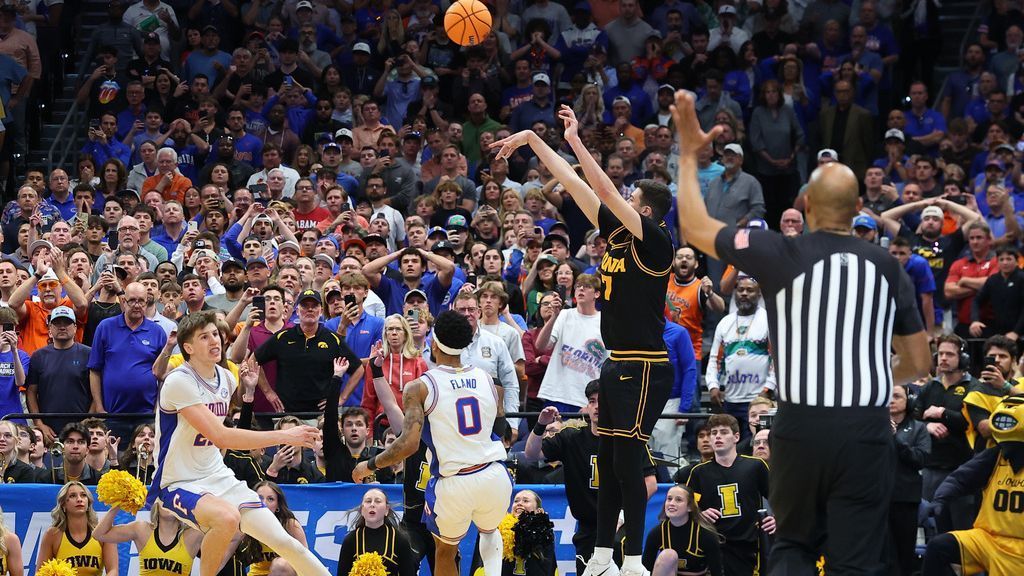
TAMPA, Fla. — Down by two points against defending national champion and No. 1 seed Florida, Iowa forward Alvaro Folgueiras took a pass from guard Bennett Stirtz and drilled a go-ahead 3-pointer with 4.5 seconds left that clinched a 73-72 victory Sunday night, sending Benchmark International Arena into an absolute frenzy and the ninth-seeded Hawkeyes into the Sweet 16 for the first time since 1999.
It was Iowa’s second win against a No. 1 seed since seeding began in 1979 (versus Syracuse in the 1980 regional semifinals), according to ESPN Research. It also was the first game winner in the final five seconds against a top seed in the tournament since Kris Jenkins’ buzzer-beater for Villanova versus North Carolina in the 2016 national championship game.
“The play was drawn up for me to get downhill, and then this dude came up to me and he’s like, ‘I’m going to be ready, and I’m going to make it,'” Stirtz said of Folgueiras, who finished with 14 points and five rebounds off the bench. “That’s what he actually did.”
First-year Hawkeyes coach Ben McCollum was in disbelief.
“Did you say that?” he asked.
Folgueiras responded, “I did. That was me.”
McCollum replied, “He’s got …”
“Ultra confidence,” Stirtz said.
McCollum added: “Irrational confidence.”
Folgueiras needed it. So did his mother, Beatriz Campos, when she sent him to the United States from Málaga, Spain, to pursue his dreams of playing basketball.
“She sent a 16-year-old kid to America without knowing any English … without anything but dreams and hunger. And this one is for her and my dad. He’s watching up there,” said Folgueiras, whose father died when he was 9.
While the Hawkeyes celebrated on the court, Folgueiras ran into his mother’s arms. It was first time he had seen her since August and the first time she had watched him play a college game in person in two years.
“She told me, ‘I love you,’ 100 times. I said, ‘I love you,’ 100 times back,” Folgueiras said. “It’s super special having my mom here. She’s everything for me. Where would the world be without the moms? She’s super tough. She’s been through a lot of things in life.”
She often worked 14 hours a day to provide for Folgueiras and his brother, Ignacio.
“Sometimes, when I struggle through basketball — and basketball is life — I think of my mom as an example of resilience, and that really inspires me and gives me confidence,” Folgueiras said. “Because she’s not just a fighter; she’s a super special person. I’m so lucky to have her as a mom.”
Campos said through her longtime partner, Mike, “She’s very proud. This is her son. She’s very proud. We came down here from Spain. To watch him play, we never thought we would get into this, and that last point was incredible. It’s her son.”
She stood on the floor and held a sign that read, “YOU ARE THE BEST #7,” with a picture of Folgueiras. Fans took turns helping her hold it. She was just a few feet away from her son when he made his epic shot.
“I think no one really believed in us outside this locker room,” said Stirtz, who tallied 13 points, five rebounds and five assists.
Two nights prior, Florida cruised to a 114-55 win over Prairie View A&M for the second-largest victory margin in NCAA tournament history. There was concern over how the Hawkeyes would handle Florida’s tempo. But the Hawkeyes led for 66% of the game, were up by as many as 12 points and were the better team in the paint.
Still, it looked like they were about to let the game slip away. Stirtz missed a layup, and Gators guard Isaiah Brown grabbed the rebound then made 1 of 2 free throws after he was fouled, giving Florida a 72-70 lead.
Iowa, though, broke the Gators’ full-court press, and Folgueiras was wide open.
“He caught it in rhythm and buried it and didn’t hit anything but net,” McCollum said. “And it was surreal. Like, ‘Oh my gosh, he just made that.'”


South Korea’s Misto Holdings’ 2025 profit jumps 31.6% on steady growth
Australia and EU agree sweeping trade deal in face of global uncertainty

How Jaxon Smith-Njigba’s contract extension impacts Seahawks

-

 Entertainment1 week ago
Strategic oil stocks to be released ‘immediately’ in Asia and Oceania: IEA
-

 Sports1 week ago
Transfer rumors, news: Real Madrid open to Camavinga exit, as Premier League clubs circle
-
 Business1 week ago
UK looking at all options to secure Strait of Hormuz, says Ed Miliband
-

 Tech1 week ago
Early Deals From the Amazon Spring Sale That Passed Our BS Test
-
 Business1 week ago
New Income Tax Act 2025 To Take Effect From April 1: 10 Key Changes That Will Affect Your Money
-
 Business1 week ago
Stocks To Watch: Tata Motors, IndiGo, Jindal Stainless, GMR Airports, Hindalco, And Others
-

 Tech1 week ago
Our Favorite Red Light Hair Growth Device Is Currently on Sale
-

 Sports1 week ago
PCB files complaint over allowing Bangladesh to take review on penultimate ball – SUCH TV