

Sports
The next generation of entertainers: 15 young stars lighting up Europe

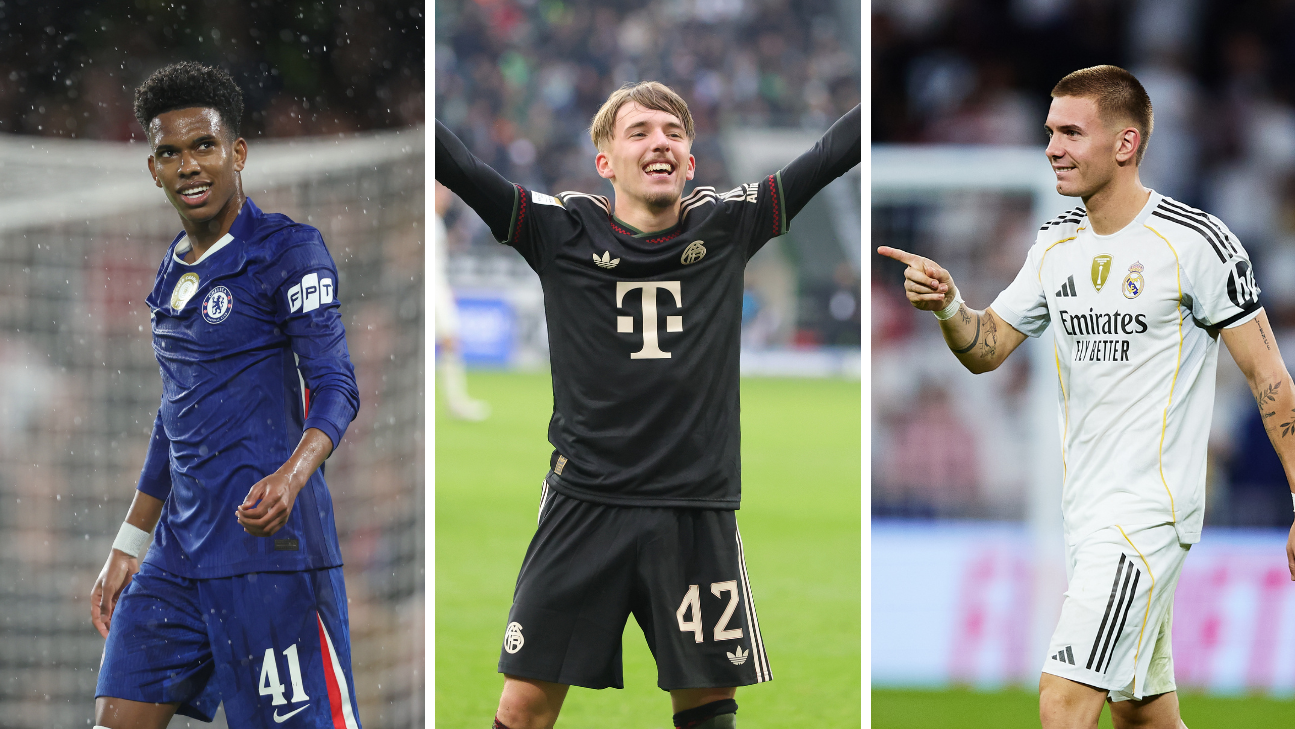
At this point, Bayern Munich should understand better than any club that if Plan A doesn’t work out, there’s no need to panic. Just get on with your business. That might be true for Plan B and Plan C, too.
In the summer of 2024, after firing Thomas Tuchel, it felt like Bayern got turned down by roughly 27 candidates before settling on Vincent Kompany, who had just been sacked after leading Burnley to relegation. In the summer of 2025, their transfer plans went awry as well when Bundesliga stars like Florian Wirtz (Liverpool) and Nick Woltemade (Newcastle United) chose the Premier League over the German giants. Instead of landing either or both approaching-their-prime talents, they spent big on veteran Luis Díaz, brought Nicolas Jackson in on loan, and elected to give a precocious 17-year-old named Lennart Karl a bit of playing time.
So having experienced many public failures over multiple summers, Bayern are about a quarter of the way through 2025-26 and are in their best run of form in five years, with 14 wins from 14 games in all competitions. At this moment, at least, Karl has as many combined goals and assists in 290 minutes in all competitions (three) as Wirtz has in 934 with Liverpool.
Karl also became Bayern’s youngest UEFA Champions League scorer with a lovely, composed strike in last week’s pummeling of Club Brugge, and on Saturday he followed that up with something even more outrageous against Borussia Mönchengladbach.
17-YEAR-OLD LENNART KARL BECAME BAYERN’S YOUNGEST-EVER UCL GOALSCORER MIDWEEK AND THEN SCORES AN INSANE GOAL TODAY!
WHAT A TALENT 🔥 pic.twitter.com/4fwu0noPCs
— ESPN FC (@ESPNFC) October 25, 2025
For as much oxygen as transfers and transfer rumors occupy in the general soccer ecosystem, the most enjoyable stories often come out of nowhere. And this sport offers an endless well of fun, young talent waiting for an opportunity to spring up and entertain us.
So here’s a list of my 15 favorite 21-and-under men’s players doing exciting things in this young season. Some were indeed the subjects of heavy transfer rumors and reporting, but others seemingly appeared out of the blue.
(Note: We’ll limit this list to players who entered the season having played under 2,000 minutes in the Big Five leagues. You don’t need me to tell you that someone like Lamine Yamal is awesome. You already know that.)
– Olley: Nwaneri returns to spotlight, seizes chance to shine for Arsenal
– Cristiano Ronaldo’s race to 1,000 goals: When will he get there?
– O’Hanlon: Why we already know Arsenal will win the Premier League
 Estêvão, Chelsea / Brazil
Age: 18
Key stats (all competitions): 475 minutes, two goals from 22 shot attempts (3.8 xG), one assist (1.5 xA) from eight chances created, 56 progressive carries, 46 1v1 attempts
The whole “major club signs exciting Brazilian teenager” thing often doesn’t pay off; Endrick‘s current travails at Real Madrid are illustrating that pretty well at the moment. The competition level is higher, the defenders are bigger, and you struggle to find your way before getting repeatedly loaned out.
Statistically, Estêvão was always a little different than other up-and-comers. He had 13 league goals and nine assists in his age-17 season with Palmeiras and quickly proved that he could rack up the shot volume despite being just 5-foot-9 and 137 pounds. Chelsea head coach Enzo Maresca has smartly eased him in at Stamford Bridge, with seven substitute appearances and five starts (and only one full 90-minute appearance) thus far — and the approach is paying off. He leads the team in shot attempts, high-quality shots (worth over 0.2 xG), 1v1 attempts and 1v1s in the box, and he’s only played 44% of Chelsea’s minutes.
Oh, and he already has a signature moment, too:
Estêvão is a lightning bolt for a team that can otherwise be a little too stolid in attack at times. He’s an absolute delight, and based on his xG figures, his finishing has prevented him from enjoying even more of a breakout.
 Can Uzun, Eintracht Frankfurt / Turkey
Age: 19
Key stats (all competitions): 834 minutes, six goals from 32 shots (2.4 xG), four assists (2.6 xA) from 14 chances created, 59 progressive carries, 61 progressive passes
Granted, it might have helped Eintracht if the next awesome young talent they developed had been a defender of some sort — even while allowing only one combined goal to St. Pauli and Borussia Dortmund over the last week, they’ve still allowed 28 goals in their last 10 matches — but you take what you can get, and Uzun has been a delight. The 19-year-old hit a wall recently in terms of goal contributions, but since he’s far more of an attacking midfielder than a forward and rarely touches the ball in the box, goals shouldn’t be one of his most important stats.
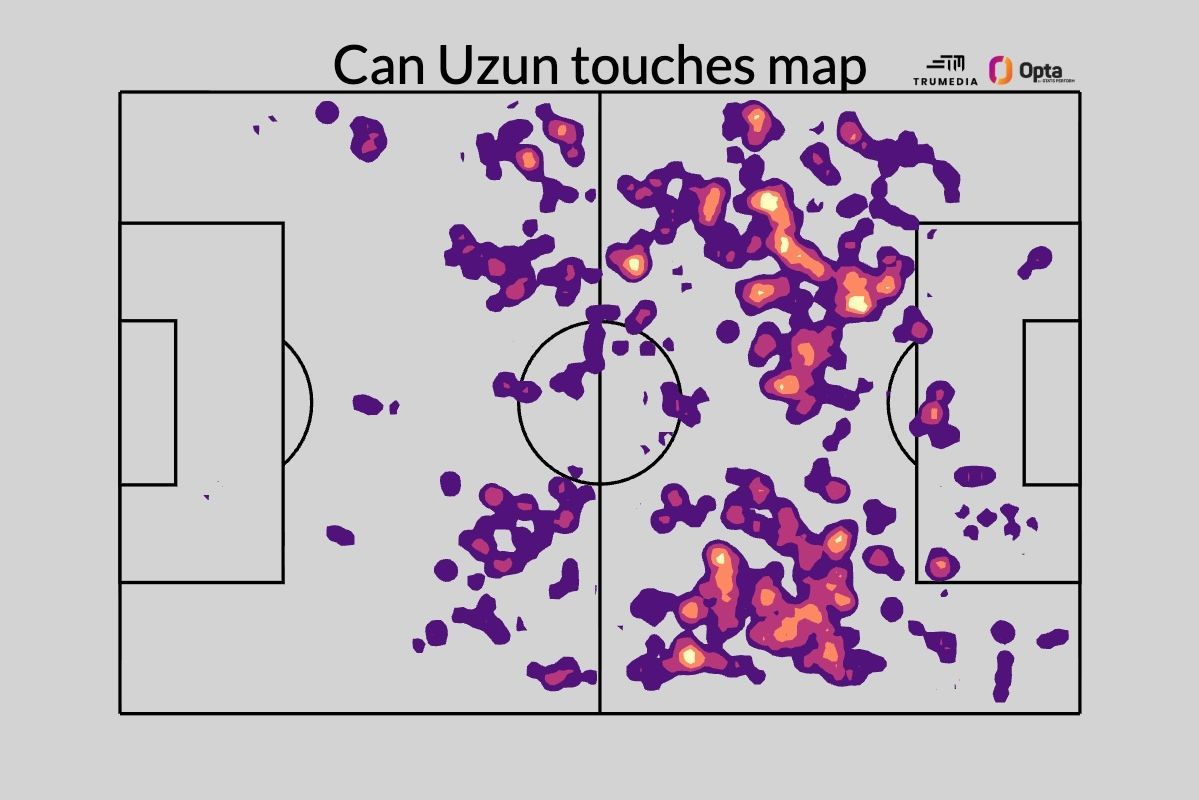
Still, in his first season as a main contributor, he currently ranks in his team’s top three in goals, shot attempts, assists, chances created, duels and fouls suffered.
Uzun makes things happen.
 Franco Mastantuono, Real Madrid / Argentina
Age: 18
Key stats (all competitions): 599 minutes, one goal from 26 shots (3.0 xG), zero assists (1.2 xA) from eight chances, 49 1v1 attempts, 17 fouls suffered (seven in the attacking third)
Like Estêvão and Uzun, Mastantuono’s main job is to try stuff and attack defenders. He’s 10th on his team in minutes but third in shots and 1v1 attempts, and he’s a willing contributor in defense as well — only left back Álvaro Carreras has blocked more passes — which is incredibly welcome on a team that features two famous attackers who contribute almost nothing in that regard.
Expectations were high for Mastantuono after he contributed four goals and six assists before his 18th birthday in parts of two seasons with River Plate. His finishing has been rather Estêvão-esque — one goal from shots worth 3.0 xG — but he’s playing his role well and carving out a niche on a star-laden squad.
 Senny Mayulu, Paris Saint-Germain / France
Age: 19
Key stats (all competitions): 627 minutes, two goals from 16 shots (2.0 xG), one assist (1.1 xA) from nine chances, 58% success rate on 73 ground duels
Warren Zaïre-Emery, also 19, has played way too much ball to make this list, but PSG still don’t lack for other thrilling youngsters. (Hell, the only reason I didn’t put 17-year-old right winger Ibrahim Mbaye on the list was because I’m trying to spread the love around.)
Mayulu scored the last goal in PSG’s historic 5-0 romp over Internazionale in last season’s Champions League final, and in mostly 60-minute midfield shifts this season, he’s been tasked with running at defenses and handing the ball over to attackers in the attacking third. He’s good at it, and he’s also quite good at teleporting into high-quality positions in the box.
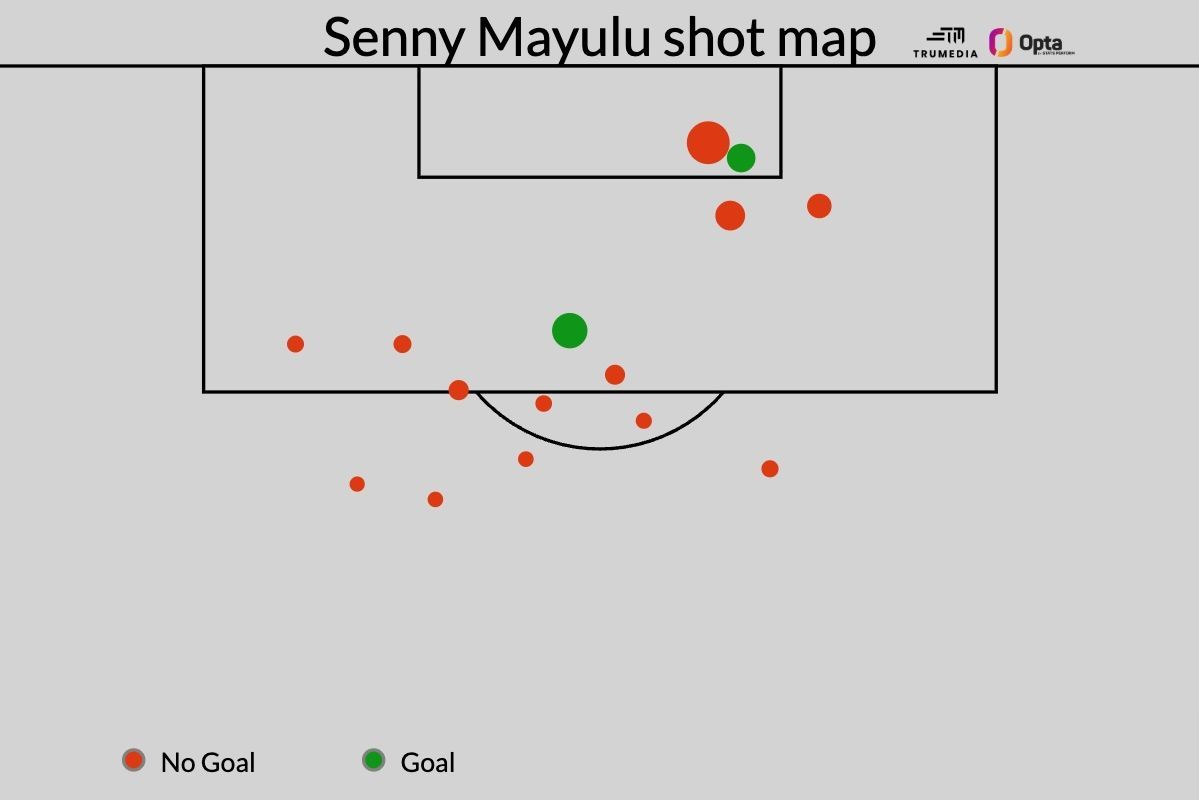
While others on this list are mostly firing away from long range, four of Mayulu’s 15 shots have been worth at least 0.2 xG. Only Bradley Barcola and Gonçalo Ramos have attempted more high-quality shots for PSG this season.
 Valentín Barco, Strasbourg / Argentina
Age: 21
Key stats (all competitions): 1,061 minutes, three assists (3.1 xA) from 20 chances created, 84 progressive carries, 85 progressive passes, 37 fouls suffered, 71 ball recoveries
On a Strasbourg team that started with just two losses in its first 12 matches, Barco currently ranks first in chances created, touches, 1v1 attempts, fouls suffered, total duels, ground duels won, blocked crosses and ball recoveries and second in progressive carries, interceptions and all defensive interventions. He spends a little over half his time in central midfield while dabbling at everything from left wing to left back to defensive midfield to center back.
Wherever he is, he’s the most important player besides, perhaps, leading goal-scorer Joaquín Panichelli.
Barco seemed like a can’t-miss prospect when he moved from Boca Juniors to Brighton & Hove Albion, but he evidently needed one more change of scenery to start unlocking his potential. Well, it’s unlocked.
 Noah Sadiki, Sunderland / DR Congo
Age: 20
Key stats (all competitions): 802 minutes, 54 progressive carries, 28 progressive passes, 14 fouls suffered, 12 blocked passes, 14 interceptions, 25 ball recoveries
This list is loaded with Make Stuff Happen™ guys, and Sadiki is already one of the best in the Premier League in that regard. After serving as an excellent ball progressor and chaos agent for Union St.-Gilloise‘s Belgian title-winning team last season, Sadiki is playing a similar role alongside Granit Xhaka in the midfield of a Sunderland side that is overachieving spectacularly in 2025-26.
Sadiki pushes the ball up the pitch and draws contact in attack (first on the team in fouls suffered), and he obstructs every passing lane in defense (first in blocked passes and interceptions). With this work-rate, he is a perfect complement for Xhaka, allowing the veteran to focus on things like “being a progressive passing machine” and “once again providing the greatest veteran leadership in the sport.”
Sunderland are overachieving against their xG figures in a way that is almost certainly unsustainable, and regression is probable, but they also genuinely outplayed Chelsea late in last weekend’s 2-1 upset at Stamford Bridge. There’s some magic to this team, and the Sadiki-Xhaka combo is a major reason why.
 Myles Lewis-Skelly, Arsenal / England
Age: 19
Key stats (all competitions): 445 minutes, three assists (0.6 xA) from five chances created, 20 progressive carries, 25 progressive passes, 16 fouls suffered (four in the attacking third)
Because Arsenal head coach Mikel Arteta is distributing minutes to so many guys within a ridiculously deep squad — including 15-year-old Max Dowman, who could have made this list despite playing only 125 minutes thus far — it’s hard to get a complete read on Lewis-Skelly’s capabilities. But his per-90 stats are great, and moments like his assist against Atlético Madrid in last week’s Champions League blowout certainly give us a pretty good hint.
Ho hum: just casually dribbling around and through four Atleti defenders and perfectly cueing up a first-timer from Gabriel Martinelli against one of the most celebrated defenses in Europe. No big deal.
 Lennart Karl, Bayern Munich / Germany
Age: 17
Key stats (all competitions): 303 minutes, two goals from 16 shots (1.9 xG), one assist (0.8 xA) from four chances created, 31 progressive carries, 18 1v1 attempts, seven fouls suffered
Take it away, Tor-Kristian Karlsen:
“Excellent at playing between the defensive lines, his low center of gravity — he measures at just under 5-foot-6 — gives him the balance and agility to navigate short spaces. Meanwhile, an explosive first step makes him elusive in crowded areas, often allowing him to slip away from defenders before they’ve had the chance to get settled. […] In the short term, Bayern seem intent on rotating Karl through multiple attacking roles: as a right-sided inside-forward, a narrow No. 10, and occasionally a left-sided option to encourage his two-footed development. Each role offers a different challenge, but will help refining abilities such as acceleration, composure, flexibility, game intelligence and creative risk-taking.”
Karl is versatile, and he’s incredibly unique in stature and skill set. It might be easier for a young guy to find a role by fitting into a certain box, and Karl most certainly doesn’t, but he’s a fascinating prospect.
 Assan Ouédraogo, RB Leipzig / Germany
Age: 19
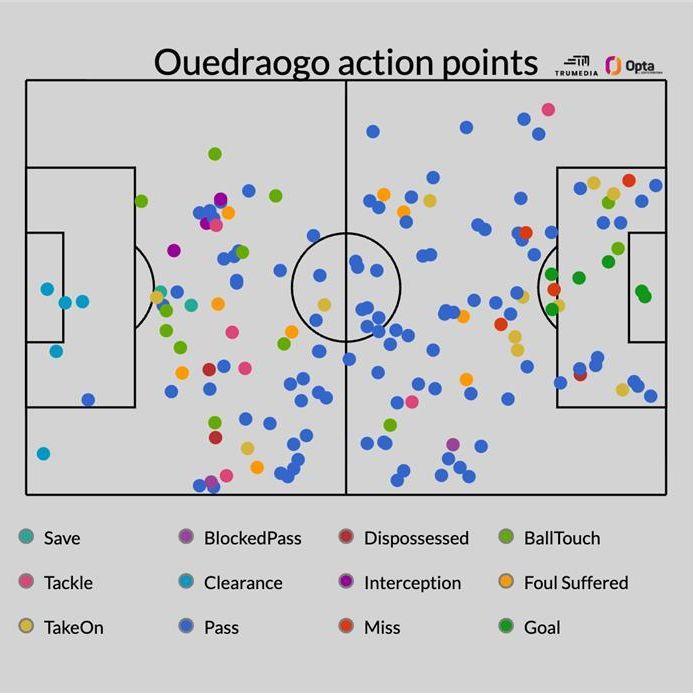
Key stats (all competitions): 333 minutes, two goals (2.1 xG) from nine shots, three assists (0.8 xA) from six chances created, nine fouls suffered, 71.9% success rate from 32 duels, 50.0% aerial success rate
Ouédraogo scored the title-winning penalty for Germany at the Under-17 Euros in 2023, and he became Schalke 04‘s youngest ever goal-scorer, putting the ball in the net on his professional debut at age 17 in 2023-24. At a Paul Pogba-esque 6-foot-3, 185 pounds, he’s looked the part all along, and after barely playing in his first season at RB Leipzig, it appears he has the lay of the land.
Ouédraogo has started RBL’s last five matches, and they’ve taken 13 points in those five as he’s made four goal contributions. He’s doing a little bit of everything, from clearances to short-range goals, and RBL is reestablishing a pretty high level after last season’s disappointing campaign.
 Leopold Querfeld, Union Berlin / Austria
Age: 21
Key stats (all competitions): 930 minutes, two goals (0.7 xG) from 10 shots, seven chances created (0.5 xA), 45 progressive carries, 43 progressive passes, 63.2% success rate from 57 aerial duels, 163 defensive interventions
There aren’t many defenders on this list both because defensive stats are less sexy and, well, there aren’t loads of teenage defenders in the top leagues. It’s a lot easier to break guys in with hustle-and-try-stuff roles up front.
Still, Querfeld’s an interesting prospect. He put in over 1,700 Bundesliga minutes last season and therefore barely qualified here, but even before that he logged over 4,300 minutes for Rapid Vienna in Austria. He’s a certified Big Dude, standing 6-foot-3, manning the middle of Union’s three-man back line and winning about 60% of his aerials.
Union are back to doing Union things this season, absorbing pressure, playing physically (and committing lots of fouls), counterattacking and winning the set-piece battle. It says a lot that Querfeld has been asked to man such an important position in that regard. He even scored a goal in the DFB Pokal.
 Christian Kofane, Bayer Leverkusen / Cameroon
Age: 19
Key stats (all competitions): 558 minutes, four goals (4.4 xG) from 20 shots, 10 chances created (0.5 xA)
Bayer Leverkusen are working through an up-and-down campaign in their first season after the departure of manager Xabi Alonso, chief creator Wirtz and others. But the 6-foot-2 Kofane, who scored eight goals with Albacete in the Spanish second division last year, is providing bright moments already.
Kofane is a Haaland-model striker, meaning he’s in for shots and goals and not a ton of other things — per 90 minutes, he’s averaging just 25.9 touches but 3.2 shots, 35% of which are worth at least 0.2 xG. Those aren’t Erling Haaland levels, but they’re intriguing for a teenager playing in a top-flight league for the first time. He scored Leverkusen’s go-ahead goal against PSV in the Champions League, and he’s started the last five matches for new manager Kasper Hjulmand. It’s been a very bright start.
 Adrián Liso, Getafe (on loan from Real Zaragoza) / Spain
Age: 20
Key stats (all competitions): 634 minutes, three goals (1.0 xG) from 12 shots, two assists (1.2 xA) from two chances created, 23 progressive carries, six fouls won in the attacking third, 22 ball recoveries
Outside of Barcelona and Real Madrid, there haven’t been a ton of high-impact youngsters in LaLiga early this season, but Liso, a second-division standout for Real Zaragoza, got loaned up to a first-division club and was immediately named LaLiga’s under-23 player of the month in August. Getafe have scored only 10 goals in 10 league matches, but he has three of them, and he’s assisted two others. And on a team loaded with 30-and-over veterans, he and 20-year-old midfielder Mario Martín are putting in some serious hustle time.
 Geovany Quenda, Sporting CP / Portugal
Age: 18
Key stats (all competitions): 722 minutes, two goals (1.8 xG) from 15 shots, four assists (2.5 xA) from 18 chances created, 19 fouls suffered, 54.2% success rate on 83 ground duels, 46 ball recoveries
Of the 16 players with at least 250 minutes for Sporting this season, only three are under 24 years old, and only one is under 21: Quenda, who’s racing up and down the right touchline and providing all the young energy he can for a veteran squad.
Quenda is starting about half the time, but while he’s eighth on the team in minutes, he’s second in assists and fouls suffered and fourth in goals and shots on goal. He’s also won 64% of his tackles, and he’s third on the team in ball recoveries. He had a goal and an assist in Sporting’s Champions League-opening win over Kairat Almaty, too.
Quenda, who has agreed a €52 million move to Chelsea in 2026, is a boundless runner with a creative streak in attack — that’s a pretty great combination.
 Antoine Mendy, Nice / Senegal
Age: 21
Key statistics (all competitions): 1,022 minutes, 204 defensive interventions, 30 blocked passes and shots, 70.7% success rate on 41 aerial attempts, 80 progressive carries, 50 progressive passes
I was tempted to put Mendy’s 19-year-old center-back companion Juma Bah on here, too, as the two have both been asked to hold the fort quite a bit for a decent but offensively challenged team. But we’ll go with Mendy here; the 21-year-old converted attacker has battled through a run of injuries to play at a really high level this season. (He’s learned under ageless defender Dante at Nice, too.)
Mendy has made the second-most defensive interventions in all of Ligue 1 — a hint of just how much duress the Nice backline has faced, but also a sign of sureness on Mendy’s part — and he’s dynamite in the air. His odds of making the Senegal squad for next year’s World Cup are pretty good.
 Joane Gadou, RB Salzburg / France
Age: 18
Key stats (UEFA competitions): 630 minutes, 90 defensive interventions, 94 progressive carries, progressive passes
Playing defense for Salzburg is a unique sort of stress test: you’re going to learn all about possession play and proper buildup from the back, and you’re going to have to put out all sorts of fires in transition. Gadou is holding his own. The 6-foot-4 center back has played every minute of Salzburg’s UEFA season, and he’s averaging nearly 13 defensive interventions per 90 minutes and leading the team in blocked crosses and shots. He’s also leading in progressive carries and is second in progressive passes.
Gadou has already been linked to Bayern and other heavyweights, and it’s not hard to see why. But in the meantime, he’ll keep playing the game on the hardest difficulty level.
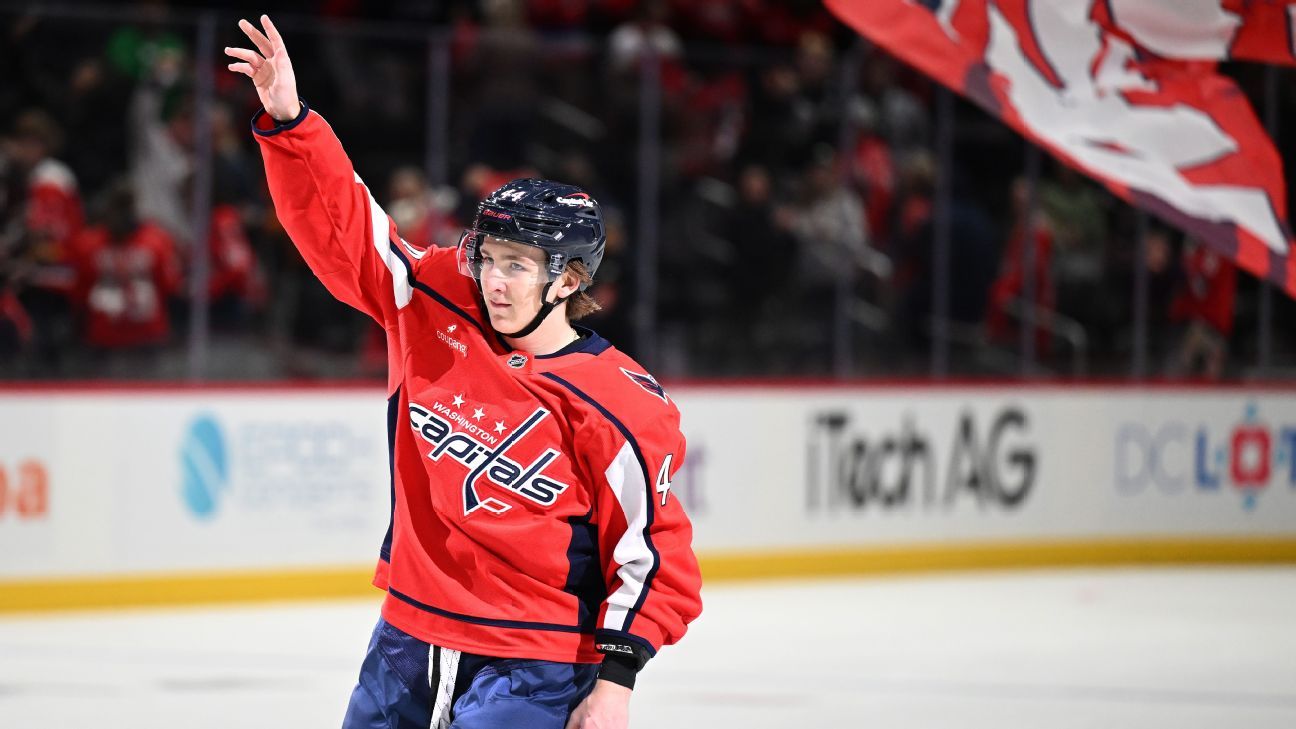
It took Cole Hutson only two games to aggravate the first NHL superstar of his professional career. And with the way Hutson handled himself, Jack Hughes isn’t likely to be the last.
Hutson was days out from signing his three-year, entry-level contract with the Washington Capitals when he engaged in a physical battle with the New Jersey Devils‘ star forward. The 19-year-old defenseman surprised Hughes with his strength, prompting a frustrated rebuttal by Hughes via (uncalled) cross-check to the newcomer’s back.
Hutson was undeterred; he leveled another hit on his American counterpart late in that game to send Hughes spiraling to the ice. Washington won the game 2-1.
It’s early yet, but the message from Hutson in Week 1 was clear: This NHL stage wasn’t intimidating the teen — and he definitely wasn’t there to make friends.
“Jack sort of gets a little bit of an edge on him there in the one-on-one,” Capitals coach Spencer Carbery said after the game. “[Cole]’s like, ‘Don’t try to beat me one-on-one and try to embarrass me.’ You like that because it speaks to the competitor. Doesn’t want to be beaten one-on-one. Doesn’t want to lose a hockey game. Doesn’t want someone to get an upper hand on him. Doesn’t take kindly to losing or failing even in individual situations on the ice.”
That thread of physicality has emerged in Hutson’s game the same way it has in his brother Lane‘s. Cole takes after Lane in more ways than one; they both progressed through the U.S. National Team Development Program, represented their country at the world juniors and went on to be standouts for two years at Boston University (a program also attended by their older brother, Quinn).
The younger Hutsons were drafted in similar slots, too. Lane went off the board to the Montreal Canadiens in the second round, 62nd overall, in 2022. Cole followed as a second-round choice, 43rd overall, by Washington in 2024.
At BU, assistant hockey coach Kim Brandvold welcomed one Hutson son after another. He grew close to each of them but forged an especially strong bond with the youngest one. On the eve of Cole’s NHL debut, Brandvold prophesied what the hockey world would come to see in short order — it didn’t yet know all of Cole Hutson.
“He’s obviously a special player. Everyone’s seen him at big stages,” Brandvold said. “I just still don’t think they’ve seen actually how big of an impact he can have and how good he can fully be, and all the difference he can make in a game. I think he’s just scratching the surface of that part of it.”
BRANDVOLD HELPED HUTSON make the decision to leave BU after his sophomore year concluded in disappointing fashion earlier this month, with a 5-3 loss to UConn in the Hockey East quarterfinals. Just last year, BU was in the NCAA championship game, although it also fell there 6-2 to Western Michigan.
The swift exit this time around sat like a lead balloon in Hutson’s chest. The two years at BU had been transformative, every bit that once-in-a-lifetime experience he had expected. Brandvold told Hutson it was time to move on, and lean into the plan Capitals general manager Chris Patrick had put in motion at the conclusion of Caps development camp.
“I met with Cole there and just asked him after this [2025-26] collegiate season if he thought he might be ready to make a jump to the NHL,” Patrick said. “He’s confident, but he’s quiet and pretty reserved usually. In our conversation I told him, ‘Well, I certainly think you’re ready for it, and you look ready’ and he cracked a little bit of a smile which to me was showing some excitement on his part.”
Hutson comes honestly by his stoicism — he was born into a family obsessed with its sport. Carbery’s initial impression of Hutson was of the quintessential “hockey guy,” mesmerized by the game and his place in it.
“I would call him an intense competitor,” Carbery said. “He’s just always on and thinking about hockey and he’s just so motivated to be a great player. So when you talk to him, a lot of the conversation centers around what’s going on, what he’s doing, how training is going, when’s the next game. He’s very serious about his craft and trying to be the best possible player he can be.”
Brandvold balks at the notion Hutson has a one-note personality. Like his game on the ice, Hutson is multifaceted off the ice.
“Cole’s really funny, and once he opens up, he’s got a great sense of humor,” Brandvold said. “He likes to have more fun than people think, although he puts on this tough face. But he’s got a big heart, and he’s a lot of fun to be around, actually. He’s a lot more outgoing in certain ways than people think.”
The idea of leaving BU — and “one of his best friends” in Brandvold — was the last thing Hutson wanted during that camp chat with Patrick. It wasn’t anything specific about Washington or a desire to be there; Hutson just couldn’t see beyond what he still wanted to accomplish in Beantown before taking the greatest leap of his young life.
“I didn’t really think much of [Patrick’s declaration] at the time,” Hutson said. “I knew I’d never be able to live college again; that’s the best time in everyone’s life. And honestly, I played careless the first year. Didn’t really care about defense much, just unaware of what was going on. The main reason I wanted to go back was to get better, and hone in the defensive details, because at the next level, you’re going to get exposed for any little mistake that you make.”
Hutson was understandably “not too thrilled” to see BU fall well short of another national championship berth. It was an opportunity he wouldn’t have again. Hutson consulted with his inner circle and decided that second year would be his last. He left BU with 24 goals and 80 points in 74 games, stats that reflect his high-end offensive ability and playmaking skills. In each of those years as a Terrier, Hutson also suited up for Team USA at the world juniors, finishing with four goals and 15 points in 10 total matchups (and one gold medal victory in 2025).
Basically, everywhere Hutson has gone he has had success. But the NHL is an animal of its own — and there’s no universal definition of “ready” when it comes to promoting a player to its ranks.
“I don’t think there’s a cookie-cutter situation where it’s like, OK, this player is 100% prepared,” Carbery said. “All we could do was just base our decision on what Cole’s accomplished in his career thus far, and where he’s at development wise versus his peers, and what he’s put on display. All of that has earned him an opportunity to play in the National Hockey League.”
ONCE HUTSON PUT PEN to paper on March 15, he knew exactly who to call for advice on a rapidly approaching new chapter: Lane Hutson. Brother. Confidant. And — oh yes — an NHL sophomore on the Canadiens’ top defensive pairing, coming off a Calder Trophy-winning rookie campaign.
Inspiration? Of course. And Lane didn’t disappoint with some candid shop talk.
“I was on the phone with him for like three hours [after signing], just talking about the situation,” Cole said. “He was just giving me some tips on how to play, what to do, what not to do. Just go play free, play confident, just do what I can do.”
It was inevitable given their shared position and expertise that Cole would be measured against Lane. In Patrick’s mind though, Cole separated himself last year at BU by “showing more of an edge, and being willing to engage physically and compete for space.” That rapidly translated to the NHL level — just ask Hughes — and gave Cole some space to keep carving out his own identity in the league.
“I didn’t really love being compared to Lane growing up,” the younger Hutson said. “It was always like, me being not as good as him. But I’ve grown to really appreciate everything he’s done for me; the path he’s paved for me now. The comparison to him now is unbelievable. It’s like being compared to your favorite player of all time.”
Lane never sensed any resentment from Cole in their formative years. If anything, Lane tried emphasizing their individual qualities and encouraged his brother to be his own man, not a copy-paste version of his siblings.
“Cole always understood from me that we are different players, and that he is a great player in his own way,” Lane said. “He is built to be Cole, and he’s on his own path that he’s making and I’m on mine. But he still always wants to do better than me, in everything. Sometimes I have to tell him like, ‘Geez, let’s just calm down.'”
It’s not just on the ice that the three Hutsons are intense. Give them a good skating session followed by a trip to the links and that inherited competitive energy will find its way out in a hurry.
“Things get pretty heated on the golf course,” Lane said. “Or anywhere, really. The rink. The weight room. Have to admit Cole is probably the best golfer of us three. My older brother is good too. I am not good, but I know it so that’s fine.”
There’s a humble quality to Lane that stanched any potential gatekeeping when he offered Cole precious insight about the NHL — mainly the uptick in quality of skill and pace of the game. Lane also reminded Cole about some of the lesser-acknowledged realities playing out at the professional level.
“He just told me to be ultra-aware out there, because everyone’s got a job, everyone’s got a family to feed,” Cole said. “And regardless of who you are, people are going to be finishing hits that are way bigger, and Lane said to just be aware of it, protect yourself and at the same time, just play free and don’t be scared.”
Cole didn’t exactly nail the last bit — there were, admittedly, some nerves developing before he took that first NHL shift on March 18. Those wouldn’t last long into the opening frame, and were well shot by the time Cole pocketed his first NHL goal, a rare empty-net power-play strike with 26 seconds left in the Capitals’ 4-1 win over Ottawa.
That capped Cole’s night with one point, recorded in 16:24 in ice time with three shots on net. The goal also produced Cole’s first viral moment as a pro because of how teammate Connor McMichael‘s was exuberantly waving off Cole’s attempt to pass the puck before tallying it for himself.
“Didn’t really want to shoot it, to be honest,” Cole said after the fact. “I was looking to pass the whole time. But you’ve got to get your first one eventually … and I couldn’t even pass to [McMichael] if I [tried since] he had no stick on the ice.”
McMichael defended his attention-grabbing actions by saying he “didn’t want the fan base to turn on me” if he took away Cole’s first NHL score.
Even Carbery got in on the fun, mimicking McMichael’s flailing gestures to signal, “‘No, do not even think of passing it over to me.'”
Where were you when Cole Hutson scored his first career goal in his NHL debut during the McNugget Minute at Capital One Arena pic.twitter.com/B4COltgahh
— Washington Capitals (@Capitals) March 19, 2026
ALL KIDDING ASIDE, Hutson has fit right in with the Capitals. Veteran Tom Wilson could feel it right when Hutson showed up for his first practice.
“He’s got that swagger. He has a real presence,” Wilson said. “I think everybody on the ice could see that. It’s cool when a young player who is highly anticipated comes in, it creates an energy where everybody on the ice starts picking up their game and making sure that they’re dialed in. He definitely brought that out in our group.”
The Capitals needed the boost. Hutson’s arrival came just days after Washington’s shocking trade of defenseman John Carlson — after 17 years in the organization — to the Anaheim Ducks. It was reflective of where the Capitals are at now: Eight years removed from their Stanley Cup victory in 2018, with fellow franchise stalwarts Nicklas Backstrom and T.J. Oshie long gone, and now sitting out of a playoff spot on pace to miss the postseason for the second time in four seasons.
Carlson’s departure still devastated the Capitals’ dressing room. Captain Alex Ovechkin — one of only two players remaining (along with Wilson) from that Cup champion team — called Carlson’s trade the “toughest day of my career … personal-wise.” It left a hole in the very heart of Washington, even greater than the absence the team would feel on the blue line.
Hutson had hoped to share back-end responsibilities with Carlson; a sponge absorbing everything Carlson had to share. But, as the saying goes, when one door closes, another opens. Ready or not, it was Hutson’s time to step over the threshold.
“It’s extremely crazy. He was one of my favorite players growing up and I was so excited to get the chance to play with him,” said Hutson of Carlson. “But he texted me [after I signed], wished me good luck. He said he was looking forward to playing with me and showing me the ropes. And he said good luck the rest of the year, and if I needed advice, to just call him and just ask him whatever it is.”
Washington had been embracing its youth movement well before Hutson’s arrival. Forward Ryan Leonard — the Capitals’ first-round pick (No. 8 overall) in 2023 — came on board last season after his own college career at Boston College ended; he has had a strong rookie season, with 15 goals and 36 points in 63 games. McMichael — drafted 25th overall in 2019 — is a 20-plus goal scorer. Aliaksei Protas, 25, hit the 30-goal mark in 2024-25. And the list goes on from there.
The Capitals’ depth has been an asset in the past but was under the microscope almost immediately this season when an injury to top forward Pierre-Luc Dubois in early November required surgery. He didn’t return for Washington until early February, and Wilson points out how Dubois being unavailable was a heavy contributor to the Capitals’ overall down year.
Dubois did step up with an offer to house Hutson for the remainder of this season. Hutson was thrilled to accept, and the two got right down to the important business of selecting Hutson’s goal song. He refused to reveal what it was before that first game. It wasn’t until minutes after he collected that empty-netter — and was still wearing the shaving cream courtesy of a pie to the face from Wilson — that Hutson told the origin story of choosing Jerry Lee Lewis’ “Great Balls of Fire.”
“Me and Dubie were sitting in his kitchen [and] I got a text saying I had to pick a goal song,” he said. “We were going through songs, and that’s the one we decided on.”
Never mind that Lewis released the track nearly 50 years before Hutson was born. Dubois confirmed that Hutson’s first reaction to hearing the song put it past other more modern options.
It speaks, perhaps, to Hutson being an old soul — somewhat ironic considering Carbery’s ambition for Hutson to helm the “new era of Caps hockey.”
“There’s no denying that us getting younger and retooling here in [preparation for] the post-Ovi, post-2018 Stanley Cup champs climate is starting to begin,” Carbery said. “And you could say it’s a changing of the guard. There are some good young players that are going to be hopefully the next stars of the Washington Capitals for the next 15 years, and can hopefully have the same type of success that previous group had, because those guys laid a strong foundation and a strong standard to live up to.”
Hutson will have more opportunities than Lane did to get his feet wet on this stage. Lane got in just two games for the Canadiens before becoming a rookie the following season. Hutson could see as many as nine outings before Washington’s regular season ends. He certainly hasn’t looked out of place.
“He’s been excellent so far stepping into the NHL level,” Carbery said. “He’s shown his dynamic offensive ability in every game so far, that has created opportunities for him and his teammates.”
PATRICK CONSIDERS THE CAPITALS fortunate to have simultaneously been a good team that also padded its prospect pool. There are layers to the team that have deterred any sort of “scorched earth” rebuild — the Capitals have players in their prime (Dubois, Wilson, Dylan Strome, Jakob Chychrun), a tier of rising stars (McMichael, Protas, Martin Fehervary) and then the fresh faces of Leonard and Hutson who are beginning their journeys.
Whether Ovechkin remains a part of that ride remains to be seen. The 40-year-old is a free agent in July and hasn’t committed to whether he would sign up for a 21st NHL season. Washington is secure elsewhere though, with Dubois, Chychrun, Wilson, Fehervary and goaltender Logan Thompson all signed through 2029-30, and Protas until 2028-29. McMichael is a pending restricted free agent and will be a priority signing for Patrick in the offseason.
“If this can be the next core of group of players, we should be ready to be a really competitive team again,” the GM said. “That’s [partially] why you want to get Hutson in now. He’s going to come into the league at about as hard a time as there is, when every team is scraping for points, and you’re getting the best effort from every team every night.
“Hopefully if he learns that, and shows that understanding quickly, he’ll be able to play at a high level in this league fairly rapidly.”
Chychrun is in his second season with the Capitals and can’t lay claim to their past success. That’s hardly an issue though considering the Caps are pushing their chips in on the future and all that this next wave of skaters will bring to the franchise.
“It’s really still fresh losing guys [like Carlson] who made the culture that we have here now,” Chychrun said. “It’s difficult and sad and upsetting, but that’s the business. So you have new guys coming in, and guys that are signed here for a long time together, and guys in their prime years. We’re excited to be part of that core that we know is going to be here for a while to take charge. We have an obligation to help the young guys grow here.”
Wilson intends to do that in more ways than one. There’s an undue amount of pressure on highly touted players such as Hutson to be difference-markers from the get-go. That weight can take some of the shine off of entering the NHL. But 13 years in the league has taught Wilson to take nothing for granted, and he is determined to see Hutson enjoy everything about what’s ahead — a whirlwind, sure, but also an unforgettable, unrepeatable shot at helping the Capitals get back on top.
“The best part about being a rookie is this is your dream come true,” Wilson said. “You’re flying by the seat of your pants the whole first year, in new rinks, and just being a kid and having fun. You really don’t have any responsibilities except playing hockey. Get home, throw on some video games or a movie, take a nap, cook dinner and go play.
“I’m going to tell Cole to have fun being the young guy and have fun being the rookie, because it goes by fast and it’s the best, and you just don’t get that first year back.”
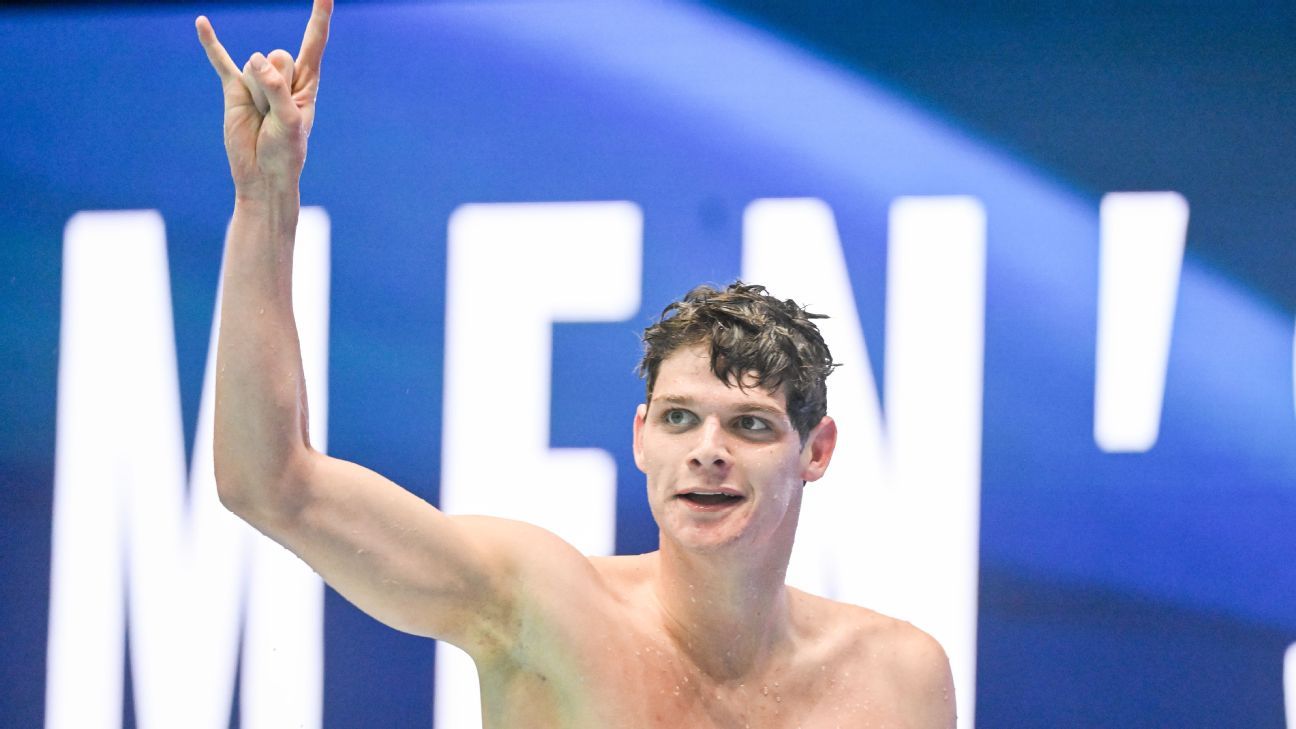
ATLANTA — Texas junior Rex Maurer defended his title in the 400-yard individual medley at the NCAA swimming and diving championships, and the Longhorns held the team lead after Day 2 on Thursday.
Texas has 215.5 points, followed by Florida with 205 and Arizona State 133.5.
Josh Liendo won the 100 butterfly for Florida in a NCAA record time of 42.49, just passing Texas’ Hubert Kos on the final stroke. Kos matched Liendo’s record set in the prelims at 42.54. Arizona State’s Ilya Kharun also broke the 43-second mark.
Arizona State ended the night by winning its second relay of the championships, finishing the 200 freestyle with a NCAA record time of 1:12.46.
Virginia freshman Maximus Williamson won the 200 freestyle from lane eight in 1:30.03. In the prelims, Williamson tied his teammate David King for the final spot in the final and King ceded the spot.
California sophomore Yamato Okadome out-touched two Texas swimmers to win the 100-yard breaststroke in 49.90. Longhorns Campbell McKean and Nate Germonprez came in second and third, respectively.
SMU sophomore Luke Sitz claimed the one-meter diving title.
Day 3 of the four-day event continues on Friday with the 100 backstroke, 200 breaststroke, 500 freestyle, 50 freestyle, 400 medley relay and three-meter diving.
The 2026 men’s NCAA tournament continues as a loaded Sweet 16 tips off Thursday.
ESPN reporters on-site in Houston and San Jose, California are working alongside other analysts and editors to track all the action.
Jump to: Game previews
7:10 p.m., CBS
Borzello’s prediction: Purdue, 80-70
Medcalf’s prediction: Purdue, 85-72
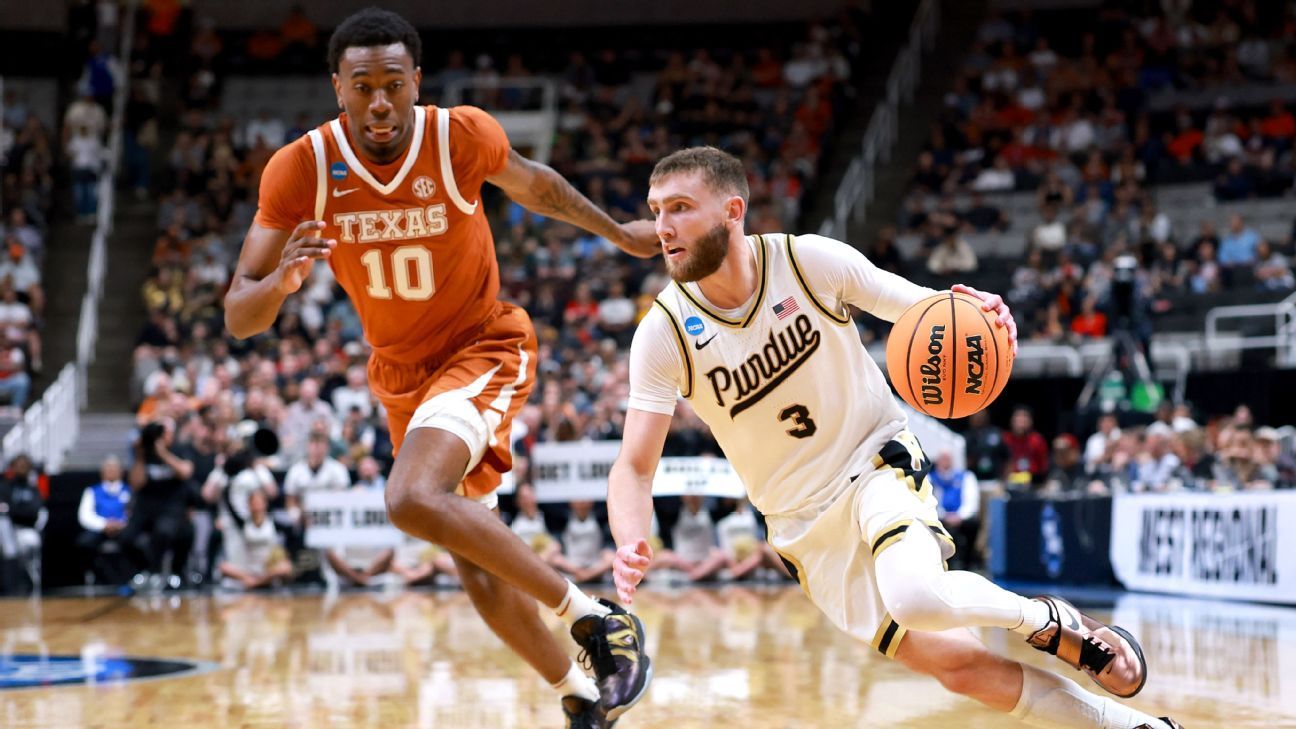
How Texas can advance to Elite Eight: Texas has emerged as one of the hottest teams in March, winning three games in five days to go from the First Four to the Sweet 16. Sean Miller has made Matas Vokietaitis an offensive focal point, and the Lithuanian native responded by averaging 20.0 points and 12.5 rebounds in his past two NCAA tournament games. And over his past 12 games, Vokietaitis is averaging 17.6 points and 8.1 rebounds. Purdue has enough size to deal with the 7-foot-1 big man, but the Boilermakers also allowed opponents to shoot better than 56% inside the arc in Big Ten play.
The Longhorns also have to continue their defensive resurgence, which has come out of nowhere after they ranked No. 159 in adjusted defensive efficiency in their final six games before the NCAA tournament. They’re allowing just 1.03 points per possession in three tournament games. The key will be whether that’s enough against Purdue, which is ranked No. 1 in adjusted offensive efficiency. Texas has to make sure it doesn’t let Braden Smith dictate the entire game.
0:59
No. 4 Arkansas vs. No. 1 Arizona game preview
Check out some stats on Arkansas’ Sweet 16 matchup with Arizona in the men’s NCAA tournament.
How Purdue can advance to the Elite Eight: The late-season return to form of Trey Kaufman-Renn and Fletcher Loyer has taken Purdue to a different level — and is likely the Boilermakers’ biggest key. Kaufman-Renn had 20 points in the Big Ten tournament title game and 25 in the first-round NCAA tournament against Queens, then went for 19 points and nine rebounds in the second-round win over Miami. Loyer was perfect from 3-point range (4-for-4) against the Hurricanes and is now shooting 19-for-35 from beyond the arc in his last five games.
While Texas’ defense has tightened up recently, it was still ranked in the bottom half of the SEC, while Purdue enters the Sweet 16 with the best offense in the country. Moreover, the Boilermakers rank in the top 10 nationally in 3-point percentage, while the Longhorns are in the bottom third in 3-point defense. If C.J. Cox, who suffered a knee injury and is listed as questionable, can play and make shots alongside Loyer and Kaufman-Renn, Purdue should be able to light up the scoreboard. — Borzello
7:30 p.m., TBS/truTV
Borzello’s prediction: Nebraska, 66-63
Medcalf’s prediction: Iowa, 65-60
How Iowa can advance to the Elite Eight: We have evidence on how Iowa can beat Nebraska (and vice versa). When the Hawkeyes beat the Cornhuskers on Feb. 17, Bennett Stirtz was relatively inefficient but still finished with 25 points in willing Iowa to a win. When the Hawkeyes lost to the Cornhuskers in the regular-season finale, he finished with 11 points on 10 shots. In the NCAA tournament, Stirtz has received plenty of help from his supporting cast, with Alvaro Folgueiras averaging 14.0 in two wins and Tavion Banks scoring 20 against Florida.
Defensively, the Hawkeyes have to avoid fouling. They ranked last in the Big Ten in defensive free throw rate, and there was a noticeable gap in free throw attempts in the two games against Nebraska. When Iowa won, it was plus-6 at the free throw line. When Nebraska won, Iowa was minus-10.
0:58
No. 3 Illinois vs. No. 2 Houston game preview
Check out some stats on the matchup between Illinois and Houston in the men’s NCAA tournament.
How Nebraska can advance to Elite Eight: Nebraska picked up its first NCAA tournament win in program history last Thursday, then doubled its total in drama-filled fashion Saturday when Vanderbilt’s half-court heave rimmed out. What will the Cornhuskers need to do to win a third — against a team they split the regular-season series with during Big Ten play? Their success all year has been primarily predicated on two factors: 3-point shooting and defense.
They rank top 15 nationally in 3-pointers made per game, 3-point attempt rate and percentage of points generated off 3-pointers. They have four players who made 50 or more 3s this season, and they’ll likely have to make double-digit 3s to win. When they beat Iowa on Feb. 17, they made 10 3s. When they lost, they were 5-for-24. Nebraska led the Big Ten in adjusted defensive efficiency, holding opponents to below 30% from 3-point range and forcing turnovers on nearly 20% of possessions. The Cornhuskers had far more success against Iowa when they forced Stirtz into a tough outing. — Borzello
9:45 p.m., CBS
Borzello’s prediction: Arizona, 89-82
Medcalf’s prediction: Arizona, 93-87
How Arkansas can advance to Elite Eight: With his team battling High Point late in the second round, Darius Acuff Jr. never flinched. The projected NBA draft lottery pick finished with 36 points on efficient 11-for-22 shooting from the field to send Arkansas to its fifth Sweet 16 in six years. The Razorbacks can advance if he can get downhill, draw fouls and create space for his teammates. We saw this blueprint in their win against the Panthers on Saturday. With Acuff drawing multiple defenders, his teammates were able to produce: Malique Ewin (14 points, 12 rebounds) and Billy Richmond III (15 points, 10 rebounds) finished with double-doubles, while Meleek Thomas (19 points) also finished in double-figure scoring.
Acuff has to convince Arizona coach Tommy Lloyd that the Wildcats have no chance against Arkansas if he puts only one defender on him. Still, on defense, Arkansas is up against the deepest team in the NCAA tournament field. Each Razorbacks player has to win individual matchups; Richmond and Trevon Brazile especially will have to match the physicality of an elite Wildcats frontcourt without fouling excessively.
How Arizona can advance to the Elite Eight: Arizona can advance with a physically exhausting style that has challenged opponents throughout the season. Utah State cut Arizona’s lead to four points with five minutes to play in Sunday’s second-round meeting — the Wildcats had led by as many as 18 — and staged a serious attempted comeback in the final minutes. But Jaden Bradley drove to the rim and scored, Brayden Burries hit big shots, and Arizona got to the free throw line with 22 attempts in the second half. That’s the taxing style that makes most opponents break. Arizona is relentless. To beat Arkansas, though, its goal must be to stop the best player in this college basketball postseason: Acuff. If Lloyd can devise a defensive game plan against Acuff without sending a lot of help, then his guards can avoid early foul trouble, which could have an impact on the game. But that’s easier said than done. Acuff can make anyone panic, especially in crucial moments down the stretch. Arizona can’t do that if it expects to win. — Myron Medcalf 10:05 p.m., TBS/truTV Borzello’s prediction: Houston, 74-72 How Illinois can advance to Elite Eight: When Illinois jumped out to a 14-5 start against VCU in the second round, it seemed as if the Illini would enter halftime with a substantial edge — then the Rams slowed the game down and upped their defensive pressure to enter the break down just seven points. Ten minutes into the second half, though, they trailed by 22 points. That’s how quickly the game can turn against Illinois, which owns the best offense in America. That’s the Illini’s advantage against a Houston team prone to extensive scoring droughts. They already have wins over Tennessee and Nebraska, both top-15 defenses nationally. Houston and its pressure are unique, and the Illini will hit difficult offensive stretches against the Cougars — but Illinois has proved that it never stays cold. When the shots stop falling for Houston, as they have multiple times this season, Illinois will advance if its impeccable offense can extend a lead. Houston isn’t built for comebacks, while Illinois is equipped to widen the gap against its opponents. Whenever that opportunity arises against the Cougars, the Illini have to seize it. How Houston can advance to Elite Eight: Their defensive strength is their advantage when they force opponents to play methodically and measured. Texas A&M entered its second-round matchup against Houston having played one of the fastest tempos in America, but the Cougars locked the Aggies into a 65-possession affair and recorded a subpar 87 points per 100 possessions. Houston will have to deploy the same method against Illinois. Kelvin Sampson will need efficient efforts from star guards Kingston Flemings and Emanuel Sharp. And Joseph Tugler, last season’s Big 12 Defensive Player of the Year, has spent the last portion of his campaign as an emerging offensive threat. But to beat the best offense in the country, Houston will have to use the same gritty style that has anchored its 7-1 streak in its past eight games. One of the best defensive units in America will have to gain the edge against Illinois, which can turn a trickle of shots into a fire hose. Houston’s defensive strengths will have to be the difference against Brad Underwood’s squad. — Medcalf
Medcalf’s prediction: Illinois, 77-74


China concludes Mexico tariffs create trade barriers for firms

Taylor Swift wins seven awards at iHeartRadio Music Awards 2026

How Cole Hutson is taking a role in the next wave for the Capitals

-

 Fashion1 week ago
Sales at US apparel, clothing accessories stores up 4% YoY in Jan 2026
-

 Fashion1 week ago
Spain’s Inditex FY25 sales rise 3.2% to $46.28 bn amid strong demand
-

 Entertainment1 week ago
Val Kilmer revived 1 year after death through AI
-

 Politics1 week ago
Iran strikes Tel Aviv with cluster-warhead missiles in retaliation of Larijani’s martyrdom
-

 Sports1 week ago
March Madness 2026 – How to watch in SA, start time, schedule, TV channel for NCAA championship basketball tournament
-

 Fashion1 week ago
US’ G-III Apparel’s FY26 sales fall 7% to $2.96 bn
-

 Politics1 week ago
US judge directs Trump administration to bring VOA employees back
-
 Business1 week ago
Brits cashing in jewellery as gold price hits record high