

Sports
The NHL is back at the Olympics! Everything you need to know about hockey in Milan-Cortina

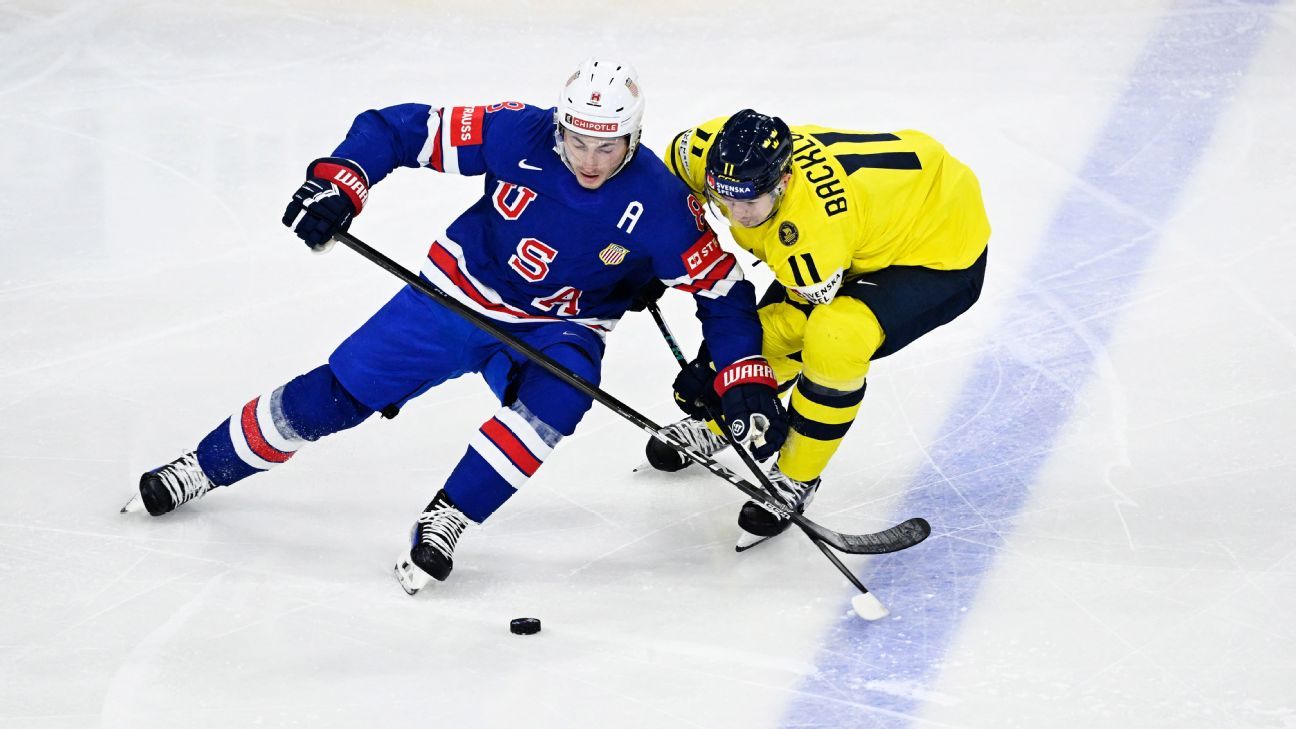
-
Ryan S. Clark
-
Kristen Shilton

For the first time since 2014, NHL players will be competing in the Olympic Games — minus those who call Russia home.
On the women’s side, the best players have been participating without restriction this whole time.
You might have several questions based on those two sentences.
ESPN reporters Ryan S. Clark and Kristen Shilton are here with answers to those — and many more about the format, favorites, etc. — as the start of the Milan-Cortina Games approaches in early February.
When do the tournaments begin?
As pop poet laureate Taylor Swift would say: Baby, let the Games begin!
In this 25th iteration of the iconic winter sports showcase, hockey’s best will compete over 18 days. The women’s side kicks things off Feb. 5, with round-robin action extending to Feb. 10. The men get started Feb. 11 with their own round-robin going until Feb. 18.
Quarterfinals for the women will open Feb. 13, and the men will have qualification playoff games starting Feb. 17. Further quarterfinal and semifinal matchups will follow, leading into medal rounds slated for Feb. 19 (both bronze and gold on the women’s end) and then Feb. 21 (bronze) and Feb. 22 (gold) for the men. — Shilton
Which countries are competing?
Twelve nations will compete in the men’s division, while 10 nations will comprise the women’s division.
Men’s hockey was first introduced as an Olympic sport during the 1920 Summer Olympics, but was then made a permanent sport at the 1924 Winter Games.
Canada was the first nation to win gold in men’s hockey, winning four consecutively; in total, Canada has won gold nine times — the most of any nation. The U.S. is tied for third all time with two gold medals, while its eight silver medals are the most of any nation in men’s hockey.
Finland enters the tournament as the reigning men’s champion, with the nation winning its first-ever gold in 2022. The Finns are seeking to become the first country since Canada in 2010 and 2014 to win consecutive gold medals. It’ll try to pull off that achievement in a field that will also feature Canada, Czechia, Denmark, France, Germany, Italy, Latvia, Slovakia, Sweden, Switzerland and the U.S.
Women’s hockey was introduced at the 1998 Winter Games in Nagano, Japan.
The U.S. was the first country to win gold in women’s hockey when it defeated Canada. Since then, there has been just one Olympics (2006 Torino) in which the gold medal game hasn’t been played between the two North American rivals. The Canadians won their first gold in 2002, and kept those gold medals coming until they were defeated by the U.S. in 2018 in Pyeongchang, South Korea. Canada would strike back in 2022 to win its fifth gold medal in six tries.
Both Canada and the U.S., which are the only countries to win a gold medal in women’s hockey, are back in 2026. They’ll be joined by Czechia, Finland, France, Germany, Italy, Japan, Sweden and Switzerland. — Clark
Why is it a big deal that NHL players are participating on the men’s side?
The NHL is back competing at the Olympics for the first time since the 2014 event in Sochi. There had been league players participating at the Winter Olympics since 1998, but the NHL eventually had a change of heart about being involved. The NHL opted to stop taking Olympic breaks, disallowing its athletes from going to the 2018 showcase.
There were a number of reasons for that choice cited by NHL officials, ranging from pricing and cost issues with the International Olympic Committee and International Ice Hockey Federation (particularly when it came to insurance, travel and lodging). Furthermore, there was consideration for the impact of shutting down for a month on the NHL’s bottom line, not to mention the logistical gymnastics involved in a shortened season. Basically, the NHL owners didn’t think there was enough benefit to seeing their players suit up for their countries.
It wasn’t until the NHLPA pushed back at the collective bargaining table and worked Olympic participation back into the labor laws that it became an option once again. NHL players were slated to return for the 2022 Games, but because of widespread COVID-19 outbreaks at that time, the league stepped in and barred its players again — this time for health reasons — from heading to Beijing.
Those days are behind us now though. The NHL is all-in, and ready to build on the best-on-best momentum from last February’s 4 Nations Face-Off — Shilton
What is the format of the tournament, and what rules are different from the NHL’s?
The tournament is straightforward for the women: 10 countries will be represented, spread across two groups of five teams each. All teams will play each other once in preliminary action. From there, all five teams from Group A and the top three teams from Group B will advance to the quarterfinals. Standard knockout rules apply once the round-robin is done.
The men’s situation is a tad more complex.
We’ve already covered some of the basics: There are 12 teams competing, seeded across three groups of four. Each team will play three round-robin games. When that preliminary round ends, all 12 clubs will be reranked according to a specific system: Which team had the higher position in the group, which had more points, which had the better goal differential, which had the higher number of goals scored and which had a higher IIHF ranking in 2020.
At that point, teams rated 1-4 will have a bye into the quarterfinals. Teams 5-12 will participate in a qualifying round that pits 5 vs. 12, 6 vs. 11, 7 vs. 10 and 8 vs. 9. The four winners from that mini tournament will advance to the quarterfinals, where the matchup system (highest vs. lowest seed) will carry on. Ditto into the semifinals, and then the gold and bronze medal games will be played by the winners and losers of the semis. The team with the higher preliminary round ranking will be considered the home squad in each final round game.
There will also be some differences from what rules and procedures govern the NHL.
The Olympic event’s outcomes will be run by a points system: three for the winning team in regulation, zero for the losing team in regulation, two for the winning team in overtime or a shootout and one for the losing team in overtime or a shootout. During the preliminary action, overtime will last five minutes before the sides go to a shootout. At the Olympics, there will be five preliminary shooters per side instead of the NHL’s usual three. In qualifying, quarterfinal and semifinal games, there will be a 10-minute overtime followed by a shootout. In medal rounds, overtime periods will last 20 minutes until someone scores.
Intermissions will also be shorter — 15 minutes, as opposed to 18 in the NHL. Men’s teams can bring 25 skaters (including three goalies) and ice a game-day roster of 20 players.
Oh, and as always, there is no fighting allowed at the Olympics (or any IIHF hockey events). Sorry, Tkachuk brothers! — Shilton
What’s the latest on the construction of a new rink?
Creating the space where both male and female players will compete has been an arduous process ahead of these Games. Various delays put laborers behind schedule, and by mid-December — just seven weeks from when the women’s hockey teams are slated to start playing — the ice surface inside Milano Santagiulia Ice Hockey Arena had not been installed.
The IOC executive board has made assurances that the arena will be ready by February, even though previously planned pre-Olympic events to test out the pending ice surface had to be canceled. There are reported to be thousands of workers on site around the clock each day to ensure the final deadlines are made.
NHL commissioner Gary Bettman has repeatedly said the NHL had nothing to do with the arena construction process, and deputy commissioner Bill Daly reiterated recently that the safety of NHL players remains the league’s primary concern when it comes to any arena setbacks. — Shilton
What happens if the rink isn’t finished? Is there a deadline for a decision?
Officially, there is no Plan B if the Milano Santaguila rink isn’t finished in time and deemed safe for the athletes. In order for the NHL to make that designation, there has to be some kind of hockey played in the arena so that ice can be tested on its own and when the 16,000-person capacity venue has actual people inside. Bettman and Daly have both stated that if the league doesn’t feel the rink is adequately prepared and vetted they will not send players as planned.
NHL officials have been on the ground in Milan to see what progress there has been, and on one of those trips discovered the size of the ice surface will measure 196.85 feet by 85.3 feet, something the IIHF agreed upon but was a surprise to the league (which has its own standard rinks at 200 feet by 85 feet). International tournaments have been played on smaller ice surfaces than that in the past, but this will be shorter and wider than what athletes have experienced before. The IIHF defended itself against any backlash while moving ahead with their plans.
“While these dimensions differ slightly from a typical NHL rink, they are consistent with IIHF regulations, match the rink size used at the Beijing 2022 Olympic Winter Games and are fully consistent with the dimensions the NHL requires as part of its Global Series Game arena specifications,” the federation said in a statement. “All involved — the IIHF, the organizing committee, NHL, NHLPA, International Olympic Committee and the relevant venue authorities — agree that the differences in rink specifications are insignificant and should not impact either the safety or quality of game play.”
Still, it’s yet another wrench in an increasingly stressful situation for both Olympic organizers and men’s and women’s league executives who want to see their players properly showcased but without risking their health in the process.
“We have offered [to help with the construction] and they are utilizing our ice experts and technicians and outside providers,” Daly said. “We’re basically moving everybody there to try to help get this done in a way that is acceptable for NHL athletes.”
There has been no publicly announced cut-off date as of yet that would indicate how much runway the organizers have before the NHL or any of the women’s teams would drop out of the tournament. — Shilton
Who are some of the top women’s players who I need to know?
Canada is expected to be led by its established stars, and that starts with its captain Marie-Philip Poulin. She’s a three-time Olympic gold medalist, a four-time women’s world champion, the reigning IIHF Women’s Player of the Year, and is considered to be one of the greatest players of all time.
Poulin is just one of two Player of the Year recipients who are expected to play for Canada. Natalie Spooner won the award in 2024 and has won two Olympic golds and three world championships. Canada’s bid for a consecutive gold medal is also likely to be heavily bolstered by other stars such as Erin Ambrose, Renata Fast, Sarah Fillier, Brianne Jenner, Sarah Nurse and Blayre Turnbull.
The U.S. has its own collection of stars who will be led by captain Hilary Knight. She is a four-time Olympic medalist who was part of the U.S. team that won gold in 2018 and is also a 10-time world champion. Knight was the first recipient of the IIHF Women’s Player of the Year back in 2023.
America’s path for a gold is also expected to feature Alex Carpenter, Kendall Coyne Schofield, Britta Curl-Salemme, Aerin Frankel and Lee Stecklein. Laila Edwards and Caroline Harvey, teammates at the University of Wisconsin, are also expected to be on the roster.
Outside of the North American powers, there’s Finland duo Jenni Hiirikoski and Michelle Karvinen, who are considered to be two of the best players in the world. Switzerland’s Alina Muller might be a familiar name, with the forward winning a bronze medal when she was 15 at the 2014 Olympics.
Another country to watch is Czechia, which has been among the top four women’s teams over the past four years because of players such as Kristyna Kaltounkova, Natalie Mlynkova, Katerina Mrazova and Aneta Tejralova. — Clark
Who are the key non-NHL players to know on the men’s side?
The U.S., Canada, Finland and Sweden are expected to field rosters that exclusively feature NHL players. Although it’s possible Finland could have to rely on skaters playing elsewhere considering how many expected roster players are out because of injury, led by Florida Panthers star Aleksander Barkov.
Czechia, Germany and Switzerland will have NHL players on their respective rosters but will need players from leagues beyond the NHL in order to field a full team. Czechia is expected to rely on Ondrej Beranek, Roman Cervenka and Jakub Flek, along with other players who have previous NHL experience like Libor Hajek, Michal Kempny and Dominik Kubalik.
Switzerland could be an under-the-radar medal threat. In addition to NHL players like Nico Hischier and Timo Meier, it also has players who either have NHL experience or have played in North American leagues. It’s a group that consists of Sven Andrighetto, Dean Kukan and Denis Malgin. There are also players who’ve stayed in Europe for their whole careers such as Swiss goalie Leonardo Genoni, a veteran of nearly 90 games for his country at the senior level. — Clark
Who are the medal favorites?
Part of what made the 4 Nations Face-Off intriguing is that it was seen as a dress rehearsal for the Olympics. Canada and the U.S. were the heavy favorites and showed why with Canada winning in overtime in the final. The tight margins between those two teams is more evidence that either could win the men’s tournament. That narrative was enhanced by the U.S. winning its first men’s world championships gold medal since 1960 this past spring.
HISTORY MADE. FOR THE FIRST TIME IN 92 YEARS, TEAM USA IS BRINGING HOME THE #MENSWORLDS GOLD 🇺🇸🏆 pic.twitter.com/4qqRdIc3VF
— USA Hockey (@usahockey) May 25, 2025
That said, Czechia, Finland and Sweden all have a strong history of finding cohesion at numerous international tournaments en route to either winning gold or being somewhere on the podium. And as noted above, Switzerland could build upon its consecutive second-place finishes at the two most recent men’s world championships and parlay that into a place on the medal stand.
On the women’s side, the U.S. and Canada are considered to be the two strongest nations when it comes to talent and infrastructure, and they enter the tournament as the favorites for gold.
That’s not to suggest that others won’t force the issue and give the Olympics its second-ever gold medal game that isn’t played between Canada and the U.S.; the two most likely candidates to do so appear to be Finland and Czechia.
Finland has won bronze in three of the four most recent Olympics. The Finns have also won bronze in the two most recent women’s world championships.
Both of those third-place finishes for Finland were against a surging Czechia. The 2022 Olympics was Czechia’s first time at the Games, and they finished seventh. They were the bronze medalists at the women’s world championships in 2022 and 2023, losing the bronze to Finland the past two years. — Clark
Why isn’t Russia in the tournament?
The IOC is continuing its ban on teams from Russia (and Belarus) competing in both men’s and women’s hockey at the 2026 Games. This will be the second straight Olympics where those countries won’t be represented in group sports, although certain individual athletes will be allowed to compete as Individual Neutral Athletes.
The IOC initially had its executive board call for sanctions against Russia in response to their invasion of Ukraine — with Belarus’ support — in 2022. Those recommendations were made in 2023, and consequently Russia and Belarus were barred from the summer 2024 Games in Paris. The IOC asked the IIHF for a projected schedule and groupings in May for the 2026 Games, making their decision to uphold the previous recommendations against Russia and Belarus at the end of that month.
This isn’t the first time the IOC has taken a stance against Russia. When a state-sponsored doping program was exposed there in 2016, the IOC and World Doping Agency determined as punishment that Russia’s name, flag and anthem be banned from all upcoming Games. As such, Russia’s last two Olympic teams competed as “Olympic Athletes from Russia” in 2018 and “Russia Olympic Committee” in 2022. — Shilton
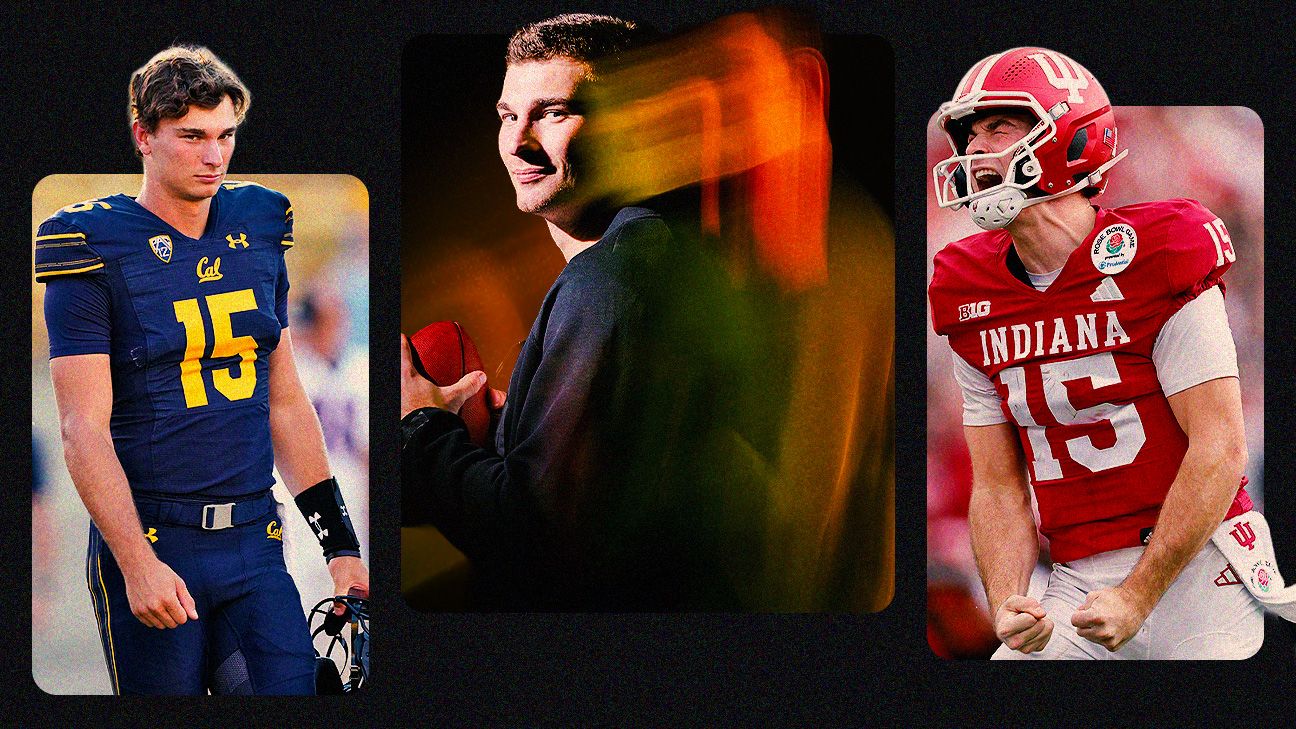
THE VERDICT IS all but in, the coronation all but official.
Fernando Mendoza‘s presence here, in Indianapolis at the combine, is formality over function. It’s late February, two months to go until the 2026 NFL draft, but he has already done the fairytale, done the unthinkable, done the proving. There’s no throw he can make this week that could outdazzle the missile he launched to beat Penn State last fall, with a pair of defenders closing in and the clock ticking down. There’s no strength test he can crush that will tell us more about what he can and will put his body through than the beating he took scrambling for his life to score the touchdown that helped seal Indiana’s first national championship in January.
This thing is so wrapped up, even Mendoza — normally so polished, so tactful — briefly slips. He’s at the podium, fielding questions from a flock of reporters who are so eager to hear what the “likely” top draft pick has to say, they throw elbows to get an inch closer. Mendoza gets asked about Tom Brady — former NFL great, current minority owner of the Las Vegas Raiders, who are, in turn, owners of the first pick in this year’s draft — and he’s duly effusive.
“Who hasn’t admired Tom Brady?”
“He’s the greatest quarterback of all time by a wide margin.”
“To have,” he says, stops, then tries again. “To potentially have a mentor like that would be pretty impressive.” Underscore, highlight, ALL CAPS that potentially, he all but says out loud.
The rest of his news conference proceeds without a hitch, which is to say, it’s typically Mendozian. He smiles when he listens to questions, he smiles when he answers questions, he smiles when he can’t hear questions, he smiles when there is no more time for questions. He delivers his answers with class-president-acing-his-presentation energy, full of direct eye contact and workshopped points and counterpoints. It’s tempting to look for notecards hidden somewhere discreet on the dais.
This is the pinnacle of the Mendoza experience. He looks like a star quarterback dreamed up in a lab: 6-foot-5, 236, respectable mobility, good arm, rarefied accuracy, all the while sounding like few star quarterbacks who have come before. He is, to hear those in his orbit tell it, the most unfootball-like of adjectives: “goofy.”
So goofy (or “awkward” or “different” or “not normal,” depends on who you ask) that one of his old coaches from his Cal days, Tim Plough, now head coach at UC Davis, has fielded a slew of calls from NFL scouts plying him with questions. Is Mendoza always like this? Is he really like this? Is that going to fly in a room of full-grown adults?
Yes, Plough, tells them. When he is in front of a camera or in front of a locker or in front of the dining room table in Plough’s home, he is always like this. He will talk you and thank you to death. He’ll drill you with questions and take the conversation in winding ways and be courteous to the point of oh, wow, enough already. It’s an acquired taste for some, Plough concedes, but it’s more than that too. The way that Mendoza is? The way he always is?
“It’s Fernando’s superpower.”
THE STORY OF Mendoza’s time in Bloomington, which ended with a cascade of increasingly unfathomable feats — the Heisman crowning, the Big Ten title, the national championship, the 16-0 record, and all this for Indiana (?!) — was a fairytale starring a new kind of hero.
“He’s not …” Plough starts, then pauses, in search of the best way to put this gently. “He’s not the cool guy.”
So what is it, exactly? What uncool boxes is he checking? Corniness? (“Some people might think he is corny, but I think he’s a blessing,” former Hoosiers running back Roman Hemby says.) Nonconformity? (“Everyone gives him a hard time, myself included, that he’s kind of nerdy,” his old high school coach Dave Dunn says.) Stone-cold quirkiness? (“Sometimes he’d just say the stupidest stuff, and you’re like, ‘What are you talkin’ about, dude,'” former Indiana tight end Riley Nowakowski says.) Check, check, check. It’s not a bad package, they all say, just not your typical star (or starting) quarterback package. They sort of love it, in fact.
He calls wide receiver Charlie Becker “Chuck-o-nator,” and calls Nowakowski something “not PG,” and has absolutely no nickname for Curt Cignetti whatsoever, because he does not have a death wish. Cignetti, now going into his third season as Indiana’s head coach, makes Bill Belichick look positively joyful. “Yeah, Cignetti’s not a nicknames guy,” Nowakowski says.
For all his quirks, Mendoza is quick to read a room. Or a sideline. Sometimes Nowakowski would steal a glance at Mendoza and Cignetti conferring in the middle of the game, and snicker at Mendoza’s total, if temporary, transformation. The quarterback had to shift gears to disgruntled grouch in order to game plan.
“Nando would get super serious,” he says. “Silent. It was like a completely different person.”
His eccentricities have an off button. It’s just that Mendoza’s default setting is on, turned all the way up. Which works. It worked at Indiana — killed at Indiana, really. And it will work in the NFL, people think. People hope. People are trying to make sure, which is why Plough fielded all those calls in the first place.
“Is he a little different? Yeah,” one NFL scout says. “Is that going to be a bad thing? I don’t know. The issue that you have is: Can you see him leading your team? Is he going to be the guy that says, ‘You ran the wrong route,’ and then, ‘M-F you,’ in the huddle?”
Spoiler: He will not. On the first play of the Big Ten title game against Ohio State, Nowakowski was meant to block the edge on a rollout, but he got beat and Mendoza got crushed. The man can take a beating, but even he had to leave the game for a play, and Nowakowski spiraled. He just let the soon-to-be Heisman winner get destroyed. Their whole season rides on this one guy being able to play … and now he might not be able to play. The quarterback returned two plays later and waved off Nowakowski’s repeated apologies. Mendoza was still in pain but was also still Mendoza. “Jolly,” Nowakowski says. No M-Fs in sight. “He was like, ‘Dude, I got cracked!'”
But here’s a spoiler addendum: He doesn’t need to be that kind of leader. Back in 2024, Jayden Daniels had one of the best rookie seasons of all time. The coach who oversaw all that history, Dan Quinn, says the biggest misread on what a young, highly drafted quarterback needs to be is this: “The outside thinks he has to be the leader of the team, right when he walks in the locker room. And that’s not the case. Man, learn the system so well you can be counted on in clutch moments. Be a great teammate. Help others get better. But you don’t have to go lead by ripping a guy for being in the wrong alignment.”
If you’re inauthentic, Quinn says, these guys will sniff you out. They don’t want to see their young, albeit transcendent, quarterback force leadership that isn’t there. They just want to see him really freaking care.
Back in early November, when the Hoosiers were already an endearing story but not yet a mythical one, they survived an unexpected battle at Penn State to stay undefeated. Mendoza had 80 yards and less than two minutes left in the game to try to escape State College with a win, and the effort started with a 7-yard sack. From there, though, it was death by gashing: a 22-yard pass, a 12-yard pass, a 29-yard pass, a 17-yard pass, and a 7-yard touchdown pass that was part brass from Mendoza (two Penn State defenders coming in hot) and part wizardry from his wide receiver (Omar Cooper Jr. toe-tapping a millimeter of grass in the back of the end zone).
After the game, Nowakowski found Mendoza sitting on the bench crying. The quarterback had just authored a game-winning, two-minute fire drill, but he couldn’t stop apologizing. He was so sorry because although he led an amazing final drive, he had played only fine the rest of the game, which is why he needed an amazing final drive in the first place. Nowakowski told him to stop; he couldn’t always be perfect, and he was already more perfect than most of those guys out there anyway. Pat Coogan, Indiana’s center, joined in the rescue effort with some gentle ribbing: “Nando, you are so ridiculous.”
Maybe so. But he really freaking cared.
IF MENDOZA WAS emotionally ruined by the thought of less-than-stellar play, it probably had something to do with this: For much of the 2025 season, he went full football whisperer. That ball did what it was told.
On a wet, miserable day last summer in Bloomington, the team was deciding whether it was dismal enough to abandon its 7-on-7. While his teammates deliberated, Mendoza warmed up with the rest of the quarterbacks. There he was, ripping 50-yard dimes with tight spirals as if the ball weren’t soaking wet. Nowakowski sought out Grant Wilson, another quarterback on Indiana’s roster, because he was curious.
Nowakowski: “Can you throw like that in the rain?”
Wilson: “Are you kidding me? No. Of course not.”
Wretched conditions or not, Mendoza had command of the ball — and its precise location. According to ESPN Research, he overthrew or underthrew his receiver on just 7.1% of pass attempts in 2025, the third-lowest rate in the FBS. He completed 54% of his passes on throws 20-plus yards downfield, fourth best. His receivers dropped only 2.6% of his pass attempts last year, sixth lowest among power conferences, which seems like a credit to Mendoza as much as it is to the team’s sure-handed receivers, because if a ball’s placement is perfect, what’s left to do but not drop it? And he developed one of the best back-shoulder throws in the game, which scouts coveted for that pinpoint accuracy and for what it told them about his football acumen.
“His football IQ is so high,” says Mike Giddings, owner of Proscout Inc., which has worked with 39 Super Bowl teams in its decades of scouting. “Whether it’s, ‘Oh, he’s got him beat. Throw it out in front of him.’ Or, ‘Oh, he’s got him covered, I’m going to back-shoulder it.’ To me, that’s Peyton-like.”
Giddings does plenty of name-dropping. In Mendoza, he sees Philip Rivers-like preparation, Joe Montana-like game management and Andrew Luck-like facility for making the big play when needed.
Because he was, simply, clutch. Mendoza ranked first in the FBS in expected points added per dropback last year overall (+0.52), second in EPA per dropback on third and fourth downs (+0.58), and fourth in EPA per dropback when tied or trailing in the fourth quarter (+0.66).
Yes, he could do with taking fewer sacks. His arm strength is good but not great, certainly not Josh Allen-level obscene. But there just aren’t that many pokable spots in his game. The NFL ruling class has spoken: He’s the best quarterback in a bad quarterback class. Maybe he’s not a Caleb Williams-Jayden Daniels-Trevor Lawrence god-tier prospect, but his biggest green flag as an NFL hopeful might just be his lack of red flags.
“Everything I’m hearing about the kid, he’s going to come in as humble as a quarterback who didn’t have the success he had,” one current NFL general manager says.
He wouldn’t be here, in these interview rooms with these teams, if not for that success. But ears sure do perk up when they hear a guy has that kind of outsized success and a normal-sized sense of self.
“A lot of quarterbacks come in and they think they’re the man,” one scout says. “And they like the fact that he’s not an egomaniac.”
In this one specific and vital way, Mendoza, king of quirk, is perfectly ordinary.
BEFORE HE WAS anyone’s conquering hero, Mendoza was the quarterback no one wanted. Not even his own team.
In the summer of 2023, he was coming off his redshirt season at Cal and seeing about as many snaps in camp as he had the year before: practically none.
“An afterthought,” says Plough, who was the team’s tight ends coach at the time.
Mendoza had been an afterthought recruit too. Two stars and one lonely power conference offer, and even that, only after Cal came calling a week before signing day because it had lost a quarterback pledge. Now, he was a ghost out there. No reps, which turned into no meeting time with coaches, which turned into him being invisible. It was an exhausting hamster wheel, and Mendoza figured he’d try just about anything to hop off, so he knocked on Plough’s door, looking for support. Plough had coached quarterbacks for more than a decade, but since it wasn’t his day job at Cal, he told Mendoza he could help out at night.
Starting in August, Mendoza would show up to Plough’s office at 9 p.m., then stay until midnight. They’d convene every night that month to mine the basics, a How to Be a Better Quarterback seminar for one. How to learn the offense; how to call plays; how to suss out defensive schemes; how to locate blitzes; how to refine throwing mechanics; how to have pocket presence. By the time the season rolled around, Plough insisted they scale back these “midnight meetings,” as they took to calling them, to just Monday through Wednesday. Plough needed to take his wife out for at least one date night or she’d leave him, he said, so Mendoza “let” him have Thursdays off.
Then, about halfway through the season, the Cal coaches, looking for any juice at quarterback, tabbed Mendoza as the starter. Plough thought he might be let off the hook. He was happy for Mendoza but assumed the quarterback would trade his sessions with the tight ends coach for more time with the offensive coordinator.
Right after he was named the starter, Mendoza showed up to Plough’s office at 9, like normal. “‘Hey, we’re still going to meet, right?'”
Their midnight sessions continued for the year, sometimes just bleeding into time together at Plough’s house with his family. Plough had met his wife back in college when he was coaching in the sorority flag football league and she played on an opposing team. When this football meet-cute was brought to Mendoza’s attention, he had questions. What kind of plays had Plough called? What kind of plays had his wife run? What were those plays called? And why those plays? And how those plays? And …
“We might have talked for 90 minutes about the plays we were calling in sophomore year, in sororities,” Plough says. “But that’s just the way his mind works.”
He can’t let things go. Mendoza “rages to master,” Plough says, like all the best quarterbacks the coach has come across. Mendoza can’t sleep. Can’t move on. Can’t think about anything else. Whether it’s making sure he thanks you enough for dinner, or thanks you enough for the after-hours tutoring, or wants to get at the root of why that flag football play was called 20 years ago, or wants to intimately understand why that nickel lined up 2 yards outside of the field safety last week, he won’t stop, can’t stop, does not stop.
“It goes from being a joke, like, ‘Oh, that’s just Fernando being Fernando, what a goofball,'” he says, “to like, ‘Oh, no, that’s actually his greatest strength.'”
It will be hard to outwork Mendoza, hard to out-effort Mendoza, Plough says. And impossible to out-Mendoza Mendoza.
BACK AT THE combine, it’s the rare stretch of days when Mendoza will be outworked and out-efforted. Because he lapped the 2026 quarterbacks field, he has opted out of workouts. Instead, he’ll spend his few days in town reminding anyone who will listen that nothing is set in stone, that this is a job interview, that he still must prove himself. (Nowakowski says this is Mendoza’s spiel in private too. “If I asked him right now, ‘Do you think you’ll be the first pick?’ He’ll be, like, ‘I don’t know. Man, I hope so.'”)
He won’t call it a coronation, though there are plenty of people in Indiana this week willing to do the coronating for him.
Word is he received a standing ovation as he walked through St. Elmo Steak House, one of the city’s (and combine’s) most revered institutions, just for the act of getting dinner.
Earlier that day, Mendoza walked the length of a hallway that led to Lucas Oil Stadium, where all the workouts he did not have to do were taking place. At the end of the corridor, a police officer with a buzz cut and white beard manned the security checkpoint. He was there to keep overeager fans at bay, but as Mendoza drew closer, hands in his pocket, the officer turned zealous himself: “Theeeeeere’s Fernando,” he yelled. Then he pointed at the quarterback. “You’re a blessing,” he told him.
And Friday, after he has completed his news conference duties, Mendoza walks past a different security guard, overseeing a different checkpoint, who pulls him aside. “Mr. Mendoza, we’re all so proud of you,” she says, then gives him a black bracelet. A token of her appreciation, perhaps, for what Mendoza just did, for what he might do yet.
His response is like so many of his others: earnest and a touch over the top. It’s impossible to out-Mendoza Mendoza.
“Oh wow, I love this,” he tells her. “Thank you. I love it. God bless you.”
He walks away, then turns back one more time for good measure. “Thank you!”
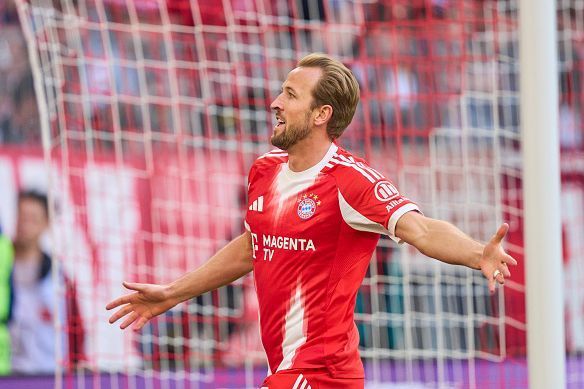
Harry Kane has reiterated that Bayern Munich still have “a lot to play for” this season after winning the Bundesliga title following their 4-2 thrashing of Stuttgart on Sunday.
The England international was substituted on at half time to bag his 31st goal, taking his tally to 51 across all competitions for Bayern this season, the most by any player for a top-five league side since Erling Haaland in 2022-23 (52).
After retaining the title — Bayern’s 13th in 14 seasons — an overjoyed Kane shared his ambitions for the remainder of the season.
“It’s been a fantastic season for us to finish the league off in the way we have with the goals that we scored.” Kane said.
“It’s a credit to the mentality of the boys, from the first game to the last we just keep pushing.
“We still have a lot to play for in other competitions, but all the hard work and days together this makes it worth it to be champions again.”
Kane, Michael Olise and Luis Díaz have a combined 94 goal contributions between them this season — the most by a trio on record (since 1988) in the Bundesliga.
– The numbers behind Harry Kane’s record-breaking Bundesliga season for Bayern Munich
– Bayern Munich retain Bundesliga title after thrashing Stuttgart
– Who has won Bundesliga? All-time German soccer winners list
Kane celebrated the trio’s chemistry: “It’s special, I feel like the relationship just get stronger and stronger, it grows every time we play and train with each other.
“There is still a lot to play for we feel good every time when we’re on the pitch.
Two more trophies are up for grabs for Vincent Kompany’s side, with a semifinal against Bayer Leverkusen in the German Cup to play next as well as a highly-anticipated clash against Paris Saint-Germain in the Champions League semifinals.
Kompany, who has now won the Bavarian club’s 34th and 35th Bundesliga crowns, hailed the opportunity to keep winning trophies.
“The numbers are great, but it’s not over yet,” Kompany said.
“We keep going. It’s also a question of mentality. We always give our all, whether in pre-season or for a competitive fixture and I don’t want to stop yet.
“We’ve got crucial weeks to come. We’re excited, but also know how tough it’ll be. Our belief is there, and that’s very valuable in football.”
Additional information from PA contributed to this report.
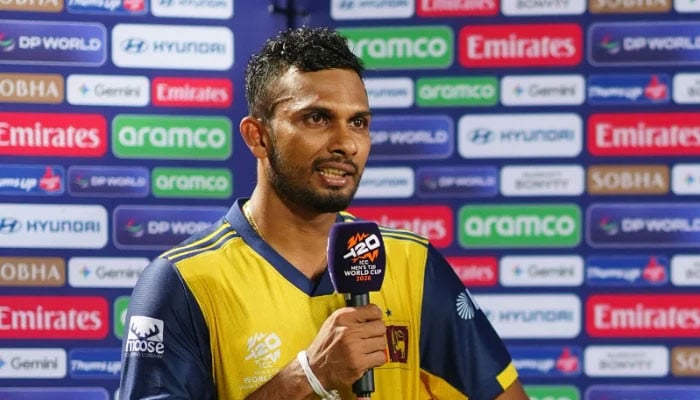
The Pakistan Cricket Board (PCB) has imposed a one-year ban on Sri Lanka’s Dasun Shanaka from participation in the next edition of the Pakistan Super League (PSL), citing contractual violations.
Shanaka was signed by defending champions Lahore Qalandars for Rs7.5 million in the accelerated round of the inaugural players auction, held in February this year.
But just three days before the commencement of the ongoing PSL 11, the franchise confirmed that the Sri Lankan all-rounder has withdrawn due to personal reasons and was replaced by Australia’s Daniel Sams in the squad.
In a statement, the PCB said it conducted a comprehensive assessment of recent contractual developments involving Shanaka and Lahore Qalandars, after the player withdrew from the tournament on March 21, 2026.
The board concluded that the unilateral withdrawal amounted to a clear breach of the player registration terms and the tripartite agreement. It further noted that the reasons cited for the withdrawal were not covered under the existing contractual framework.
While acknowledging Shanaka’s expressions of regret and his stated desire to continue playing in Pakistan, the PCB said the nature of the breach required regulatory action to safeguard the integrity and exclusivity of the league.
As a result, the PCB confirmed that Shanaka has been barred from participating in PSL 12, effective immediately.
Meanwhile, in a statement released by the PCB, the Sri Lankan all-rounder issued an apology to Pakistani fans and the wider cricket community.
“I deeply regret my decision to withdraw from the HBL PSL and offer my sincere apologies to the people of Pakistan, the fans of HBL PSL, and the wider cricket community,” Shanaka was quoted as saying by the PCB.
“The HBL PSL is a prestigious tournament, and I fully understand the disappointment caused by my actions. To the loyal fans of Lahore Qalandars, I am truly sorry for letting you down.”
He further clarified that he had no intention of joining any other franchise league at the time of his withdrawal from the PSL, urging that he has great respect for Pakistani fans and expressing his hope to make his return to the marquee league soon.
“I must clarify that at the time I withdrew from the PSL I had no intention of joining any other tournament. I have the greatest respect for Pakistani Fans and have always enjoyed my time in Pakistan. I hope to return to the HBL PSL in the future with renewed dedication and the trust of the fans.”


War Memes Are Turning Conflict Into Content

‘It’s his superpower’: Inside Fernando Mendoza’s extraordinary rise to No. 1

Consumers have record savings options in final year of £20,000 cash ISA allowance

-

 Fashion4 days ago
France’s LVMH Q1 revenue falls 6%, shows resilience amid Iran war
-

 Sports1 week ago
The case for Man United’s Fernandes as Premier League’s best
-

 Entertainment1 week ago
Palace left in shock as Prince William cancels grand ceremony
-
 Business1 week ago
UK could adopt EU single market rules under new legislation
-

 Entertainment5 days ago
Is Claude down? Here’s why users are seeing errors
-

 Fashion1 week ago
Energy emerges as biggest cost driver in textile margins
-

 Tech1 week ago
A Lot of Shops Won’t Fix Electric Bikes. Here’s Why
-
 Business1 week ago
Delta Air Lines unveils first new Delta One suite in premium cabin arms race