

Fashion
The North Face and Cecilie Bahnsen launch second collaboration

Published
October 21, 2025
The North Face and Danish designer Cecilie Bahnsen have unveiled their second collaboration, following its debut at Bahnsen’s Fall/Winter 2025 runway show during Paris Fashion Week.
Building on the foundation of their first partnership, the collection reimagines The North Face’s alpine icons through Bahnsen’s hyper-feminine couturier style. The latest lineup introduces new fabrics, winter-ready details, and an advanced layering system.
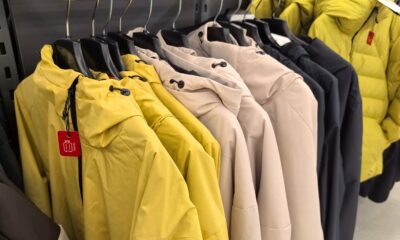
Launching October 30, the seven-piece collection embraces a warmer, richer palette. Highlights include a cinched-waist rework of the down Himalayan Parka, a quilted down skirt inspired by Bahnsen’s signature silhouettes, and an oversized down jacket that merges functionality with Bahnsen’s signature trimmings. Completing the collection are a reinterpreted Denali Fleece Jacket, a refined Wool DotKnit base layer, a crossbody bag inspired by vintage climbing gear, and fresh takes on The North Face’s Verto boots and Traction Mules.
“Icons are not prescribed, they are born. At The North Face, our Icons were born on the edges of the Himalayas and adopted by the streets of New York, London, Paris, or Tokyo. In our second collaboration with Cecilie Bahnsen, we’ve looked at icons of the past and present through her lens. Together, we’ve explored the edges of our brand through silhouette, materialization, and technique all while honoring both brands’ DNA,” explained North Face’s design director, David Whetstone.
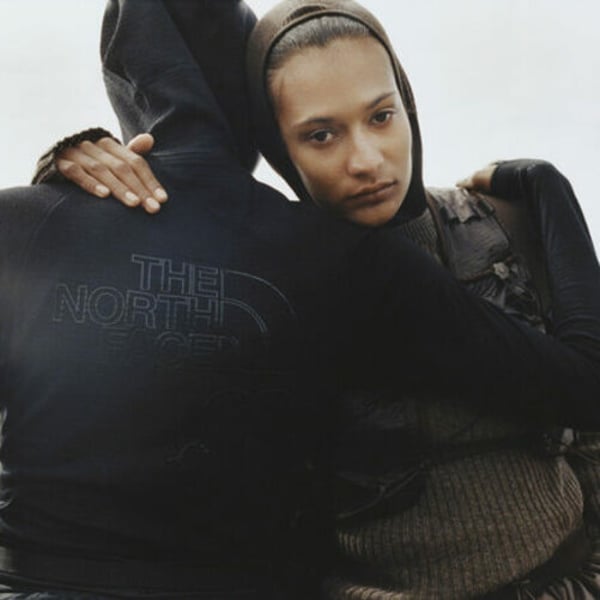
The collection launches with a campaign shot by Ellen Fedors along the coastlines of Mølle and Kullaberg in Sweden. Styled by Emelie Johansson, the imagery captures The North Face athletes — including trail runner Ida-Sophie Hegemann and boulderer Melina Costanza — alongside models navigating the dramatic Scandinavian landscape.
“The campaign is about wanderlust and authenticity, about finding strength in landscapes that feel both intimate and infinite,” added Bahnsen. “It was important to me that the women in the images, whether athletes or models, embody a sense of determination, but also ease. That balance feels true to how I design, and to how these pieces should live in the world.”
Copyright © 2025 FashionNetwork.com All rights reserved.










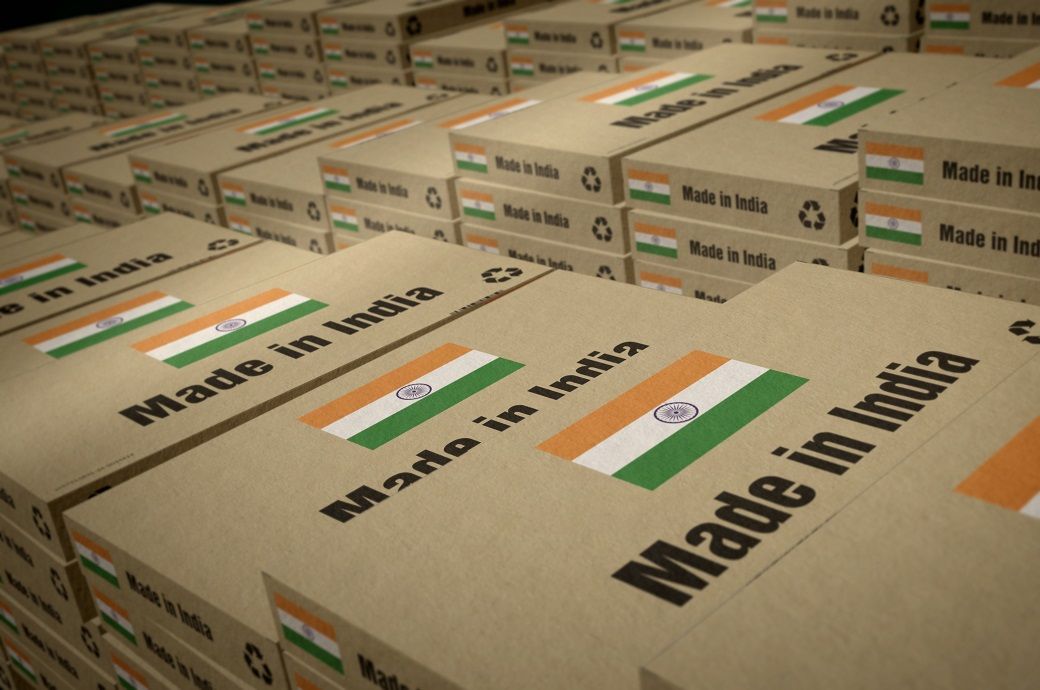
According to a notice issued by the Ministry of Commerce and Industry, the newly formed group will track global developments that may disrupt production networks, logistics flows, and trade corridors. The initiative comes at a time when escalating conflicts, shipping route uncertainties, and volatility in energy and freight markets are beginning to influence sourcing decisions across the textile value chain.
India’s move to form an inter-ministerial group signals a proactive approach to managing export risks amid rising geopolitical uncertainty.
By closely monitoring supply chains, logistics routes and critical imports, the government aims to ensure faster policy responses and protect export competitiveness, particularly for sectors like textiles that are highly exposed to trade disruptions.
The inter-ministerial group will conduct sector-wise assessments to identify export vulnerabilities and potential disruptions in the supply of critical raw materials. For the textile industry, this includes monitoring inputs such as petrochemical derivatives used in synthetic fibres, dyes, and chemicals, as well as machinery components that are often sourced through complex global supply networks.
The group will also serve as a co-ordination platform among different ministries and government departments, enabling faster policy responses if disruptions escalate. Engagement with industry stakeholders, including Export Promotion Councils and trade bodies, will form an important part of this process. Through these consultations, the government aims to gather real-time feedback from exporters on logistical challenges, input shortages, freight cost pressures, and order uncertainties emerging from geopolitical tensions.
Alongside the inter-ministerial mechanism, DGFT has established an internal coordination framework to enable real-time tracking of trade-related developments. This system is intended to strengthen inter-agency communication and ensure that emerging issues affecting exporters are identified and addressed quickly.
For India’s textile and apparel sector, one of the country’s largest export industries with extensive global supply chain linkages, the monitoring initiative is particularly significant. Disruptions in maritime routes, fluctuations in petrochemical feedstock availability, and shifts in sourcing strategies among global brands could all influence export competitiveness in the coming months.
By establishing both an inter-ministerial monitoring group and an internal co-ordination mechanism, the government aims to improve preparedness and policy responsiveness as geopolitical uncertainties continue to reshape global trade dynamics.
The move reflects a broader effort to safeguard export growth while maintaining stability in critical supply chains that support India’s manufacturing and textile industries.
Fibre2Fashion News Desk (KUL)
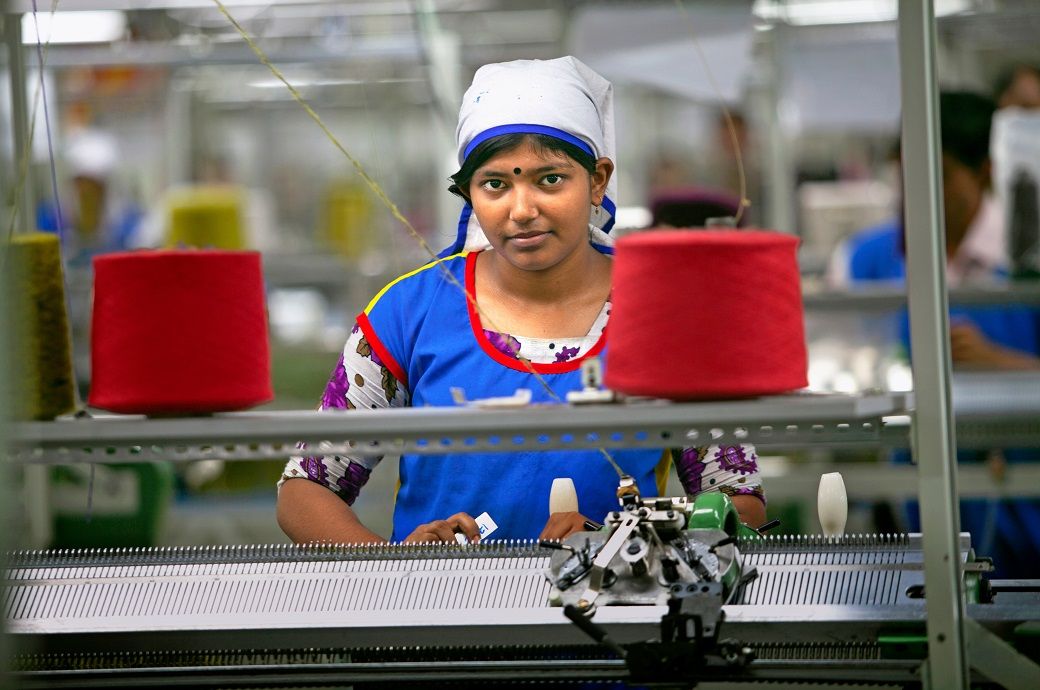
Due to falling exports, delayed purchase orders and liquidity crisis, production in many export-oriented units is getting affected. As a result, the ability to pay salaries and allowances to workers has reduced.
Bangladesh Bank recently issued a circular asking banks to introduce special loan facilities beyond the working capital loan limit to pay salaries of workers and employees for February in light of concerns in the export sector due to global and domestic economic pressures.
The loan amount cannot exceed the average salary and allowances component of the concerned enterprise in the last three months.
The loan amount cannot exceed the average salary and allowances component of the concerned enterprise in the last three months. The prevailing market-based interest rate will be applicable against the loan, while no additional interest, profit, fee or charge other than regular interest can be charged.
The loan must be repaid within a year with a grace period of three months, according to domestic media outlets. Industrial enterprises that export at least four-fifths of their total production will be considered export-oriented. The salary will go directly to the workers’ accounts, not through the company.
Fibre2Fashion News Desk (DS)
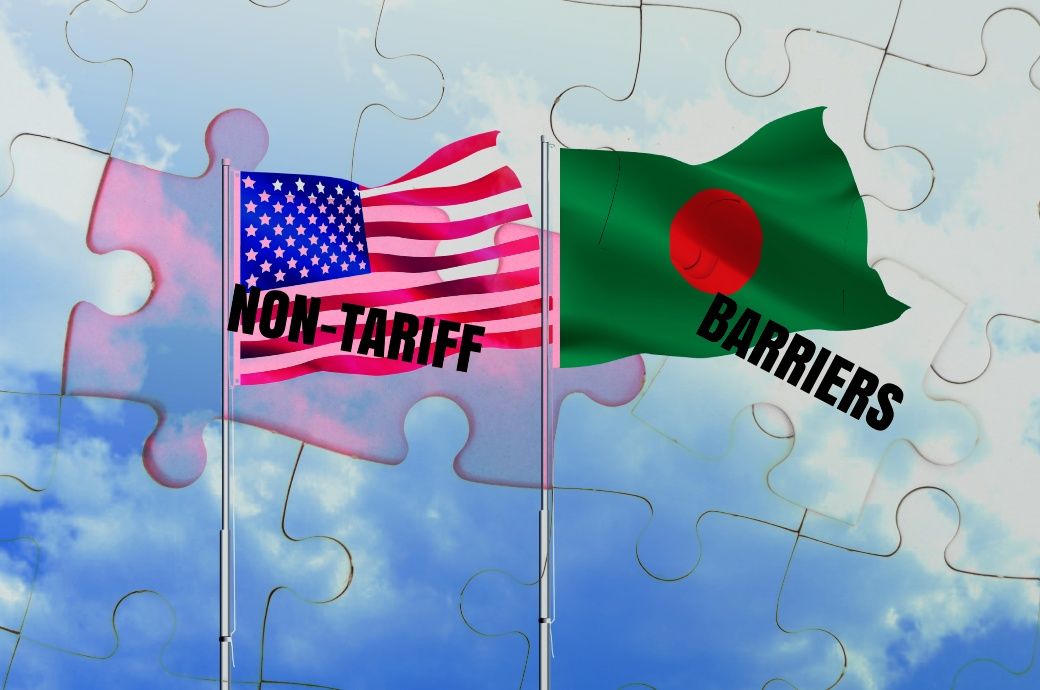
Addressing these issues would also facilitate Bangladesh’s greater access to US development assistance and financing programmes, he said after meeting US Assistant Secretary of State for South and Central Asian Affairs S Paul Kapur in Dhaka.
Cutting unnecessary complexities and eliminating selected non-tariff barriers could significantly boost US investment in Bangladesh and enhance the country’s appeal as a foreign investment destination, according to Commerce, Industry, and Textiles & Jute Minister Khandakar Abdul Muktadir.
Addressing these would also facilitate greater access to US development assistance and financing programmes, he said.
The meeting focused on strengthening bilateral trade ties, expanding investment into new sectors, improving digital infrastructure and deepening overall trade and investment cooperation.
Certain procedural and policy-related bottlenecks continue to affect the investment climate, the minister observed.
Fibre2Fashion News Desk (DS)


India forms inter-ministerial group to assess export disruptions

Special loan facility for Feb wages in Bangladesh’s export units

Let girls fly

India Us Trade Deal: Fresh look at India-US trade deal? May be ‘rebalanced’ if circumstances change, says Piyush Goyal – The Times of India

LPGA legend shares her feelings about US women’s Olympic wins: ‘Gets me really emotional’

Pakistan’s semi-final qualification scenario after England defeat New Zealand

-
Business1 week ago
India Us Trade Deal: Fresh look at India-US trade deal? May be ‘rebalanced’ if circumstances change, says Piyush Goyal – The Times of India
-
 Sports1 week ago
LPGA legend shares her feelings about US women’s Olympic wins: ‘Gets me really emotional’
-

 Fashion1 week ago
South Korea’s Misto Holdings completes planned leadership transition
-
 Entertainment1 week ago
Pakistan’s semi-final qualification scenario after England defeat New Zealand
-

 Entertainment1 week ago
Bobby J. Brown, “The Wire” and “Law & Order: SUV” actor, dies of smoke inhalation after reported fire
-
 Business1 week ago
CNBC To Merge TV And Digital News Operations, Nearly A Dozen Jobs To Be Cut: Report
-
 Business1 week ago
Greggs to reveal trading amid pressure from cost of living and weight loss drugs
-
 Entertainment1 week ago
What’s new in Pokémon? Every game, update, surprise from 30th anniversary event