

Entertainment
The Paparazzi: Once making big money, now a casualty of social media











Taylor Swift has been a passionate musician since the beginning of her career, when she started out with songs written in her childhood bedroom and a guitar, and until now has created a discography which would not have been possibly recreated through AI.
The 36-year-old pop superstar has also officially been verified as an AI-Free artist on Spotify now, which ensures that her work is a by-product of her mind and not a machine’s.
Despite critics calling her last album, The Life of a Showgirl, an “AI slop” and whatnot, the Grammy winner has always been very meticulous about her process of creating songs.
In a recent detailed interview with the New York Times, Swift spoke at length about her songwriting process.
She told the outlet that her writing is rooted in the descriptions of feelings. Swift shared that she has tried to maintain the same intensity of feelings as she felt them for the first time as a young adult.
“I don’t have social media on my phone. It looks like I’m just endlessly scrolling, but l’m scrolling through words – like, the words in my file that I thought of four years ago at 3 in the morning,” said the Opalite hitmaker.
Swift is also widely acknowledged for her songwriting and was inducted in the Songwriters Hall of Fame for this year.
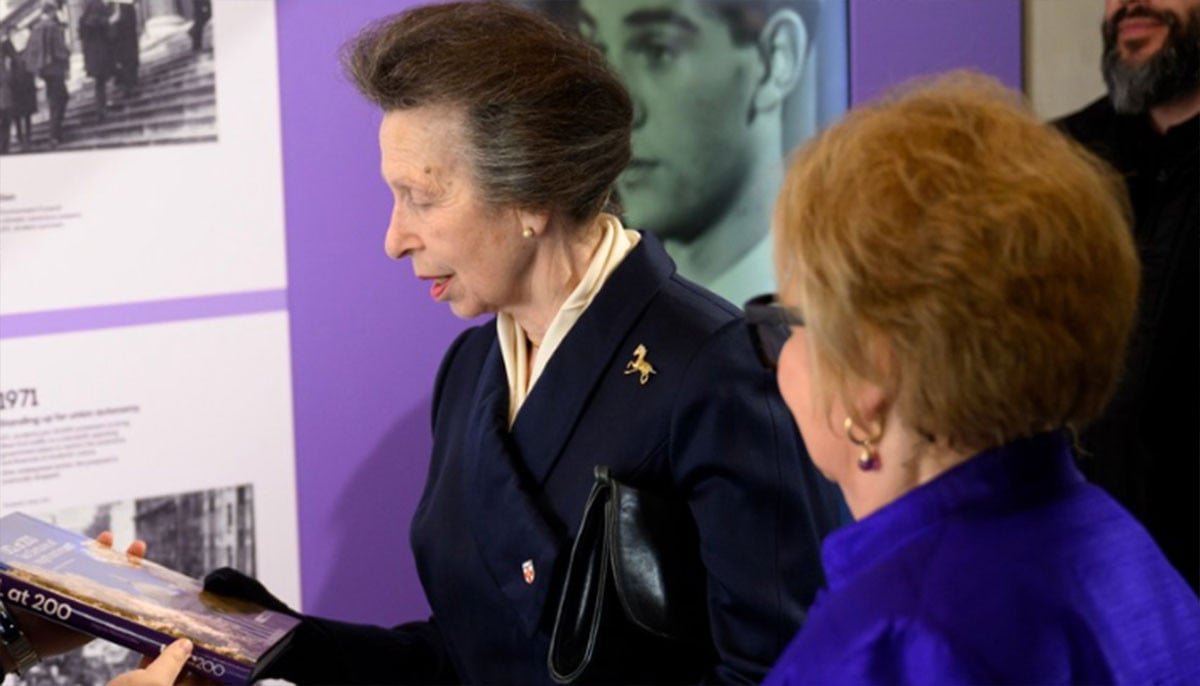
The Princess Royal carried out a ceremonial engagement on April 30, 2026, attending the traditional raising of the White Ensign at the Hospital of Sir John Hawkins in Chatham.
Anne took part in the formal proceedings at the historic naval charity site, where the White Ensign was hoisted in a ceremony reflecting service, remembrance, and the institution’s deep ties to seafaring communities.
The event highlighted the hospital’s enduring role in supporting naval personnel and preserving its centuries-old legacy in the Medway area.
Earlier, the Princess attended an international conference in Birmingham on 29 April 2026.
The morning began at St James’s Palace, where the Princess Royal, in her role as Colonel-in-Chief of the Intelligence Corps, formally received senior military figures during an official handover of command.
The meeting marked the transition between General Sir James Hockenhull stepping down as Colonel Commandant and Major General Matthew Jones assuming the role.
She then travelled to Birmingham for the inaugural annual conference of the Royal College of Emergency Medicine at the International Convention Centre.
- Shahrah-e-Bhutto to reduce traffic pressure within city: Sindh CM.
- CM directs completion of all mixed-traffic lanes along Red Line.
- Work on BRT Red Line project progressing at pace: Sindh minister.
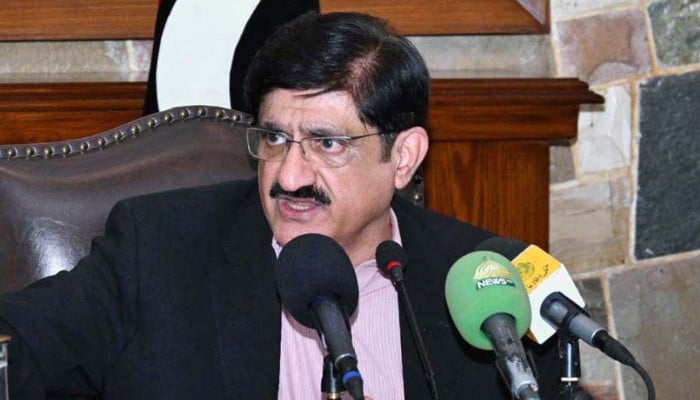
Sindh Chief Minister Murad Ali Shah on Sunday announced that Shahrah-e-Bhutto would be opened for traffic before Eid ul Adha, describing the road’s opening as an “Eid gift for the people of Karachi”.
The Sindh CM made the announcement following an inspection of major infrastructure projects across the city.
“Shahrah-e-Bhutto will significantly reduce traffic pressure within the city and improve connectivity between the M-9 and N-5 highways,” he said, adding that heavy traffic will shift outside the city, bringing relief to Karachi’s residents.
“This road is not just another project; it will serve as a lifeline for Karachi’s economy,” the Sindh CM said.
During an inspection of the under-construction Azeempura flyover at Shah Faisal Colony, he directed Karachi Mayor Murtaza Wahab to complete the project within 90 days.
The flyover is part of Shahrah-e-Bhutto, which is being constructed near the Shah Faisal Interchange to provide a signal-free passage for traffic to and from Jinnah Terminal and the adjoining areas.
The Sindh CM also directed authorities to accelerate work on the Karachi Bus Rapid Transit (BRT) Red Line corridor, saying that all mixed-traffic lanes along the Red Line corridor should be completed within two months.
“The Red Line and Shahrah-e-Bhutto are critical corridors for the city, and there will be no unnecessary delays or compromise on quality,” he added.
Separately, Sindh Senior Minister Sharjeel Inam Memon defended delays in the BRT Red Line project, saying that difficult but necessary decisions had been taken to move work forward.
“This delay was not due to government negligence,” Memon told the media during his visit to the Red Line project site.
He said work on Lot-1 and Lot-2 was progressing at a pace, particularly after the Frontier Works Organisation (FWO) was assigned responsibilities.
The minister added that the previous contractor had been issued warnings and payments were cleared, but the pace of work did not improve.
Acknowledging the public inconvenience, Memon said the authorities were aware of the hardships faced by commuters due to the ongoing construction.
However, he emphasised that infrastructure work in urban centres like Karachi presented unique challenges.
Work in cities is far more complicated, he said, explaining that authorities cannot immediately shut down gas, electricity and water lines.
The minister said that efforts were underway to reopen mixed traffic lanes by the end of July to ease congestion.


Taylor Swift secures big win against AI ahead of Hall of Fame honour

Princess Royal attends White Ensign Ceremony in Chatham

Israel approves deal to buy fighter jets from US

-

 Tech6 days ago
A Brain Implant for Depression Is About to Be Tested in Humans
-

 Tech7 days ago
Almost 90% of women leave tech industry within 10 years | Computer Weekly
-
 Business6 days ago
‘I had £20,000 stolen and had to fight a 13-month fraud reporting rule to get it back’
-
 Business1 week ago
Pakistan’s oil market is fuelling the crisis | The Express Tribune
-

 Entertainment6 days ago
Melania Trump says ABC should ‘take a stand’ on late-night host Kimmel
-

 Tech5 days ago
This Ambitious Laptop Doesn’t Leave Much Room for Your Hands
-

 Sports5 days ago
Pro wrestling star Steph De Lander reveals how colleague’s advice helped lead her to title triumph at ACW
-

 Sports5 days ago
Match officials announced for HBL PSL 11 qualifier – SUCH TV