

Entertainment
The true, authentic Kenny Chesney

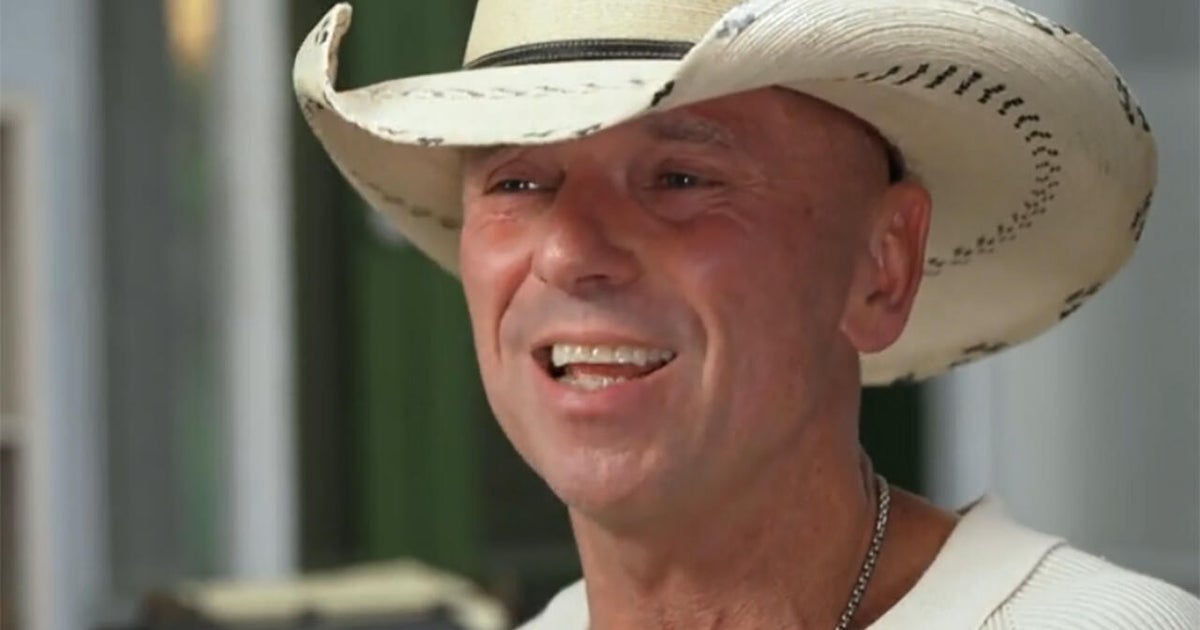
Just as the sun was going down in the heart of old Key West, Florida, a self-described pirate rode his rust-ravaged bike to the Blue Heaven restaurant to meet a friend – a friend we just happened to be in the middle of interviewing. “She said come in!” David Wegman laughed, as he joined Kenny Chesney.
But that’s the thing about Chesney – down here, he’s not really a country music superstar. He’s just another laid-back local. “We know a lot of the same people,” Chesney laughed.
He collects characters like seashells – he met Wegman at Ivan’s Stress-Free Bar down in the British Virgin Islands. “Above the bar was written in shells: ‘No Shirt, No Shoes, No Problem,'” Wegman recalled.
That 2002 song, “No Shoes, No Shirt, No Problems,” helped make Chesney one of the biggest touring acts around. Almost every summer he turns stadiums into beach parties. Among his many accolades: the Academy of Country Music’s Entertainer of the Year Award, which he won four years in a row. And just last week, he was inducted into the Country Music Hall of Fame – a career-topping accomplishment that he credits to taking that tropical turn in his career.
“You know what’s crazy?” he said. “I had an 18-song Greatest Hits album, and nobody knew who I was. They knew the songs, but I wasn’t comfortable in my skin yet. I didn’t know who I was supposed to be as an artist yet. I would go do shows and they would go, ‘Oh yeah, that’s the guy that sings that song.’ And then, ‘That’s the guy that sings that song.’ When I started being my true, authentic self, that’s when everything changed.”
He could have taken us to some Tiki bar down in the Keys to keep up his tropical brand. But instead, he wanted to show us the room where Ernest Hemingway worked on “To Have and Have Not” and “Green Hills of Africa.”
I said, “The space, it’s almost like sacred place.”
“Yeah, do you feel it? I feel it,” Chesney said. “I spent so much, almost two weeks straight on the bow of my boat in the Virgin Islands reading those books.”
Which might explain why he came down here to work on his first book, out next month: “Heart Life Music.” “This book forced me to pause,” he said.
William Morrow
For all of his love of the islands, he writes it was his own mom who first realized that he may have drifted too far from his East Tennessee roots. “She wanted her 12-year-old boy back in ways, and he was gone. Gone gone gone,” he said.
“She had a hard time finding you, kind of had a hard time reaching you?” I asked.
“It hit me a little bit, but I was so already so addicted to seeking an adventure and all of it, and all these new things happening in my life that I dismissed it.”
He kept going, kept touring, kept writing, until a concert in Indianapolis back in 2009, which he describes as hitting a wall, and crying on stage. “In that moment I was so exhausted and numb to all of it, that it wasn’t making me happy,” he said. “I wasn’t creating the same way. I wasn’t connecting to the audience. It just hit me. It took sports to get me out of that funk.”
He grew up playing baseball and football – loving every inning, every down. So, when a song called “The Boys of Fall” crossed his path, he didn’t only record it; he began interviewing coaches and players about sports and life, and turned it into a documentary for ESPN, “Boys of Fall.” “I needed Joe Namath, I needed Bill Parcells,” he said. “I sat in Bobby Bowden’s living room and he talked to me like a deacon in a Baptist church! I woke up one day, and I went, I’m back.”
Now he’s the one doing pre-game pep talks backstage, like at Sphere in Las Vegas. Many on his team have been with him for decades. There’s confidence in familiarity. “If I had to sit on the bus and think about what I’m getting ready to go do, it would – yeah, I don’t do well with that,” he said.
He put on the kind of show his fans expect – a kaleidoscope of sand, sunsets and songs.
CBS News 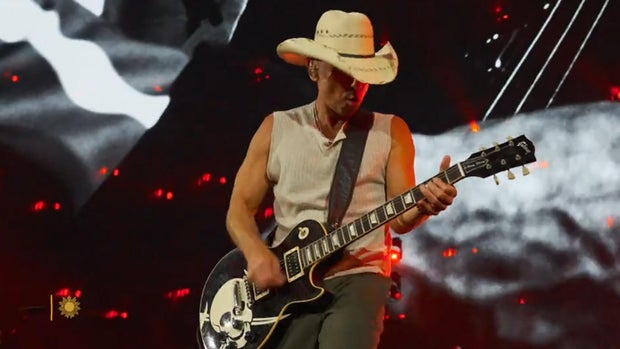
When me met him the next morning, he was still buzzing about performing in Sphere. “The first couple of nights, I caught myself singing a song and I was like, Well, this is so cool! And then, I forgot the words to a song that I actually wrote!”
On stage with him this night was Grace Potter, the singer-songwriter he recruited for a duet, even though country really wasn’t her thing. The two are now lifelong friends.
“There’s people who have always seen him as just the iconic, you know, Statue of David of country music,” she said.
“I’m gonna go to Florence and stand beside it!” he laughed.
“But there’s just so much more underneath it that’s more interesting than the sculpture itself,” Potter added.
Indeed, the off-stage Kenny Chesney is a more complicated guy, a more thoughtful guy, even a little shy if you can believe it. That’s the East Tennessee part that will always remain even as he’s chasing sunsets.
Chesney said, “It takes a certain amount of ego to be up there on stage and to do what I do, right? But I try really hard to leave that person up there. I can’t live that person every day. And I don’t want that person in my life every day, but I’m really glad to meet him when I go back up there.”
READ AN EXCERPT: “Heart Life Music” by Kenny Chesney with Holly Gleason
WEB EXCLUSIVE: Extended interview – Kenny Chesney (Video)
For more info:
Story produced by Aria Shavelson. Editor: Remington Korper.
See also:
Kenny Chesney spreads the love to Boston bombing victims (“Sunday Morning”)


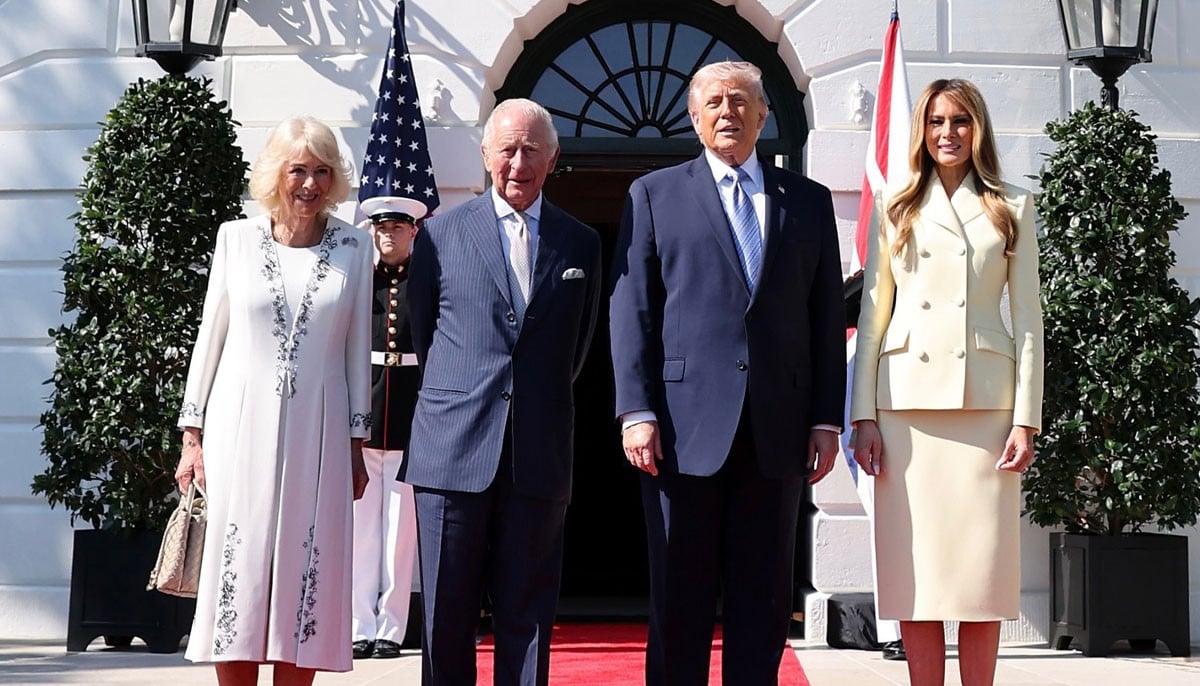
King Charles and Queen Camilla began their US trip amid mounting fear about their security after the Trump shooting incident.
The royal couple arrived on April 27 in Washington, D.C., to begin a four-day State Visit to the USA, on the advice of the UK Government, and at the invitation of the President of the United States, Donald Trump.
Buckingham Palace issued an update from the King and Queen’s first engagement in the US, but that left fans “disappointed.”
The King and Queen were shown the beehives in the White House gardens alongside the US President and First Lady, Melania Trump.
According to the statement, “The White House beehives were first established in 2009, serving as an enduring feature of the grounds across multiple administrations and producing honey for the White House.
“In 2026, First Lady Melania Trump enhanced the existing White House honey program to include a hand-crafted hive, shaped in the form of the White House. During the summer, the hive is home to approximately 70,000 bees.”
However, fans in the comments section were not impressed by the first outing.
One social media user wrote, “Poor King Charles, Queen Camilla having to appear graceful, professional, diplomatic in front of those two…”
“I pray Their Majesties are kept safe during this four-day trip. God save the King,” another penned.
One fan took a dig by saying, “Looks like that’s the first time Trump has seen them, too.”
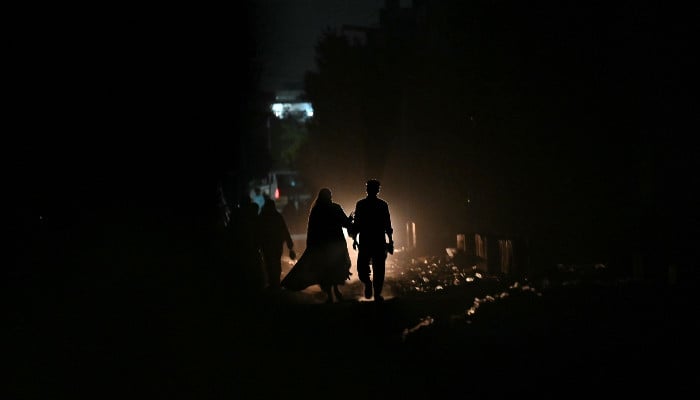
There is a version of Pakistan’s power sector story that reads as a financing tragedy. Billions of dollars borrowed, capacity built, tariffs indexed, guarantees issued – and the lights still went out.
That version is accurate, but incomplete. The deeper story is one of institutional political economy: a systematic misapplication of development finance theory to a sector whose problems were never about megawatts, but about institutions, incentives and the allocation of risk.
Pakistan did not stumble into a power crisis; it borrowed its way into one by design. The political economy of large infrastructure debt rewards the act of financing over the discipline of planning, while the coalition that benefits from capacity expansion – governments seeking ribbon-cutting opportunities, lenders deploying capital and developers earning guaranteed returns – has always been more cohesive and influential than the diffuse public ultimately left to pay the cost.
The economics of debt-financed power capacity rest on a coherent theoretical foundation: long-lived assets, predictable revenue streams and financing matched to productive asset life. Textbook infrastructure finance. The problem is that Pakistan’s IPP model violated nearly every condition that makes that theory work. Take-or-pay contracts transferred demand risk from investors to consumers. Sovereign guarantees transferred default risk from lenders to the state. Indexed tariffs transferred currency and inflation risk from developers to electricity buyers.
At each step, the private sector retained the upside while the public sector absorbed the downside. This is not infrastructure financing. It is a structured transfer of fiscal liability dressed in the language of private investment, and it persisted across two decades because the parties who designed the contracts were not the parties who paid for them.
Pakistan is paying for the right to use plants at rates that assume near-full utilisation, while overall thermal plant utilisation was below 45%. The economic logic would be indefensible in any other sector. A government contracting to pay a hotel 80% of room revenue regardless of occupancy would face immediate public audit.
Pakistan’s power sector did precisely this across dozens of contracts over two decades, and the audit arrived only when the fiscal consequences became impossible to absorb. That delay is itself a political-economy finding: costs were dispersed across millions of consumers and a national circular-debt stock, while benefits were concentrated in project companies with direct access to the policymaking process.
Karot Hydropower entered operation carrying $1.358 billion in debt against a $1.698 billion project cost. Suki Kinari carried $1.280 billion against $1.707 billion. Punjab Thermal Power assumed a 75:25 debt-to-equity ratio in its tariff structure. Coal plants followed the same financial philosophy. High leverage works when revenue is predictable.
In Pakistan’s power sector, revenue was guaranteed contractually but collected through a circular debt mechanism that by 2025 had metastasised into one of the largest contingent fiscal liabilities in the country’s history. The debt did not finance capacity. It financed the illusion of capacity while actual liability accumulated inside the public balance sheet at compound interest.
And do not get me started on Neelam-Jhelum. A 969MW hydropower project financed at roughly $2.7 billion through sovereign borrowing that cracked, flooded and ceased generation by 2022 due to geological failures that adequate pre-feasibility work would have surfaced. It sits today as perhaps the most expensive idle asset in Pakistan’s public infrastructure portfolio, still carrying debt service obligations that Wapda and ultimately the electricity consumer must absorb. Neelam-Jhelum is not an anomaly in Pakistan’s power sector. It is the model taken to its logical conclusion.
The RLNG fleet crystallises the broader argument. Pakistan borrowed to build Bhikki, Haveli Bahadur Shah, Balloki and Punjab Thermal Power, totalling nearly 4,900MW of combined RLNG capacity, to address a gas shortage caused by domestic reserve depletion. The solution replaced one import dependency with another, priced in dollars, routed through the Strait of Hormuz, and exposed to precisely the kind of geopolitical disruption that materialised when the US-Iran conflict closed LNG shipping lanes in 2026.
Approximately 6,000MW of RLNG capacity was producing around 500MW at the peak of the disruption. The debt service continued. The capacity payments continued. The plants sat. This is not a scenario requiring exotic modelling; it appears in the first chapter of any energy security curriculum. Pakistan borrowed billions to build a fuel-import machine and called it energy security. The political economy explanation is straightforward: the decision-makers who approved the contracts bore none of the fuel-supply risk, while the consumers who bore all of it had no seat at the negotiating table.
The case for abolishing debt-based capacity addition is not ideological. It is empirical. The model has been tested across two investment cycles, the thermal buildout of the 1990s under the 1994 Power Policy and the RLNG and hydel expansion after 2014, and it has produced the same outcome twice: stranded obligations, circular debt accumulation, tariff escalation and renewed loadshedding. Repeating it a third time would not be a policy failure. It would be a policy choice made with full knowledge of the consequences, which is considerably worse.
What should replace it is a framework built on three organising principles: grid modernisation, decentralisation and capacity rationalisation.
Grid modernisation means investing in the transmission and distribution infrastructure that determines whether existing generation, all 40,000+ MWs of it, can actually reach consumers at acceptable quality and cost. Pakistan’s transmission system incurs significant technical losses, operates with limited real-time visibility and cannot withstand high penetrations of variable renewable energy without stability risks.
A dollar invested in smart metering, advanced distribution management and real-time system monitoring yields returns across all generation sources simultaneously, without creating a new capacity payment obligation. That is categorically different economics from adding another imported-fuel plant behind another sovereign guarantee. It also produces a different political economy: beneficiaries are dispersed consumers rather than concentrated developers, which is precisely why it receives less institutional enthusiasm than it deserves.
Decentralisation recognises what the 2026 crisis demonstrated empirically. Pakistan’s 19,000-plus MWs of people-financed solar, built without state financing or sovereign guarantees, provided more resilient service during geopolitical disruption than several billion dollars of centralised RLNG capacity. Distributed generation financed from private balance sheets does not accumulate on the public fiscal balance sheet, does not require foreign exchange for capacity payments and does not transit the Strait of Hormuz.
A regulatory framework that accelerates distributed solar, battery storage integration, time-of-use pricing, and virtual power plant aggregation is not abandoning infrastructure investment. It is redirecting it toward a model that allocates risk efficiently, where those who invest bear the risk and those who benefit pay the cost. That it simultaneously dismantles the political economy of centralised capacity rent extraction is a feature, not a complication.
Capacity rationalisation addresses the existing stock honestly. Pakistan cannot walk away from signed PPAs without triggering sovereign credit consequences. But rationalisation is achievable through commercial renegotiation, fuel-switching where technically feasible, conversion of baseload thermal assets to flexible peaking operation and structured early retirement of plants whose capacity payments exceed any plausible economic value of continued operation. The resistance will come from the same coalition that benefited from the original contracts. Identifying that coalition and designing the negotiating strategy accordingly is as much a task of political economy as of financial engineering.
Economics has already delivered its verdict. Debt-financed centralised capacity, priced through capacity payments, guaranteed by the sovereign and fuelled by imports, is not a development strategy. It is a liability-accumulation strategy with a generation component, sustained by a political economy that consistently privatises gains and socialises losses.
Pakistan borrowed its way into darkness. The path out runs through the grid, through rooftops and through the disciplined retirement of the obligations the old model left behind.
The writer has a doctorate in energy economics and serves as a research fellow at the Sustainable Development Policy Institute (SDPI).
Disclaimer: The viewpoints expressed in this piece are the writer’s own and don’t necessarily reflect Geo.tv’s editorial policy.
Originally published in The News
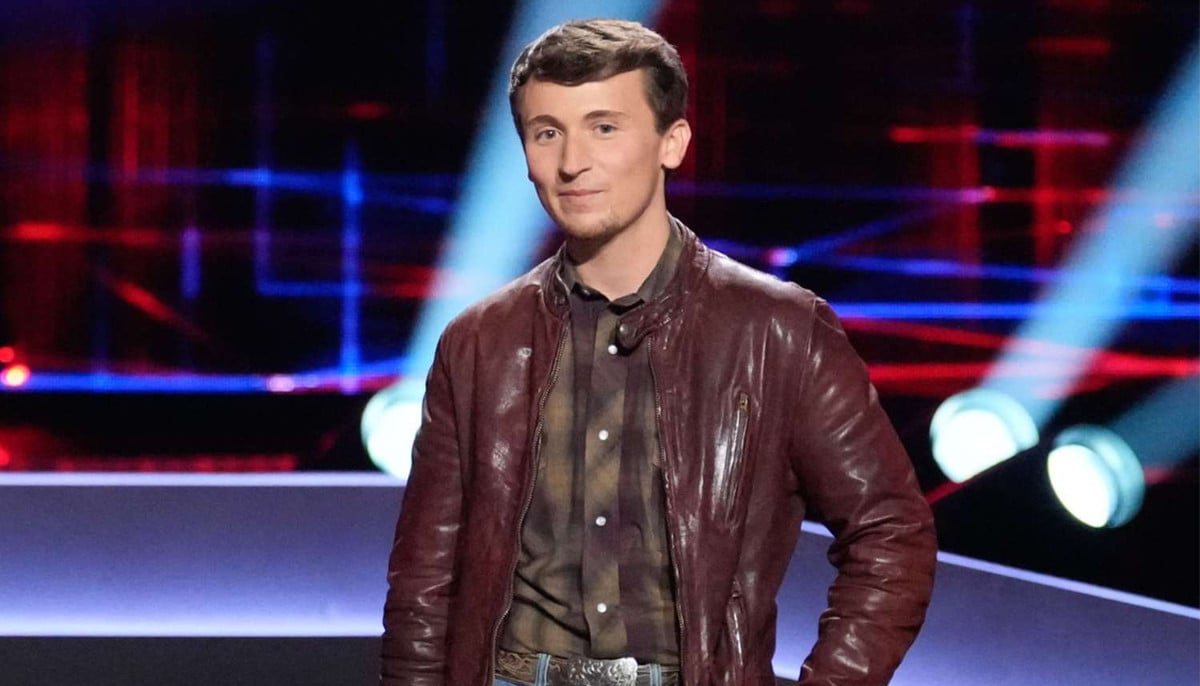
Dylan Carter, the singer who captivated all four judges with his audition on The Voice season 24, has died at the age of 24 following a car crash in Colleton County, South Carolina.
The Colleton County coroner has ruled his death accidental, caused by blunt force injuries sustained in the collision.
According to TMZ, Carter was driving a 2026 Tesla sedan alone just after 11pm when the vehicle veered off the road, struck a pole and a fence, and rolled.
He was wearing his seatbelt at the time of the crash. He was taken to hospital, where he later died from his injuries.
Carter made a lasting impression on The Voice in 2023 when, at just 20 years old, he auditioned with a rendition of Whitney Houston’s I Look to You, a performance he dedicated to his late mother.
It prompted all four coaches to turn their chairs: Gwen Stefani, John Legend, Reba McEntire and Niall Horan.
Carter chose McEntire as his coach but was eliminated during the Battle Rounds.
His family confirmed the news of his passing on Sunday in a Facebook statement, describing their grief and celebrating the mark he had left on his community.
“As a gifted singer, he frequently entertained our community with his performances at Town events. His kindness and charm earned him immense respect, and his absence will be deeply felt,” the statement read.
The family concluded simply: “He was much more to our family than an entertainer, he was our friend and we are deeply saddened.”


Match officials announced for HBL PSL 11 qualifier – SUCH TV
BP profits more than double as oil trading booms amid Iran war

Buckingham Palace issues ‘disappointing’ update on King Charles amid threat

-

 Sports1 week ago
NCAA men’s gymnastics championship: All-time winners list
-

 Sports1 week ago
WWE WrestleMania 42 Night 2: Live match results and analysis
-

 Fashion1 week ago
UK’s Sosandar returns to profitability amid robust FY26 performance
-
 Politics7 days ago
UK’s Starmer seeks to deflect blame over Mandelson appointment
-
 Business1 week ago
No fuel shortage: Govt assures 100% domestic LPG, PNG, CNG supply amid Hormuz energy crunch – The Times of India
-
 Entertainment1 week ago
Lee Anderson, Zarah Sultana kicked out of UK Parliament for calling PM ‘liar’
-
 Business1 week ago
How Trump’s psychedelics executive order could unlock stalled cannabis reform
-
 Business7 days ago
Us-India Trade Talks: US–India trade deal: Where do talks stand & what to expect – explained – The Times of India