

Sports
The VAR Review: Why Man United’s goal wasn’t ruled out; Trafford’s red-card escape

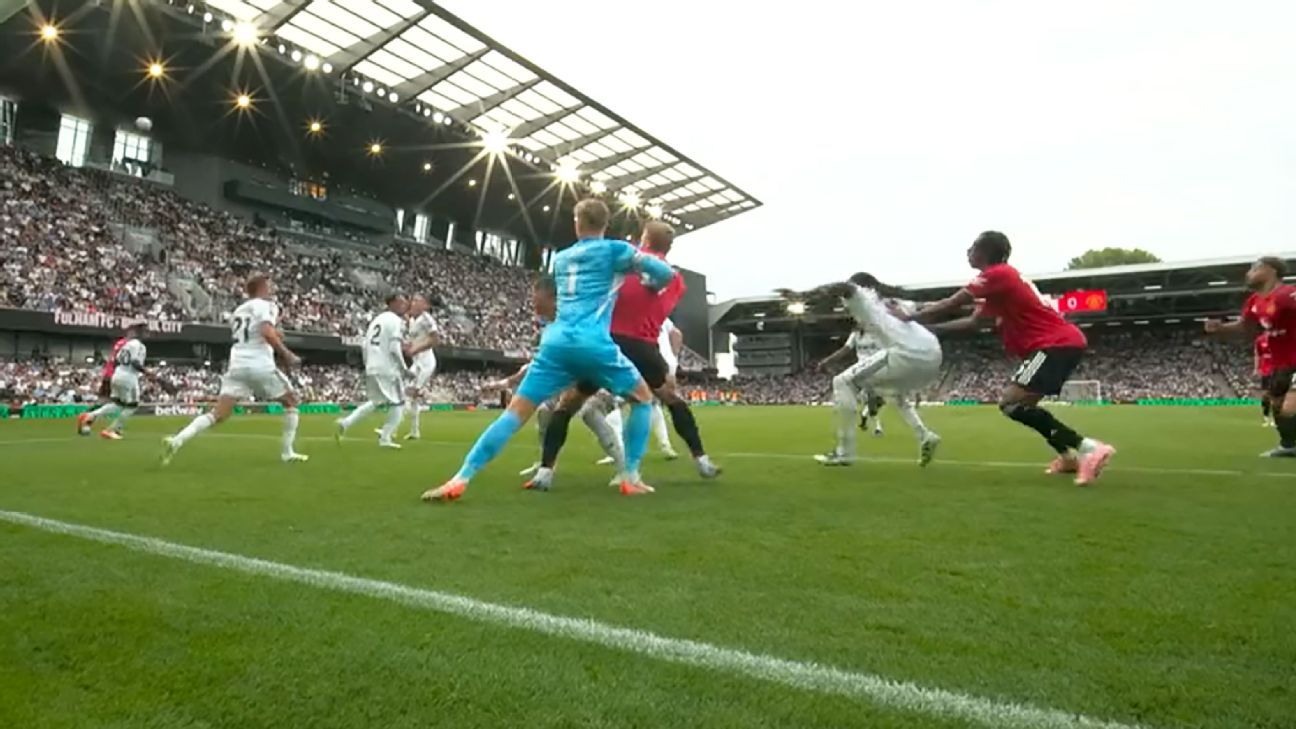
Video Assistant Referee causes controversy every week in the Premier League, but how are decisions made, and are they correct?
After each weekend we take a look at the major incidents, to examine and explain the process both in terms of VAR protocol and the Laws of the Game.
In this week’s VAR Review: Looking at why Manchester United were awarded a penalty at Fulham but their goal was allowed to stand. Plus, should Manchester City goalkeeper James Trafford have been sent off against Tottenham Hotspur?
Possible disallowed goal: Challenge by Yoro on Bassey
What happened: The game was in the 58th minute when Man United won another corner. Bryan Mbeumo delivered into the danger zone, with Leny Yoro‘s header deflecting into the back off the net off Fulham‘s Muniz. However, Yoro appeared to push Bassey as the ball came into the box, and that was looked at by the VAR.
VAR decision: Goal stands.
VAR review: The VAR doesn’t step in to disallow a goal for a foul very often in the Premier League — last season it happened just four times and only one of those involved this specific type of offence (Sepp van den Berg‘s effort for Brentford against Leicester City ruled out for holding by Yoane Wissa on Jan Bednarek.) No VAR error was logged across the season by the Key Match Incidents Panel for a foul in the buildup to a goal.
It’s easier to find examples of pushes which were not penalised — Joelinton on Gabriel Magalhães when Newcastle scored against Arsenal two years ago; or Beto on Ibrahima Konaté for Everton’s late goal vs. Liverpool in February.
Verdict: With the high bar in the Premier League, there is a reluctance to get involved in this kind of situation, with the belief that an attacking player is allowed to create space and the referee should be making the decision. However, if the VAR is getting involved in the earlier defensive infringement, it feels inconsistent that they would not intervene when Yoro’s push with both arms prevented Bassey from being able to challenge for the ball.
– Ogden: New season, same problems for Manchester United
– O’Hanlon: The best worst transfers that should have worked
– How did Arsenal beat Spurs to Eze, and why do they need him?

The VAR argued that this level of contact wasn’t impactful, but it’s difficult to see how that can be the case when the United player was left free to direct a header which led to a goal.
The Premier League’s high bar for intervention — 83% of stakeholders voted that the current level should be maintained, with only 8% feeling it should be lowered — creates a situation where fouls such are left on the field. But for many supporters, it leaves the perception of a “big club decision” from the VAR.
And, of course, we have examples of very similar pushes being given as a foul on-field — such as Enzo Fernández‘s disallowed goal for Chelsea at Brighton & Hove Albion last season.
Possible penalty: Challenge by Bassey on Mount
What happened: Manchester United had a corner in the 33rd minute. As the ball came into the area, several players went to ground through grappling and holding but referee Chris Kavanagh allowed play to continue. It then became clear a VAR check was being made for a possible penalty over a foul by Calvin Bassey on Mason Mount, yet it was one minute and 45 seconds until the referee was sent to the monitor by the VAR, Darren England.
VAR decision: Penalty, missed by Bruno Fernandes.
VAR review: At the start of the season, Premier League refs’ chief Howard Webb made it clear that there would be a focus on holding inside the area. Not the simple contact stuff, but the clear non-footballing actions.
“What we’ve said to the officials is if you get one of those situations where one player is clearly dragging another one to the floor in an extreme non-football action, even if it’s off the ball, we expect the referee to see it,” Webb said. “Or if it’s a clear one, then the VAR will intervene and recommend the referee looks at it at the screen because it fits the criteria that we’ve laid out. An extreme non-footballing action which prevents an opponent from moving.”
Webb also made it clear that there wouldn’t be a huge spike in penalties for this, as it was about catching the excessive examples — and that’s what England felt he saw here.
Bassey does throw Mount to the ground and has no interest in playing the ball, in a similar way to the VAR penalty awarded to Newcastle United at Everton at the start of last season — when James Tarkowski dragged down Sandro Tonali.
It’s confusing, however, that the VAR only showed the referee the “high behind” camera angle; there were other angles that showed the nature of the challenge more clearly. It may well be that the VAR felt this was the best to show that the offence by Bassey came before a possible foul by Luke Shaw on Rodrigo Muniz — or that it didn’t reach the threshold for a foul. And just because there was other holding taking place inside the area doesn’t mean the VAR won’t intervene if they feel there is a more serious offence
The “high behind” camera did make it clear that Mount was being “thrown” by Bassey, while Shaw was only holding onto Muniz. So, Bassey’s actions came first and a penalty is justified.
Verdict: The issue with holding offences is always going to be consistency, but the new guidelines have been brought in punish the more-obvious examples and not make football a non-contact sport on set pieces. There won’t be a flood of penalties for this.
However, when a VAR intervention happens the game should go back to that point — so the three minutes lost from the ball being in play to the end of the the review should be replayed, but only two minutes were added on at the end of the half.
Possible red card: Challenge by Trafford on Kudus
What happened: Mohammed Kudus ran onto a ball through the center in the 40th minute, and Manchester City goalkeeper James Trafford came out of his area. The pair collided, with Kudus going down and Trafford then able to clear. Referee Peter Bankes allowed play to continue, and it was looked at by the VAR, Andy Madley, for a possible red card.
VAR decision: No red card.
VAR review: One thing we can be sure of is that this was a foul and should have been called as such by the referee, who was perhaps fooled by the way Trafford came away in possession of the ball. The VAR can’t get involved in a simple free kick, but they can if there should have been a red card — and the chronology is important.
The first aspect to consider is denying a goal-scoring opportunity (DOGSO) by handball. A goalkeeper doesn’t have different handball factors to an outfield player, the arm still has to be extended away, in an unexpected position or there be a deliberate act. Trafford had his arm close to his body and didn’t move it, or his body, to the ball. The ball came at him from very close proximity off Kudus. This won’t be considered a handball offence and there shouldn’t be a VAR intervention.
Second, a possible red card for serious foul play. Trafford took a considerable risk in going into the challenge with Kudus with a raised knee, but he didn’t go into the challenge with excessive force or directly into the opponent, so this would not reach the bar for a red card.
Now back to DOGSO, this time for the challenge — the potential foul could stop Kudus being through to an empty goal. Does the foul come before, at the same time, or after Trafford gets a touch? This is important for DOGSO, because the direction the ball is travelling decides the quality of a scoring chance — if it exists at all.
So, if there is no handball, it’s a play of the ball by Trafford, and from that point it can be deemed that there is no chance of the Tottenham Hotspur player taking control.
It’s like the possible DOGSO against Spurs goalkeeper Guglielmo Vicario vs. Brentford last season. He handled the ball outside the area, but the ball dropped behind Mikkel Damsgaard so it couldn’t be considered a DOGSO situation.
Verdict: DOGSO is very often about the perception of where it happens on the pitch, when it’s really the ball which is the key factor — along with the position of opponents.
Take Andrew Robertson‘s DOGSO red card for Liverpool vs. Fulham last season. There were clear questions about any kind of scoring chance for Harry Wilson, but as the foul happened just outside the area as the “last man” there was very little controversy.
A situation like with Trafford, and Vicario, can look and feel like it should be a DOGSO red card, but there could be one crucial element missing which means the VAR won’t get involved.
There’s just about enough doubt in the chronology of the incident for Trafford to avoid a red card through VAR, but it wouldn’t have been overturned if given by the referee. That said, most fans will believe this looks like a DOGSO red card.
Possible penalty: Challenge by Van de Ven on Bobb
What happened: Tottenham goalkeeper Vicario played a short pass to Micky van de Ven inside his area in the 52nd minute, but the Netherlands international defender miscontrolled the ball, allowing Oscar Bobb to steal it. It ran to Erling Haaland, who attempted to find Rayan Cherki — however he was penalised for a foul on João Palhinha. Bobb was on the ground asking for a foul, but it wasn’t spotted by the referee.
VAR decision: No penalty.
VAR review: With the on-field decision carrying all the weight with VAR, there will often be similar decisions across a weekend with opposite outcomes — and often it’s the more-obvious foul which isn’t punished.
The ball has gone when Van de Ven stands on the foot of Bobb, and we’ve seen other instances when the VAR has intervened — such as when Chelsea midfielder Fernández was penalized for stepping on Manchester United‘s Antony.
Yet later on Saturday, Arsenal were given a penalty when Leeds United‘s Anton Stach trod on Max Dowman — the contact in that case appearing to be far less significant. (watch here)
Verdict: In both the Arsenal and Man City cases, the on-field decision was allowed upheld, which was understandable with Stach’s challenge. The high threshold will always give the perception of inconsistency.
Van den Ven makes contact on the top of Bobb’s foot after the ball has gone, and this should have been a penalty.
Possible handball: Saliba on Timber goal
What happened: Arsenal scored their fourth goal in the 56th minute when Jurriën Timber netted from close range following a corner routine. But was there a case of handball against William Saliba before the ball dropped to Timber?
VAR decision: Goal stands.
VAR review: Accidental handball is only an automatic offence if it’s by the goal scorer. As Timber scored, Saliba’s act either had to be deliberate or his arm needed to be in a position which wasn’t justifiable for his movement.
Verdict: It wasn’t clear if the ball did indeed touch Saliba’s arm, but there wasn’t anything that could be penalised for handball if it did.
Possible goal: Foul by Collins on Martínez
What happened: Brentford thought they had scored a second goal in the 43rd minute when Mikkel Damsgaard lashed home a loose ball after a long throw. Referee Tony Harrington disallowed it for a foul by Nathan Collins on goalkeeper Emiliano Martínez. Should there have been an intervention by the VAR, Tim Wood?
VAR decision: No goal.
VAR review: We’re back to the weight of the on-field decision, this time comparing to last week’s goal for Arsenal at Manchester United and Saliba’s challenge on Altay Bayindir.
The actions of Collins and Saliba were very similar, but one goal was disallowed and the other was given — both decisions taken by the referee.
Verdict: The VAR will stand by the on-field call because Collins seemed to be moving into Martínez, but it’s exceptionally soft and in a case like this, where the fault really does lie with the goalkeeper, an intervention would be a better outcome.
Last season, the KMI Panel didn’t log a VAR error for a challenge on a goalkeeper, but it did say the on-field referee was wrong to rule out a goal by Newcastle United‘s Bruno Guimarães after he had put pressure on Ipswich Town goalkeeper Alex Palmer. It feels like the Panel might come to a similar judgement on this.
Possible penalty overturn: Handball by Dewsbury-Hall
What happened: Brighton & Hove Albion were awarded a penalty in the 76th minute when Kiernan Dewsbury-Hall blocked a shot by Yankuba Minteh with his hand. Referee Stuart Attwell pointed to the spot and it was checked by the VAR, James Bell. (watch here)
VAR decision: Penalty stands, Danny Welbeck‘s effort saved by Jordan Pickford.
VAR review: Everton were furious on Monday when they conceded a handball penalty at Leeds United — but there was no chance that was going to be overturned. James Tarkowski had leaned his body into the path of a shot and stopped it with his arm. In law, that the arm was close to the body was irrelevant as the player’s body movement qualifies as a deliberate act. (watch here)
The Dewsbury-Hall decision was slightly more contentious, but he moved his arm into a raised position as Minteh takes his shot — and that makes it very difficult for the VAR to get involved.
Verdict: We’ve already had three handball penalties this season, all given by the on-field referee. That’s already beaten the total for 2024-25, when two were whistled on the pitch (plus seven through VAR).
Handball will always be contentious, especially those given, but the KMI Panel won’t judge either of these to be incorrect.
Possible red card: Violent conduct by Adringra
What happened: Simon Adingra was shown a yellow card in the 19th minute after he raised his hand to the face of Hannibal Mejbri. Referee Michael Salisbury only showed a yellow card to the Sunderland player, but was there a case for a red card? It was checked by the VAR, John Brooks.
VAR decision: No red card.
VAR review: There’s a misconception that raising an arm to the face is automatically a red card, but it’s not that straightforward.
The law on violent conduct states that “a player who, when not challenging for the ball, deliberately strikes an opponent or any other person on the head or face with the hand or arm, is guilty of violent conduct unless the force used was negligible.”
And it’s the last six words which saved Adringra.
Verdict: Referees are asked to consider if a player’s actions are petulant or violent for the incident to cross from a yellow card to a red, and a caution is justifiable in this case. There was no force in the way Adringra put his hand to the face of Hannibal.
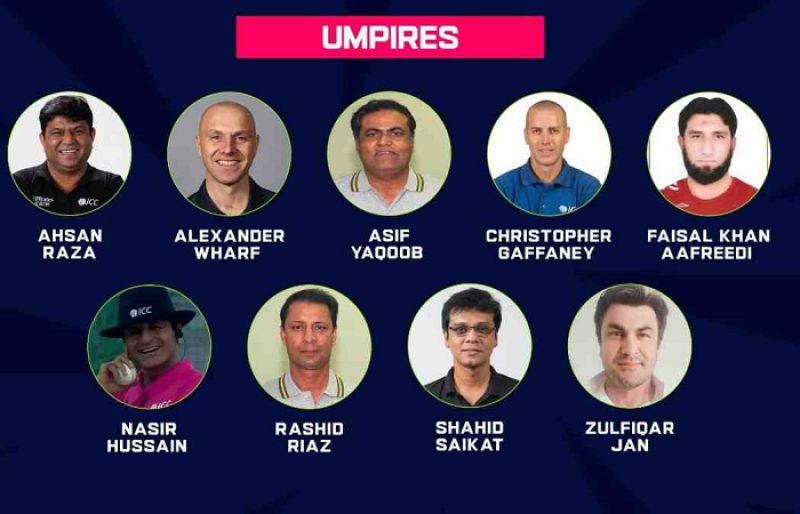
The playing control teams for the April 28 qualifier, April 29 eliminator 1 and May 1 eliminator 2 of the HBL Pakistan Super League 11 have been appointed, the Pakistan Cricket Board announced on Tuesday.
Member of ICC Elite Panel of Match Referees Sir Richard Richardson will lead the playing control team for the qualifier between Peshawar Zalmi and Islamabad United at the National Bank Stadium, Karachi.
Earlier, he made his HBL PSL debut as the match official on April 15 and will bow out for this season, having officiated 10 games.
Christopher Gaffaney of New Zealand will be joined by Alexander Wharf of England as an on-field umpire for the qualifier. Both are part of the ICC Elite Panel of Umpires.
Faisal Khan Aafreedi, ICC International Panel Umpire, will serve as the third Umpire, while PCB’s National Elite Panel Umpire Zulfiqar Jan will be the fourth umpire for the all-important 41st HBL PSL 11 match.
Roshan Mahanama of Sri Lanka will lead the playing control team in both eliminators.
He has the honour of officiating in all 11 HBL PSL seasons, and his tally of games as match referee in the league currently stands at 127.
In the Hyderabad Kingsmen v Multan Sultans eliminator 1 in Lahore, ICC Elite Panel Umpire Shahid Saikat from Bangladesh will join ICC Emerging Panel Umpire Asif Yaqoob as on-field Umpire, while Rashid Riaz Waqar of ICC Emerging Panel of Umpires will be the third Umpire.
Nasir Hussain of ICC International Panel of Umpires will perform duties as the fourth Umpire.
The eliminator 2 on May 1 between the winner of eliminator 1 and the losing team of qualifier will be officiated on-field by ICC Elite Panel Umpires Ahsan Raza and Shahid Saikat, while Asif Yaqoob and Rashid Riaz will carry out the duties of third and fourth Umpire, respectively.
The match officials for the highly anticipated May 3 final will be announced in due course.
NEWYou can now listen to Fox News articles!
The most pressure-packed scoring opportunity in soccer might be the one where no one is defending: the penalty kick.
A goal is almost certain, so long as you keep a cool head and beat the goalkeeper. Simple enough, right?
But what exactly is a penalty kick, and how is it awarded? Here’s everything you need to know about the penalty kick ahead of the 2026 FIFA World Cup:
What Is A Penalty Kick?
A penalty kick — or “PK” — is a one-on-one duel between a field player and a goalkeeper in which the field player tries to score a direct kick from the penalty spot.
How Is A Penalty Kick Awarded?
A penalty kick is awarded when a player commits a foul — tripping, pushing or a handball — inside the penalty area, which is a large 18-yard box that extends from the goal line into the field of play. The total width of the box is 44 yards.
A penalty can be awarded in the run of play or during a Video Assistant Referee check.
Who Takes The Penalty Kick?
The designated penalty taker is usually predetermined based on a player’s proven ability to score, from the penalty spot or otherwise. For example, Harry Kane, the active leading goalscorer for England, is the designated penalty taker for the Three Lions.
How Far Is The Penalty Spot?
The penalty is 12 yards from the center of the goal line, meaning that there are just 12 yards that separate the penalty taker and the goalkeeper at the time of a penalty kick.
What Are The Rules For The Penalty Taker?
The penalty taker is given freedom to confuse the goalkeeper during their run-up to the kick so long as:
- The penalty taker doesn’t attempt a fake kick or a “feint” while attempting to strike the ball AND
- The penalty doesn’t make contact with the ball more than once during their attempt.
If a penalty taker participates in illegal feinting, they will be cautioned and an indirect free kick will be awarded to the opposing team.
If a penalty taker makes contact with the ball more than once during their attempt and the attempt is successful, the penalty kick will be retaken. If it isn’t, it will be recorded as a miss and play will resume.
What Are The Rules For The Goalkeeper?
The goalkeeper must follow three key rules during a penalty kick: face the kicker, stay between the goalposts and keep at least one foot on or over the goal line until the kick.
If a goalkeeper leaves their line during a penalty attempt and the attempt is unsuccessful, it will be retaken. If the attempt is successful, it will result in a goal.
Additionally, goalkeepers may not touch the goalposts, crossbar or netting as an intimidation tactic. Trash-talking is also not permitted.
How Often Are Penalty Kicks Awarded?
There were 23 penalty kicks awarded at the 2022 FIFA World Cup in Qatar, which was six fewer than in 2018. Argentina led all countries in penalty attempts with five, and its designated penalty taker, Lionel Messi, converted all five attempts.
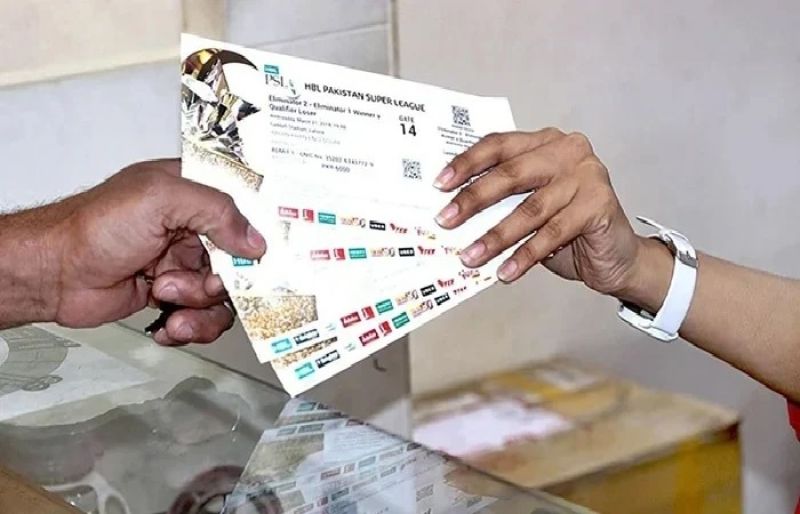
The Pakistan Cricket Board (PCB) has unveiled ticketing information for the Pakistan Super League (PSL) 11 Qualifier between Peshawar Zalmi and Islamabad United, set to take place at Karachi’s National Bank Stadium on Tuesday.
According to the cricket board, E-Tickets for the high-stakes fixture can be purchased from tonight, with prices for all enclosures of the aforementioned venue set at Rs500.
Furthermore, the physical tickets will be available for sale from Tuesday morning and can be bought at the TCS Express Centre at the China Ground situated opposite the venue.
The PCB further advised fans with tickets to reach the stadium “well before the start of play” to avoid any inconvenience. Notably, the coin toss for the Qualifier will take place at 6:30pm as per the Pakistan Standard Time (PST), with the first ball to be bowled at 7pm.
Meanwhile, the ticket details for the remaining two playoffs, set to be played in Lahore, will be announced in due course.
The cricket board announced the ticketing details hours after Prime Minister Shehbaz Sharif granted approval for public attendance in all three playoffs of the ongoing PSL 11.
Taking to X, PCB Chief Mohsin Naqvi said he had a meeting with the premier, during which the cricket board secured his approval for allowing fans in the stadia for the upcoming playoffs of the eight-team tournament.
“Just had a meeting with Prime Minister Shehbaz Sharif, and I’m pleased to share that we have secured his approval for public attendance in all three PSL playoff matches as well,” Naqvi wrote on the microblogging website.


Match officials announced for HBL PSL 11 qualifier – SUCH TV

BP profits more than double as oil trading booms amid Iran war

‘Dances With Wolves’ star Nathan Chasing Horse gets life imprisonment for sexual assault verdict

-

 Sports1 week ago
NCAA men’s gymnastics championship: All-time winners list
-

 Sports1 week ago
WWE WrestleMania 42 Night 2: Live match results and analysis
-

 Fashion1 week ago
UK’s Sosandar returns to profitability amid robust FY26 performance
-

 Politics7 days ago
UK’s Starmer seeks to deflect blame over Mandelson appointment
-
 Business1 week ago
No fuel shortage: Govt assures 100% domestic LPG, PNG, CNG supply amid Hormuz energy crunch – The Times of India
-

 Entertainment1 week ago
Lee Anderson, Zarah Sultana kicked out of UK Parliament for calling PM ‘liar’
-
 Business1 week ago
How Trump’s psychedelics executive order could unlock stalled cannabis reform
-
 Business7 days ago
Us-India Trade Talks: US–India trade deal: Where do talks stand & what to expect – explained – The Times of India