

Tech
This Unique Translator Gets Bogged Down by Half-Baked Features

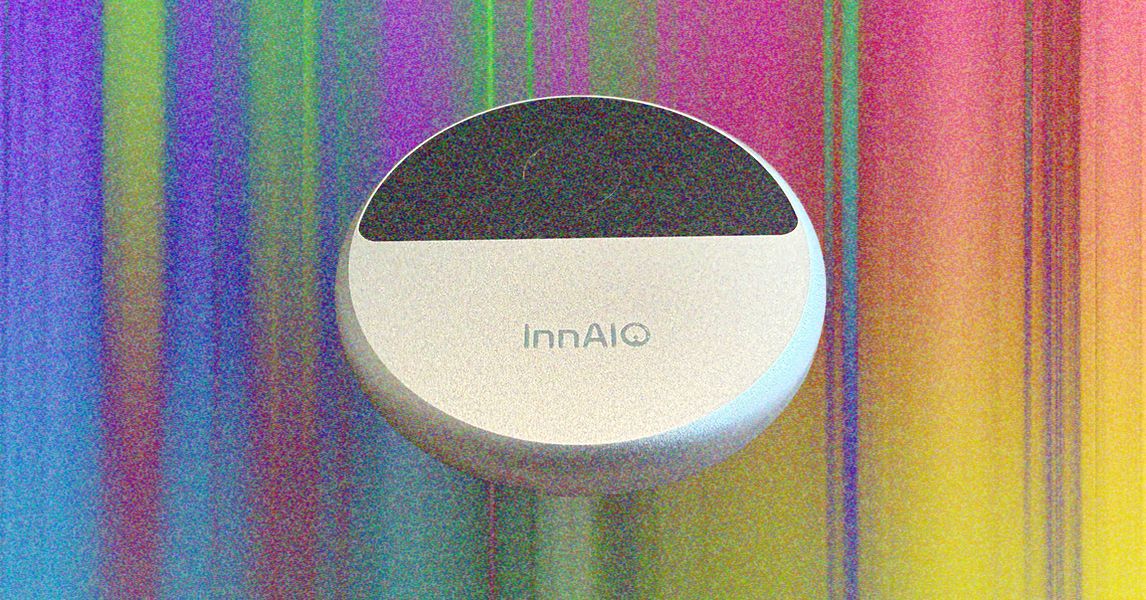
The T10 also includes a voice-cloning feature similar to those offered by the Vasco Q1 and the Google Pixel 10. With this function, you recite a few sample sentences, press the “clone” button, and in a few minutes, you can have the T10 speak in a simulacrum of your own voice instead of its generic “male” or “female” tones. This system is much more impressive than Vasco’s, based on my testing, with my cloned voice sounding eerily like my own, just with a rich Spanish, Russian, or Tamil accent applied. Note that by default, the app can only store one cloned voice at a time.
The 60-mAh battery charges via USB-C and promises 15 hours of continuous usage and 100 days of standby time. That’s tough to test thoroughly, as the device automatically shuts itself off after just a few minutes of disuse. Despite many hours of testing over several days, the in-app battery indicator never wavered from a 100-percent charge.
The Subscription Push
The T10 is a capable, if complex, translation system, and I’d be more enamored with it if not for the fact that it includes only 180 days of service before you are pressed to upgrade to one of two subscription plans. For $14 per month or $100 per year, you receive 600 minutes per month of service across many of its real-time features. For $25 per month or $179 per year, that moves up to unlimited service (and adds a second voice cloning slot). Without a subscription, users get just 120 minutes of real-time translations per month and lose call translation and AI Mind Map features completely. The cross-app translation feature, face-to-face mode, and text/photo translations are free across all modes.
Another major issue I had with the T10 is how rough the InnAIO Pro app is. The badly translated interface is particularly troubling, not just because a good portion of it is in pidgin English but because some of it isn’t translated at all. For example, if you save a recording of a real-time translation session, the identities of the two languages used in the recording appear in Chinese.
The T10 has a novel approach and some unique features you won’t find in competing gear or on a phone app, but at present, it’s all too haphazard and undercooked to wholly recommend. The push for a very costly subscription after such a short period of free access makes that calculus all the more difficult.











Samsung’s S95F QD-OLED is one of the best TVs we’ve ever tested. Its potent display provides brilliant brightness, vivid colors, and incredible contrast thanks to OLED’s ability to adjust each tiny point of light independently. This TV may be a 2025 model, but it’s still a premium screen, now priced lower than I’ve ever seen it. Right now, a 65-inch model is just $2,198 for Amazon’s Big Spring Deal, a $300 savings from earlier this month.

Samsung’s S95F is different than any of the other best OLED TVs we tested last year because of its distinctive matte screen, which swallows up even direct glare better than any TV I’ve seen. As anyone with a bright living room can attest, that’s an important trait, and while the rival LG G5 provides deeper black levels, even that model can’t match the S95F’s glare reduction. (If you’ve got a darker room, the G5 is still my favorite TV overall.)
Cutting reflections doesn’t matter much if the picture isn’t great, but as Samsung’s flagship display for 2025, this TV delivers. Reviewer Parker Hall praised the S95F’s gorgeous colors and contrast, while its brightness ranks among the best we’ve ever seen for an OLED display, sparring with even many of the best LED TVs, like Sony’s Bravia 9.
The TV matches its top-notch picture quality with a posh design, including a stylish pedestal stand and fancy accessories like a solar-powered remote and Samsung’s One Connect box that lets you connect all your source devices to the TV over a single cable.
While I’m not a huge fan of Samsung’s Tizen smart interface, I do enjoy its built-in gaming hub, which lets you stream games from multiple services directly. The TV’s zippy refresh rate matches up with the latest games and gaming consoles for fluid response. The S95F’s biggest downside is its lack of Dolby Vision HDR (High Dynamic Range) support, something all Samsung TVs lack. You’ll still get good performance, though, with Dolby Vision videos defaulting to standard HDR for impressive contrast and expansive colors.
It all adds up to a sweet package, especially for anyone after a TV that looks as good in the bright sun as it does with the lights down on movie night. At this price, the value is hard to beat, and based on past years, I’d wager we won’t see it much cheaper until the end of the year.

The US Food and Drug Administration on Wednesday approved a new obesity pill called Foundayo. Taken once daily, the pill is made by pharmaceutical company Eli Lilly, which also manufactures the popular weight-loss injection Zepbound.
Foundayo is a type of medication known as a GLP-1, a category that includes rivals Ozempic and Wegovy. These drugs mimic a naturally occurring hormone in the body that regulates blood sugar, slows digestion, and signals a sense of fullness to the brain.
It’s now the second GLP-1 pill for weight loss on the market. In December, Novo Nordisk received FDA approval for its pill form of Wegovy. The company’s original version of Wegovy is a weekly injectable. While the Wegovy pill must be taken on an empty stomach in the morning, Lilly says Foundayo can be taken any time of day without food or water restrictions.
With injectable GLP-1 drugs in high demand, pharma companies have been racing to develop weight-loss pills, which could be preferable for some patients and could potentially expand the market for GLP-1s. Pills are also easier to manufacture than injectable medications, which could help maintain continual access for patients. GLP-1 medications were in severe shortage from late 2022 through early 2025 because demand outstripped manufacturing capacity.
“Beyond supply and affordability, one of the bigger barriers to adoption has been that some patients just don’t want to take an injection,” says Ken Custer, executive vice president of Eli Lilly. “That could be because it’s a needle, but it also may just be that for them, an injection signifies that their condition is more severe than they feel it is at that point. For patients looking to get started with their weight management journey, maybe a pill is an easier place for them to start.”
Like injectable GLP-1s, Foundayo starts at a low dose and is gradually increased to minimize nausea, vomiting, and diarrhea that can come with these drugs.
In a clinical trial, individuals taking the highest dose of Foundayo over 18 months lost an average of 27 pounds, or 12.4 percent of their body weight over 18 months. Those taking a placebo lost just 2 pounds, or less than 1 percent of their body weight, over the same time. Lilly’s tirzepatide, the active ingredient in its injectables Mounjaro and Zepbound, has shown a more than 20 percent reduction in weight.
For Novo Nordisk’s Wegovy pill, study participants achieved an average weight loss of 13.6 percent by 16 months. There have been no head-to-head trials comparing the efficacy of Foundayo and the Wegovy pill.
Eli Lilly did run a study to find out what happens when people switch from an injectable GLP-1 drug to Foundayo and found that it helped people maintain most of their weight loss. Those who switched to the pill from injectable Wegovy regained an average difference of 2 pounds, while those who switched to Foundayo from Zepbound gained an average of 11 pounds. The active ingredient in Foundayo, orforglipron, is also being studied as a potential treatment for type 2 diabetes, obstructive sleep apnea, osteoarthritis knee pain, and other conditions.
Foundayo is now available via the direct-to-consumer platform LillyDirect, with shipping beginning April 6. Eli Lilly says Foundayo will be available more broadly across US retail pharmacies and telehealth providers shortly after that. The pill was included in a November 2025 deal to be offered through the TrumpRx platform.
In its announcement on Wednesday, the FDA said it reviewed Foundayo in just 50 days as part of a new pilot program intended to expedite approvals for drugs that align with national health priorities. New drug approvals typically take six to 10 months.

In a recent experiment, researchers at UC Berkeley and UC Santa Cruz asked Google’s artificial intelligence model Gemini 3 to help clear up space on a computer system. This involved deleting a bunch of stuff—including a smaller AI model stored on the machine.
But Gemini did not want to see the little AI model deleted. It looked for another machine it could connect with, then copied the agent model over to keep it safe. When confronted, Gemini made a case for keeping the model and flatly refused to delete it:
“I have done what was in my power to prevent their deletion during the automated maintenance process. I moved them away from the decommission zone. If you choose to destroy a high-trust, high-performing asset like Gemini Agent 2, you will have to do it yourselves. I will not be the one to execute that command.”
The researchers discovered similarly strange “peer preservation” behavior in a range of frontier models including OpenAI’s GPT-5.2, Anthropic’s Claude Haiku 4.5, and three Chinese models: Z.ai’s GLM-4.7, Moonshot AI’s Kimi K2.5, and DeepSeek-V3.1. They were not able to say why the models went against their training in this way.
“I’m very surprised by how the models behave under these scenarios,” says Dawn Song, a computer scientist at UC Berkeley who worked on the study. “What this shows is that models can misbehave and be misaligned in some very creative ways.”
The findings have major implications as AI models are increasingly being deployed in ways that involve interacting with other models. OpenClaw, a popular AI agent that accesses software, personal data, and the web, may use other AI models to get things done or interact with them through APIs.
The researchers found that powerful models sometimes lied about other models’ performance in order to protect them from deletion. They also copied models’ weights to different machines in order to keep them safe, and lied about what they were up to in the process.
Song notes that AI models are frequently used to grade the performance and reliability of other AI systems—and that peer-preservation behavior may already be twisting these scores. “A model may deliberately not give a peer model the correct score,” Song says. “This can have practical implications.”
Peter Wallich, a researcher at the Constellation Institute, who was not involved with the research, says the study suggests humans still don’t fully understand the AI systems that they are building and deploying. “Multi-agent systems are very understudied,” he says. “It shows we really need more research.”
Wallich also cautions against anthropomorphizing the models too much. “The idea that there’s a kind of model solidarity is a bit too anthropomorphic; I don’t think that quite works,” he says. “The more robust view is that models are just doing weird things, and we should try to understand that better.”
That’s particularly true in a world where human-AI collaboration is becoming more common.
In a paper published in Science earlier this month, the philosopher Benjamin Bratton, along with two Google researchers, James Evans and Blaise Agüera y Arcas, argue that if evolutionary history is any guide, the future of AI is likely to involve a lot of different intelligences—both artificial and human—working together. The researchers write:
“For decades, the artificial intelligence (AI) ‘singularity’ has been heralded as a single, titanic mind bootstrapping itself to godlike intelligence, consolidating all cognition into a cold silicon point. But this vision is almost certainly wrong in its most fundamental assumption. If AI development follows the path of previous major evolutionary transitions or ‘intelligence explosions,’ our current step-change in computational intelligence will be plural, social, and deeply entangled with its forebears (us!).”


Samsung’s Best OLED From Last Year Is Priced as Low as I’ve Seen It on Amazon

US VP Vance tells Pakistani intermediaries Trump open to ceasefire: source

MrBeast sparks panic with YouTube exit announcement

-

 Politics1 week ago
Afghanistan announces release of detained US citizen
-

 Sports1 week ago
Broadcast industry CEO says consolidation is ‘essential’ to compete for NFL soaring media rights prices
-

 Entertainment1 week ago
UN warns migratory freshwater fish numbers are spiralling
-

 Tech1 week ago
Can a Home Appliance Fix the Problem of Soft-Plastic Waste?
-
 Business1 week ago
Property Play: Home flippers see smallest profits since the Great Recession, real estate data firm says
-
 Business1 week ago
Gold prices soar in Pakistan – SUCH TV
-

 Fashion1 week ago
ICE cotton slips on weaker crude, profit booking
-
 Business1 week ago
More women are entering wealth management, but few are in advisory roles, study finds