

Tech
Thursday’s Cold Moon Is the Last Supermoon of the Year. Here’s How and When to View It

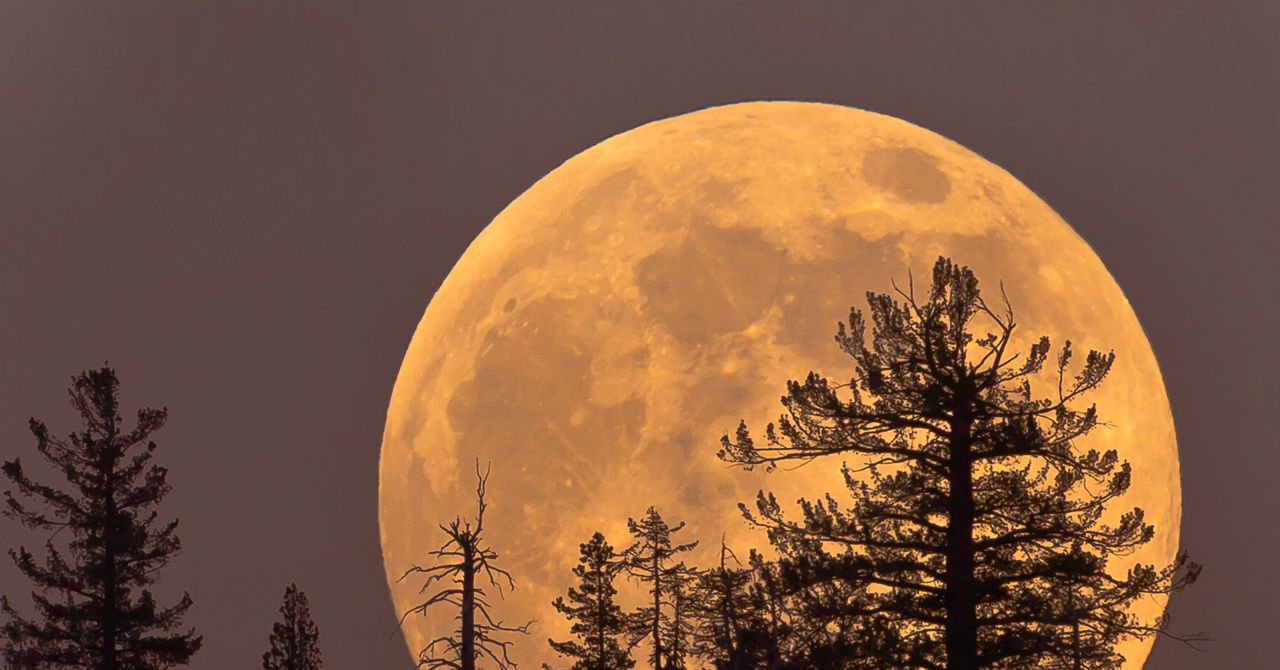
A cold supermoon is on its way. On December 4, Earth’s satellite will delight us with one of the last astronomical spectacles of 2025. Not only will it be the last full moon of the year, but it’s also a cold moon—which refers to the frigid temperatures typical of this time of year—and, finally, a supermoon. Here’s how and when best to enjoy this spectacle of the year-end sky.
What Is a Supermoon?
The term supermoon refers to a full moon that occurs when our satellite is at perigee, the point at which its orbit brings it closest to our planet. (The moon’s orbit is elliptical, and its distance from Earth varies between about 407,000 km at apogee, the point of maximum distance, and about 380,000 at perigee.)
In addition to being the third consecutive supermoon of the year, as reported by EarthSky, it will be about 357,000 km away from us, making it the second-closest full Moon of the year. Consequently it will also be the second-largest and brightest.
Although most of us won’t notice any difference in size compared to a normal full moon (it appears up to 8 percent larger to us), its brightness could exceed that of an ordinary full Moon by 16 percent. This time, moreover, it will be 100 percent illuminated just 12 hours after its perigee.
The Cold Supermoon
In addition to its name, which refers to the cold temperatures of this period, December’s full moon will be the last of 12 full moons in 2025 and the highest of the year. With the winter solstice approaching on December 21, the sun is at its lowest point in the sky, so the full moon is at its highest point. In other words, this means that the super cold moon will be particularly high in the sky. As EarthSky points out, however, it is not the closest full Moon to the December 21 solstice. While it occurs 17 days before, the first full moon of 2026 will occer on January 3—just 12 days ater teh solstice. That will be the fourth and last consecutive supermoon.
How to Enjoy the Show
Although the moon may appear full both the night before and the night after, the exact time of the full moon is scheduled for 6:14 pm ET on Thursday, December 4. In general, moonrise is the best time to be subject to the so-called lunar illusion, during which the moon appears larger than usual to us. NASA still doesn’t have a scientific explanation for why this happens, but as you might expect, the effect is greatest during a supermoon. Weather permitting, therefore, find an elevated place or meadow with an unobstructed view of the eastern horizon and enjoy the last moon show of the year.
This story originally appeared on WIRED Italia and has been translated from Italian.











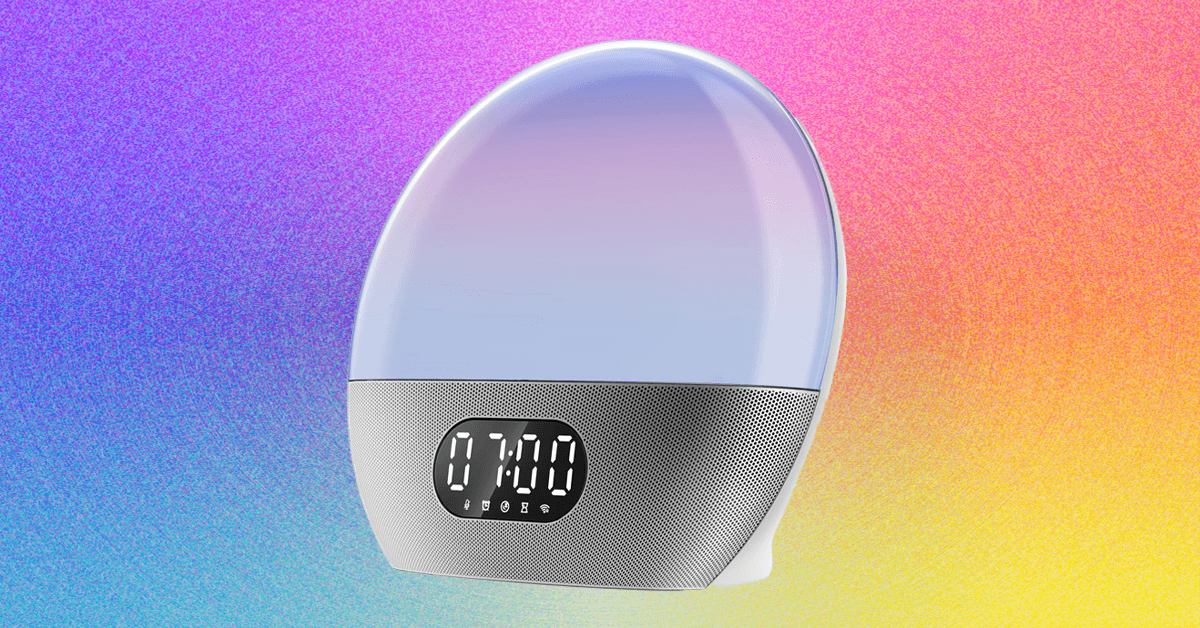
Ultimately, these lights can do a lot. They can double as a sound machine, help you wake up and fall asleep, and even act as a regular bedside lamp if they’re bright enough. Not all sunrise alarms have all of these features, though, so you have to choose how much you want to spend and what features are most important to you.
What Features Should You Look for in a Sunrise Alarm Clock?
You might see a range of features listed for a sunrise alarm, and more expensive ones will include more of these than cheaper models. If you’re not sure what features you want, try this series of questions to figure out what features you need.
Do you struggle to fall asleep? Splurge on a sunrise alarm with a nighttime or wind-down routine. These help build a routine for you to fall asleep to.
Do you need one device that doubles as an alarm and a bedside lamp? Get a brighter sunrise clock that has easy controls to switch it on as a bedside lamp. Not all sunrise clocks have these, so check the details carefully (and reviews like mine!) and note that cheaper, smaller sunrise alarm clocks usually won’t brighten an entire bedroom.
Are you picky about your alarm sounds? Check how many sounds are offered. Just about every sunrise clock has some sound machine features and options, but cheaper ones tend to only have a couple of sounds and might not have the sound you’re looking for.
Do you want app control? Some options in this guide don’t have a partner app or Wi-Fi capabilities, especially some of my favorites. An app doesn’t necessarily make it a better sunrise clock, but it can be convenient to use. If you prefer an app to set up your sunrise lamp, shop the Casper, Hatch, Loftie, and WiiM.
Which Sunrise Alarm Clocks Are Best?

Lumie
Bodyclock Luxe 700FM
This sunrise alarm is my favorite one. It’s big and bright with a stylish exterior, and has a button for lamp mode so you can easily switch it on to use in the evening as a regular lamp, and it was bright enough to fill my bedroom like a normal lamp. It has a nice range of sounds, and not only connects to the radio but allows you to save five stations. There are both sunrise and sunset settings. The biggest downside is it only has a 24-hour clock, and it doesn’t connect to Wi-Fi or an app so you have to set the time manually (and change it manually for daylight saving). If you want to spend less, the Shine 300 ($169) is a little smaller and has fewer sounds, but otherwise is similarly great.
The very existence of left-handedness seems to defy Darwin. According to the theory of evolution by natural selection (in very simplified terms), a species should retain the characteristics necessary for survival and reproduction and discard those that are not very useful. And yet around 10 percent of people continue to develop greater dexterity in their left hand, a rate that has remained stable throughout history. Why do humans continue to retain this peculiar ability?
A study conducted by researchers at the University of Chieti-Pescara in Italy set out to confirm a hypothesis indicating that, while right-handed people have advantages in cooperative behaviors, left-handed people—particularly males, the study notes—have advantages in competitive behaviors, especially in one-on-one situations. This hypothesis is based on evolutionarily stable strategy (ESS), a concept from game theory applied to evolution.
This is how ESS explains why the proportion of left-handed people remains low but constant. If almost everyone in a population is right-handed, being left-handed offers a frequency-dependent advantage: Being in the minority, left-handers are less predictable in competitive interactions (e.g., a boxing match), which may translate into small advantages (left hook!). But if left-handedness became very common, that advantage would disappear because others would adapt to encountering left-handers with the same frequency. In evolutionary terms, a “stable equilibrium” is reached when the majority are right-handed and a minority are left-handed, because neither “strategy” can completely eliminate the other since their advantages change depending on how frequent each is in the population.
How can a study support this hypothesis? The Italian researchers conducted two experiments to see whether a dominant hand is linked to any specific personality type. The results were recently published in the academic journal Scientific Reports.
Righty vs. Lefty
In the first experiment, about 1,100 participants completed questionnaires designed to measure their handedness (their level of dexterity between one hand and the other) and various facets of competitiveness, such as their inclination to achieve personal goals or their aversion to anxiety-driven competition. The results showed that people who identified with greater left-handed laterality tended to show higher levels of personal development-oriented competitiveness and lower levels of anxious avoidance. That is, left-handers tended to be more inclined to engage in competitive situations than right-handers.
In addition, when strongly lateralized groups were compared (just pure southpaws, no ambidextrousness), left-handers scored higher on “hypercompetitiveness,” a trait that implies an intense desire to win, even at the expense of others.
In the second experiment, a subgroup of 48 participants (half right-handed and half left-handed, with equal proportions of men and women) took a pegboard test, a classic laboratory test that measures manual dexterity. Interestingly, no significant differences were observed here either between left-handers and right-handers or between laterality measures and competitiveness scores. This suggests that hand preference and competitiveness are not directly related to motor skills.
Give Them a Hand
According to the authors of the study, left-handedness is not simply a biological accident, but a characteristic that may offer advantages in competitive contexts and is therefore worth preserving. This supports, at least in part, the idea that the unequal distribution between right-handers and left-handers could be maintained by an evolutionary balance. While the right-handed majority favors social cooperation, the left-handed minority benefits in competitive contexts, where surprise plays a role.
But what about other personality types? Are left-handed people more extroverted or more emotionally unstable? The study cited here found no significant differences between left-handed and right-handed people in the Big Five personality traits (openness, conscientiousness, extraversion, agreeableness, and neuroticism). Nor was there any relationship between handedness and levels of depression or anxiety in this sample of people without a psychiatric diagnosis. This suggests that the advantage associated with left-handedness is more linked to competitiveness than to general differences in personality or mental health.
The study also examined differences by sex. Men, in general, scored higher on hyper-competitiveness and development-oriented competitiveness, while women showed a greater tendency to avoid competition due to anxiety. This suggests that the interaction between hand preference, competitive profile, and gender is complex and likely influenced by multiple biological and environmental factors that warrant further investigation.
This story originally appeared on WIRED en Español and has been translated from Spanish.
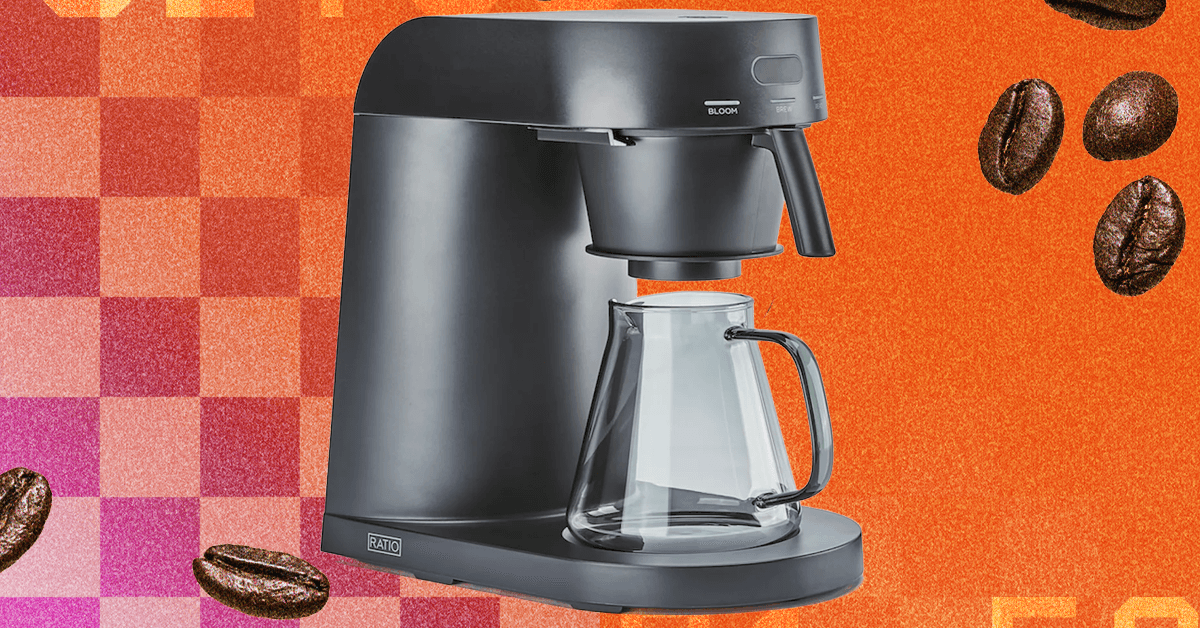
Coffee is the original office biohack and the nation’s most popular productivity tool. As we lose sleep to the changeover to daylight saving time, the caffeine-addicted WIRED Reviews team is writing about our favorite coffee brewing routines and devices that’ll keep us alert and maybe even happy in the morning. Today, reviewer Matthew Korfhage expounds on his lasting love for drip coffee—and why the Ratio Four never leaves his counter. In the days after, we’ll add other Java.Base stories about other WIRED writers’ favorite brewing methods.
As with any vice worth having, a morning coffee routine can take on the character of religion. And like a lot of religion, it’s often born as much accident as moral conviction. My denomination is good, old-fashioned drip coffee. That’s what I drink first thing, before I even think about crafting a shot of espresso.
I’m WIRED’s lead coffee writer and I’ve developed a deep fondness for coffee’s many variations, from espresso to Aeropress to cold brew. But “coffee” to me, in my deepest soul, still means a steaming mug of unadulterated drip. Luckily, that’s also the coffee arena that has been transformed the most by technology in recent years. The drip coffee from the Ratio Four coffee maker (now quietly on its second generation) feels to me like coffee’s purest form, the liquid distillation of what my coffee beans smell like fresh off the grinder.
-
Photograph: Matthew Korfhage
-
Photograph: Matthew Korfhage
-
Photograph: Matthew Korfhage


Ratio
Four Small-Batch Brewer (Series 2)
My love of filter coffee began as a teenager traveling and studying in India—perhaps my first glimpse of adult freedom. This is where I drank the first full cup of coffee I remember finishing. In Jaipur, filter coffee was an intense, jet-black gravity brew typically mixed with milk and sugar. I decided that if I was going to drink coffee, I would take it straight and learn to like it on its own terms. A newfound friend, tipping jaggery into his own brew, laughed at my insistence I didn’t want sweetened milk. I then downed a cup so thick and strong and caffeinated it made my hairs stand at perpendicular. If I’d made a mistake, I refused to admit it.
I carried this preference back to Oregon, drinking unadulteratedly black, terrible drip coffee at all-night diners and foul office breakrooms. Black coffee had become a morality clause, though it was hardly a matter of taste.
It wasn’t until years later that I discovered that drip coffee could actually be an indulgence every bit as refined as pinkies-up espresso.
Upping the Drip
In part, this was a problem of technology. Aside from a classic Moccamaster, it’s only very recently that home drip coffee makers have been able to produce a truly excellent cup. For years, I didn’t keep one at my home.
What woke me up to drip’s possibilities was a new wave of cafes in Portland, first third-wave coffee pioneer Stumptown Coffee and then especially Heart Coffee Roasters in Portland. Heart’s Norwegian owner-roaster, Wille Yli-Luoma, expounded to me at length about the aromatic purity of light-roast immersion coffee—the fruity aromatics of a first-crack Ethiopian that could smack of peach or nectarine or blueberry. Scandinavians had long prized this, he told me, and had evolved light-roast coffee into pure craft. America was finally catching up.
Still, I could never quite get that same flavor or clarity on a home brewer. Not until recently. To get the best version, I still had to walk up the street to Heart and get my coffee from the guy who roasted it. Or I had to spend way too long drizzling water over coffee in a conical filter. I rarely wanted to do this while still bleary from sleep, already late for work.


Is Daylight Saving Time Killing Your Mornings? This Gadget Can Save Them

Will John Lewis pay staff an annual bonus for first time in four years?

Police probe man for throwing ‘ignited’ devices near protest in front of Mayor Mamdani’s house

-

 Sports1 week ago
LPGA legend shares her feelings about US women’s Olympic wins: ‘Gets me really emotional’
-

 Entertainment1 week ago
Pakistan’s semi-final qualification scenario after England defeat New Zealand
-

 Fashion1 week ago
South Korea’s Misto Holdings completes planned leadership transition
-
 Business1 week ago
Greggs to reveal trading amid pressure from cost of living and weight loss drugs
-

 Entertainment1 week ago
Bobby J. Brown, “The Wire” and “Law & Order: SUV” actor, dies of smoke inhalation after reported fire
-
 Business1 week ago
CNBC To Merge TV And Digital News Operations, Nearly A Dozen Jobs To Be Cut: Report
-
 Entertainment1 week ago
What’s new in Pokémon? Every game, update, surprise from 30th anniversary event
-

 Politics1 week ago
Iran launches retaliation against Israel, launches ballistic missiles