

Entertainment
Tina Knowles wishes granddaughter Blue Ivy on 14th birthday

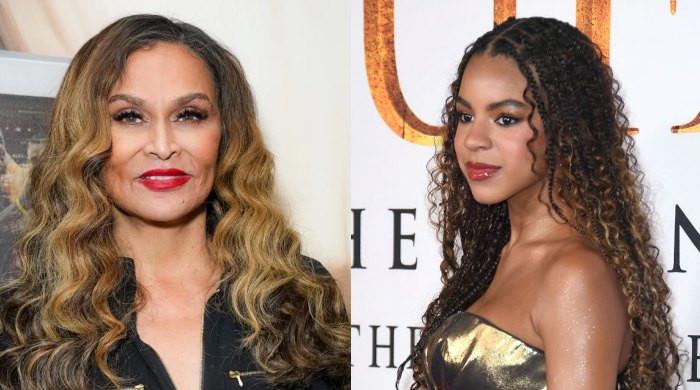
Tina Knowles is marking a very special milestone for her granddaughter Blue Ivy, and she did it in a way that felt deeply personal and full of love.
On Wednesday, Jan. 7, Knowles celebrated Blue Ivy’s 14th birthday by sharing a heartfelt Instagram post that quickly caught the attention of fans.
The 72-year-old author posted a collage featuring 14 photos of Blue Ivy taken across different stages of her life, a clear nod to the birthday being celebrated.
Alongside the snaps, Knowles wrote an emotional message that reflected on Blue Ivy’s journey from before she was even born to the young teenager she is today.
She affectionately described her granddaughter as her “manager, makeup artist, fashion adviser, and my love,” setting the tone for the tribute.
In her caption, Knowles looked back on the moment the family first learned Beyoncé was expecting.
“I remember the day that we found out about you being in your mom‘s womb. We could not have been more excited! We were told that you were the size of a blueberry and that is where your name came from!” she wrote.
She also shared how the family came together in prayer during those early weeks.
“We all prayed together for you every single day till you were 12 weeks old in your moms belly! Then we prayed individually until you arrived months later.”
Knowles went on to describe Blue Ivy as strong and sharp from the very beginning, noting that it was clear she was “a fighter from the beginning.”
She fondly recalled their time playing Princess and Barbie dolls, praising Blue Ivy’s imagination and early intelligence.
The message ended on a proud and loving note.
“To say that I’m a proud grandmother is an understatement!” Knowles wrote, adding that despite Blue Ivy’s many accomplishments, she remains “a very sweet, kind humble human being.”
Knowles is a grandmother to four grandchildren in total, including Blue Ivy, her younger siblings Rumi and Sir, and Solange Knowles’ son Julez.
Still, this birthday post made it clear that Blue Ivy’s 14th birthday was one Tina Knowles wanted the world to celebrate right along with her.
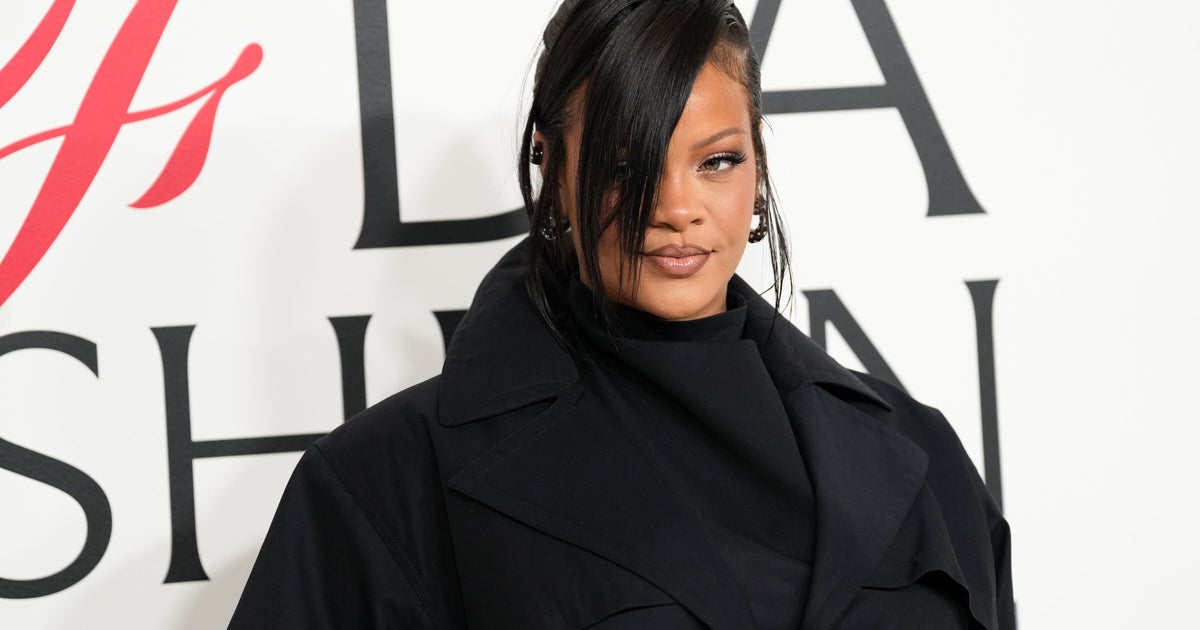
A person was arrested on Sunday for firing multiple shots at the Beverly Hills home of pop music star Rihanna, Los Angeles Police Department officials say.
Officers were sent to the area at around 1:15 p.m. after learning of shots being fired, according to the LAPD. Upon arrival, they located a suspect and took them into custody without further incident.
No injuries were reported and the weapon used in the shooting was recovered by police, LAPD officials said.
An LAPD official confirmed with CBS LA that the home targeted in the incident belongs to Rihanna.
It’s unclear if anyone was home at the time of the shooting.
Rihanna, whose real name is Robyn Rihanna Fenty, rose to fame in the early 2000s with mega-hits like “Pon de Replay” and “Umbrella.” Since then, she has turned her successful music career into a business empire under her brand Fenty, which now specializes in cosmetics, fashion and lingerie. She has been with her partner, rapper ASAP Rocky, since 2020, and they share three children. She famously announced her second pregnancy during the Super Bowl LVII halftime show.
This is a developing story. Check back for details.
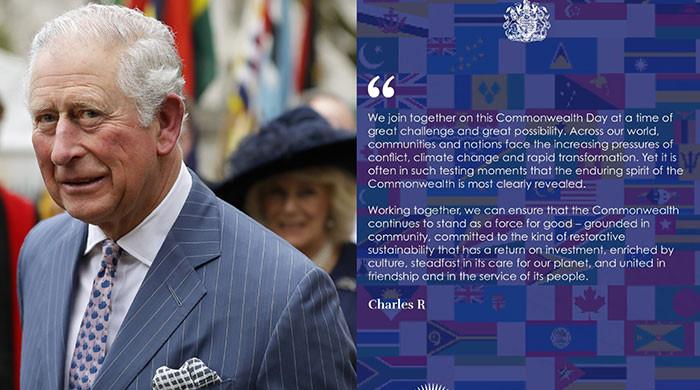
Kensington Palace posted on Instagram ahead of Commonwealth Day, sharing King Charles’s annual message to the 56 nations that make up the global organization.
In his address, the monarch described the global community of nations as something truly “rare and precious,” particularly at a time when global divisions can feel increasingly pronounced.
He highlighted the organization as a unique platform where countries can engage in open dialogue and cooperation while working to improve the lives of the nearly three billion people living across its member states.
Speaking in his annual Commonwealth Day message, the King said:
“In a world that can feel increasingly fragmented, this voluntary union of free association remains rare and precious.
A forum for open and honest discussion to help improve the lives of the nearly three billion people who call our Member States home.”
He also pointed to the significant economic possibilities within the Commonwealth, noting that the network of nations holds major potential for stronger trade partnerships built on trust and shared values.
“Our 56-nation bloc holds untapped potential for prosperous trade between trusting partners.
With nearly two-thirds of our population under the age of thirty, we are a family defined by youth and possibility,” he said.
The King stressed that the future of this younger generation depends on the actions taken today, urging collective responsibility to ensure they inherit a hopeful and thriving world.
“It is our shared responsibility to ensure that they inherit not only hope and ambition, but also a world in which they can flourish.”
Environmental protection also featured prominently in his message, with the monarch warning that climate change is already a reality for many communities across the nation.
He added that safeguarding nature, protecting forests and oceans, and pursuing prosperity in harmony with the natural world are duties owed not only to current citizens but to generations still to come.
Looking ahead, the King also reflected on the importance of the upcoming Commonwealth Heads of Government Meeting scheduled for later this year in Antigua and Barbuda.
The annual Day service will take place at Westminster Abbey, where senior members of the Royal Family and Sir Keir Starmer are expected to join a congregation of around 1,800 guests to mark the occasion.
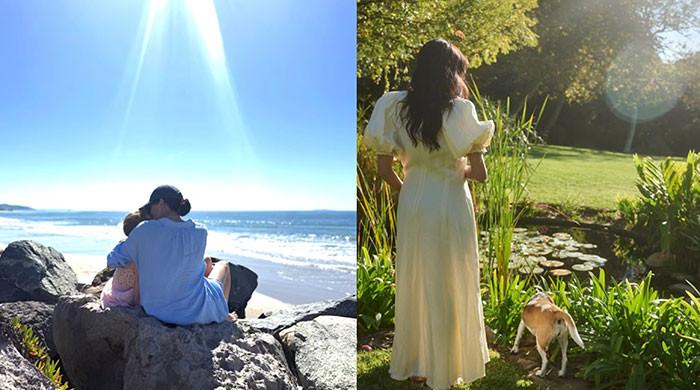
Meghan Markle marked International Women’s Day with a touching tribute to her daughter, Princess Lilibet, posting a rare glimpse of their quiet time together by the sea on Sunday.
The Duchess of Sussex shared the serene photograph on Instagram taken by Prince Harry, showing herself seated on sun-warmed rocks along a sweeping coastline while holding her young daughter close.
The pair looked out over the shimmering water as gentle waves rolled onto the shore, creating a peaceful backdrop for the candid mother-daughter moment.
In the video story, the bright sunlight and expansive ocean view added to the calm, intimate atmosphere captured in the image.
Alongside the photograph, Meghan included a heartfelt message dedicated to her daughter and to women around the world.
“For the woman she will one day be. Happy International Women’s Day,” she wrote.
She also shared another sunny snapshot from the same day on her As Ever social platform.
In that image, she stood in bright golden light wearing a flowing frock with puffed sleeves, adding a caption: “Sunday, with a little extra light to linger in.”


Rihanna’s Beverly Hills home hit by gunfire; suspect arrested, LAPD says

Iran war: Oil prices jump above $100 for first time in four years

King Charles urges unity, brighter future, wishing Happy Commonwealth Day

-

 Fashion1 week ago
South Korea’s Misto Holdings completes planned leadership transition
-

 Politics1 week ago
Iran launches retaliation against Israel, launches ballistic missiles
-

 Politics2 days ago
India let Iran warship dock the day US sank another off Sri Lanka, say officials
-

 Entertainment1 week ago
Al Jazeera broadcast interrupted by emergency missile alert in Qatar
-

 Sports1 week ago
Transfer rumors, news: Man City, Man United in for Anderson
-

 Sports2 days ago
Pakistan set for FIH Pro League debut | The Express Tribune
-

 Sports1 week ago
College basketball star suspended by team for spitting toward opposing fan
-

 Fashion1 week ago
India’s real GDP estimated to grow 7.6% in FY26 under new base FY23