

Business
‘To sustain the ride, they started to dilute it’: How Black Friday became a retail letdown


Black Friday early morning shoppers rush in as the doors are opened at a Walmart store in Fairfax, Virginia, Nov. 28, 2008.
Gerald Martineau | The Washington Post | Getty Images
Black Friday has long been defined by massive crowds, rock-bottom prices and rabid consumers willing to bite, scratch and claw their way to the best deals of the season. But these days, retail’s biggest holiday looks a bit different.
Stores are opening their doors later, foot traffic is flat, online shopping is up and, in a world where Black Friday begins in September, consumers are wary, unsure if the deals they’re getting are even that good.
“The integrity of the event is pretty much gone,” said Mark Cohen, former CEO of Sears Canada, who spent a decade as the director of retail studies at Columbia Business School. “Back in the day, a Black Friday price was the best you could ever find on something … never to be seen again. In today’s day and age, promotional pricing just gets better and better from a consumer’s point of view the closer you get to the holiday.”
A line forms for the 4 a.m. Black Friday opening at Kohl’s department store in Pleasanton, California, Nov. 27, 2009.
Michael Macor | San Francisco Chronicle | Hearst Newspapers | Getty Images
While Black Friday remains a critical day for many retailers and is still arguably the most popular shopping day of the year, it’s no longer defined by the in-person experience. Millions of shoppers are expected to visit malls, big-box stores and specialty retailers on Friday, but millions more are expected to stay at home and shop online from their phones and computers.
That means a shift in strategy for retailers that have long gone all in on Black Friday, including Walmart, Target and Macy’s. Some, such as Kohl’s, are launching their holiday sales earlier in the season. Others, such as Walmart, are spacing out promotions in separate events — one in mid-November, another over the holiday weekend and a final, one-day event on Cyber Monday. Many others plan to stay closed on Thanksgiving but will still have deals online during the holiday.
“I still recall queuing up outside stores waiting for those special deals that every retailer would advertise,” said Denish Shah, the department chair and professor of marketing at Georgia State University’s Robinson College of Business. “Whereas now it goes over weeks, over multiple days, and most of the time the consumers are doing it from the comfort of their home through online sales.”
For the last six years, more people shopped online on Black Friday than in-store, and foot traffic has been relatively flat following a post-Covid spike, according to data from the National Retail Federation and Placer.ai, an analytics firm that uses anonymized data from mobile devices to estimate overall visits to locations.
Since 2021, Black Friday store visits have consistently been more than 50% higher than the daily average for the full year, but the amount of foot traffic stores are getting on the day after Thanksgiving isn’t really growing, data from Placer.ai shows.
From 2023 to 2025, the number of millennials and Generation X consumers planning to make the majority of their purchases on Black Friday has dropped. It’s largely flat for Gen Z and baby boomer shoppers over that time period, according to data from the Bank of America Institute.
Meanwhile, the amount of money people are spending during the so-called Turkey 5 – the period of shopping days spanning Thanksgiving to Cyber Monday – has declined for two straight years, according to the NRF. Between 2019 and 2024, spending fell nearly 13%.
That decline is expected to continue this year, with consumers planning to spend 4% less on average during the Turkey 5, according to a recent Deloitte survey.
“There is still going to be a day of highlights from retailers, whether it is door busters, … certain additional promotions, etc.,” said Tiffany Yeh, a managing director and partner with Boston Consulting Group’s consumer practice. “But it is more muted.”
How Black Friday lost its edge
When the modern-day version of Black Friday became popularized in the 1980s, it took an entire year of planning to pull off, Cohen said.
“The art was to convince a vendor to give you an enormous discount on cost so that you could create this tremendously compelling offer to the consumer that would then … benefit you for the balance of the holiday season,” he recalled. “But it required an enormous amount of work.”
Retailers had to pick the perfect product, set the perfect price and make sure their competitors didn’t get wind of their promotional plans. Then, they had to make sure they ordered enough inventory to sell out, but not so early that it would cause riots.
Black Friday shoppers pour in to a Best Buy store in Los Angeles at 5 a.m. on Nov. 28, 2008.
Jewel Samad | AFP | Getty Images
But over time, as Black Friday became more popular, retailers began extending the shopping holiday so their biggest sales tailwind of the year could last longer than a single day. First, stores opened earlier Friday morning, then they began opening on Thanksgiving, and then, promotions began the day before. When consumers began expecting discounts on more than a handful of products, promotions were spread to items in every department.
“In other words,” Cohen said, “to sustain the ride, they started to dilute it.”
As discounts spread across the store, the operational feat behind inventory and staffing became even more challenging to manage, leading retailers to spread out promotions even earlier, Yeh said.
“It’s always been a tough one to really staff up labor so significantly for a short period of time,” she said. “If it’s only for a day, people are not going to necessarily want to sign up for that, versus, if it’s for a longer season, then you’re more likely to get the necessary team members and also be able to train them.”
At the same time, consumer habits began to shift in the backdrop.
Are Black Friday deals still worth it?
Online shopping had been on a slow and steady rise for 20 years, but during the Covid-19 pandemic, adoption skyrocketed. Now, retailers don’t need to put on as big of an in-person show on Black Friday, because online sales are increasingly outpacing those in stores.
Stretching Black Friday into a seasonlong event also makes it easier for consumers to spread out their own spending, Shah said.
“November and December are two different pay periods for many consumers,” he said. “It makes a difference if they can spread their spending across two pay periods rather than just one.”
Of course, there’s also debate about how good the discounts actually are on Black Friday, especially in a soft economy where retailers are leaning heavily on promotions to drive sales at the same time they’re raising prices to offset tariffs.
People crowd the first floor of Macy’s department store in New York as they open for Black Friday sales at midnight on Nov. 23, 2012.
Stan Honda | AFP | Getty Images
“Rampant discounting” across the industry — before, during and after the holiday shopping season — has left many consumers feeling “skeptical” about promotions overall, said Sonia Lapinsky, the head of consulting firm AlixPartners’ global fashion practice. Some promotions this holiday season could also be disguising price increases, notching the cost back down to what it was before the ticket price was raised, said Lapinsky.
“They’ve had the power to cross-shop and look for these discounts, and now there’s just this lack of trust,” Lapinsky said. “They’re tired of doing that, and there’s a lack of trust that they’re actually getting the value piece of it.”
For example, brands like Gap, Levi Strauss and Under Armour started their Black Friday sales on Thanksgiving, and the promotions were comparable to those offered earlier in the season.
“The whole idea of creating urgency is kind of goofy and gone,” Cohen said. “Like so many headlines that purportedly offer a deal, the deal is something of a scam.”
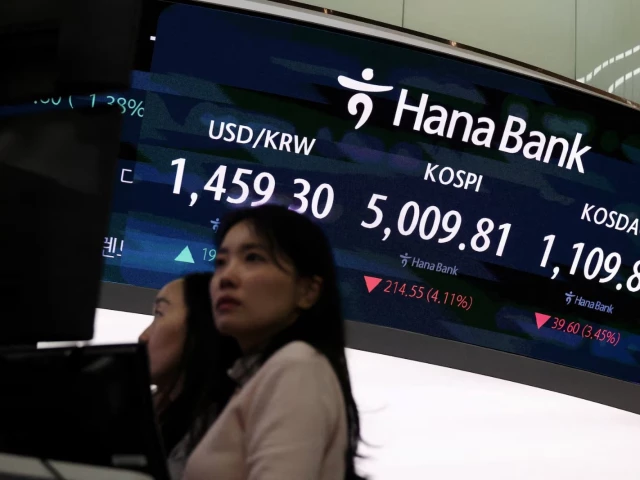





Energy markets have seen wild swings since the US and Israel attacked Iran on 28 February.
Source link
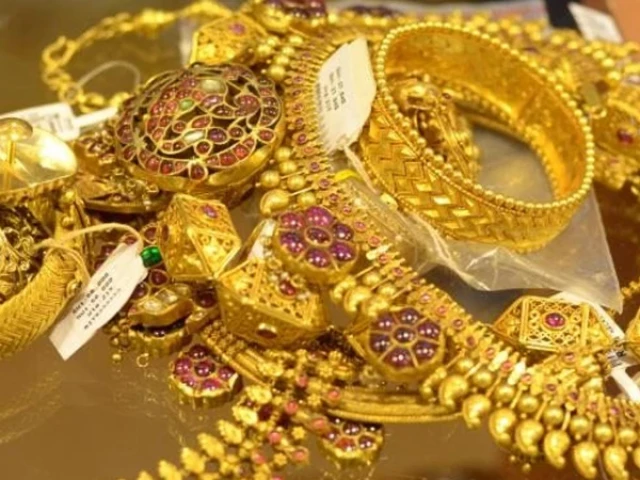
Gold and silver prices declined in both international and domestic markets, reflecting a broader downward trend in precious metals.
In the international bullion market, the price of gold fell by $49 per ounce, settling at $4,788.
According to the All-Pakistan Gems and Jewellers Sarafa Association (APGJSA), in the local market, gold prices also recorded a significant drop. The price per tola decreased by Rs4,900 to reach Rs501,162. Similarly, the price of 10 grams of gold declined by Rs4,201, settling at Rs429,665.
Silver prices also followed a downward trajectory. The price per tola of silver fell by Rs145 to Rs8,417 while the price of 10 grams of silver dropped by Rs124, reaching Rs7,216.
Read More: Gold, silver prices rise again in local and international markets
Gold and silver prices recorded an increase on Saturday in both international and local markets after declining on Friday, following a three-day upward trend in global and domestic markets.
According to the All Pakistan Sarafa Gems and Jewellers Association (APSGJA), in the international bullion market, the price of gold rose by $45 per ounce to reach $4,837. In the local market, the price of gold per tola increased by Rs4,500 to Rs506,062, while the rate for 10 grams rose by Rs3,858 to Rs433,866.
Silver prices also moved higher, with the per tola rate increasing by Rs118 to Rs8,562. Similarly, the price of silver per 10 grams rose by Rs101 to Rs7,340.
Business
Stocks to buy: What’s the outlook for Nifty for April 20-April 24 week? Check list of top stock recommendations – The Times of India
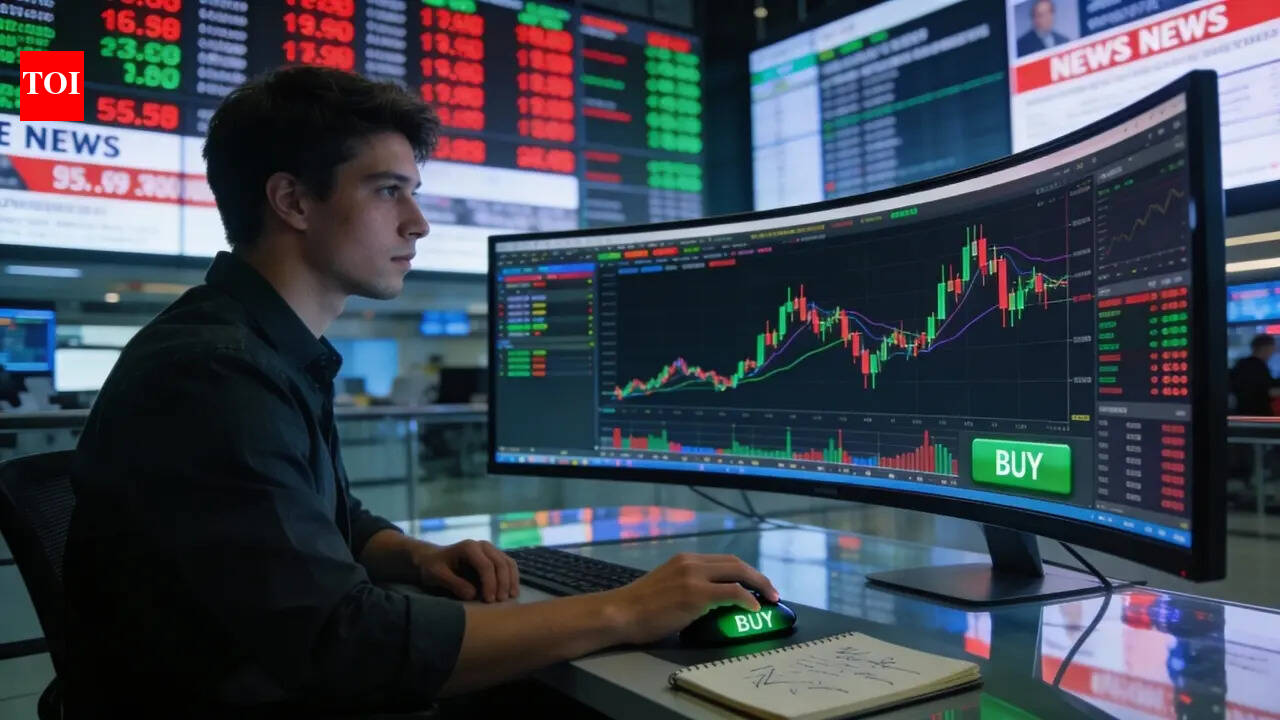
Stock market recommendations: APL Apollo Tubes, and HDFC Asset Management Company are Sudeep Shah, Head – Technical Research and Derivatives, SBI Securities’ top stock picks for this week. Below are his stock picks and also views on Nifty.Nifty ViewThe benchmark index Nifty continues to inch higher; however, this phase of the rally is notably different, as the spotlight has shifted away from the headline index. While Nifty has extended its pullback rally for the second consecutive week and closed in the green, the real strength is emerging beneath the surface. The broader markets have taken the lead, with Nifty Midcap 100 and Nifty Smallcap 100 delivering a robust rally and clearly outperforming the frontline index. Both indices have decisively moved above their key moving averages, signalling trend strength, whereas Nifty is still trading below its 100day and 200day EMA. Most importantly, Nifty Midcap 100 is now just a short distance away from its alltime high, suggesting that the next leg of opportunity may be unfolding beyond the conventional largecap space.Focusing back on Nifty, the index has been sustaining above its 50day EMA for the last three trading sessions, while the 20day and 50day EMA have started to edge higher, reflecting improvement in the shortterm trend. Meanwhile, the downward momentum in the 100day and 200day EMA has slowed considerably, indicating a stabilisation in the mediumterm structure. Momentum indicators further support the constructive bias, with the daily RSI trading above the 57 mark and moving higher, and the daily MACD histogram signalling strong bullish momentum.Collectively, these technical factors suggest that the pullback rally is likely to continue in the short term. On the upside, the 24650–24700 zone is expected to act as a crucial hurdle for the index. A sustainable breakout above 24700 could lead to an extension of the pullback rally towards 25000, followed by 25200 in the near term. On the downside, the 24050–24000 zone will serve as immediate support, and as long as the index remains above the 24000 mark, the ongoing pullback rally is likely to stay intact.Bank Nifty ViewThe banking benchmark Bank Nifty also ended the week on a positive note, indicating the continuation of its ongoing pullback rally. However, over the last three trading sessions, the index has struggled to decisively cross its 200day EMA, suggesting a phase of consolidation near a key long-term resistance zone. This price behaviour reflects hesitation at higher levels and points towards a pause in momentum after the recent recovery.This consolidation largely indicates a degree of caution among market participants, as investors appear to be awaiting clarity on the Q4 earnings outcome of major banking heavyweights, namely ICICI Bank and HDFC Bank. With both results scheduled over the weekend, the index is likely to witness a directional move post the earnings announcements, depending on earnings performance and management commentary.From a technical perspective, the index continues to maintain a constructive short-term setup, as it is trading above its 20day and 50day EMA, reflecting underlying strength. Momentum indicators remain supportive, with the daily RSI placed above the 55 level and trending higher, suggesting improving buying momentum and positive shortterm bias.Looking ahead, the 57000–57100 zone is expected to act as a crucial resistance area, as it coincides with both the prior swing high and the 100day EMA, making it an important supply zone. A sustainable move above 57100 could lead to a further extension of the pullback rally towards 57800, followed by 58500 in the short term. On the downside, the 55800–55700 zone is placed as an important support band, and any dip towards this region is likely to attract buying interest as long as the structure remains intact.Stock recommendations:APL Apollo TubesAPL Apollo Tubes has shown strong bullish intent after a 14.5% pullback from its early April lows near the 200-day EMA, indicating solid support at lower levels. The recent consolidation between 2072–1961 acted as a base, with the stock now delivering a decisive breakout on strong footing. A positive DI crossover on ADX signals clear buyer dominance, while the MACD nearing a move above the zero line with rising histogram bars points to strengthening momentum.The overall setup suggests the stock is well-positioned to extend its uptrend in the near term. Hence, we recommend to accumulate the stock in the zone of 2110-2090 with a stoploss of 2020. On the upside, it is likely to test the level of 2255 in the short term.HDFC Asset Management CompanyHDFC Asset Management Company has exhibited strong bullish momentum, closing Friday’s session with an impressive 4.89% gain. The stock has surged nearly 26% from its March lows, indicating robust buying interest. Momentum indicators remain firmly supportive, with RSI sustaining above 60, reflecting strength. Additionally, a positive DI crossover on ADX highlights clear buyer dominance, while rising MACD histogram bars with the MACD line above the zero mark further reinforce the ongoing uptrend. The overall structure suggests the stock is well-positioned to extend its upward trajectory. Hence, we recommend to accumulate the stock in the zone of 2800-2770 with a stoploss of 2690. On the upside, it is likely to test the level of 2990 in the short term.(Disclaimer: Recommendations and views on the stock market, other asset classes or personal finance management tips given by experts are their own. These opinions do not represent the views of The Times of India)


Germany’s BOSS secures landmark Australian Open partnership

Prego Has a Dinner-Conversation-Recording Device, Capisce?

Long energy disruptions to raise pressures on SEA nations: S&P Global

-

 Fashion4 days ago
France’s LVMH Q1 revenue falls 6%, shows resilience amid Iran war
-

 Sports1 week ago
The case for Man United’s Fernandes as Premier League’s best
-

 Entertainment1 week ago
Palace left in shock as Prince William cancels grand ceremony
-
 Business1 week ago
UK could adopt EU single market rules under new legislation
-

 Entertainment5 days ago
Is Claude down? Here’s why users are seeing errors
-

 Fashion1 week ago
Energy emerges as biggest cost driver in textile margins
-

 Sports1 week ago
Lamar Jackson hits back at critics with faithful message on social media
-
 Business1 week ago
Delta Air Lines unveils first new Delta One suite in premium cabin arms race