

Fashion
Tommy Hilfiger appoints Sergio Pérez as global menswear ambassador


Published
December 11, 2025
Tommy Hilfiger has announced the appointment of Sergio Pérez as its new global menswear ambassador, reinforcing its long-standing relationship with Formula 1 and its standing at the intersection of sport, style and contemporary culture.
The announcement comes in the run-up to the 2026 season, when the Mexican driver will return to the grid with the Cadillac Formula 1 team, with Tommy Hilfiger as the team’s official kit partner.
“We have long championed drivers’ freedom to express themselves through style and, as Formula 1 continues to embrace fashion and entertainment, its stars have become truly global figures,” said Tommy Hilfiger.
He added that Pérez, an icon in Mexico and an international fan favourite, is a figure capable of inspiring new generations with his talent, confidence and personality.
From Pérez’s perspective, the collaboration also reflects the paddock’s cultural evolution.
“Tommy brought style to the paddock and gave drivers the confidence to show who they are away from the track. He has always been at the centre of the action,” Pérez said.
He explained that returning to competition with the brand marks a new chapter he embraces with enthusiasm and commitment, aligned with his preparations for the next sporting cycle.
The partnership encompasses menswear collections, fan merchandise inspired by the world of racing, timepieces, and participation in the brand’s campaigns and events.
Tommy Hilfiger adds Pérez to its line-up of athletes with global cultural impact, at a time when Formula 1 is extending its influence into image, consumer culture and fashion.
This article is an automatic translation.
Click here to read the original article.
Copyright © 2025 FashionNetwork.com All rights reserved.










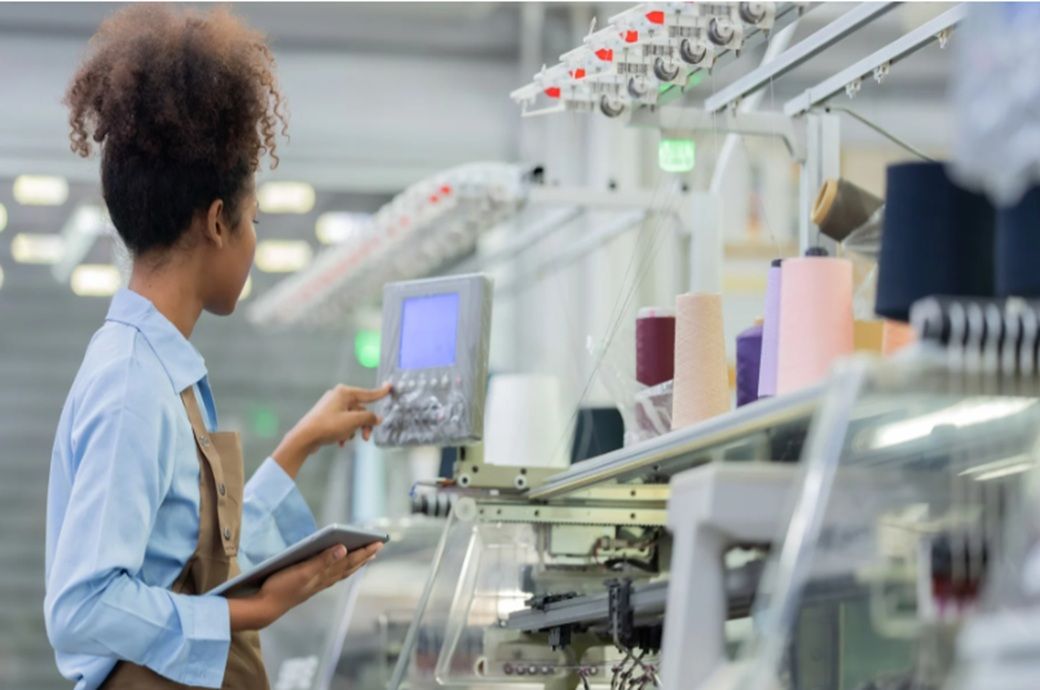
The original Fashion Manufacturers Initiative (FMI) was created in 2013 to support New York City fashion manufacturers to modernise their equipment and facilities. In addition to the NYCEDC’s investment in the Local Production Fund, the programme is made possible by early industry support from Andrew Rosen, TWP, and the American Apparel & Footwear Association, with additional partners to be announced. From the programme’s launch until 2024, $6.7 million was invested across 220+ grants and workforce support programming impacting the work of 3,708 employees. The programme consisted of six core components: innovation grants, workforce development, programmes & collaborations, and a production database. For this next phase, the Local Production Fund is an optimal investment to double down on ensuring the historic garment manufacturing ecosystem can continue to call New York City home.
NYCEDC and CFDA launched a $1.7 million Local Production Fund under the Fashion Manufacturing Initiative to boost NYC garment manufacturing.
It will support 21 manufacturers and 43 designers over two years.
Building on $6.7 million invested since 2013, the programme aims to strengthen local production, jobs, and partnerships amid Midtown South redevelopment.
“The Fashion Manufacturing Initiative’s decade of impact, supporting over 3,500 New Yorkers, helped strengthen the foundation of New York City’s historic garment manufacturing industry while advancing a diverse local workforce,” said NYCEDC interim president & CEO Jeanny Pak. “Building on that growth, NYCEDC is proud to continue our partnership with CFDA through the new Local Production Fund, which will deepen collaboration between local designers and manufacturers, helping to drive production and ensure this vital industry continues to thrive in New York City.”
“At the CFDA, we are committed to supporting American designers not just creatively, but in building strong, sustainable businesses, and the Local Production Fund is a critical step in helping them access local manufacturing, build lasting partnerships, and grow within New York City,” said Council of Fashion Designers of America (CFDA) president Steven Kolb.
In August 2025, the New York City Council and City Hall adopted the Midtown South Mixed-Use (MSMX) Plan, advancing the transformation of 42 blocks in Midtown South into a 24/7 mixed-use neighbourhood by facilitating the creation of 9,500 new homes including 2,800 permanently affordable new units. In light of this historic opportunity, NYCEDC, in partnership with former NYC Councilmember Erik Bottcher, undertook a six-month engagement process in the MSMX area—including the historic Garment District—where businesses identified needs for programming and understanding of existing NYCEDC programmes, CFDA said in a press release.
NYCEDC created Midtown Made to promote existing programming that supports the MSMX area as the rezoning unfolds. NYCEDC will continue its partnership with CFDA to promote NYCEDC’s programmes for the fashion sector through webinars, newsletters, paid social media efforts and events, under the Midtown Made brand. Our partnership and promotion efforts will direct businesses to the new Midtown Made resource hub on NYCEDC’s website and continue the support for the manufacturers that make New York City’s Fashion industry hum day after day.
“The talent and expertise of New York City’s local manufacturing facilities is instrumental in fostering the growth of the next generation of American designers and helping them build their brands,” said Andrew Rosen. “The Fashion Manufacturing Initiative, and now the Local Production Fund, is investing in and supporting this vital ecosystem. I’m excited and proud to be part of the continuation of such an important mission—one that helps ensure garment manufacturing in New York City continues to thrive.”
“For generations, New York City’s fashion industry has been woven into the fabric of our economy, and the Local Production Fund is exactly the kind of investment we need to keep it strong. At a time when tariffs and global supply chain pressures are squeezing designers, manufacturers, and small businesses, supporting local production is critical to protecting good jobs and strengthening our workforce,” said Council member Virginia Maloney. “As Chair of the Council’s Committee on Economic Development, I’m proud to work closely with NYCEDC and CFDA on initiatives like this, alongside efforts like Midtown Made that are supporting businesses in the Garment District as Midtown South evolves. This $1.7 million investment sends a clear message: New York City stands behind its fashion industry and is committed to ensuring it has a future here.”
Fibre2Fashion News Desk (RR)
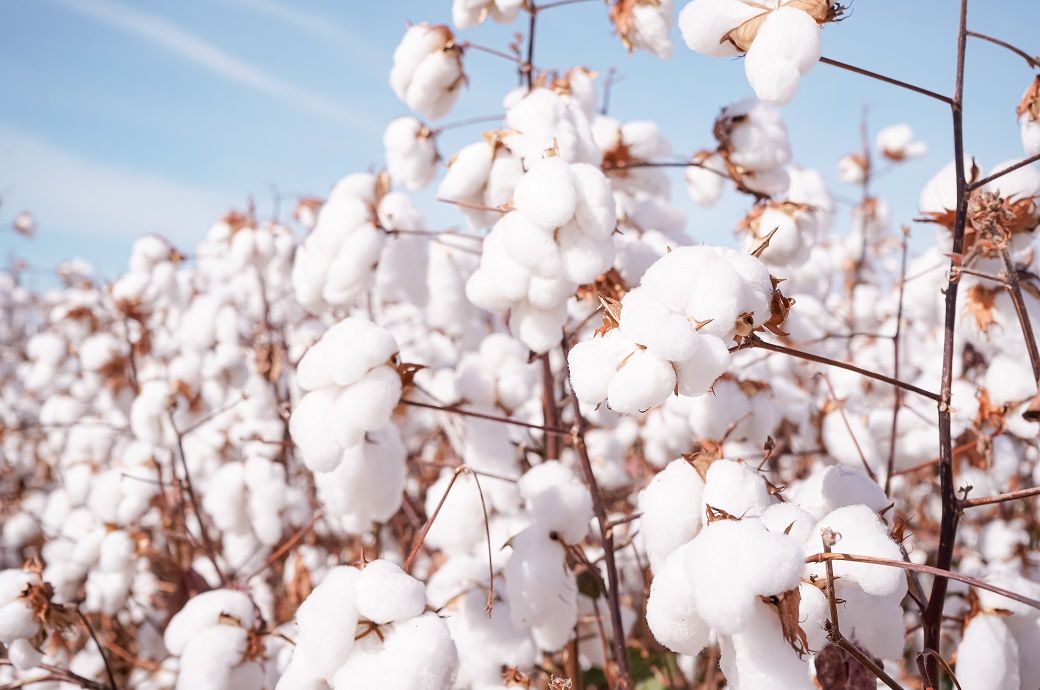
The Union Cabinet chaired by Indian Prime Minister Narendra Modi approved the Mission for Cotton Productivity for the period 2026–27 to 2030–31 to address declining growth, productivity bottlenecks and quality concerns in India’s cotton sector.
India approved a $595 million cotton productivity mission for 2026-31 to boost yields, quality and self-sufficiency amid rising cotton and yarn prices, tight domestic supply, and higher exports.
The plan focuses on better seeds, modern farming, traceability and processing, targeting higher output, improved productivity, and stronger global competitiveness.
The move comes as cotton yarn prices in key textile hubs such as Tiruppur and Mumbai have climbed sharply in recent days after cotton prices rose by ₹2,000-3,000 per candy. Traders said spinning mills were forced to raise yarn prices to offset higher raw material costs, while domestic supply remained limited because mills were increasingly prioritising exports. According to trade sources, Indian spinning mills are currently exporting nearly 60 per cent of their cotton yarn production compared to around 30 per cent a few months ago, tightening availability in the domestic market.
Against this backdrop, the government’s cotton mission aims to strengthen long-term self-sufficiency and global competitiveness in the sector under the 5F vision—Farm to Fibre to Factory to Fashion to Foreign.
The mission will focus on development of high-yielding, climate-resilient and pest-resistant cotton seeds, along with expansion of modern cultivation techniques such as High-Density Planting System (HDPS), closer spacing, integrated cotton management, and promotion of Extra Long Staple (ELS) cotton.
The government also plans to improve cotton quality through capacity building and modernisation of ginning and processing factories, alongside adoption of best processing practices. Cotton testing infrastructure across the country will be upgraded with modern and accredited facilities to support standardised quality assessment and global benchmarking.
A major component of the programme will be strengthening branding and traceability initiatives under Kasturi Cotton Bharat to position Indian cotton as a premium and sustainable fibre in global markets.
The mission additionally seeks to empower farmers through digital integration of mandis, enabling transparent price discovery, direct market access, and better price realisation through e-platforms.
The programme also includes promotion of cotton waste recycling and circular economy practices, while supporting diversification into other natural fibres such as flax, ramie, sisal, milkweed, bamboo, and banana to complement cotton production and align India’s textile sector with evolving global demand trends.
The mission will be implemented jointly by the Ministry of Agriculture and Farmers Welfare and the Ministry of Textiles. It will involve 10 institutes of the Indian Council of Agricultural Research (ICAR), one institute under the Council for Scientific and Industrial Research (CSIR), and 10 centres of the All India Coordinated Research Project (AICRP) on Cotton operating across major cotton-growing states.
Initially, 140 districts across 14 states will be covered through collaboration between state agriculture departments and ICAR. Around 2,000 ginning and processing factories will also be brought under the programme.
The government aims to increase cotton production to 498 lakh bales of 170 kg each by 2031 and raise lint productivity from 440 kg per hectare to 755 kg per hectare. Around 3.2 million farmers are expected to benefit from the initiative.
The mission also targets reducing cotton trash content to below 2 per cent under Kasturi Cotton Bharat certification and traceability initiatives, reinforcing India’s ambition to build a cleaner, premium-quality and globally competitive cotton ecosystem.
Fibre2Fashion News Desk (KUL)
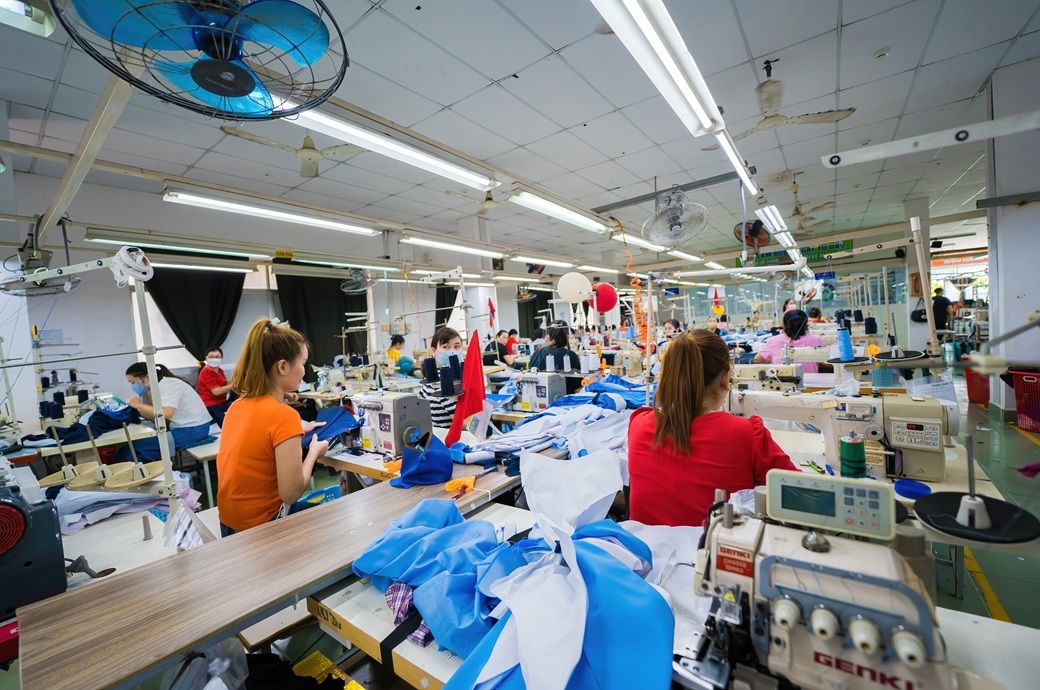
Growth in output and new orders softened, with production nearing stagnation. New orders rose at the slowest pace in eight months, while export orders declined for a second straight month, reflecting a weaker trade environment, S&P Global said in a press release.
ASEAN manufacturing growth slowed in April, with the S&P Global Manufacturing PMI falling to a nine-month low of 50.7.
Output and new orders weakened, export sales declined further, and employment fell for the first time in eight months.
Supply chain pressures and rising operating costs intensified inflation.
Despite weaker momentum, firms remained optimistic.
Supply-side constraints intensified during the month. Delivery times lengthened to a 17-month high as firms increased purchasing activity, putting pressure on supply chains. As a result, inventories of both inputs and finished goods declined, indicating firms relied on existing stocks to meet demand.
Employment conditions also weakened, with staffing levels falling for the first time in eight months, albeit marginally. Meanwhile, backlogs of work continued to rise, suggesting capacity pressures persist.
Inflationary pressures strengthened further. Input costs rose at the fastest pace since March 2022, prompting firms to increase output prices at the sharpest rate in 49 months.
Maryam Baluch of S&P Global Market Intelligence said ASEAN manufacturing remained in expansion territory in April, though growth momentum weakened as output neared stagnation, demand softened, exports fell faster, and employment declined. She noted that price pressures intensified further amid rising operating costs.
“While manufacturing firms in the ASEAN region remain optimistic about continued production growth in the coming year, the overall trajectory will remain dependent on external factors, notably the ongoing conflict in the Middle East, which is also shaping the inflation picture,” added Baluch.
Fibre2Fashion News Desk (SG)


Pentagon to release first batch of UFO, alien files ‘very soon’

Trump’s Team Wants Him to Accept an Iran Deal He’s Already Rejected

Arsenal’s Champions League win over Atleti sparked ‘record broadband traffic spike’

Pro wrestling star Steph De Lander reveals how colleague’s advice helped lead her to title triumph at ACW

‘I had £20,000 stolen and had to fight a 13-month fraud reporting rule to get it back’

This Ambitious Laptop Doesn’t Leave Much Room for Your Hands

-
 Sports1 week ago
Pro wrestling star Steph De Lander reveals how colleague’s advice helped lead her to title triumph at ACW
-
Business1 week ago
‘I had £20,000 stolen and had to fight a 13-month fraud reporting rule to get it back’
-
 Tech1 week ago
This Ambitious Laptop Doesn’t Leave Much Room for Your Hands
-
 Business7 days ago
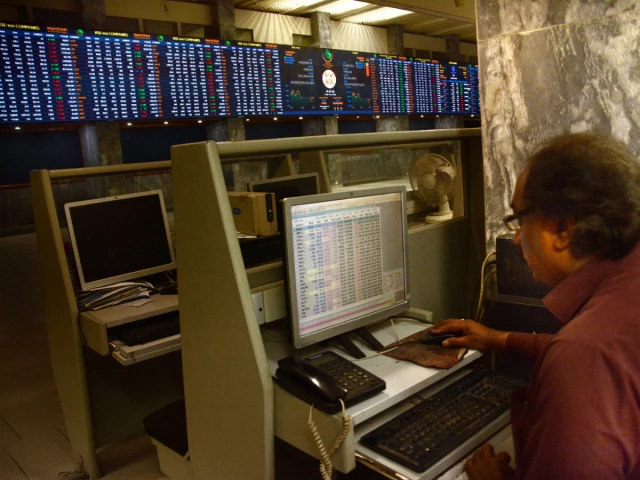
PSX plunges over 4,800 points | The Express Tribune
-

 Tech6 days ago
Almost half of UK businesses hit by cyber attacks | Computer Weekly
-

 Tech6 days ago
This Indigenous Language Survived Russian Occupation. Can It Survive YouTube?
-

 Tech6 days ago
Musk v. Altman Kicks Off, DOJ Guts Voting Rights Unit, and Is the AI Job Apocalypse Overhyped?
-
 Business1 week ago
BP profits more than double as oil trading booms amid Iran war