

Business
Top PSU bank roles open to private sector: SBI MD, ED positions to welcome external candidates; eligibility criteria changed – The Times of India


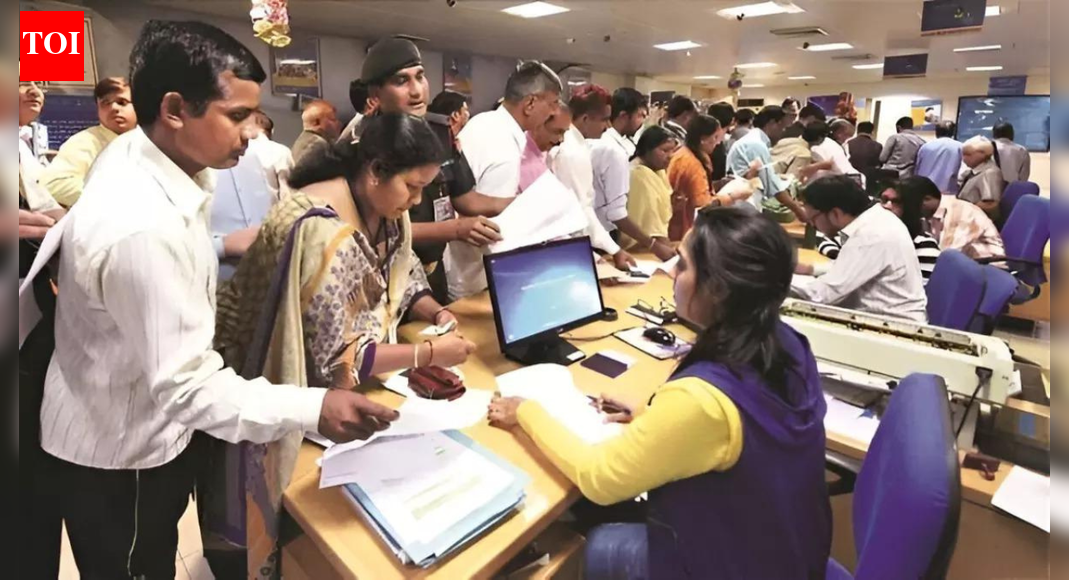
The government has opened senior management positions in public sector banks, including State Bank of India (SBI), to private sector professionals, a move aimed at broadening the talent pool for top banking leadership.Under the revised appointment guidelines, one of the four Managing Director (MD) posts at SBI is now accessible to private sector candidates and individuals from other public sector financial institutions, PTI reported. Previously, all MD and chairman positions were filled internally.The new guidelines also allow private sector professionals to apply for Executive Director (ED) positions across public sector banks (PSBs). In addition to SBI, the 11 other nationalised banks—including Punjab National Bank, Bank of Baroda, Canara Bank, Union Bank of India, and Bank of India—are covered under the framework.Private sector candidates for the MD post must have a minimum of 21 years of professional experience, including at least 15 years in banking and two years at the bank board level. For ED roles, candidates need at least 18 years of experience, with 12 years in banking and three years at the highest level below the board. Eligibility for public sector candidates remains unchanged.According to the guidelines issued by the Appointments Committee of the Cabinet, the first vacancy of SBI’s MD will be treated as open to all eligible candidates, while subsequent vacancies will be filled by internal PSB candidates. For ED positions, one post per bank will be accessible to both private sector and internal candidates.However, officers holding the post of Chief Vigilance Officer (CVO) are ineligible for these appointments. The eligibility rules for nationalised banks also specify service requirements at the Chief General Manager and General Manager levels through FY2027-28, after which candidates need a minimum of two years as Chief General Manager.
Business
Defence stocks surge on Middle East tensions! HAL, BEL, Paras Defence rise up to 13% even as stock market crashes – The Times of India

Defence stocks today: Contrary to the crash in Nifty50 and BSE Sensex, defence stocks on Monday moved up in trade as rising Middle East tensions brought focus back on them. Shares of defence companies such as Hindustan Aeronautics, Bharat Dynamics, BEL and Paras Defence surged by as much as 13.5% as tensions in the Middle East intensified following the death of Iran’s supreme leader, Ayatollah Ali Khamenei. The escalation has raised expectations of increased export opportunities and strengthened investor sentiment toward the sector. Paras Defence led the gains, climbing 13.5%. Meanwhile, HAL, BEL and Bharat Dynamics advanced by up to 3.5% on the BSE.During his recent visit to Israel, Prime Minister Narendra Modi said that the two countries would move ahead with joint development, production and technology transfer in the defence sector.A joint statement issued after the visit noted that India and Israel would collaborate on the co-development and manufacturing of defence equipment to deepen strategic ties. The two sides also agreed to work toward concluding a bilateral trade agreement soon, broaden cooperation under the UPI digital payments framework, and partner on space projects and emerging technologies, among other areas.Brokerage house JM Financial said Indian defence companies such as Hindustan Aeronautics Limited and Bharat Electronics Limited may receive sentiment support despite continued volatility in domestic equities amid a broader global risk-off environment, according to an ET report.Defence counters have seen significant fluctuations in recent months. The sector saw a robust rally last year after Indian armed forces conducted targeted strikes against terrorist groups in Pakistan and Pakistan-occupied Kashmir. However, the uptrend later lost steam in the absence of new catalysts.Even as defence counters could witness a strong rally amid the escalating conflict, the wider equity market is expected to stay subdued.(Disclaimer: Recommendations and views on the stock market, other asset classes or personal finance management tips given by experts are their own. These opinions do not represent the views of The Times of India)
Business
Stock Market News Live Updates: Sensex Down Over 1,000 Points, Nifty Below 24,900; India VIX Jumps Nearly 20%

Nifty, Sensex Stock Market Today Live Updates: Indian benchmark indices continued their downward trajectory on Monday, tracking weak global cues as geopolitical tensions between the US and Iran escalated.
As of 11:00 AM, the Sensex was trading 1.34 per cent, or 1,086.02 points, lower at 80,201.17, while the Nifty50 declined 1.31 per cent, or 350.55 points, to 24,828.10. Shares of Larsen & Toubro, InterGlobe Aviation and Adani Ports and Special Economic Zone were among the biggest laggards in the Nifty 50 index.
Broader market indices also traded in the red, with the Nifty MidCap and Nifty SmallCap indices falling 0.93 per cent and 1.3 per cent, respectively. Among sectoral indices, the Nifty Auto was the worst performer, sliding more than 2 per cent as shares of Maruti Suzuki India and Mahindra & Mahindra came under pressure.
On the other hand, the Nifty Metal index declined the least, making it the relatively best-performing sectoral index in early trade despite the overall weak market sentiment.
Global Cues
Over the weekend, Iran’s Supreme Leader Ayatollah Ali Khamenei and several senior officials were killed in a joint US-Israel military operation. The conflict appears set to intensify, with US President Donald Trump vowing to retaliate after American servicemen were killed in Iran’s counterattacks, according to agency reports.
Asian markets tumbled in early Monday trade. Japan’s Nikkei 225 and South Korea’s Kospi dropped as much as 2.7% and 2.43%, respectively.
On Sunday, US stock futures declined more than 1% after the strikes on Iran. Both the S&P 500 and the Dow Jones Industrial Average were reported to have fallen 1.11% each.
During the Asia session, Dow Jones Industrial Average futures and S&P 500 futures were down 0.6% and 0.54%, respectively.
In commodities, oil prices surged amid rising concerns over supply disruptions in the key producing region. Brent crude futures jumped 13.76% to $82.37 per barrel — the highest level since January 2025 — according to Bloomberg data.
Gold and silver futures rose more than 1% as investors turned to safe-haven assets.
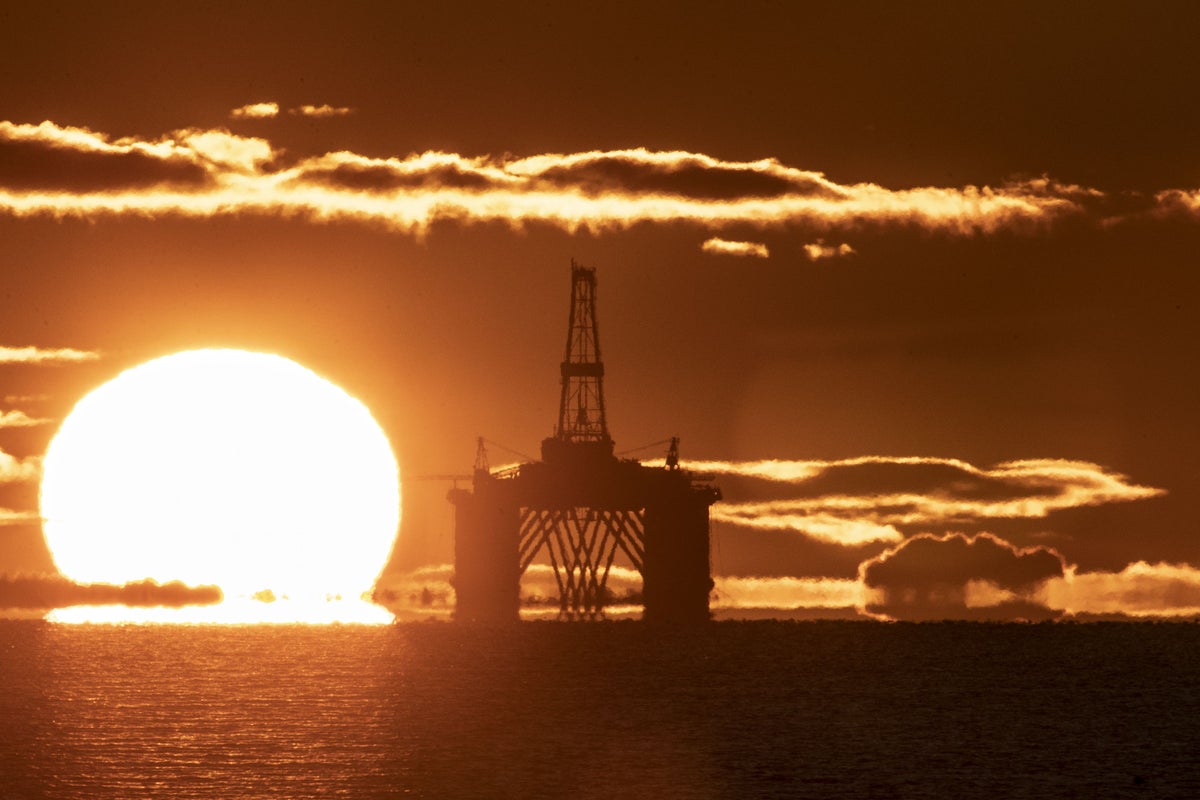
Labour MPs are among a group of more than 60 parliamentarians to have made public their opposition to the planned Rosebank oil field – with one of Sir Keir Starmer’s backbenchers urging the Government to rule against the development and take a stand “against Trump, Reform and their fossil fuel paymasters”.
Clive Lewis is one of more than 50 MPs at Westminster who have signed a pledge from campaign group Uplift to “oppose the Rosebank oil field” and instead “advocate for a properly funded just transition for oil and gas workers and communities”.
Urging the Government to reject the development, Norwich South MP Mr Lewis said: “We must stand our ground against Trump, Reform and their fossil fuel paymasters.
“Approving an enormous new oil field would mean caving in to their anti-climate, anti-renewables agenda that runs completely counter to our values and our long-term interests.”
Scottish Labour MP Chris Murray, another of the Labour MPs to have signed the pledge, said the decision on Rosebank was “an opportunity for the Government to change course”.
It comes as the UK Government continues to consider whether the development of the oil field can go ahead – with Labour now under mounting pressure after the loss of the Gorton and Denton by-election to the Greens on Thursday.
Rosebank, which lies about 80 miles west of Shetland, is the UK’s largest untapped field, containing up to an estimated 300 million barrels of oil.
Drilling there was approved by the Conservative government in 2023 but was then subject to a legal challenge in the wake of a Supreme Court ruling which said the emissions created from burning fossil fuels should be considered when granting permission for new sites.
Now the decision on whether it can proceed lies with Labour ministers – with some 16 Labour MPs having made plain their opposition to the development.
The group includes Mr Lewis, Mr Murray, former Labour shadow chancellor John McDonnell and Scottish Labour’s Brian Leishman.
Former Labour MPs Jeremy Corbyn and Diane Abbott have also signed the pledge, along with a number of Liberal Democrat and Green MPs, SNP MP Chris Law, Plaid Cymru’s Liz Saville Roberts and Paul Maskey of Sinn Fein.
In Scotland a number of Labour MSPs have signed the pledge, along with Green MSPs – including the party’s Scottish co-leader Ross Greer – and former SNP health secretary Michael Matheson.
While previous Scottish first ministers Nicola Sturgeon and Humza Yousaf made plain their opposition to Rosebank, First Minister John Swinney has insisted the Scottish Government takes a “case-by-case approach” to new oil and gas developments, stressing these should only proceed if found to be compatible with climate change targets.
Mr Lewis said opposing Rosebank would “show that a Labour Government will stand by the promises we made to the country”.
He added: “There are only so many times we can afford to make mistakes and then change course.
“With Rosebank, we have an opportunity to get it right the first time.”
Mr Murray, the Labour MP for Edinburgh East and Musselburgh, said many locals in his constituency were “deeply concerned about Rosebank and rightly so”.
He added: “Climate change is one of the reasons I came into politics, and opening new oil and gas fields is simply incompatible with our climate commitments.
“With the North Sea’s oil supply dwindling, Scotland’s energy sector must transition to clean energy, or workers risk being left behind.”
Scottish Labour MSP Mercedes Villalba, who has also signed the pledge, argued that “approving projects like Rosebank will lock us into a toxic dependence on volatile, conflict-ridden fossil fuels”.
This would create “another excuse to delay the urgent investment needed to create secure, well-paid jobs for Scotland’s workers”, she added.
Ms Villalba said: “In an increasingly uncertain world, where climate action is relegated in favour of fossil politics, the UK and Scotland must lead the way on the clean energy transition.”
Wera Hobhouse, Liberal Democrat MP for Bath, said people in her constituency and across the country “are already facing the consequences of an increasingly unstable climate”.
Highlighting the impact of flooding and “skyrocketing food prices”, she said that “climate impacts are now a daily reality”.
Ms Hobhouse said: “Extreme weather is damaging crops, putting pressure on farmers, and destroying our precious natural environment.
“We cannot ignore these warning signs.
“A massive new oil field like Rosebank would only make matters worse.
“The emissions would be enormous, locking us into decades more pollution when we should be cutting carbon and unlocking the benefits of cheap, renewable energy.”
Approving the Rosebank development would “make a mockery of Labour’s environmental promises”, she said.
A UK Government spokesperson said: “Our priority is to deliver a fair, orderly and prosperous transition in the North Sea in line with our climate and legal obligations, which drives our clean energy future of energy security, lower bills, and good long-term jobs.”


‘No intelligence suggests’ Iran planned to attack US first, Pentagon tells Congress
Defence stocks surge on Middle East tensions! HAL, BEL, Paras Defence rise up to 13% even as stock market crashes – The Times of India

Indian news channel hacked, airs pro-Pakistan slogans

Pakistan carries out precision strikes on seven militant hideouts in Afghanistan

Eye-popping rise in one year: Betting on just gold and silver for long-term wealth creation? Think again! – The Times of India

These Cheap Noise-Cancelling Sony Headphones Are Even Cheaper Right Now

-
 Politics1 week ago
Pakistan carries out precision strikes on seven militant hideouts in Afghanistan
-
Business1 week ago
Eye-popping rise in one year: Betting on just gold and silver for long-term wealth creation? Think again! – The Times of India
-
 Tech1 week ago
These Cheap Noise-Cancelling Sony Headphones Are Even Cheaper Right Now
-

 Sports1 week ago
Kansas’ Darryn Peterson misses most of 2nd half with cramping
-

 Sports1 week ago
How James Milner broke Premier League’s appearances record
-

 Entertainment1 week ago
Viral monkey Punch makes IKEA toy global sensation: Here’s what it costs
-

 Entertainment1 week ago
Saturday Sessions: Say She She performs "Under the Sun"
-
Sports1 week ago
Mike Eruzione and the ‘Miracle on Ice’ team are looking for some company