

Business
Tribunal upholds decision in LDI case | The Express Tribune


ISLAMABAD:
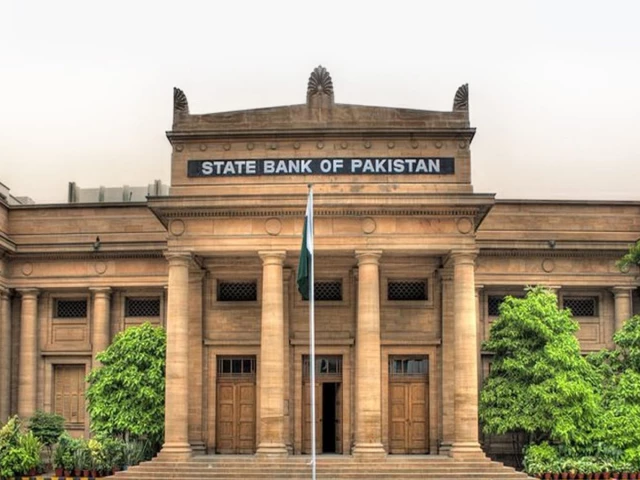
The Competition Appellate Tribunal has upheld the Competition Commission of Pakistan’s (CCP) decision to penalise Pakistan Telecommunication Company Limited (PTCL) and other Long Distance International (LDI) operators for entering into an anti-competitive International Clearing House (ICH) agreement. These companies have been directed to deposit the fine within 30 days.
The total turnover of PTCL and other LDI operators amounts to Rs11 billion and they have been directed to deposit 2% of the turnover within a month.
While upholding the CCP’s findings, the tribunal reduced the penalty from 7.5% to 2% of the turnover generated from ICH-related activity. It said that if the operators failed to deposit the penalty within 30 days, it would automatically reinstate the original 7.5% fine.
The ICH agreement, signed in 2012, routed all incoming international calls through a single gateway operated by PTCL as the head of LDI consortium. All other LDI operators assigned their termination rights to the consortium, and traffic and revenues were shared on a quota basis rather than through competition.
The arrangement fixed termination rates at around 8.8 US cents per minute, up from about 2 cents earlier, effectively eliminating competition and reducing consumer choice.
Data from the Pakistan Telecommunication Authority (PTA) showed that the incoming call volume dropped 70%, from 1.9 billion minutes in September 2012 to 579 million minutes in February 2013. Despite the sharp decline in traffic, the LDI operators’ revenue surged 308%.
In April 2013, the CCP declared the ICH a cartel arrangement involving price fixing and market sharing. It imposed penalties of 7.5% of the annual turnover (approximately Rs11 billion) on each LDI operator and directed the PTA to restore competition to pre-ICH levels. The ICH policy was subsequently withdrawn in June 2014.
During proceedings, the LDI operators claimed they entered into the ICH agreement on directives from the Ministry of Information Technology (MOIT) and the PTA, arguing that non-compliance would have risked the loss of their licences. However, the tribunal found no genuine state compulsion and ruled that records showed that the LDI operators had lobbied themselves for the ICH policy.
The MOIT had no authority under the Telecom Act, 1996 to issue directives to the operators and its powers were limited to issuing policy directives to the PTA.
The tribunal noted that even if the directives had been given, the operators were fully aware that the ICH violated competition laws, as evidenced by their earlier application for exemption under Section 5 of the Competition Act. The agreement, it held, restricted competition, prevented new entrants and clearly fell within the CCP jurisdiction.
The ruling reaffirmed that the Competition Act, 2010 applies to all undertakings, including the regulators and government bodies. The tribunal stated that even the PTA could be held liable, if found guilty of restricting or reducing competition.
PTCL had argued that the CCP should have conducted an inquiry before issuing a show-cause notice. The tribunal rejected this, saying that an inquiry is not necessary in every case, particularly where facts are admitted. The LDI operators had already acknowledged the existence of the ICH agreement, which was the root cause of the violation.




Citigroup initiated its coverage of Pine Labs with a buy rating and a target price of Rs 235. Analysts said that India’s payments fintech is on a monetization improvement trajectory, with leading players increasingly entrenched in respective core areas of leadership. While product, services and distribution build-outs into comprehensive plays will continue across the fintech ecosystem, large players don’t face significant disruption risks owing to: Across-the-board profitability push; rising regulatory costs and compliance requirements; and stickiness borne out of integration into enterprise business workflows. Further, while consumer payments have seen flux in competitive positioning in the past decade, there have been relatively fewer changes in positioning and leadership within segments in merchant payments.BoFA Securities has initiated its coverage of Groww (Billionbrains Garage Ventures) with a buy rating and a target price of Rs 235. Analysts said Groww is well positioned to capitalize on India’s retail investing tailwinds and they expect compounded annual growth rate (CAGR) for revenue at 30% over FY26-FY28. The company produces best-in-class profitability with further upside from operating leverage. Analysts have valued Groww at 39x FY28E price-to-earnings. They, however, said that the near-term risks for the stock are a weak capital market performance and the expiry of the six-month lock-in of shares post-IPO.Elara Capital initiated its coverage of Jindal Saw with a buy rating and a target price of Rs 280. Analysts said earnings recovery is expected over FY27–FY28, driven by water, and oil & gas demand. The company’s order book is at an all-time high, indicating strong visibility. They also feel Jal Jeevan Mission spending revival to drive domestic pipe demand, while the global pipeline capex is supported by energy security concerns. Analysts also pointed out that exports are rising, with diversification reducing dependence on domestic capex. The company’s capacity expansion to support margins and operating leverage. They feel the stock’s valuations are attractive, with rerating potential driven by execution and growth.Jefferies has downgraded Indus Towers to underperform from buy with a target price cut to Rs 375 from Rs 530. Analysts downgrade the stock due to site-renewal risks bunched up over second half of 2026 (H2CY26) and first half of 2027 (H1CY27) which could impact revenues and growth. Elevated capex levels due to higher growth and maintenance capex which will impact earnings growth as well free cash flow and payouts. They cut Indus Towers’ revenue and profit after tax (PAT) estimates by 2-6% to factor renewal risks post which stock offers 3% EPS growth and a 4% yield. They said risks on growth outlook should weigh on re-rating potential too.Kotak Institutional Equities has a buy on Ujjivan SFB with a target price of Rs 72. Analysts said that the RBI has returned Ujjivan SFB’s application for a universal bank license, citing need for further loan portfolio diversification. While the outcome is clearly not favourable, the regulator has flagged no concerns relating to governance, compliance or operational soundness. Analysts said their investment thesis did not factor in any benefit from a potential transition to a universal bank. Hence, they maintained a buy but remained watchful of any sharp changes in asset mix strategy in response to RBI’s feedback.(Disclaimer: Recommendations and views on the stock market, other asset classes or personal finance management tips given by experts are their own. These opinions do not represent the views of The Times of India)

The better-than-expected GDP data comes as Asian countries have been hit hard by the impact of the conflict.
Source link
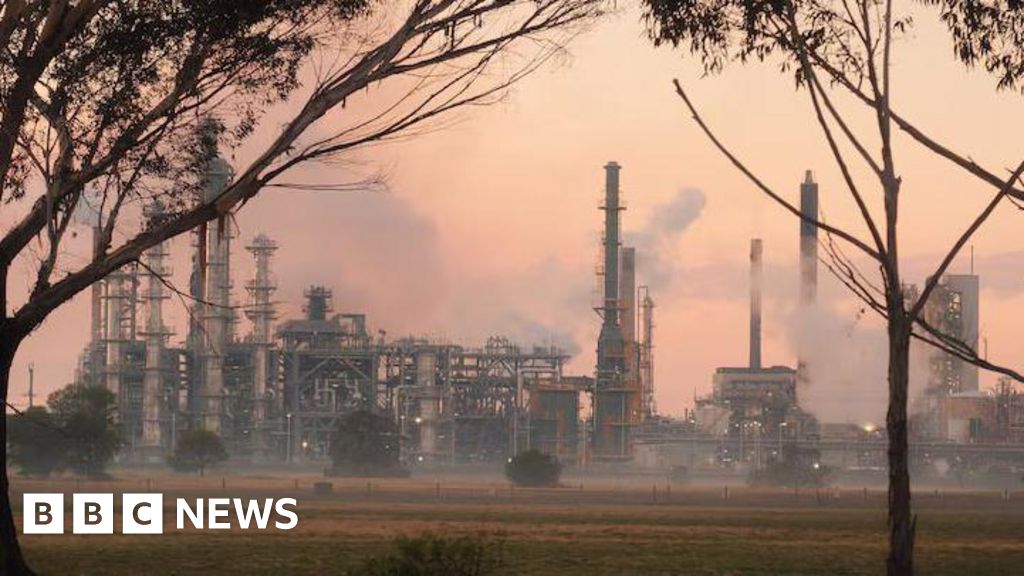
The fire has deepened fears over the nation’s petrol supplies amid a global crunch.
Source link


No vote after NCAA urges further study of age eligibility changes to college sports

Taylor Swift on bond with Dakota Johnson: ‘Curious’
Pine Labs, Groww & more: Top stocks to watch on April 16 – The Times of India

-

 Fashion1 week ago
India’s exports face reset as EU links trade to carbon metrics: EY
-

 Entertainment1 week ago
Lamar Odom shocking response to Khloé Kardashian account of his overdose
-

 Entertainment1 week ago
Queen Elizabeth II emotional message for Archie, Lilibet sparks speculation
-

 Tech1 week ago
Azure customers up in arms over ‘full’ UK South region | Computer Weekly
-

 Tech1 week ago
As the Strait of Hormuz Reopens, Global Shipping Will Take Months to Recover
-

 Fashion1 week ago
CII submits 20-pt agenda to Indian govt to back firms hit by Iran war
-

 Tech7 days ago
This AI Button Wearable From Ex-Apple Engineers Looks Like an iPod Shuffle
-

 Politics6 days ago
Indian airlines hit hardest after Dubai limits foreign flights until May 31