

Business
True cost of becoming a mum highlighted in new data on pay


 Femilola Miller
Mums in England face a “substantial and long-lasting reduction” in earnings after having children, according to new findings from the Office for National Statistics (ONS).
Five years after having their first child, mums’ earnings drop by an average of £1,051 a month compared with their salary one year before having a child.
Mums’ earnings continue to be affected after the births of second and third children.
Rachel Grocott, chief executive of campaign group Pregnant Then Screwed, called the findings “completely abhorrent” and said the impact of the motherhood penalty is “not just unfair – it’s avoidable”.
In the first dataset of its kind, the ONS has looked at the earnings and employment status of mums after having a first, second and third child over an eight-year period from April 2014 to December 2022.
Mums earn £313 a month less on average five years after the birth of their second child, and £689 a month less five years after their third child. Each figure is compared to their salary one year before each birth.
Mums suffer “maximum losses” in the first year after their children are born, when they are more likely to take extended parental leave than dads.
When compared with a mum’s earnings in the year before the birth of a child, the total loss in earnings over five years was:
- £65,618 for a first child
- £26,317 for a second child
- £32,456 for a third child
Femilola Miller, from London, has three children aged seven, five and three.
Before starting a family, she and her husband David had similar salaries, but he now earns £55,000 a year more than her.
Both she and her husband took several months off work after the birth of each child, “but every time my husband went back to work, he got a promotion”.
“Mothers are not compensated even if they return to work full time and are dedicated to their career.”
She believes the motherhood penalty is “engrained in society” and some people enforce the stereotypes “without even realising”, she says, remembering several comments people had made to her about whether she would return to work after having children.
“It was not even a question about what was going to happen to David’s career,” she says.
“I had a career before I had children and I want to carry on working full-time.”

 Femilola Miller
Although the gender pay gap is slowly reducing in the UK, women working full time still earn 7% less than men.
Joeli Brearley, founder of Pregnant Then Screwed, said the motherhood penalty was “a perfect storm of bias, outdated legislation and cultural norms”.
She added “the vast majority” of the gender pay gap is linked to the motherhood penalty, which can be attributed to a number of factors, including:
- unaffordable childcare costs for some families
- an unbalanced parental leave system
- some jobs not offering flexible and part-time working hours
- pregnancy and maternity discrimination
The government has introduced 30 hours a week of funded childcare for working parents and is undertaking a review of parental leave.
New laws also came into force in England, Wales and Scotland last year which give women greater protection against redundancy while pregnant or on maternity leave.
But, according to research from Pregnant then Screwed and Women in Data, up to 74,000 new or expectant mums lose their jobs each year due to pregnancy and maternity discrimination.
 Evie Jay
Evie, 33, from Newcastle, says she feels as though her career is “on hold” until her daughter goes to school.
Evie initially reduced her hours at work when three-year-old Ellie was born, but now works 35 hours a week in the NHS.
She wants to retrain as a therapist, but doing so would mean she could no longer work from home, which isn’t compatible with her childcare arrangements.
She described becoming a mum as “the best thing that’s happened to me, but career-wise, it has been a punishment”.
“You’re expected to be a parent like you don’t work, but work like you haven’t got kids. You can’t win.”
Emma Potts, manager of Market Place Cafe in Stoke-on-Trent, says it is “a really difficult balance” for small businesses like hers to accommodate flexible working, part-time hours or maternity cover.
“We always try to be as supportive as possible, but the reality is that in a small team, flexibility is much harder to manage.”
If staff members were to reduce their hours to part-time, “it would cause real issues”, she says.
“Ultimately, smaller businesses like ours don’t have the luxury of large teams or spare capacity.
“Every shift matters, every deadline matters, and every absence makes a difference.”
Katie Guild, co-founder of Nugget Savings, a business that helps new and expectant parents with financial planning, says the impact of having children can be “shocking” on finances, but there are a number of things parents can do.
This includes checking which benefits you are entitled to and ensuring your employer still contributes to your pension based on your salary as it was before maternity leave.
“Unfortunately, a lot of what we deal with is mothers having difficult situations with their employers and not knowing whether they have a leg to stand on legally,” she says.
“Knowing your rights is really crucial.”
Business
Hair oil, ACs, soaps become costlier: How FMCG companies are dealing with Middle East supply blow – The Times of India

Consumer goods companies in India are facing a sharp rise in input costs due to the ongoing war in the Middle East. Surging raw material prices are forcing firms to track costs on a near-daily basis, review pricing frequently, and focus on short-term decisions instead of long-term planning.As firms are struggling with volatile input costs, company executives have told ET that the sudden spike in inflation has made it harder to manage business, while also raising concerns that higher prices could hurt consumer demand. This comes at a time when consumption had started improving after the government reduced goods and services tax rates on several products last September.Havells India chief executive officer Anil Rai Gupta was cited by the financial agency as saying that the company is taking a cautious approach and reviewing the situation month by month. “I have not seen this kind of price escalation in the recent past or in recent memory. Usually, inflation happens, but it is neither so steep nor spread across all product categories… consumer offtake can get affected if the price hike is too sharp.” Bajaj Consumer Care managing director Naveen Pandey said the company is closely tracking input costs and taking decisions almost daily. Speaking during the company’s earnings call last week, he said costs across the business have gone up between 20% and 60%. He added that the war has created “extreme volatility” in the prices of light liquid paraffin and packaging materials. At the same time, prices of mustard and copra have not fallen as expected and are still at pre-war levels. The company is working on cutting costs across its operations.Industry executives said the war has pushed up commodity prices and crude-linked products, increased freight costs, and made imports more expensive due to the fall in rupee. They added that even after a ceasefire, prices have not come down, and uncertainty remains over whether the conflict could start again.In the past month, companies have already raised prices in several categories, including air-conditioners, refrigerators, soaps, detergents, hair oil, apparel, decorative paints and footwear. Some companies have also reduced pack sizes to deal with higher costs. More price hikes are expected by the end of this month.Parle Products vice president Mayank Shah said the pressure on input costs is very high and the uncertainty is “killing”.Retailers are also seeing more careful spending. Trent Ltd, which runs Westside and Zudio stores, said in an investor presentation that while demand was steady at the start of the January–March quarter, the current situation is affecting consumer behaviour.“Consumers are spending with caution, resulting in moderation of discretionary spending on the back of continuing macro uncertainties and potential increase in cost of living. Structurally the demand levels and the underlying market opportunities remain strong. However, the duration and intensity of disruptions in the Middle East along with its second order effect on supply chain, commodity prices and inflation in general has potential implications for near term demand,” the company said.AWL Agri Business executive deputy chairman Angshu Mallick said the company has already increased edible oil prices by Rs 7–10 per kg to pass on higher freight costs. “Being a staples company, we hike or reduce prices immediately. As we are in basic necessities, the volume impact is usually lower,” he said.Meanwhile, the Middle East conflict is inching closer towards the two month mark. The conflict began back on February 28, when the US and Israel launched joint strikes on Iran. In retaliation, Tehran choked the crucial Strait of Hormuz, a pipeline that carries 20% of global energy supplies, straining flow across the globe.
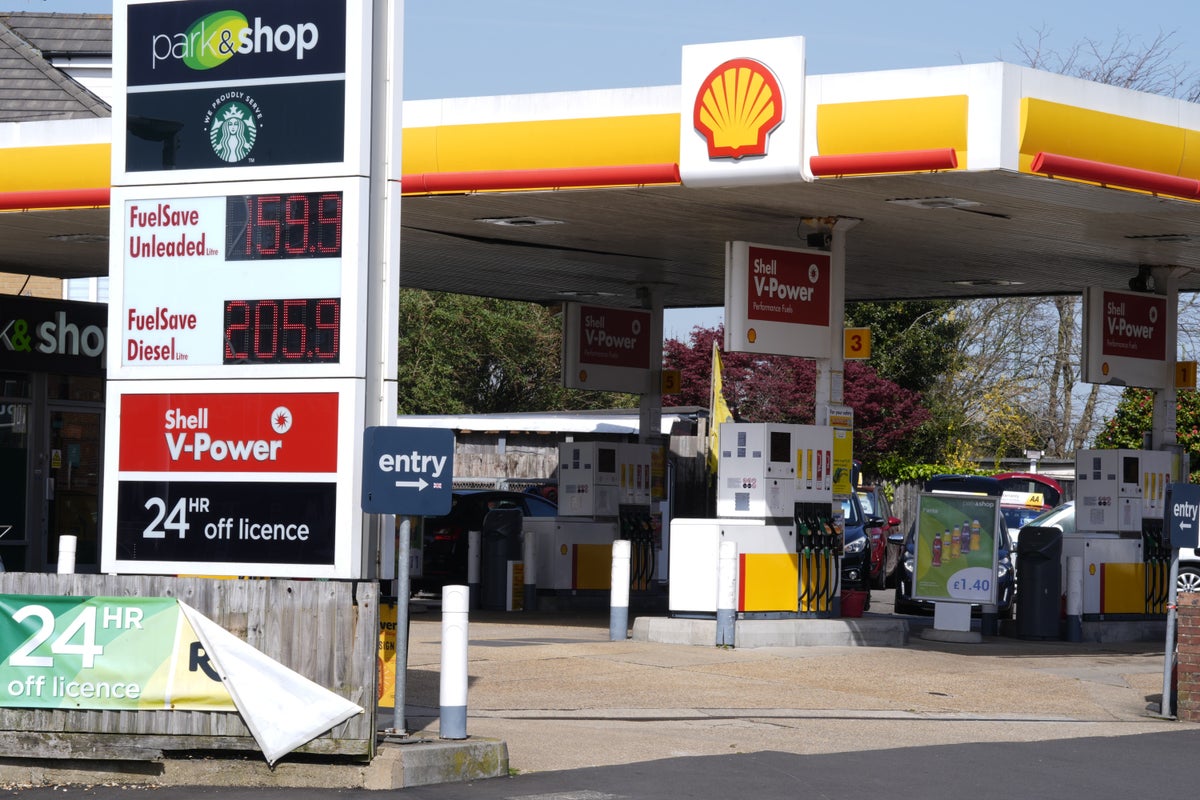
UK retail sales returned to growth last month as they were pushed higher by motorists stocking up on fuel as prices shot higher because of the Iran war, according to official figures.
The Office for National Statistics (ONS) said the total volume of retail sales, which measures the quantity bought, rose by 0.7% in March.
It compared with a 0.6% fall in February, which was revised slightly lower.
The latest reading was also stronger than expected, with economists having predicted a 0.1% dip for the month.
Statisticians said March’s increase was particularly driven by a spike in demand for fuel, which saw sales volumes jump by 6.1% for the month, the highest level since April 2021.
They indicated that this was especially linked to a short period, of less than a week, of particularly elevated sales as unfolding geopolitical events in the Middle East caused a significant rise in prices at the pump.
The value of sales, the amount of money spent, for fuel was up 11.6% amid the jump in petrol and diesel prices.
Recent data from the RAC shows that petrol prices have risen by 18.5% to 157.34 pence per litre, as recorded on Wednesday.
Meanwhile, diesel is up 33.4% to an average of 189.88 pence per litre.
Elsewhere, clothing stores also had a strong month, with sales volumes across the category rising by 1.2% in March amid a boost from better weather conditions.
Technology retailers also saw sales grow after they benefited from new products launches.
However, food sales were weaker, slipping by 0.8% for the month.
The ONS said overall retail sales volumes are up 1.6% for the first three months of 2026, as the industry was also supported by positive growth in January.
ONS senior statistician Hannah Finselbach said: “Retail sales rose in the three months to March, with commercial art galleries doing well earlier in the quarter and sales in beauty products stores rising as retailers reported launching new collections.
“Motor fuel sales were up on the quarter, with retailers commenting that many motorists had been filling up their tanks in March following the start of conflict in the Middle East.”
Elliott Jordan-Doak, senior UK economist at Pantheon Macroeconomics, said: “The first batch of hard data on consumers’ spending since the start of the Iran war was better than expected.
“Granted, stocking up on motor fuels drove headline sales higher, but even excluding petrol retail sales volumes nudged up showing that households largely brushed off the initial shock of higher energy prices.”

Oil prices rose on Friday morning over fears of renewed military escalation in the Middle East after Iran released footage of commandos boarding a cargo ship in the Strait of Hormuz and on reports that Tehran’s air defences had engaged “hostile targets”.
Brent crude futures rose $1.23, or 1.17%, to $106.3 a barrel, while West Texas Intermediate futures were up $1.07, or 1.12%, at $96.92.
Both benchmark contracts settled up more than 3% on Thursday and jumped $5 a barrel after reports that air defences were engaging targets over Tehran and of a power struggle between Iran’s hardliners and moderates.
US President Donald Trump said that Iran may have loaded up its weaponry “a little bit” during the two-week ceasefire, but added that the U.S. military could eliminate it in just a single day.
The ceasefire phase is increasingly looking like a preparatory phase for war, Haitong Futures said in a report.
If US-Iran talks fail to make key progress by the end of April and fighting resumes, oil prices could climb to new highs for the year, it added.
Iran on Thursday posted video of commandos in a speedboat storming a huge cargo ship after the collapse of peace talks, underlining its grip over the Strait of Hormuz through which 20% of global oil and gas usually flows.
As investors and governments around the world look for an enduring peace, Trump said he would not set a “timetable” for ending the conflict with Iran and that he wanted to make “a great deal.”
“Don’t rush me,” he said when asked how long he was willing to wait for a long-term peace deal with Iran.
Prolonged disruptions in the Strait of Hormuz could push global crude and refined-product inventories below five-year seasonal lows by late May or early June, adding a supply-risk premium back into oil prices, said Mingyu Gao, chief researcher for energy and chemicals at China Futures.
Trump also announced in a social media post on Thursday that Israel and Lebanon had agreed to extend their ceasefire by three weeks after a high-level meeting between representatives of both countries in the White House Oval Office.
Before that announcement, Israel warned that it was ready to restart attacks on Iran.


North India cotton yarn steady despite continued push by spinners

The WIRED Gear Team’s Tips on Ways to Save Money

Bangladesh, EU sign Partnership and Cooperation Agreement

-

 Fashion1 week ago
France’s LVMH Q1 revenue falls 6%, shows resilience amid Iran war
-

 Entertainment1 week ago
Is Claude down? Here’s why users are seeing errors
-

 Sports1 week ago
PSL 11: Peshawar Zalmi win toss, opt to field first against Quetta Gladiators
-

 Tech1 week ago
CYBERUK ’26: UK lagging on legal protections for cyber pros | Computer Weekly
-
 Business1 week ago
PepsiCo earnings beat estimates as North American food business improves
-

 Sports5 days ago
WWE WrestleMania 42 Night 2: Live match results and analysis
-

 Fashion1 week ago
Raymond unveils luxury Chairman’s Collection Store in Mumbai
-

 Sports5 days ago
NCAA men’s gymnastics championship: All-time winners list