

Business
Trump affirms Gaza ceasefire remains intact despite fresh Israeli airstrikes – SUCH TV


The strikes, which targeted multiple Hamas sites in southern Gaza, came after Israel accused the group of attacking its troops in “a clear breach” of the nine-day-old ceasefire.
When asked by reporters whether the truce was still valid, Trump replied, “Yes, it is.”
The president, who played a key role in brokering the agreement, suggested that the alleged attacks may not have been ordered by Hamas leadership but rather carried out by “some rebels within.”
“We want to ensure peace with Hamas,” Trump said. “It will be managed firmly but fairly.”
According to Gaza’s civil defence agency, operating under Hamas authorities, at least 45 people were killed in the latest airstrikes. Hospitals across Gaza confirmed the death toll to AFP.
Israel’s military said it was reviewing the reports of civilian casualties, reiterating that it had “reimposed enforcement of the ceasefire” while warning it would “respond decisively to any breach.”
A Hamas official denied the allegations, accusing Israel of fabricating excuses to reignite the conflict.
An Israeli security official also said that aid deliveries into Gaza had been temporarily halted following the alleged ceasefire violations a move that humanitarian agencies fear could worsen the already severe crisis in the territory.
Israel repeatedly cut off aid to Gaza during the war, exacerbating dire humanitarian conditions, with the United Nations saying it caused a famine there.
Blood has returned
The ceasefire, which began on October 10, halted more than two years of devastating war between Israel and Hamas.
The deal established the outline for hostage and prisoner exchanges, and proposed an ambitious roadmap for Gaza’s future. But it has quickly faced challenges to its implementation.
Israel said on Sunday that two of its soldiers died in clashes in the city of Rafah.
“Earlier today, terrorists fired anti-tank missiles and opened fire on IDF (Israeli army) forces,” in Rafah, the military said in a statement. “The IDF responded with air strikes by fighter jets and artillery fire, targeting the Rafah area.”
Palestinian witnesses told AFP clashes erupted in the southern city in an area still held by Israel.
One witness, a 38-year-old man who asked not to be named, said that Hamas had been fighting a local Palestinian gang known as Abu Shabab but the militants were “surprised by the presence of army tanks”.
“The air force conducted two strikes from the air,” he added.
Abdullah Abu Hasanin, 29, from Al‑Bureij camp in central Gaza where Israel launched strikes, said: “The situation is as if the war has returned anew.
“We had hoped the agreement would hold, but the occupation respects nothing — not an agreement, not anything.”
He said he had rushed to the site of the bombing to help, adding: “The scene is indescribable. Blood has returned again.”
Security illusion
AFP images from Bureij showed Palestinians running for cover from the strikes, as well as the dead and wounded arriving at Deir al-Balah hospital, accompanied by grieving relatives.
Defence Minister Israel Katz warned Hamas would “pay a heavy price for every shot and every breach of the ceasefire”, adding Israel’s response would “become increasingly severe”.
A statement from Izzat Al-Rishq, a member of Hamas’s political bureau, reaffirmed the group’s commitment to the ceasefire.
Israel, it said, “continues to breach the agreement and fabricate flimsy pretexts to justify its crimes”.
Hamas’s armed wing insisted on Sunday that it had “no knowledge” of any clashes in Rafah.
On Sunday, US Vice President JD Vance called on Gulf Arab countries to establish a “security infrastructure” to ensure that Hamas disarmed — a key part of the peace deal.
Under Trump’s 20-point plan, Israeli forces have withdrawn beyond the so-called Yellow Line. That leaves them in control of around half of Gaza, including the territory’s borders but not its main cities.
Bodies returned
Hamas in turn has released 20 surviving hostages and is in the process of returning the remaining bodies of those who have died.
Israel returned the bodies of 15 Palestinians to Gaza on Sunday, bringing the total number handed over to 150, the health ministry in the Hamas-run territory said.
Israel has linked the reopening of the Rafah crossing — the main gateway into Gaza — to the recovery of all of the deceased.
Hamas has said it needs time and technical assistance to recover the remaining bodies from under Gaza’s rubble.
The war, triggered by Hamas’s October 7, 2023 attack on Israel, has killed at least 68,159 people in Gaza, according to the health ministry in the Hamas-run territory, figures the United Nations considers credible.
The data does not distinguish between civilians and combatants but indicates that more than half of the dead are women and children.
Hamas’s 2023 attack on Israel resulted in the deaths of 1,221 people, mostly civilians, according to an AFP tally based on official Israeli figures.

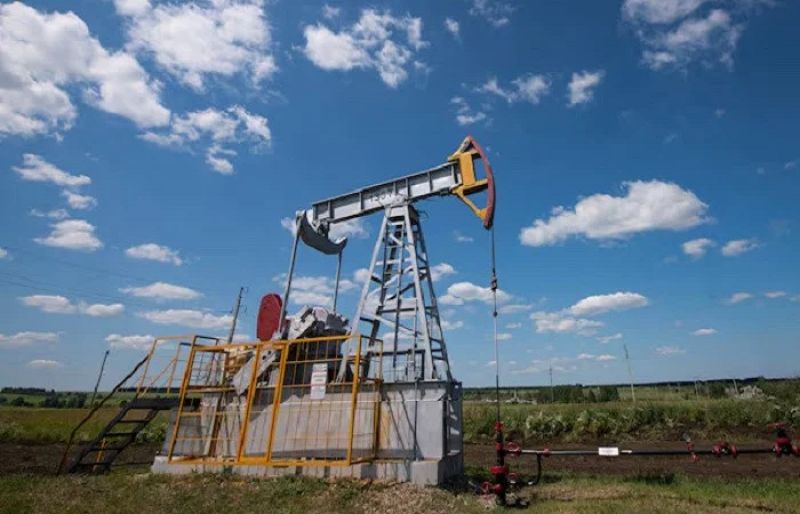





Gold prices in Pakistan have risen again at the start of the business week after several days of decline, according to the All Pakistan Bullion Market.
The price of gold per tola increased by Rs 800, reaching Rs 493,962.
Similarly, the price of 10 grams of gold rose by Rs 686 to Rs 423,492.
In the global market, gold also recorded an increase of $8 per ounce, reaching $4,716.
Experts say global economic uncertainty, currency fluctuations, and investor preference for safe-haven assets are driving the upward trend in gold prices.
They add that changes in international markets directly impact Pakistan’s local bullion rates, leading to continued fluctuations in domestic prices.

Now one of the biggest sportswear firms, Anta’s rise follows a playbook adopted by many Chinese giants.
Source link
Business
Gold price prediction today: Will gold prices continue to be volatile? Key levels to watch out for April 27, 2026 week – The Times of India

Gold price prediction today: Gold prices will closely track movements on the rate decisions by several central banks, including the US Federal Reserve, this week, says Manav Modi, Senior Analyst, Commodity Research at Motilal Oswal Financial Services Ltd.Gold is currently consolidating after sharp swings in a broad range, indicating a pause rather than a reversal. Price action shows a higher-high structure intact, but the recent sideways movement suggests indecision near the upper supply zone around 158,000–160,000. The formation resembles a short-term flag/triangle continuation pattern, where a breakout on either side will define the next directional move. Volume has tapered slightly, reinforcing the consolidation narrative.Gold prices recently moved from the upper band toward the mid-band (20 DMA), and are now attempting to stabilize. The bands have started to contract, signaling a potential volatility expansion ahead. Sustaining above the mid-band (~150,500–151,000 zone) keeps bullish bias intact, while a breakdown below this could trigger a deeper mean reversion toward the lower band.For the week, immediate support for gold prices is placed at around Rs 150,500, which is followed by stronger support near Rs 148,500. On the upside, the resistance stands at around Rs 155,500, and after that the key supply zone is at Rs 158,000. A decisive close for gold above Rs 158,000 levels can then resume the broader uptrend. However, a break in gold prices below levels of Rs 148,500 may shift the momentum to bearish in the near term.The economic docket is filled with data points and events this week as the focus will be on FED, BOJ, ECB and ECB policy meetings. US consumer confidence, GDP, inflation and durable goods orders data will also be in radar.(Disclaimer: Recommendations and views on the stock market, other asset classes or personal finance management tips given by experts are their own. These opinions do not represent the views of The Times of India)


SBP raises policy rate by 100bps to 11.5% as inflation risks mount

Finalise Bangladesh’s textile-RMG circular economy strategy: Experts
Gold prices rise rebound in Pakistan after recent decline – SUCH TV

-

 Sports1 week ago
WWE WrestleMania 42 Night 2: Live match results and analysis
-

 Sports1 week ago
NCAA men’s gymnastics championship: All-time winners list
-

 Fashion1 week ago
UK’s Sosandar returns to profitability amid robust FY26 performance
-

 Politics6 days ago
UK’s Starmer seeks to deflect blame over Mandelson appointment
-
 Business7 days ago
How Trump’s psychedelics executive order could unlock stalled cannabis reform
-

 Entertainment7 days ago
Lee Anderson, Zarah Sultana kicked out of UK Parliament for calling PM ‘liar’
-
 Business1 week ago
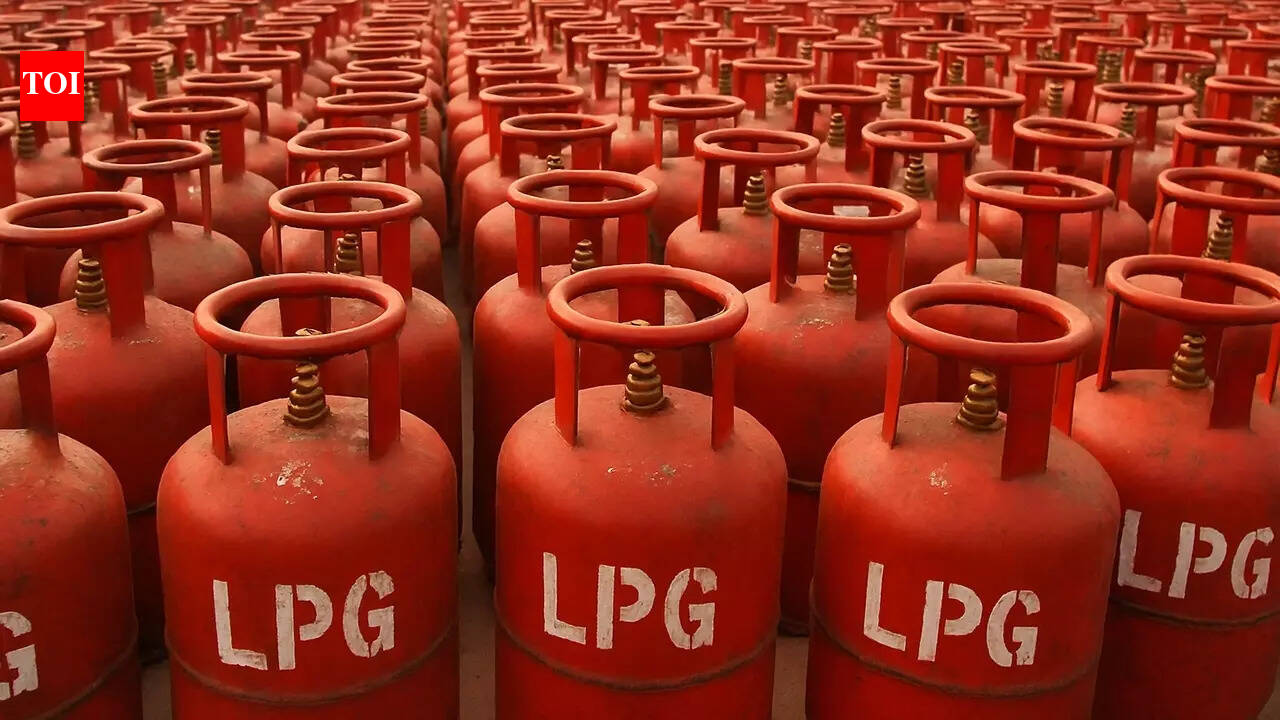
No fuel shortage: Govt assures 100% domestic LPG, PNG, CNG supply amid Hormuz energy crunch – The Times of India
-
 Business6 days ago
Us-India Trade Talks: US–India trade deal: Where do talks stand & what to expect – explained – The Times of India