

Politics
Trump and aides offer shifting reasons for Iran war

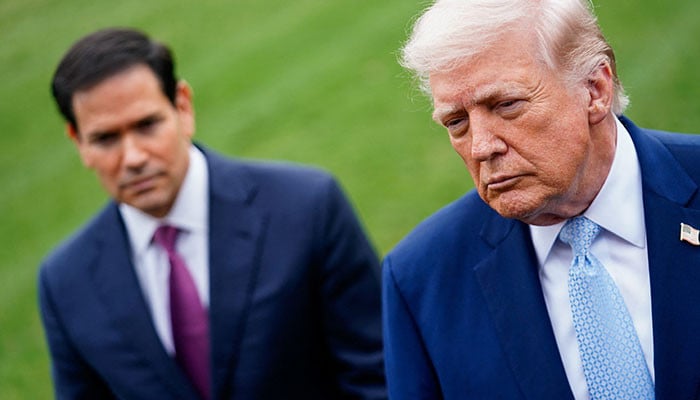
- Early calls from US include urging Iranians to topple their govt.
- Goals range from weakening Iran’s military to ending missile threats.
- Timeline estimates vary from under four weeks to indefinite duration.
WASHINGTON: President Donald Trump and his top officials have offered shifting objectives and reasons for the US-Israeli war on Iran, which critics say shows a lack of planning for the conflict and its aftermath.
Stated objectives and expected timeline have varied, including toppling Iran’s government, weakening Iran’s military, security and nuclear capabilities and its regional influence, as well as supporting Israeli interests.
Here is how Trump described his war goals and timeline:
February 28: Calls for Iranians to topple their govt
The Iranian people should “take over” governance of their country, Trump said in a video on social media as the US and Israel launched their attacks. “It will be yours to take,” he added. “This will be probably your only chance for generations.”
Trump described the attacks as “major combat operations”.
February 28: Weaken Iran’s military, influence
Trump said Washington would deny Iran the ability to have a nuclear weapon, although Tehran has insisted its nuclear programme is for peaceful purposes. Iran does not have nuclear weapons while the United States does. Israel is also widely believed to be the only Middle Eastern country with nuclear weapons.
Trump insisted he would end what he described as Tehran’s ballistic missile threat. “We’re going to destroy their missiles and raze their missile industry to the ground,” he said. “We’re going to annihilate their navy.”
Trump claimed Iran’s long range missiles “can now threaten our very good friends and allies in Europe, our troops stationed overseas, and could soon reach the American homeland.”
His remarks echoed the case of President George W. Bush for the Iraq war, which had false claims. Neither experts nor US intelligence support Trump’s assertions and both assess that Iran’s ballistic missile programme was years from threatening the US homeland.
March 2: Shifting timeline
Trump said the war was projected to last four to five weeks but could go on longer.
“We’re already substantially ahead of our time projections. But whatever the time is, it’s okay. Whatever it takes,” Trump said at the White House. In a social media post, Trump said there was a “virtually unlimited supply” of US munitions and that “wars can be fought ‘forever,’ and very successfully, using just these supplies.”
In a notification to Congress, Trump provided no timeline. Trump earlier told the Daily Mail the war could take “four weeks, or less,” then told The New York Times four to five weeks and subsequently said it could take longer.
March 2: Rubio says US attacked Iran because Israel did
Secretary of State Marco Rubio told reporters Israel’s determination to attack Iran forced Washington to strike.
“We knew that there was going to be an Israeli action, we knew that that would precipitate an attack against American forces, and we knew that if we didn’t preemptively go after them before they launched those attacks, we would suffer higher casualties,” Rubio said.
March 3: Trump contradicts Rubio
Trump said he ordered US forces to join Israel’s attack on Iran because he believed Iran was about to strike first.
“I might have forced their (Israel’s) hand,” Trump said. “If we didn’t do it, they (Iran) were going to attack first.”
March 4: Call to ‘destroy’ security infrastructure
Pentagon chief Pete Hegseth said the goal was to “destroy Iranian offensive missiles, destroy Iranian missile production, destroy their navy and other security infrastructure.”
March 6: ‘Unconditional surrender’ call
“There will be no deal with Iran except UNCONDITIONAL SURRENDER,” Trump wrote on social media.
March 8–11: Just the start but also ‘pretty much complete’
Hegseth told CBS News in an interview aired March 8 strikes on Iran were “only just the beginning”.
A day later, Trump told the same network “I think the war is very complete, pretty much.”
“We’ve already won in many ways, but we haven’t won enough,” Trump told reporters later on the same day. When asked if the war was beginning or complete, he said: “Well, I think you could say both.”
On March 11, Trump again said he thought the US had won but: “We’ve got to finish the job.”
March 13: Softens call for internal uprising
In a March 13 interview, Trump told Fox News the war will end “when I feel it in my bones”.
Trump softened his call for Iranians to topple their government. “So I really think that’s a big hurdle to climb for people that don’t have weapons,” Trump said.
March 19: Hegseth says no time frame
Hegseth said Washington was not setting a time frame for the war and Trump would decide when to stop.
“We wouldn’t want to set a definitive time frame,” the Pentagon chief said. “It will be at the president’s choosing, ultimately, where we say, ‘Hey, we’ve achieved what we need to.’”
March 20: Trump considers winding down but no ceasefire
Trump posted on Truth Social that “we are getting very close to meeting our objectives as we consider winding down our great military efforts” in the Iran war. Earlier in the day, Trump told reporters “I don’t want to do a ceasefire” when asked about the war.
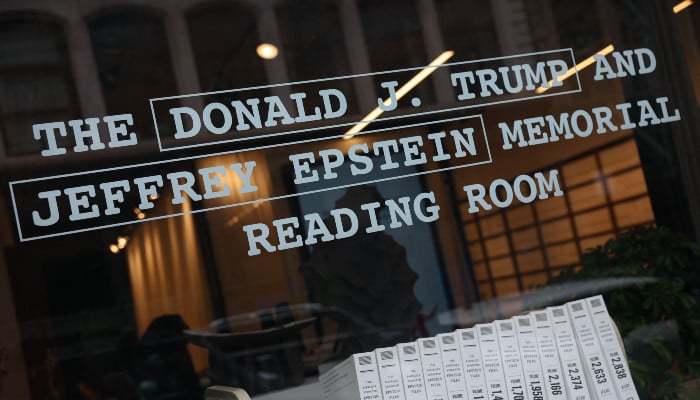
NEW YORK: A US transparency advocacy group has opened a temporary exhibition in New York with only one text on display: a print-out of all the files released by the US Department of Justice — roughly 3.5 million pages — relating to financier and convicted sex criminal Jeffrey Epstein.
The library, dubbed “The Donald J Trump and Jeffrey Epstein Memorial Reading Room,” has bound all the documents released under the Epstein Files Transparency Act in 3,437 volumes, all numbered and organised on shelves.
“The truth is hard to deny when it’s printed and bound for you to see,” reads the website for the Institute of Primary Facts, the Washington-based nonprofit behind the display.
Those interested in seeing the files at the library in Tribeca can do so by registering online.
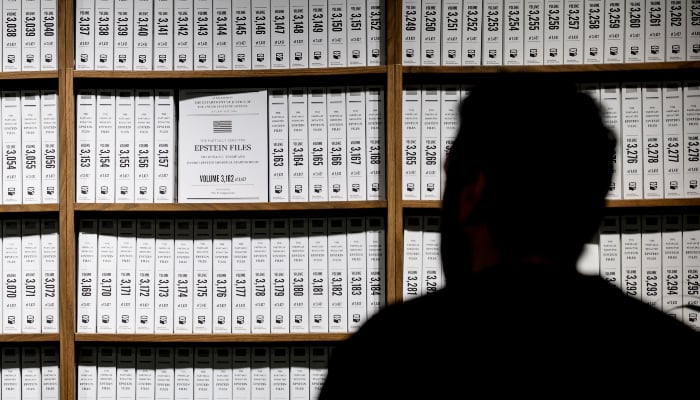
However, due to errors by the Department of Justice in failing to redact the names of some of the victims included in the documents, the general public is not allowed to consult the files. The exhibit offers exceptions for some professionals like journalists and lawyers.
The pop-up also has a display on the longstanding relationship between President Donald Trump and Epstein, who died in federal custody in 2019 while awaiting trial on sex trafficking charges involving minors.
The pair were friends for decades before they reportedly fell out in 2004 over a property deal, after which Trump reportedly denounced his former ally. He has repeatedly denied any wrongdoing after showing up repeatedly in the so-called “Epstein Files.”
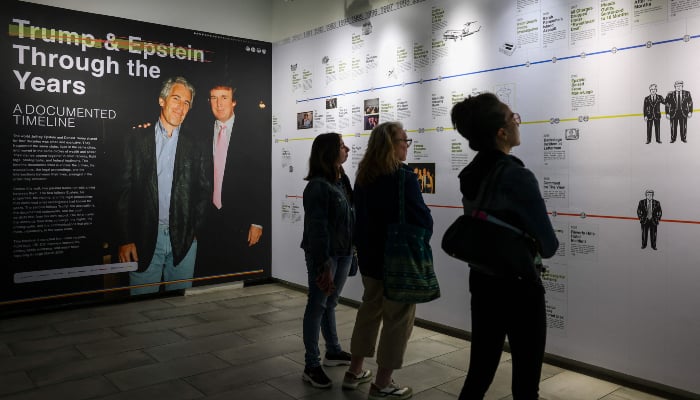
“We’re a pro-democracy organisation, with the goal of educating the public using these kinds of sort of pop-up museums and other in-real-life experiences to help people understand the corruption in the United States, the dangers to democracy,” David Garrett, one of the creators behind the project, told AFP.
Garrett said he believes “there needs to be real public outcry” about how the Trump administration has handled the document release, with many accusing justice officials of covering up Trump’s ties to Epstein.
“And what we attempted to do here was to create, or help to create public outcry to have real accountability,” he added.
The exhibit is open to the public until May 21.
- More than 60 Labour MPs reportedly call on UK PM to step down.
- Four govt aides resign amid growing pressure on Starmer leadership.
- PM vows to “prove doubters wrong” after disastrous local election losses.
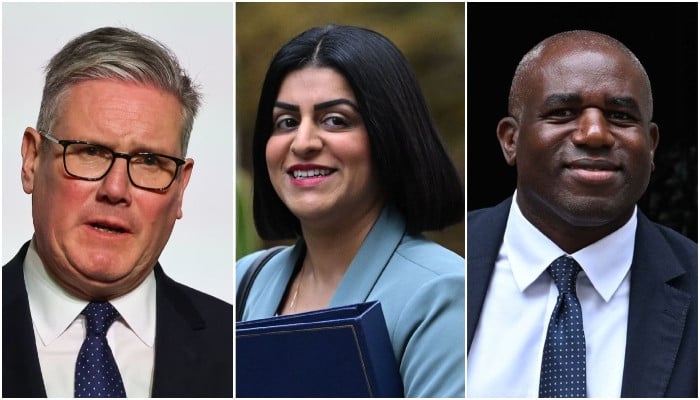
British Prime Minister Keir Starmer has been told by UK Interior Minister Shabana Mahmood, UK Foreign Secretary David Lammy, and a myriad of other senior cabinet ministers to consider setting out a timeline for his departure, The Times newspaper reported on Monday.
The statement comes as pressure continues to mount on Starmer following disastrous local and regional election results for the ruling Labour Party.
The report came as Starmer vowed to prove his doubters wrong and resist growing calls to step down after Labour suffered heavy losses in local and regional elections.
More than 60 of Labour’s 403 MPs reportedly asked him to quit, unconvinced by his pledge to make the party “bolder and better” in response to voter frustration over the pace of change.
The rebels included four government aides who resigned from their posts.
Joe Morris, who served as parliamentary private secretary to Health Secretary Wes Streeting, wrote on X that it was “now clear that the prime minister no longer has the trust or confidence of the public to lead this change”.
Another aide, Tom Rutland, who worked for Environment Secretary Emma Reynolds, said Starmer had “lost authority” among Labour MPs and “will not be able to regain it”.
Melanie Ward, an assistant to Deputy Prime Minister David Lammy, also called for a leadership change.
“Keir Starmer did important work to change the Labour Party, and governing in a time like this will never be easy,” she wrote on X.
“But the message from last week’s elections was clear; the Prime Minister has lost the confidence of the public to lead this change.”
Cabinet Office aide Naushabah Khan, who also resigned, said: “I am calling for new leadership so that we can rebuild trust and deliver the better future that the British people voted for.”
Under Labour Party rules, any challenger would need the backing of 81 MPs — 20% of the parliamentary party — to trigger a leadership contest.
Such a move, however, could open a damaging internal struggle between Labour’s left and right factions over a successor.
Starmer, 63, came to power in July 2024 after a landslide election victory ended 14 years of Conservative rule marked by austerity, Brexit infighting and criticism over the government’s Covid response.
But his premiership has been dogged by policy missteps and controversy, including fallout over the appointment and later dismissal of Peter Mandelson as UK ambassador to Washington after reports linked him to disgraced financier Jeffrey Epstein.
While Starmer has struggled to revive economic growth and ease cost-of-living pressures, he has drawn praise for resisting US President Donald Trump over Iran.
Labour’s poor showing in last week’s elections saw major gains for the hard-right Reform UK and the left-wing Greens at Labour’s expense.
The party also lost control of the devolved Welsh parliament to Plaid Cymru for the first time since its establishment in 1999 and failed to recover ground against the Scottish National Party in Scotland.
In a major speech on Monday, Starmer acknowledged public frustration with politics, the state of the country and his own leadership.
“I know I have my doubters, and I know I need to prove them wrong, and I will,” he said.
He promised “a bigger response” rather than “incremental change” on issues including economic growth, closer European ties and energy policy.
Starmer also pledged to fully nationalise British Steel and said Brexit had left Britain “poorer, weaker and less secure”.
He attacked Reform UK leader Nigel Farage as a “chancer” and “grifter” whose pro-Brexit campaign had taken Britain “for a ride”.
“If we don’t get this right our country will go down a very dark path,” he warned.
After the speech, Labour MP Catherine West, who had earlier threatened to trigger a leadership challenge, said she was instead gathering names of MPs who wanted Starmer to announce a timetable for electing a new leader in September.
Starmer vowed to fight any challenge and warned Labour would “never be forgiven” if it repeated the “chaos” of recent Conservative governments, which saw five prime ministers since 2010, including three in four months during 2022.
Health Secretary Streeting and former deputy prime minister Angela Rayner have long been seen as possible challengers, though neither commands universal support inside Labour.
Rayner, while stopping short of demanding Starmer’s resignation, said in a speech on Monday: “What we are doing isn’t working, and it needs to change.”
- Trump dismisses Tehran’s proposal as “stupid”.
- Says he didn’t even finish reading Iran’s response.
- Iran willing to give US “the nuclear dust”: Trump.
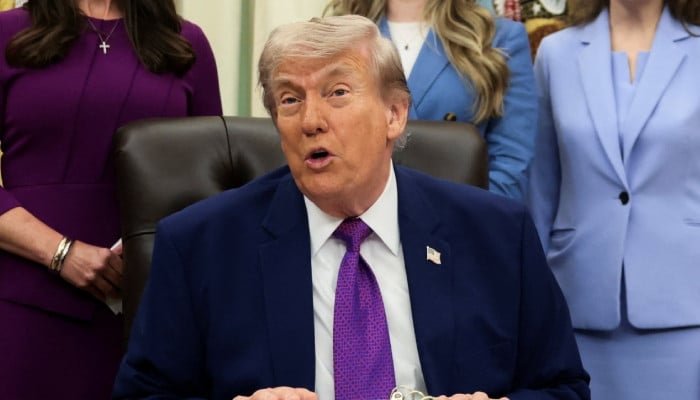
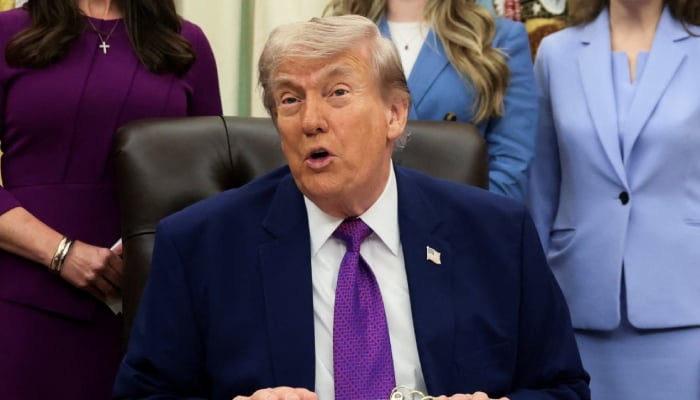
US President Donald Trump on Monday said that a ceasefire with Iran was “on life support” after he rejected Tehran’s response to a US peace proposal, fuelling concerns of a resumption of hostilities in the 10-week-old conflict that has killed thousands and halted vital energy flows.
Days after Washington floated a proposal aimed at reopening negotiations, Iran on Sunday released a response focused on ending the war on all fronts, including Lebanon, where US ally Israel is fighting Iran-backed Hezbollah.
The response had been swiftly rejected by Trump.
Asked where the Pakistan-brokered ceasefire stands, Trump told reporters: “I would call it the weakest right now, after reading that piece of garbage they sent us. I didn’t even finish reading it.”
In its response, Tehran also demanded compensation for war damage, emphasised its sovereignty over the Strait of Hormuz, and called on the US to end its naval blockade, guarantee no further attacks, lift sanctions and remove a ban on Iranian oil sales.
The US had proposed an end to fighting before starting talks on more contentious issues, including Iran’s nuclear programme.
Tehran defended its stance on Monday.
“Our demand is legitimate: demanding an end to the war, lifting the (US) blockade and piracy, and releasing Iranian assets that have been unjustly frozen in banks due to US pressure,” Foreign Ministry spokesperson Esmaeil Baghaei said.
“Safe passage through the Strait of Hormuz and establishing security in the region and Lebanon were other demands of Iran, which are considered a generous and responsible offer.”
Brent crude oil futures traded 2.7% higher at around $104 a barrel, as the deadlock left the Strait of Hormuz largely closed.
Before the war began on February 28, the narrow waterway carried one-fifth of the world’s oil and liquefied natural gas, and has since become a central pressure point in the conflict.
Disruption caused by the near-closure of the strait has forced oil producers to cut exports, and Opec oil output dropped further in April to the lowest in more than two decades, a Reuters survey showed on Monday.
Trickle of shipping through Hormuz
Traffic through the Strait of Hormuz is at a trickle compared with before the war. Shipping data on Kpler and LSEG showed that three tankers laden with crude exited the waterway last week, with trackers switched off to avoid Iranian attack.
Sporadic flare-ups around the strait in recent days have tested a ceasefire that has paused all-out warfare since it took effect in early April.
In the United States, surveys show the war is unpopular with voters facing sharply higher gasoline prices less than six months before nationwide elections that will determine whether Trump’s Republican Party retains control of Congress.
Washington has also struggled to build international support, with Nato allies refusing to send ships to reopen the waterway without a full peace deal and an internationally mandated mission.
Hakan Fidan, the foreign minister of Turkiye, which has been liaising closely with the US, Iran and mediator Pakistan since the start of the war, will hold talks in Qatar on Tuesday on the conflict and on ensuring navigational safety in the strait, a Turkish diplomatic source said.
Trump to discuss Iran in Beijing
The next diplomatic or military steps remain unclear. Trump is expected to arrive in Beijing on Wednesday, where Iran is set to be among the topics discussed with Chinese President Xi Jinping.
Trump has been leaning on China to use its influence to push Tehran towards a deal with Washington.
Iran’s Foreign Ministry spokesperson Baghaei suggested China could instead use the visit to push back against US objectives in the Gulf.
“Our Chinese friends know very well how to use these opportunities to warn about the consequences of the US’s illegal and bullying actions on regional peace and security,” he said.
Addressing whether combat operations against Iran were over, Trump said in remarks aired on Sunday: “They are defeated, but that doesn’t mean they’re done.”
Israeli Prime Minister Benjamin Netanyahu said the war was not over because there was “more work to be done” to remove enriched uranium from Iran, dismantle enrichment facilities and address its alleged proxy forces and ballistic missile capabilities.
Netanyahu told CBS News‘ “60 Minutes” that the preferred route was diplomacy, but he did not rule out the use of force.
Clashes have also continued in southern Lebanon between Israel and Hezbollah, despite a US-brokered ceasefire announced on April 16.


Bangladesh needs logistics upgradation to turn competitive: Think tank

Meghan Markle shares delightful family update amid rift with dad Thomas

Epstein files on display at New York pop-up exhibit, all 3.5 million pages

-
 Politics1 week ago
Iran weighs US reply delivered via Pakistan as Trump signals opposition to deal terms
-

 Tech1 week ago
DHS Demanded Google Surrender Data on Canadian’s Activity, Location Over Anti-ICE Posts
-
 Business1 week ago
Heineken to invest £44.5m in hundreds of pubs creating 850 jobs
-

 Entertainment1 week ago
Jelly Roll reacts to daughter Bailee Ann’s major life milestone
-

 Tech1 week ago
I Lugged the Best Travel Totes on Work Trips, Weekends, and More
-

 Politics1 week ago
Two women die on migrant boat seeking to reach UK
-
 Business1 week ago
Heineken plans huge investment in hundreds of UK pubs ahead of World Cup
-

 Tech4 days ago
‘Orbs,’ ‘Saucers,’ and ‘Flashes’ on the Moon: Pentagon Drops New UFO Files