

Politics
Trump announces Netanyahu’s nod to US Gaza peace plan as Israeli attacks rage on

- White House releases US president-pushed 20-point peace plan.
- Plan calls for truce, swap of hostages with Palestinian prisoners.
- Israel has launched one of its biggest ground offensives this month.
WASHINGTON/CAIRO/JERUSALEM: President Donald Trump has said that Israeli Prime Minister Benjamin Netanyahu has agreed to a US-backed peace plan for Gaza, even as Israeli forces press one of their fiercest offensives in the battered Palestinian enclave.
The proposal calls for a ceasefire and the release of hostages, but its success still hinges on whether Hamas will come on board.
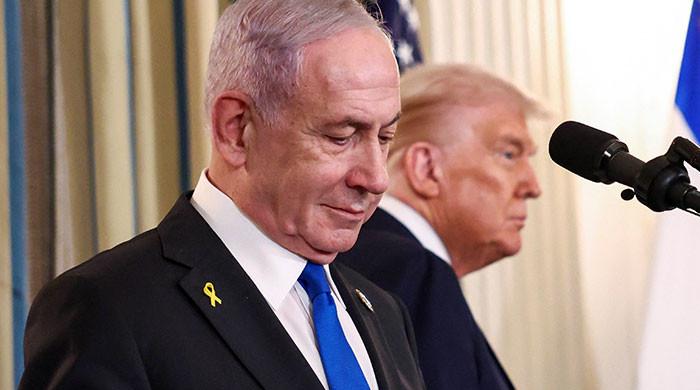
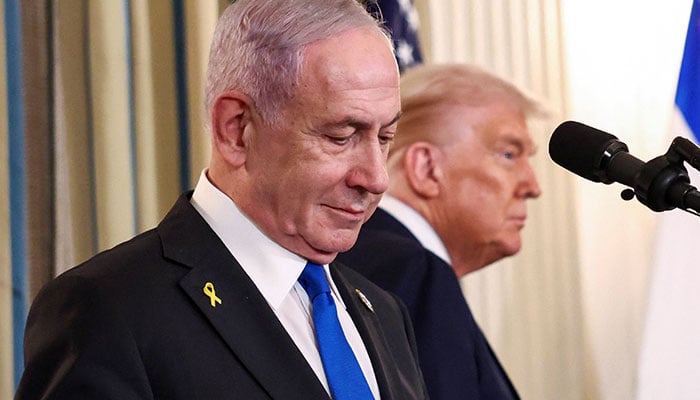
Speaking at a joint press conference with Netanyahu, Trump said they were “beyond very close” to forging an elusive peace deal and that he hoped Hamas would also accept it.
The White House released Trump’s 20-point plan that calls for a ceasefire, a swap of hostages held by Hamas for Palestinian prisoners held by Israel, a staged Israeli withdrawal from the Palestinian enclave, Hamas disarmament and a transitional government led by an international body.
“I also want to thank Prime Minister Netanyahu for agreeing to the plan and for trusting that if we work together, we can bring an end to the death and destruction that we’ve seen for so many years, decades, even centuries and begin a new chapter of security, peace and prosperity for the entire region,” Trump said.
In Netanyahu’s fourth visit to the White House since Trump returned to office in January, the right-wing Israeli leader was looking to shore up his country’s most important relationship after a slew of Western leaders formally embraced Palestinian statehood last week in defiance of the US and Israel.
Trump, who sharply criticised the recognition moves as a prize for Hamas, was seeking Netanyahu’s agreement despite Israel’s misgivings on parts of the plan.
It marked a stepped-up diplomatic effort from the US president, who vowed during the 2024 presidential campaign to bring the conflict to a close quickly and has since repeatedly claimed that a peace deal was near, only for it to fail to materialise.
Hamas’ apparent absence from the negotiations has raised questions about the prospects for the latest initiative.
Meanwhile, a senior Hamas official told AFP on Monday that the group had not yet received Trump’s Gaza peace plan.
“We have not received Trump’s proposal. We will study it and respond once we receive it,” the official said, speaking on condition of anonymity because he was not authorised to discuss the matter publicly.
Tanks head deeper into Gaza city
Washington presented its peace plan to Arab and Muslim states on the sidelines of the UN General Assembly last week, and Trump’s main objective on Monday was to try to close the remaining gaps with Netanyahu.
The White House talks came as Israeli tanks on Monday thrust deeper into the heart of Gaza City. Israel has launched one of its biggest offensives of the war this month, with Netanyahu saying he aims to wipe out Hamas in its final redoubts. The war has left much of Gaza in ruins and caused a major humanitarian crisis.
Arriving by limousine, Netanyahu was greeted by Trump outside the White House doors with a handshake, a stark contrast to the Israeli Prime Minister’s chilly reception when he spoke on Friday before the UN General Assembly, where scores of delegates walked out in protest.
Previous US-backed ceasefire efforts have fallen apart due to a failure to bridge the gap between Israel and Hamas, and Netanyahu has vowed to continue fighting until Hamas is completely dismantled.
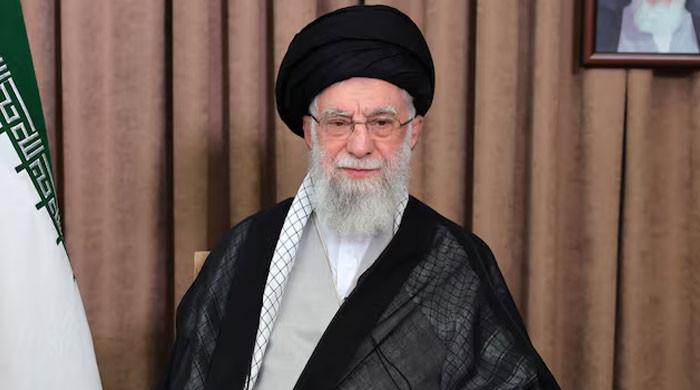
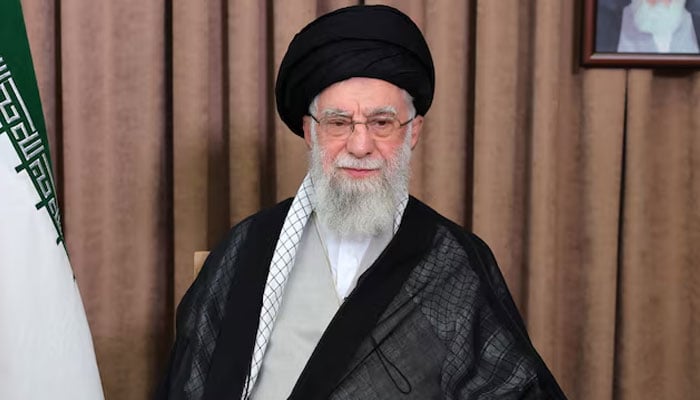
Iran’s Supreme Leader Ayatollah Ali Khamenei was martyred in US and Israeli strikes, state media confirmed, as another wave of attacks hit the country on Sunday.
Several countries, global bodies and prominent groups responded to the assassination of Iran’s supreme leader, urging de-escalation.
Pakistan
Prime Minister Shehbaz Sharif on Sunday denounced the targeting of Iran’s supreme leader in joint strikes by the United States and Israel, saying such actions were a “violation of the norms of international law”.
In a post on X, PM Shehbaz said that it was an age-old convention that the heads of state or government should not be targeted.
“Pakistan also expresses concern over the violation of the norms of international law. It is an age-old convention that the heads of state/government should not be targeted.”
Russia
President Vladimir Putin described Khamenei’s killing as a “cynical murder” that violated “all standards of human morality and international law”.
“Please accept my deep condolences in connection with the murder of the Supreme Leader of the Islamic Republic of Iran, Seyed Ali Khamenei, and members of his family, committed in cynical violation of all norms of human morality and international law.”
China
China said it “strongly condemns” the United States and Israel’s assassination of Iran’s Supreme Leader Ayatollah Ali Khamenei, calling again for a halt to military actions.
The assassination was “a serious violation of Iran’s sovereignty and security, a trampling on the aims and principles of the UN Charter and the basic norms of international relations”, Beijing’s foreign ministry said in a statement.
“China firmly opposes and strongly condemns this,” it added, calling for an “immediate halting of military operations”.
Malaysia
Malaysian Prime Minister Anwar Ibrahim on Sunday “unreservedly” condemned the killing of Iran’s Supreme Leader Ali Khamenei.
“I unreservedly condemn the killing of Iranian Supreme Leader Ali Khamenei. This act places the Middle East on the edge of grave and sustained instability. I extend my condolences to the Islamic Republic of Iran and to the Iranian people at this profoundly difficult momen,” wrote
Indonesia’s Ulema Muslim Clerical Council
“The Indonesian Ulema Council (MUI) expressed its deepest condolences for the death of Iran’s Supreme Leader, Ali Khamenei, as a result of the Israeli-American attack on February 28.
“The United States, which is playing a central role in managing the Palestinian conflict through the BoP (Board of Peace), faces a major question: is this strategy truly aimed at a just peace, or is it actually strengthening an unequal security architecture and burying Palestinian independence? Therefore, the MUI urges the Indonesian government to revoke its membership from the BoP.”
North Korea
North Korea condemned the US and Israeli strikes as an “illegal act of aggression”.
The attacks “constitute a thoroughly illegal act of aggression and the most vile form of violation of sovereignty in their nature”, a Ministry of Foreign Affairs spokesperson said, according to state media.
Iranian president
“The martyrdom of the Supreme Leader at the hands of Israel and the criminal America was a great disaster for our country… America and Israel should know that it will bring them nothing but embarrassment.”
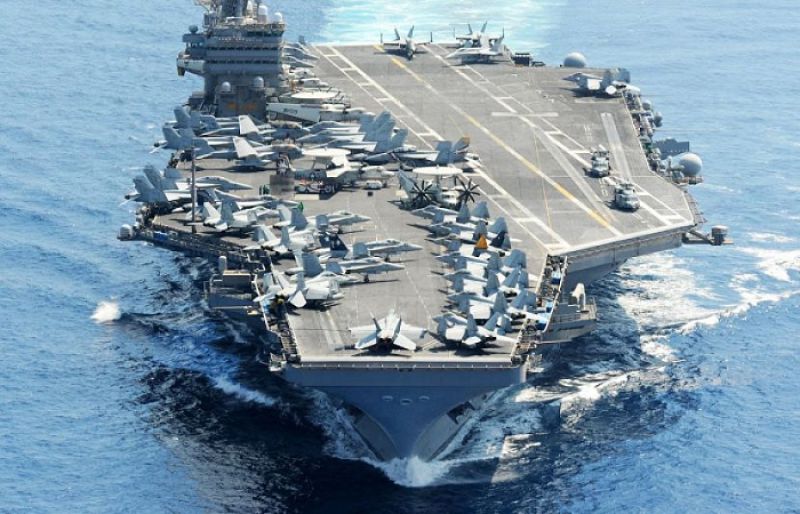
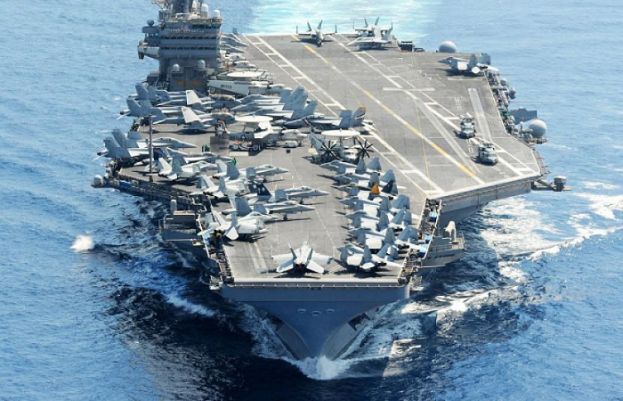
Iran’s Islamic Revolutionary Guard Corps (IRGC) on Sunday claimed it had launched ballistic missile strikes targeting a US aircraft carrier, identifying the vessel as the USS Abraham Lincoln, as part of what it called “Operation True Promise 4.”
In a statement, the IRGC’s public relations office said four ballistic missiles were fired at the carrier, adding that Iran’s military campaign had entered a “new phase.” The group warned that both land and sea would become the “burial place” for what it described as aggressors.
Multiple Waves of Strikes Announced
Earlier, the IRGC said it had launched the seventh and eighth waves of strikes under the same operation, in response to what it termed ongoing aggression by the United States and Israel.
Iran claimed it had carried out precision strikes on military targets in Israeli territory, including areas near Tel Aviv and Haifa. It also alleged that Israeli officials had taken shelter due to heightened security concerns.
Targets Across the Gulf
The IRGC further stated that it had targeted US-operated facilities in West Asia, including the US Fifth Fleet base in Bahrain, as well as installations in Qatar and the United Arab Emirates.
There has been no immediate confirmation from US or Israeli officials regarding the reported missile strikes or the extent of any damage.
Rising Regional Tensions
The developments mark a sharp escalation in regional tensions following reported military exchanges between Iran, Israel and US forces over the weekend.
Independent verification of the claims remains pending, and international observers have urged restraint amid fears of a broader conflict across the Middle East.
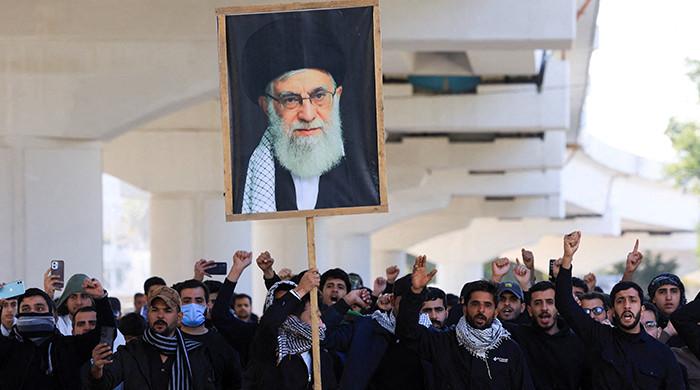
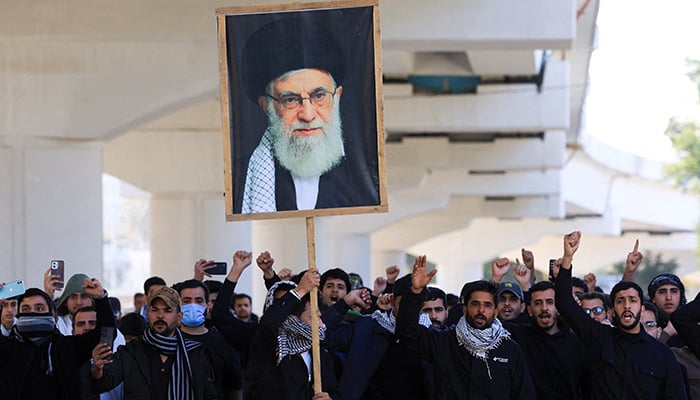
A number of Iranian senior leaders, including Supreme Leader Ayatollah Ali Khamenei, have embraced martyrdom in the “unprovoked and unwarranted” airstrikes by Israel and the United States.
As crowds gathered in Tehran, explosions rang out, and the Israeli military announced that it was again striking targets in the heart of the city — as more blasts were heard in Jerusalem, Riyadh, Dubai, Doha and Manama.
Iran’s President Masoud Pezeshkian declared Khamenei’s assassination a “declaration of war against Muslims” and warned: “Iran considers it its legitimate duty and right to avenge the perpetrators and masterminds of this historic crime.”
Iranian state media have confirmed the killing of several senior figures:
1. Ayatollah Ali Khamenei, supreme leader of Iran
2. Ali Shamkhani, representative of the Supreme Leader in the Supreme Defence Council
3. General Abdolrahim Mousavi, Iran’s Armed Forces chief of staff
4. Major General Mohammad Pakpour, commander-in-chief of the Islamic Revolution Guards Corps (IRGC)
5. Aziz Nasirzadeh, Minister of Defence
6. Gholamreza Rezaian, police intelligence chief of Iran
Separately, the daughter, son-in-law, and granddaughter of Ali Khamenei also embraced martyrdom in the US and Israeli airstrikes.


Lenovo’s Latest Wacky Concepts Include a Laptop With a Built-In Portable Monitor

USA vs. Argentina (Mar 1, 2026) Live Score – ESPN

Shia LaBeouf battles addiction amid public and legal pressure

Pakistan carries out precision strikes on seven militant hideouts in Afghanistan

Eye-popping rise in one year: Betting on just gold and silver for long-term wealth creation? Think again! – The Times of India

These Cheap Noise-Cancelling Sony Headphones Are Even Cheaper Right Now

-
 Politics1 week ago
Pakistan carries out precision strikes on seven militant hideouts in Afghanistan
-
Business1 week ago
Eye-popping rise in one year: Betting on just gold and silver for long-term wealth creation? Think again! – The Times of India
-

 Tech1 week ago
The Supreme Court’s Tariff Ruling Won’t Bring Car Prices Back to Earth
-
 Tech1 week ago
These Cheap Noise-Cancelling Sony Headphones Are Even Cheaper Right Now
-

 Sports1 week ago
Kansas’ Darryn Peterson misses most of 2nd half with cramping
-

 Sports1 week ago
How James Milner broke Premier League’s appearances record
-

 Entertainment1 week ago
Viral monkey Punch makes IKEA toy global sensation: Here’s what it costs
-

 Entertainment1 week ago
Saturday Sessions: Say She She performs "Under the Sun"