

Politics
Trump betrayed diplomacy, Americans by attacking Iran: FM Araghchi

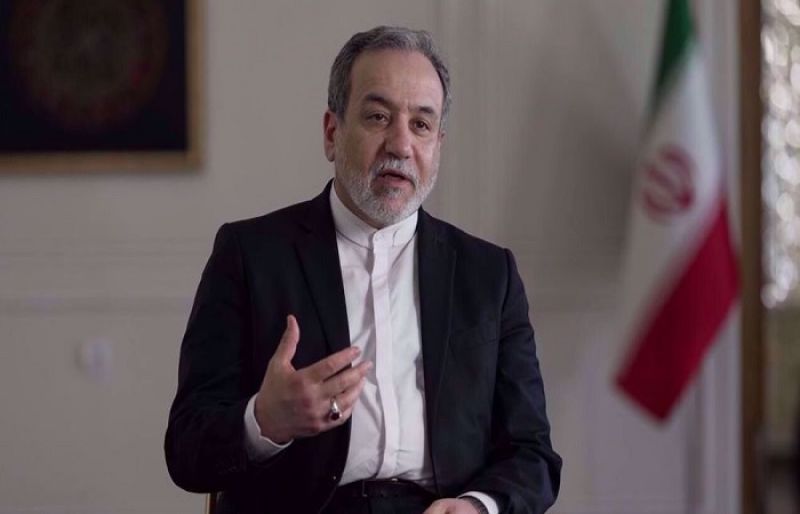

Iran’s Foreign Minister Abbas Araghchi says US President Donald Trump betrayed both the indirect negotiations with Tehran and the American people by launching unprovoked aggression against Iran.
In a post published on social media platform X on Wednesday, Araghchi said, “When complex nuclear negotiations are treated like a real estate transaction, and when big lies cloud realities, unrealistic expectations can never be met. The outcome? Bombing the negotiation table out of spite.”
“Mr. Trump betrayed diplomacy and Americans who elected him,” added the top diplomat.
Iran and the US were in the midst of indirect negotiations regarding Iran’s nuclear program, with Iranian negotiators and the Omani mediators expressing strong hope that an agreement could be reached.
On Friday, one day before the Israeli-US aggression against Iran and immediately after the third round of negotiations in Geneva, Switzerland, Omani diplomats went so far as to say that a new comprehensive agreement was closer than ever.
However, on Saturday, Israeli and US armed forces launched a series of attacks against strategic targets across Iran, killing several senior officials.
Trump’s especial envoy to West Asia Steve Witkoff, head of the US negotiating team, had earlier tried to pave the way for the US aggression on Iran by falsely claiming that it was the Iranian side that had undermined the process.
However, a diplomat familiar with the process of the negotiations told MS NOW that Witkoff’s claims are completely false and Iranians were open to a fair but comprehensive agreement with the US.
“I can categorically state that this is inaccurate,” said the diplomat, referring to Witkoff’s account.
According to the Persian Gulf diplomat, who spoke on condition of anonymity, the Iranian delegation had told Witkoff during indirect negotiations on Iran’s nuclear program that Tehran enriched the uranium after Trump pulled the US out of a 2015 nuclear agreement brokered by former President Barack Obama’s administration.
Scores of Iranian cities have been targeted in the US-Israeli aggression. Leader of the Islamic Revolution Ayatollah Seyyed Ali Khamenei was assassinated in the Saturday attack.
Since then, Iranian armed forces have swiftly and decisively retaliated against these strikes by launching barrages of missile and drones against Israeli-occupied territories as well as on US bases in region.
Iranian officials have stated that targeting US military bases in the region constitutes “legitimate self-defense.”
Referring to Article 51 of the Charter of the United Nations, they said that Iran has the legal right to defend itself against “acts of aggression” by the US or the Israeli regime.
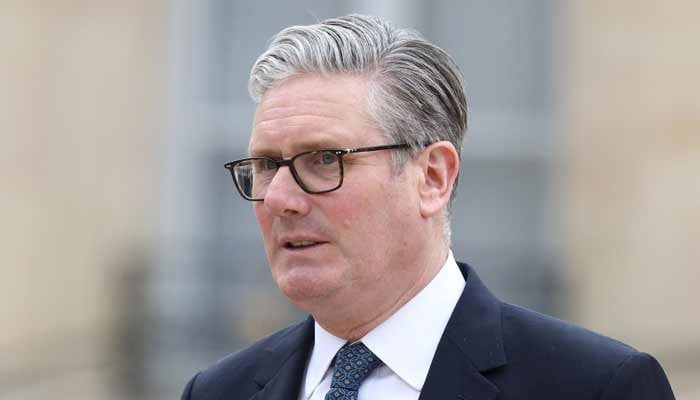
Embattled Prime Minister Keir Starmer said on Monday he had been wrong to appoint Labour politician Peter Mandelson as UK envoy to Washington, seeking to quell anger over a scandal surrounding Jeffrey Epstein’s long-time associate.
Starmer, already widely unpopular with the public and many Labour MPs, is struggling to manage a controversy that has threatened to bring down his leadership.
Addressing parliament about the deepening political row, Starmer said: “At the heart of this, there is also a judgment I made that was wrong. I should not have appointed Peter Mandelson.”
He faced fresh calls to quit last week after it was revealed that Mandelson — whose friendship with the late convicted US sex offender was long known — had become Britain’s envoy to Washington last year despite failing security checks.
Starmer has insisted that he and other ministers were not told until last week that Mandelson had failed the independent vetting process.
“It beggar’s belief that throughout the whole timeline of events, officials in the Foreign Office saw fit to withhold this information from the most senior ministers in our system, in government,” he told MPs.
“If I had known before he took up his post that (the) recommendation was that developed vetting clearance should be denied, I would not have gone ahead with the appointment.”
‘Unconventional’
Last Thursday, Starmer sacked the Foreign Office’s top civil servant, Olly Robins, telling MPs that he had set in motion a review of the security vetting process.
But ex-civil servants have accused Starmer of scapegoating Robbins, who will give his own account to a parliamentary watchdog committee on Tuesday.
Opposition leaders have called for the centre-left Labour leader to step down, with accusations ranging from incompetence to willful misleading of parliamentarians and the public.
Starmer told parliament in February that “full due process” was followed when Mandelson was vetted and cleared for the key role.
His Downing Street office has insisted that remains true because government rules meant the Foreign Office had the power to overrule vetting concerns, without the knowledge of Starmer and his top team.
On Friday, Downing Street took the unusual step of releasing a memo that insisted he had only found out about the vetting failure last Tuesday.
Senior ministers have so far rallied around Starmer.
“A judgement was made that the Trump administration was an unconventional administration and an unconventional ambassador could do a job for the United Kingdom,” Scotland Secretary Douglas Alexander said Monday.
“That judgement was wrong and the prime minister accepts that.”
‘He has to go’
Other ministers have argued that Starmer should remain in power amid the global tumult sparked by the Middle East war and other issues, including forging closer relations with the European Union.
But polls suggest Starmer is one of Britain’s most unpopular prime ministers ever.
If Starmer had known about the failed vetting “then he has to go, he has to resign”, retired dentist Andrews Connell, 59, told AFP.
“If he knew that’s really bad. If he didn’t know, he should have known.”
Pensioner Lyndia Shaw, 73, agreed saying Starmer is “absolutely hopeless, hopeless, and I feel that yes Mandelson should face the full force of the law without doubt”.
But retiree Duncan Moss, 67, said he would be “very worried if Starmer was to leave and to not run the country. I think he’s doing a very good job. I think he’s a very mature, experienced leader”.
Starmer sacked Mandelson in September 2025, seven months after he took up the post, after new details emerged about the depth of the ex-envoy’s ties to Epstein, who died in a US prison in 2019 while facing sex-trafficking charges.
UK police are investigating allegations of misconduct in office by Mandelson, 72, when he was a Labour minister more than 15 years ago. He was arrested and released in February.
Mandelson has not been charged and denies criminal wrongdoing.
Starmer and his Labour party are also bracing for a chastening set of local elections next month, including in the devolved Scottish and Welsh parliaments.
Politics
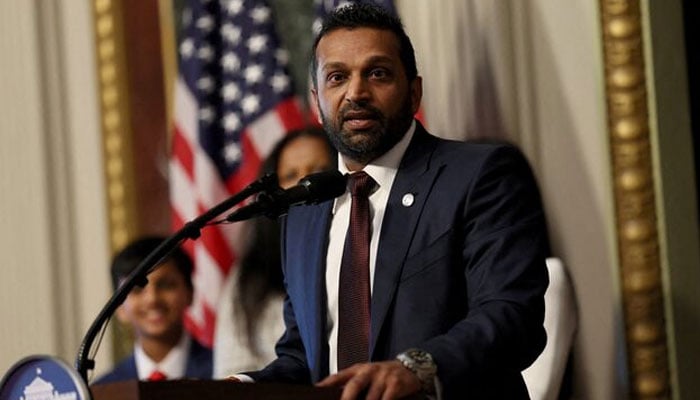
FBI Director Kash Patel sues The Atlantic claiming false reporting about drinking, absences
- Patel denies all allegations in The Atlantic article.
- Magazine cites anonymous sources alleging drinking.
- Lawsuit claims referencing ignored denials, rushed timeline.
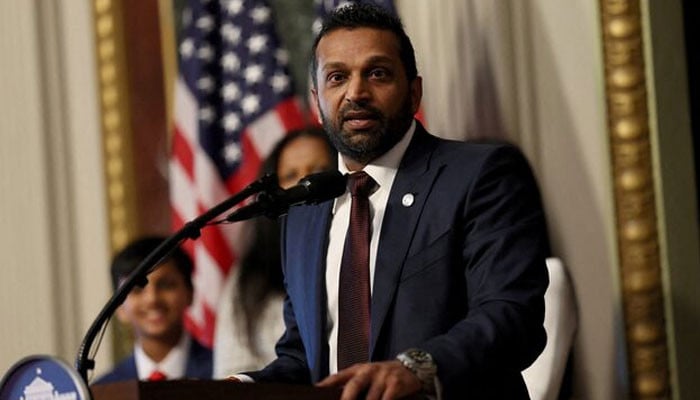
FBI Director Kash Patel filed a defamation lawsuit against The Atlantic and its reporter, Sarah Fitzpatrick, following the publication of an article on Friday alleging the director had a drinking problem that could pose a threat to national security.
The magazine’s story, initially titled “Kash Patel’s Erratic Behaviour Could Cost Him His Job,” cited more than two dozen anonymous sources expressing concern at Patel’s “conspicuous inebriation and unexplained absences” that “alarmed officials at the FBI and the Department of Justice.”
The article, which The Atlantic subsequently titled “The FBI Director Is MIA” in its online version, reported that during Patel’s tenure, the FBI had to reschedule early meetings “as a result of his alcohol-fueled nights” and that Patel “is often away or unreachable, delaying time-sensitive decisions needed to advance investigations.”
In The Atlantic’s story, the White House, the Department of Justice and Patel denied the allegations. The article included a statement from the FBI attributed to Patel, “Print it, all false, I’ll see you in court, bring your checkbook.”
“The Atlantic’s story is a lie,” Patel said in an interview with Reuters. “They were given the truth before they published, and they chose to print falsehoods anyway.”
“We stand by our reporting on Kash Patel, and we will vigorously defend The Atlantic and our journalists against this meritless lawsuit,” The Atlantic said in a statement.
Reuters could not independently establish the accuracy of the article or why the publication changed the title.
Patel’s complaint says that while The Atlantic is free to criticise the leadership of the FBI, “they crossed the legal line” by publishing an article “replete with false and obviously fabricated allegations designed to destroy Director Patel’s reputation and drive him from office.”
The lawsuit, filed in the US District Court for the District of Columbia, seeks $250 million in damages.
The lawsuit alleges The Atlantic ignored the FBI’s denials and did not respond to a Friday letter from Patel’s lawyer Jesse Binnall to senior editors and The Atlantic’s legal department asking for more time to refute the 19 allegations the reporter told the FBI’s press office she would be publishing.
The letter, which Reuters has seen, was sent shortly before 4 p.m. on Friday, and the story was published at 6:20pm, according to the complaint. Reuters could not establish how or if The Atlantic responded to Binnall’s request.
The lawsuit alleges the publication acted with “actual malice,” a legal standard that requires public figures such as Patel to show the publisher knowingly printed false information or recklessly ignored doubts about its accuracy.
“Defendants’ conscious decision to ignore the detailed, specific, and substantive refutations in the Pre-Publication Letter, and their refusal to give a reasonable amount of time for the FBI and Director Patel to respond, is among the strongest possible evidence of actual malice,” the lawsuit says.
The lawsuit is the latest instance of a Trump administration figure suing a media outlet. A judge dismissed Trump’s lawsuit against CNN for describing election denialism as “the big lie.” Judges also dismissed Trump’s lawsuits against the New York Times and the Wall Street Journal. Trump has refiled his lawsuit against the New York Times and may refile against the Wall Street Journal.
He has also secured some settlements. ABC News agreed to settle a case for $15 million plus $1 million in legal fees. Paramount Global agreed to pay $16 million for what the Trump administration called “deceptive editing” of a CBS News interview with his opponent in the 2024 election, Kamala Harris.
- India, South Korea to expand cooperation in energy sector.
- First South Korean presidential state visit to India in eight years.
- South Korean president will be visiting Vietnam after India.
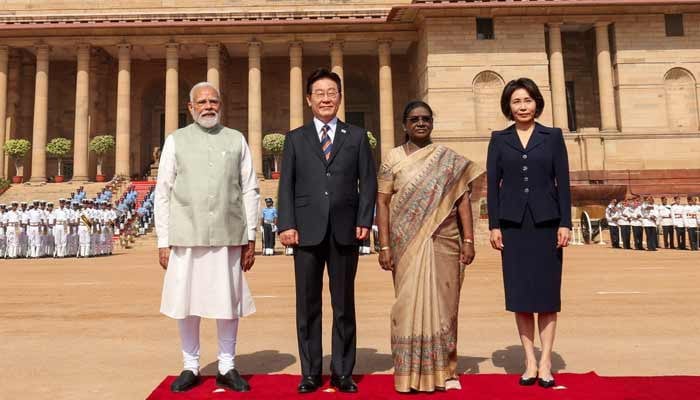
India and South Korea said on Monday that they would boost their economic ties by expanding cooperation in energy, critical minerals, shipbuilding, semiconductors and steel as they seek to double their trade to $50 billion by 2030.
New Delhi and Seoul also agreed to resume and step up negotiations to give new energy to their 2010 trade agreement as India wants their trade to be more balanced and South Korea wants greater market access to the world’s fastest-growing major economy.
South Korean President Lee Jae Myung is in India for a three-day visit, the first South Korean presidential state visit to the country in eight years.
“We decided to upgrade the framework of economic cooperation between the two countries to create a new engine for shared growth,” Lee told reporters after talks with Indian Prime Minister Narendra Modi.
The two countries created a ministerial-level economic cooperation committee for the first time, Lee said, adding that they would strengthen cooperation in areas such as nuclear power plants, clean energy as well as trade and investment.
With the Iran war squeezing global energy supplies, India and South Korea would also continue to cooperate to ensure the stable supply of energy resources and key raw materials such as naphtha, Lee added.
Modi said Lee’s visit was extremely significant and that the two countries had taken important decisions to boost two-way trade to $50 billion by 2030 from around $27 billion at present.
“Today, we are laying the foundation for the success story of the next decade,” Modi said, as he recalled strong civilisational ties between the two countries that go back several centuries.
Big investment in India’s steel sector
Indian Trade Minister Piyush Goyal said he held talks with his South Korean counterpart, Yeo Han-koo, and discussed ways to resume and revamp the trade pact and explored opportunities to deepen cooperation in the areas of industry, green energy and digital trade.
Lee will attend a joint business forum conference later on Monday where some 250 South Korean participants are expected, including leaders of household names in India such as Samsung Electronics, Hyundai Motor and LG Group, South Korea’s Yonhap news agency said.
The two sides also plan to sign a total of 20 private-sector memoranda of understanding on the sidelines of the forum, covering areas including shipbuilding, digital technology and energy, Yonhap said.
Separately, South Korea’s Posco Holdings said in a regulatory filing on Monday that its steelmaking unit plans to build a joint venture integrated steel plant with India’s JSW in Odisha state. Posco’s investment until end-2031 is expected to be about $1.09 billion, the filing said.
The joint venture deal to set up a 6-million-ton-per-annum steel plant in Odisha was announced last week.
In a policy seminar at South Korea’s parliament last week, Maeng Hyun-chul, a research fellow at Seoul National University’s Asia Center, noted India’s longstanding complaint of a widening trade deficit with South Korea and said that political ties had not kept pace with commercial ties.
South Korea had a $12.8 billion trade surplus last year, with exports worth $19.2 billion and imports of $6.4 billion, according to Korea International Trade Association data.
Lee will be visiting Vietnam after India.


War Memes Are Turning Conflict Into Content

‘It’s his superpower’: Inside Fernando Mendoza’s extraordinary rise to No. 1

Consumers have record savings options in final year of £20,000 cash ISA allowance

-

 Fashion4 days ago
France’s LVMH Q1 revenue falls 6%, shows resilience amid Iran war
-

 Sports1 week ago
The case for Man United’s Fernandes as Premier League’s best
-

 Entertainment1 week ago
Palace left in shock as Prince William cancels grand ceremony
-
 Business1 week ago
UK could adopt EU single market rules under new legislation
-

 Entertainment5 days ago
Is Claude down? Here’s why users are seeing errors
-

 Fashion1 week ago
Energy emerges as biggest cost driver in textile margins
-
 Business1 week ago
Delta Air Lines unveils first new Delta One suite in premium cabin arms race
-

 Tech1 week ago
A Lot of Shops Won’t Fix Electric Bikes. Here’s Why