

Politics
Trump convinced Netanyahu to take a deal. Can he keep him onboard?

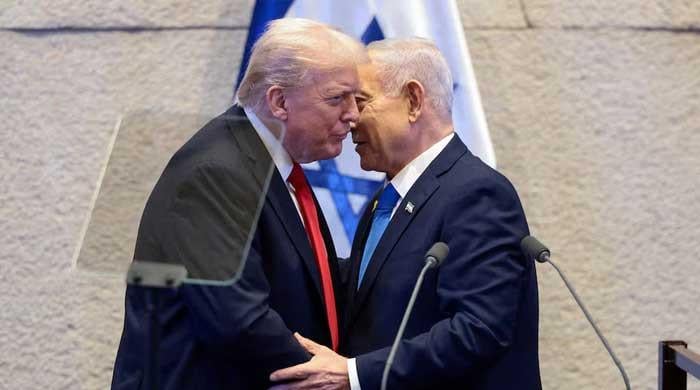
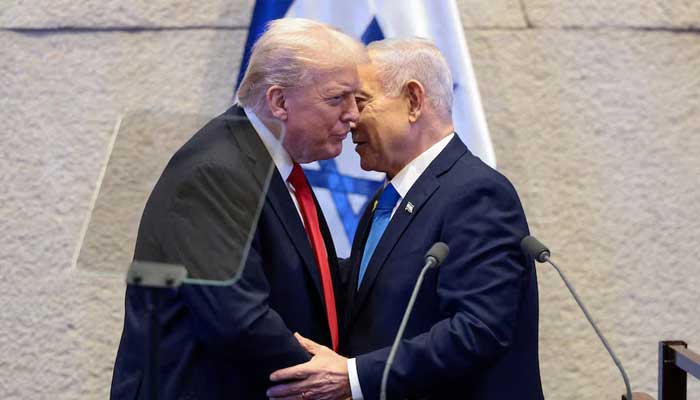
US President Donald Trump, a self-proclaimed peacemaker who has campaigned for a Nobel Prize, finally got a camera-ready diplomatic victory on Monday as world leaders flew to Egypt for the signing of the ceasefire and hostage-release deal he brokered between Israel and Hamas.
But if lasting peace is to take root, analysts and diplomats say, Trump will have to maintain pressure on the man whose support he’ll need in the next phases of his plan: Israeli Prime Minister Benjamin Netanyahu.
US presidents from Bill Clinton to Joe Biden have found the strong-willed Israeli leader difficult to work with, and even Trump administration officials have been frustrated by some Israeli military strikes they see as undermining US policy.
But this month Trump managed to push Netanyahu into accepting his framework for a broader peace deal while persuading other Middle Eastern countries to convince Hamas to return all the Israeli hostages, its key leverage in the war.
The work could get harder from here, however.
Israel and Hamas remain sharply divided over many aspects of Trump’s 20-point plan and, as Israel prepares for next year’s elections, Netanyahu’s approach may shift as he attempts to keep his right-wing coalition together.
“We’re entering a political year where everything is related to campaigns, and Netanyahu’s calculations may flip from caving to pressure to trying to ensure his political survival,” said Nimrod Goren, the president of Mitvim, an Israeli foreign policy think tank.
The strength of Trump’s peace plan, said the diplomats and analysts, is also its weakness.
The document at the heart of the deal leaves much undefined, and neither side actually agreed to the fine print of each term. That vagueness was key to getting both sides to sign on, but it also means some of the most difficult diplomatic work is just beginning.
Among the potential sticking points of Trump’s peace plan is an agreement that Hamas disarm and play no role in Gaza’s future administration. While Hamas agreed to Trump’s plan generally, the group’s official response made no mention of those specific terms, and Hamas leaders have indicated that they do in fact see a role for themselves in governing a post-war Gaza.
“There are any number of ways this could go sideways,” said Jon Alterman, a Middle East expert at Washington’s Center for Strategic and International Studies and a former State Department official.
“It’s hard to remember an international agreement that left so much to be worked out later.”
The Israeli embassy in Washington did not immediately respond to a request for comment.
A senior US official suggested that Trump had gained influence with Netanyahu in part by strongly supporting Israel on other important matters.
Trump’s first administration formally recognised Jerusalem as the capital of Israel and the disputed Golan Heights as part of the country, two things long sought by the Israeli government.
“One thing President Trump’s done with Israel … is that he’s not trying to be a middle-of-the-roader,” the US official said. “He’s basically stood shoulder to shoulder with Israel 100%. But because of that, he’s been able to help guide them in the right direction.”
A sterner Trump
Trump has a mixed record when it comes to applying political pressure on Netanyahu.
In July, Israel bombed the Syrian defense ministry in Damascus even as the US had made a point of expanding ties with the new Syrian government. The US president gave political cover in Gaza to Netanyahu for months amid mounting humanitarian concerns among European and Arab allies.
But in recent weeks, a sterner Trump has emerged. He forced Netanyahu, opens new tab to call the leader of Qatar to apologise after a failed bombing raid targeting Hamas negotiators in that country in September. Ultimately, he muscled Netanyahu into signing onto his 20-point plan despite the Israeli leader’s misgivings.
At the moment, said Alterman, the Middle East expert, Trump can likely exert leverage over Netanyahu given the US president’s significant popularity in Israel.
“Trump’s greatest leverage is he’s much more politically popular in Israel than Netanyahu,” Alterman said, “and he can either support Netanyahu’s political future or sabotage it.”
At the speech before the Israeli parliament on Monday, Trump playfully poked at the Israeli leader in ways that indicated he did not feel the need to treat Netanyahu with special deference.
“Well, see, now you can be a little bit nicer, Bibi, because you’re not at war anymore,” Trump said to laughs.
But next year’s elections could change Netanyahu’s political calculations in ways that are difficult to predict.
Supporters of right-wing politicians Itamar Ben-Gvir and Bezalel Smotrich could in theory threaten Netanyahu’s governing coalition if they are sufficiently angered by the decision to halt military operations against Hamas.
Analysts warn that foot-dragging by the Palestinian group over disarming could lead right-wing elements of the coalition to pressure Netanyahu to resume military operations in Gaza, effectively scuttling Trump’s deal.
“We are troubled with the fact that Hamas still, today, declares it will stay in power in Gaza,” Simcha Rothman, a member of the Religious Zionism party and of Netanyahu’s governing coalition, told Reuters on Monday.
“We are not happy with any deal that is not total surrender of Hamas … We will not accept any partial victory.”
Another issue that could prove an irritant: a provision in the peace plan that admits the possibility of a future Palestinian state, which analysts say most Israelis would struggle to accept after Hamas’ cross-border attack of October 7, 2023.
Dan Shapiro, a former US ambassador to Israel, said that if government and opposition politicians campaign heavily against the creation of such a state, it could limit the willingness of Arab countries to push Hamas to fulfill its obligations under Trump’s deal.
“That was a very important inclusion to get the support of the Arab states to do their part,” Shapiro said.
“If the political discourse is a full-on rejection of a Palestinian state for all time, I think that could color the enthusiasm of the Arab parties to play the parts that they need to play.”

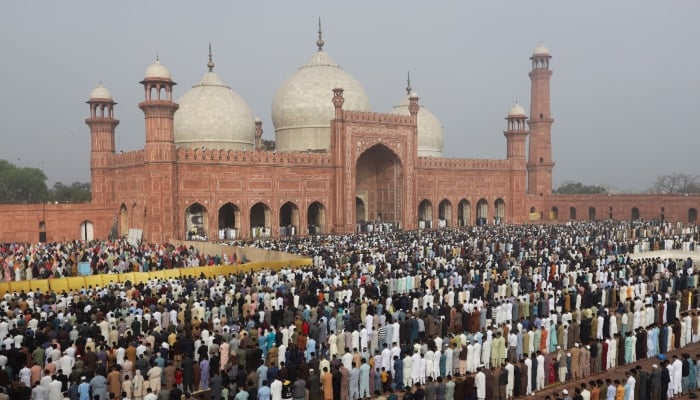
Muslims across the world are celebrating Eid ul Fitr with traditional zeal and fervour, marking the end of the holy month of Ramadan.
Families and communities are coming together for prayers, feasts, and charitable giving, reflecting on a month of fasting, spiritual reflection, and devotion. The celebrations are filled with joy, greetings of “Eid Mubarak,” and acts of kindness that highlight the essence of the festival.












Rescuers were searching for the crew and passengers of a Qatari military helicopter that crashed in the Gulf state´s waters after a “technical malfunction”, the government said early Sunday.
“A Qatari helicopter had a technical malfunction during a routine duty, which led to its crash in the regional waters of the State,” Qatar’s defence ministry said in a statement posted to X. “Searching operation for its crew members and passengers is in progress.”
The interior ministry said that several specialised teams have been deployed.
Qatar has not specified where the helicopter was flying or the number of people on board.
While Qatar has been targeted by several strikes since the start of the Middle East war, no connection has been made between this chopper and the conflict triggered by US-Israeli attacks on Iran.
- TSA staff shortages disrupt major airport travel.
- ICE agents not specifically trained for TSA duties.
- Democrat calls Trump’s ICE airport plan reckless.
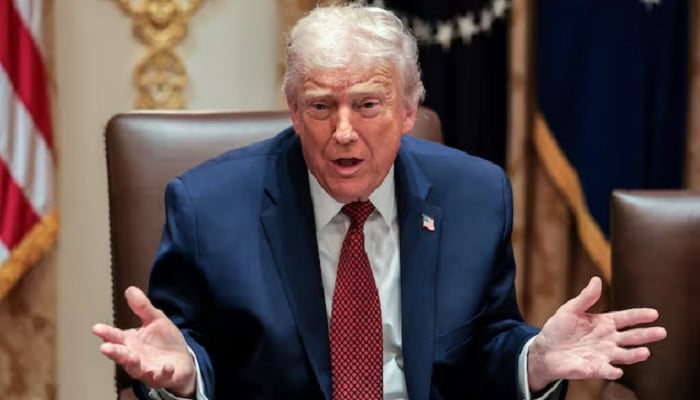
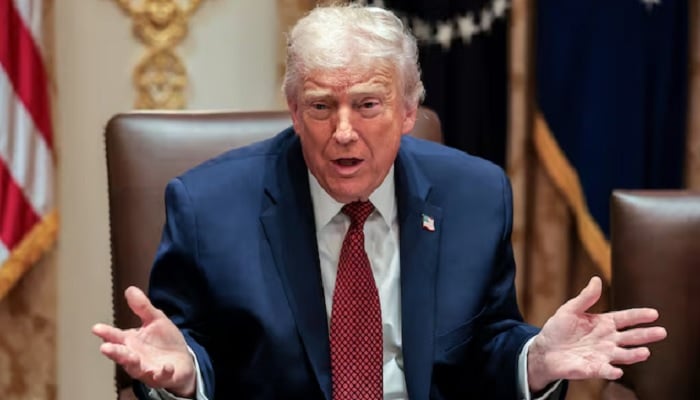
US President Donald Trump threatened to deploy Immigration and Customs Enforcement agents to US airports on Monday if congressional Democrats do not immediately agree to fund airport safety.
Transportation Security Administration personnel are set to miss a second full paycheck on March 27 amid a partial government shutdown in its 36th day as lawmakers clash over funding for the Department of Homeland Security, the parent agency for TSA and ICE.
TSA officers have called in sick as paychecks have dried up, and the shortage of security agents has disrupted travel at major airports. More than 400 TSA workers have quit since the partial shutdown began on February 14, NBC News reported on Saturday, citing DHS.
“I will move our brilliant and patriotic ICE Agents to the Airports where they will do Security like no one has ever seen before,” Trump wrote on Truth Social on Saturday.
In a subsequent post, Trump said the deployment would begin on Monday “if the Democrats do not allow for Just and Proper Security at our Airports, and elsewhere throughout our Country.”
TSA has about 65,000 employees, including 50,000 airport security officers.
ICE, central to Trump admin immigration crackdown
ICE agents are not specifically trained for airport security, which is TSA’s domain. ICE has played a central role in the Trump administration’s immigration crackdown, drawing criticism from many Democrats, civil liberties advocates and immigration advocacy groups.
Senator Richard Blumenthal, a Connecticut Democrat, criticised Trump’s proposal as “another reckless, lawless threat to misuse ICE agents.”
“He seems to have no concept of what the limits are on ICE, and I think America would be absolutely appalled to see ICE agents roaming through airports, just as they’ve been breaking down doors at homes,” Blumenthal told reporters in Washington.
Homeland Security historically has shifted resources across agencies during emergency staffing shortages, said Stewart Baker, who was a DHS policy official in President George W. Bush’s administration. Keeping TSA going without paying staff creates “serious trouble” for the agency, Baker said.
Using ICE agents for airport security “may be slower than using trained people, but it would be better than having nobody,” he added.
ICE, along with Customs and Border Protection, has deployed agents over the past few months to multiple areas as part of the crackdown, most recently to Minnesota in an operation that resulted in agents fatally shooting American citizens Renee Good and Alex Pretti.
Their deaths sparked a backlash and led the Trump administration to adopt a more targeted approach in Minnesota.
Trump this month fired Homeland Security Secretary Kristi Noem amid growing criticism of the administration’s immigration tactics. The US Senate is considering the nomination of Senator Markwayne Mullin, an Oklahoma Republican, as the next DHS secretary.
Trump has said his immigration policies are intended to curb illegal immigration and improve national security.
Last year, the American Civil Liberties Union said TSA had provided lists of airport travellers to ICE, calling the move a break from TSA’s prior practices.


Lady Amelia Windsor shares private hen photos tied to grandparents’ love story

Sri Lanka increases fuel prices around 25% as Middle East tensions disrupt global oil supplies – The Times of India

Princess Eugenie husband springs in action for Fergie, Andrew: ‘Unexpected’

Tips and Advice for Buying Used or Refurbished Electronics

UAE savings strategies 2026 explained: Best apps, tools, budget rules and smart money hacks to beat rising cost of living in emirates – The Times of India

Iran threatens US-linked oil facilities after Kharg Island bombed

-
 Tech1 week ago
Tips and Advice for Buying Used or Refurbished Electronics
-
Business1 week ago
UAE savings strategies 2026 explained: Best apps, tools, budget rules and smart money hacks to beat rising cost of living in emirates – The Times of India
-
 Politics1 week ago
Iran threatens US-linked oil facilities after Kharg Island bombed
-

 Tech1 week ago
Apple’s New Monitor Does HDR Like It’s Never Been Done Before
-

 Sports1 week ago
Japan suffers shocking collapse to Venezuela in World Baseball Classic
-

 Entertainment7 days ago
Strategic oil stocks to be released ‘immediately’ in Asia and Oceania: IEA
-
 Entertainment1 week ago
Iran at war
-

 Sports1 week ago
College Basketball Invitational abruptly cancels 2026 tournament