Connect with us

Politics

Trump convinced Netanyahu to take a deal. Can he keep him onboard?

Published

on

Trump convinced Netanyahu to take a deal. Can he keep him onboard?
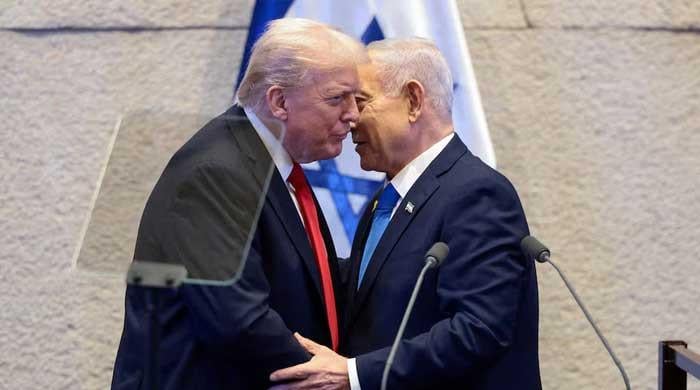

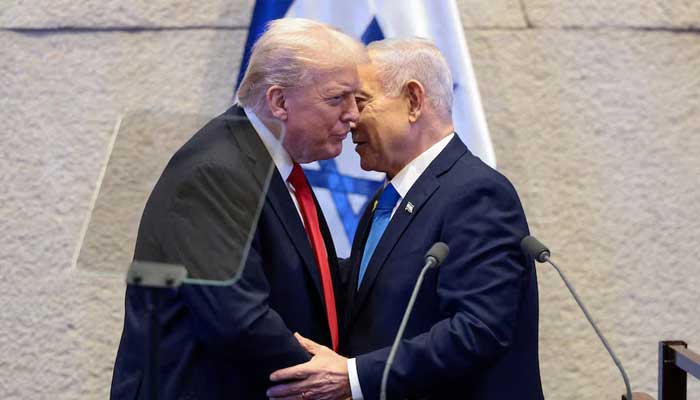
US President Donald Trump and Israeli Prime Minister Benjamin Netanyahu stand at the Knesset on the day Trump addresses it, amid a U.S.-brokered prisoner-hostage swap and ceasefire deal between Israel and Hamas, in Jerusalem, October 13, 2025. — Reuters

US President Donald Trump, a self-proclaimed peacemaker who has campaigned for a Nobel Prize, finally got a camera-ready diplomatic victory on Monday as world leaders flew to Egypt for the signing of the ceasefire and hostage-release deal he brokered between Israel and Hamas.

But if lasting peace is to take root, analysts and diplomats say, Trump will have to maintain pressure on the man whose support he’ll need in the next phases of his plan: Israeli Prime Minister Benjamin Netanyahu.

US presidents from Bill Clinton to Joe Biden have found the strong-willed Israeli leader difficult to work with, and even Trump administration officials have been frustrated by some Israeli military strikes they see as undermining US policy.

But this month Trump managed to push Netanyahu into accepting his framework for a broader peace deal while persuading other Middle Eastern countries to convince Hamas to return all the Israeli hostages, its key leverage in the war.

The work could get harder from here, however.

Israel and Hamas remain sharply divided over many aspects of Trump’s 20-point plan and, as Israel prepares for next year’s elections, Netanyahu’s approach may shift as he attempts to keep his right-wing coalition together.

“We’re entering a political year where everything is related to campaigns, and Netanyahu’s calculations may flip from caving to pressure to trying to ensure his political survival,” said Nimrod Goren, the president of Mitvim, an Israeli foreign policy think tank.

The strength of Trump’s peace plan, said the diplomats and analysts, is also its weakness.

The document at the heart of the deal leaves much undefined, and neither side actually agreed to the fine print of each term. That vagueness was key to getting both sides to sign on, but it also means some of the most difficult diplomatic work is just beginning.

Among the potential sticking points of Trump’s peace plan is an agreement that Hamas disarm and play no role in Gaza’s future administration. While Hamas agreed to Trump’s plan generally, the group’s official response made no mention of those specific terms, and Hamas leaders have indicated that they do in fact see a role for themselves in governing a post-war Gaza.

“There are any number of ways this could go sideways,” said Jon Alterman, a Middle East expert at Washington’s Center for Strategic and International Studies and a former State Department official.

“It’s hard to remember an international agreement that left so much to be worked out later.”

The Israeli embassy in Washington did not immediately respond to a request for comment.

A senior US official suggested that Trump had gained influence with Netanyahu in part by strongly supporting Israel on other important matters.

Trump’s first administration formally recognised Jerusalem as the capital of Israel and the disputed Golan Heights as part of the country, two things long sought by the Israeli government.

“One thing President Trump’s done with Israel … is that he’s not trying to be a middle-of-the-roader,” the US official said. “He’s basically stood shoulder to shoulder with Israel 100%. But because of that, he’s been able to help guide them in the right direction.”

A sterner Trump

Trump has a mixed record when it comes to applying political pressure on Netanyahu.

In July, Israel bombed the Syrian defense ministry in Damascus even as the US had made a point of expanding ties with the new Syrian government. The US president gave political cover in Gaza to Netanyahu for months amid mounting humanitarian concerns among European and Arab allies.

But in recent weeks, a sterner Trump has emerged. He forced Netanyahu, opens new tab to call the leader of Qatar to apologise after a failed bombing raid targeting Hamas negotiators in that country in September. Ultimately, he muscled Netanyahu into signing onto his 20-point plan despite the Israeli leader’s misgivings.

At the moment, said Alterman, the Middle East expert, Trump can likely exert leverage over Netanyahu given the US president’s significant popularity in Israel.

“Trump’s greatest leverage is he’s much more politically popular in Israel than Netanyahu,” Alterman said, “and he can either support Netanyahu’s political future or sabotage it.”

At the speech before the Israeli parliament on Monday, Trump playfully poked at the Israeli leader in ways that indicated he did not feel the need to treat Netanyahu with special deference.

“Well, see, now you can be a little bit nicer, Bibi, because you’re not at war anymore,” Trump said to laughs.

But next year’s elections could change Netanyahu’s political calculations in ways that are difficult to predict.

Supporters of right-wing politicians Itamar Ben-Gvir and Bezalel Smotrich could in theory threaten Netanyahu’s governing coalition if they are sufficiently angered by the decision to halt military operations against Hamas.

Analysts warn that foot-dragging by the Palestinian group over disarming could lead right-wing elements of the coalition to pressure Netanyahu to resume military operations in Gaza, effectively scuttling Trump’s deal.

“We are troubled with the fact that Hamas still, today, declares it will stay in power in Gaza,” Simcha Rothman, a member of the Religious Zionism party and of Netanyahu’s governing coalition, told Reuters on Monday.

“We are not happy with any deal that is not total surrender of Hamas … We will not accept any partial victory.”

Another issue that could prove an irritant: a provision in the peace plan that admits the possibility of a future Palestinian state, which analysts say most Israelis would struggle to accept after Hamas’ cross-border attack of October 7, 2023.

Dan Shapiro, a former US ambassador to Israel, said that if government and opposition politicians campaign heavily against the creation of such a state, it could limit the willingness of Arab countries to push Hamas to fulfill its obligations under Trump’s deal.

“That was a very important inclusion to get the support of the Arab states to do their part,” Shapiro said.

“If the political discourse is a full-on rejection of a Palestinian state for all time, I think that could color the enthusiasm of the Arab parties to play the parts that they need to play.”




Source link

Continue Reading
Click to comment

Leave a Reply

Your email address will not be published. Required fields are marked *

Politics

Russia’s Putin seeks to boost energy, defence exports with India visit

Published

on

Russia’s Putin seeks to boost energy, defence exports with India visit


Russian President Vladimir Putin and Indian Prime Minister Narendra Modi attend a meeting on the sidelines of the Shanghai Cooperation Organisation (SCO) summit in Tianjin, China, September 1, 2025. — Reuters
  • President Putin visiting India after four years.
  • India-Russia to expand partnership in nuclear energy.
  • Moscow likely to seek help to get spares for its oil assets.

NEW DELHI: Russian President Vladimir Putin starts a two-day visit to India from Thursday, pitching for more sales of Russian oil, missile systems and fighter jets in a bid to restore energy and defence ties hit by US pressure on the South Asian nation.

Russia has supplied arms to India for decades, with New Delhi emerging as its top buyer of seaborne oil despite Western sanctions after Moscow launched its invasion of Ukraine in February 2022.

But India’s crude imports are set to hit a three-year low this month, after the tightening of sanctions on Russia that coincide with its growing purchases of US oil and gas.

On his first visit in four years to the Indian capital for a summit with Prime Minister Narendra Modi, Putin will be accompanied by his defence minister, Andrei Belousov, and a wide-ranging delegation from business and industry.

“Putin’s visit offers an opportunity for Delhi to reassert the strength of its special relationship with Moscow, despite recent developments, and make headway in new arms deals,” said Michael Kugelman of the Atlantic Council think tank.

“India-Russia summits are never solely optics-driven affairs, given the substance of the relationship,” added Kugelman, a senior South Asia fellow at the Washington-based body.

New initiatives were likely to be announced, he added, even if they mostly related to low-hanging fruit in ties, he said.

Possible US reaction

But Indian officials worry that any fresh energy and defence deals with Russia could trigger a reaction from US President Donald Trump, who doubled tariffs to 50% in August on Indian goods, as punishment for New Delhi’s purchases of Russian crude.

Ahead of Putin’s visit, officials of both sides held talks in areas from defence to shipping and agriculture. In August, they agreed to launch talks for a free trade deal between India and the Russian-led Eurasian Economic Union.

They are also in talks to expand their partnership in civilian nuclear energy, Indian analysts have said.

Putin’s delegation includes the chief executives of dominant Russian lender Sberbank and state arms exporter Rosoboronexport, as well as the heads of sanctioned oil firms Rosneft and GazpromNeft an industry source with direct knowledge of the matter said.

In the talks, Moscow is likely to seek India’s help to get spares and technical equipment for its oil assets, as sanctions have choked access to key suppliers, said the industry source and a separate Indian government source.

President Donald Trump and Indian Prime Minister Narendra Modi shake hands as they attend a joint press conference at the White House in Washington, DC, US on  February 13, 2025. — Reuters

The spoke on condition of anonymity as the matter is a sensitive one.

India is likely to pitch for the restoration of a stake of 20% for state gas explorer ONGC Videsh Ltd in the Sakhalin-1 project in Russia’s far east, the government source added.

India a US trade deal by year end, as most of its refiners have stopped buying Russian oil, though widening discounts are now drawing in some state refiners.

Indian Oil Corp has placed orders from non-sanctioned Russian entities for December and January loading while Bharat Petroleum Corp is in advanced stages of placing an order, sources at the two companies said.

The sources sought anonymity as they were not authorised to speak to media.

Reliance in defence sector

Unlike crude, India does not plan to freeze defence ties with Moscow anytime soon as it requires continued support for the many Russian systems it operates, Defence Secretary Rajesh Kumar Singh said last week.

Russian Sukhoi-30 jets make up the majority of India’s 29 fighter squadrons and Moscow has also offered its most advanced fighter, the Su-57, which is likely to figure in this week’s talks, said two Indian officials familiar with the matter.

India has not yet made a decision on buying the jet, said the officials, who spoke on condition of anonymity.

Sukhoi Su-57 jet fighter performs during International military-technical forum Army-2020 at Kubinka airbase in Moscow Region, Russia August 25, 2020. — Reuters
Sukhoi Su-57 jet fighter performs during International military-technical forum “Army-2020” at Kubinka airbase in Moscow Region, Russia August 25, 2020. — Reuters

But India is likely to discuss buying more units of the S-400 air defence system, Singh said last week. It now has three units, with delivery of two more pending under a 2018 deal.

Recent US-Russia talks to ending the Ukraine war, could help make it easier for Indian officials to engage with Moscow, said Harsh Pant, head of foreign policy studies at India’s Observer Research Foundation think tank.

But ties continue to appear strained, he said.

“A large part of the trading relationship was based on energy, which is now losing traction under the threat of sanctions from the United States,” he added.

“And at the end of the day, only defence remains, which continues to bind the two together.”


Source link

Continue Reading

Politics

Race to get aid to Asia flood survivors as toll nears 1,200

Published

on

Race to get aid to Asia flood survivors as toll nears 1,200


A drone view shows cars parked in a flooded area in Hat Yai district, in Songkhla province, Thailand, November 25. — Reuters
  • Sri Lanka declares emergency and seeks global aid.
  • Over 631 dead, 472 missing across Sumatra, Indonesia.
  • Survivors describe sudden, tsunami-like flood waves.

Governments and aid groups in Indonesia and Sri Lanka worked to rush aid Tuesday to hundreds of thousands stranded by deadly flooding that has killed around 1,200 people in four countries.

Torrential monsoon season deluges paired with two separate tropical cyclones last week dumped heavy rain across all of Sri Lanka and parts of Indonesia’s Sumatra, southern Thailand, and northern Malaysia.

Climate change is producing more intense rain events because a warmer atmosphere holds more moisture, and warmer oceans can turbocharge storms.

The floodwaters have now largely receded, but the devastation means hundreds of thousands of people are now living in shelters and struggling to secure clean water and food.

In Indonesia’s Aceh, one of the worst-affected regions, residents told AFP that survivors who could afford to were stockpiling supplies.

“Road access is mostly cut off in flood-affected areas,” 29-year-old Erna Mardhiah said as she joined a long queue at a petrol station in Banda Aceh.

“People are worried about running out of fuel,” she added from the line she had been in for two hours.

The pressure has caused skyrocketing prices.

“Most things are already sky-high… chillies alone are up to 300,000 rupiah per kilo ($18), so that’s probably why people are panic-buying,” she said.

On Monday, Indonesia’s government said it was sending 34,000 tons of rice and 6.8 million litres of cooking oil to the three worst-affected provinces, Aceh, North Sumatra and West Sumatra.

“There can be no delays,” Agriculture Minister Andi Amran Sulaiman said.

Food shortage risk

Aid groups said they were working to ship supplies to affected areas, warning that local markets were running out of essential supplies and prices had tripled already.

“Communities across Aceh are at severe risk of food shortages and hunger if supply lines are not reestablished in the next seven days,” charity group Islamic Relief said.

A shipment of 12 tonnes of food from the group aboard an Indonesian navy vessel was due to arrive in Aceh on Tuesday.

At least 631 people were killed in the floods across Sumatra, and 472 are still listed as missing. A million people have evacuated from their homes, according to the disaster agency.

Survivors have described terrifying waves of water that arrived without warning.

In East Aceh, Zamzami said the floodwaters had been “unstoppable, like a tsunami wave.”

“We can’t explain how big the water seemed. It was truly extraordinary,” said the 33-year-old, who, like many Indonesians, goes by one name.

People in his village sheltered atop a local two-storey fish market to escape the deluge and were now trying to clean the mud and debris left behind while battling power and telecommunications outages.

“It’s difficult for us (to get) clean water,” he told AFP on Monday.

“There are children who are starting to get fevers, and there’s no medicine.”

The weather system that inundated Indonesia also brought heavy rain to southern Thailand, where at least 176 people were killed.

Across the border in Malaysia, two more people were killed.

Colombo floodwaters recede

A separate storm brought heavy rains across all of Sri Lanka, triggering flash floods and deadly landslides that killed at least 390 people.

Another 352 remain missing, and some of the worst-hit areas in the country’s centre are still difficult to reach.

President Anura Kumara Dissanayake has declared a state of emergency to deal with what he called the “most challenging natural disaster in our history”.

Unlike his Indonesian counterpart, he has called for international aid.

Sri Lanka’s air force, backed by counterparts from India and Pakistan, has been evacuating stranded residents and delivering food and other supplies.

In the mountainous Welimada region, security forces on Monday recovered the bodies of 11 residents buried by mudslides, a local official said.

In the capital Colombo meanwhile, floodwaters were slowly subsiding on Tuesday.

The speed with which waters rose around the city surprised local residents used to seasonal flooding.

“Every year we experience minor floods, but this is something else,” delivery driver Dinusha Sanjaya told AFP.

“It is not just the amount of water, but how quickly everything went under.”

Rains have eased across the country, but landslide alerts remain in force across most of the hardest-hit central region, officials said.


Source link

Continue Reading

Politics

White House says Trump MRI was preventative, president in excellent health

Published

on

White House says Trump MRI was preventative, president in excellent health


US President Donald Trump points after delivering remarks at the America Business Forum in Miami, Florida, US, November 5, 2025.— Reuters
US President Donald Trump points after delivering remarks at the America Business Forum in Miami, Florida, US, November 5, 2025.— Reuters 

WASHINGTON: The White House has said that President Donald Trump is in good health, even as people continue to question how his age may affect his performance as the country’s most powerful man. 

White House press secretary Karoline Leavitt said on Monday that a recent MRI conducted on President Trump was preventative in nature and revealed that he was in good cardiovascular health.

Speaking to reporters at a press briefing at the White House, Leavitt said men of Trump’s age benefited from such screenings.

‘President Trump’s cardiovascular imaging was perfectly normal, no evidence of arterial narrowing, impairing blood flow or abnormalities in the heart or major vessels,’ Leavitt said of the 79-year-old president.

‘The heart chambers are normal in size. The vessel walls appear smooth and healthy, and there are no signs of inflammation or clotting. Overall, his cardiovascular system shows excellent health. His abdominal imaging is also perfectly normal,’ Leavitt said.

Trump underwent a magnetic resonance imaging scan during a recent medical evaluation, but did not disclose the purpose of the procedure, which is not typical for standard check-ups. The lack of details raised questions about whether full information regarding the president’s health is being released in a timely fashion by the White House.

Trump is sensitive about his age and well-being. He personally attacked a female New York Times reporter on social media last week over a story she co-wrote examining the ways that Trump’s age may be affecting his energy levels.


Source link

Continue Reading

Trending