Entertainment
Trump lowers tariffs as India pledges to stop buying Russian oil
- India will buy more oil from US, Venezuela, says Trump.
- PM Modi thanks Trump for reducing tariffs on Indian products.
- Modi pledges to buy over $500bn worth of US products: Trump.
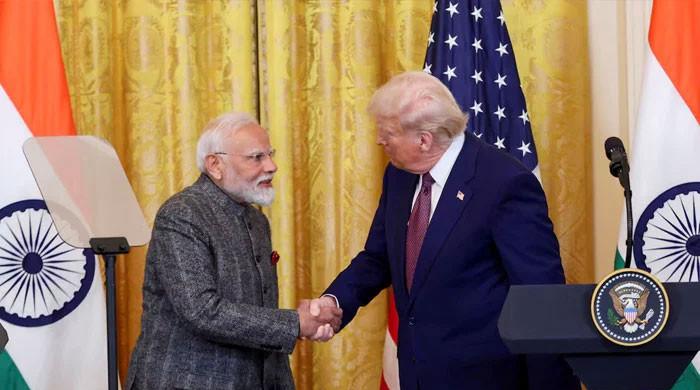
US President Donald Trump on Monday said he had agreed on a trade deal with India that slashes US tariffs on Indian goods to 18% from 50% in exchange for India lowering trade barriers, stopping its purchases of Russian oil and buying oil instead from the US and potentially Venezuela.
“Out of friendship and respect for Prime Minister Modi and, as per his request, effective immediately, we agreed to a Trade Deal between the United States and India, whereby the United States will charge a reduced Reciprocal Tariff, lowering it from 25% to 18%,” Trump said in a social media post following a call with Indian Prime Minister Narendra Modi.
A White House official told Reuters that the US was rescinding a punitive, 25% duty on all imports from India over its purchases of Russian oil that had stacked on top of a 25% “reciprocal” tariff rate.
Modi also committed to buy more than $500 billion worth of US energy, technology, agricultural and other products, Trump added.
“Wonderful to speak with my dear friend President Trump today. Delighted that Made in India products will now have a reduced tariff of 18%,” Modi said in a social media post on X. “Big thanks to President Trump on behalf of the 1.4 billion people of India for this wonderful announcement.”
US-listed shares of major Indian companies rallied on the news. IT consulting firm Infosys was up 3.53% in afternoon trading, consultancy Wipro rose 7%, HDFC Bank gained 3.4% and the iShares MSCI India exchange-traded fund rallied 3.3%.
On Saturday, Trump teased a potential deal for India to buy Venezuelan oil after the US seized Venezuelan President Nicolas Maduro in a military raid in early January.
The deal comes after months of tense trade negotiations between the world’s two largest democracies.
Last August, Trump doubled duties on imports from India to 50% to pressure New Delhi to stop buying Russian oil, and earlier this month said the rate could rise again if it did not curb its purchases.
Purchases of Venezuelan oil would help replace some of the Russian oil bought by India, the world’s third-biggest oil importer.
India relies heavily on oil imports, covering around 90% of its needs, and importing cheaper Russian oil has helped lower its import costs since Moscow invaded Ukraine in 2022 and western nations slapped sanctions on its energy exports.
Recently India has begun to slow its purchases from Russia. In January, they were around 1.2 million barrels per day, and are projected to decline to about 1 million bpd in February and 800,000 bpd in March, according to a Reuters report.
Indian markets have been battered since the tariffs were levied by Washington, making it the worst-performing market among emerging nations in 2025, with record outflows of foreign investors.
Entertainment
Notable Deaths in 2026
Demond Wilson, star of the 1970s sitcom “Sanford and Son.” | NBCUniversal via Getty Images
A look back at the esteemed personalities who left us this year, who’d touched us with their innovation, creativity and humanity.
By CBSNews.com senior producer David Morgan. The Associated Press contributed to this gallery.
Demond Wilson (Oct. 13, 1946-Jan. 30, 2026) was best known for playing Redd Foxx’s son Lamont on “Sanford and Son” in the early 1970s. Adapated by Norman Lear from the British comedy “Steptoe and Son,” about a grumpy and irascible junk man and his aspirational adult offspring, “Sanford and Son” was one of the earliest American sitcoms to feature a predominantly Black cast, and was for many years NBC’s top-rated show.
Born in Valdosta, Georgia, Wilson grew up in Harlem. As a child he appeared on radio and danced on the stage of the Apollo Theatre. As a teenager, a ruptured appendix led him to promise to devote himself to God.
He was wounded while serving with the Army in Vietnam, and upon his return to New York began acting off-Broadway, before going to Hollywood. After a guest role on Lear’s “All in the Family,” he was hired for one of the leads in “Sanford and Son.” In 2022, Wilson told the Associated Press that he was competing with Richard Pryor for the role opposite Foxx. “I said, ‘C’mon, you can’t put a comedian with a comedian. You’ve got to have a straight man,'” he said he told producers.
Debuting in 1972, the show ran on NBC for six seasons, and spent most of its run in the Nielsen Top 10 (frequently second only to Lear’s “All in the Family”). The series ended when ABC lured Foxx away to host his own variety show.
Wilson later starred in the TV shows “Baby I’m Back” and “The New Odd Couple” (playing Oscar Madison). He also appeared in “Girlfriends” and the film “The Organization.” But he did not find acting fulfilling, and in the 1980s he became an ordained minister. “Show business did not come out of me. I came out of show business,” he told Jet Magazine in 1985.
He also founded Restoration House of America, an organization that helps rehabilitate prison inmates and the formerly incarcerated, and wrote several books, including children’s stories.
Catherine O’Hara
Catherine O’Hara attends a sneak peek of “Schitt’s Creek” during the 11th Annual New York Television Festival, at SVA Theatre, October 22, 2015 in New York City. | Matthew Eisman/WireImage
Emmy-winning actress Catherine O’Hara (March 4, 1954-Jan. 30, 2026) was best-known for her roles on the sketch comedy series “SCTV,” “Schitt’s Creek,” and the films “Home Alone” and “Beetlejuice.”
Born in Toronto, O’Hara grew up in a family that encouraged being funny, she told The New York Times in 2016: “My dad would tell jokes, and my mom would tell stories and imitate everyone within the stories. I think everyone is born with humor, but your life can beat it out of you, sadly, or you can be lucky enough to grow up in it.”
A member of the Second City improv troupe, where she originally understudied for Gilda Radner, O’Hara helped create the Canadian series “SCTV,” for which she played a multitude of characters alongside cast members John Candy, Joe Flaherty, Eugene Levy, Andrea Martin, Dave Thomas and Harold Ramis. O’Hara dropped out of the cast for its third season, but rejoined after the show moved from syndication to NBC and then Cinemax. She won an Emmy as a co-writer.
Among her movie roles, O’Hara played quirky supporting characters in Martin Scorsese’s “After Hours” and Tim Burton’s “Beetlejuice,” and was also featured in “Dick Tracy,” “The Paper,” “Wyatt Earp,” and “Orange County.” But her most recognized role was as Macaulay Culkin’s mother in “Home Alone.” She was also part of Christopher Guest’s ensemble in his improvisational mockumentaries, including “Waiting for Guffman,” “Best in Show,” “A Mighty Wind,” and “For Your Consideration.”
Her biggest splash was as flamboyant matriarch Moira Rose in “Schitt’s Creek.” The show, created by her “SCTV” costar Eugene Levy and his son Dan, centers on a wealthy family losing all their money and being forced to live in a motel in a small town.
In 2016 O’Hara told “CBS This Morning” she had some initial reservations about doing the series. “You never know how long it’d go, and to lock into one character, that’s kind of scary,” she said.
“Schitt’s Creek” ran for six years, and in its final season won nine Emmys.
In addition to winning for playing Moira Rose in “Schitt’s Creek,” she was also Emmy-nominated for “Temple Grandin,” “The Last of Us,” and “The Studio.”
O’Hara shared with The New York Times her improv secret: “My crutch was, in improvs: when in doubt, play insane. Because you didn’t have to excuse anything that came out of your mouth. It didn’t have to make sense.”
Dr. William Foege
William Foege, physician and epidemiologist, receives the Presidential Medal of Freedom from President Barack Obama at the White House, May 29, 2012. | Andrew Harrer/Bloomberg via Getty Images
Dr. William Foege (March 12, 1936-Jan. 24, 2026), a physician and epidemiologist, was a leader in the global eradication of smallpox — one of humanity’s greatest public health victories.
His interest in global health was an outgrowth from his time when, at age 15, he was stuck in a body cast for three months. “We did not have television at that time,” he said in a 2021 interview for Exemplars in Global Health. “So, I was forced to read, and came across Albert Schweitzer, and became interested in Africa, and in medicine.”
Following medical school, and years before he served as director of the Centers for Disease Control and Prevention, Foege was a member of the CDC’s Epidemic Intelligence Service, as well as the Peace Corps, and studied at Harvard School of Public Health, where his interest in smallpox took hold.
Smallpox vaccination campaigns were well established by that time. In fact, the disease was no longer seen in the U.S. But infections still occurred elsewhere.
As a medical missionary in Nigeria in the 1960s, Foege and his colleagues developed a “ring containment” strategy, in which a smallpox outbreak was contained by identifying each smallpox case and vaccinating everyone with whom the patients might come into contact. The method relied heavily on quick detective work and was born out of necessity; there simply wasn’t enough vaccine available to immunize everyone, Foege wrote in his 2011 book “House on Fire.”
It worked, and was instrumental in ending the spread of the disease. The last naturally-occurring case of smallpox was spotted in Somalia in 1977. Three years later, the World Health Organization declared smallpox eradicated for good.
From 1977 to 1983, Foege was director of the CDC. He was later executive director at The Carter Center, and senior fellow at the Bill and Melinda Gates Foundation. In 2012, he received the Medal of Freedom from President Barack Obama. He was called “the Father of Global Health” by Duke University President Richard Brodhead.
Foege said in the 2021 interview that he advises students to think about editing their own obituary every day:
“‘You won’t realize it, but if you wake up in the morning knowing that you’re going to edit your obituary, it makes a difference what you will try to do that day.’ Is there a unifying field theory in all this? Yes. We belong to a group of optimists who believe that we can change the future. So, you wake up every morning knowing that you’re changing the future.”
“Uncle Floyd” Vivino
“Uncle Floyd” (Floyd Vivino) photographed in New Jersey in 1984. | MPIRock/MediaPunch via Getty Images
Beginning in the mid-1970s, “The Uncle Floyd Show” was a low-rent affair, broadcast from a UHF station whose studios were housed in an actual house in West Orange, New Jersey. Hosted by comedian and piano player Floyd Vivino (Oct. 19, 1951- Jan. 22, 2026), with a puppet named Oogie and a menagerie of vaudevillian sidekicks, the series — filled with corny jokes and skits, honky-tonk piano, musical acts, and letters from viewers — was ostensibly a children’s variety show, but it played more as a parody of kids show hosts like Soupy Sales (and presaged later ironic kids shows like “Pee-Wee’s Playhouse”).
“We produced the shows without a script and never a rehearsal,” he told NJ Arts in 2024.
The show appealed to older kids and to punk artists (Cyndi Lauper, Bon Jovi and The Ramones were musical guests). When David Bowie met Vivino backstage at a New York appearance, he told him he’d learned of “The Uncle Floyd Show” from John Lennon. Bowie even name-checked Uncle Floyd in his song “Slip Away.”
“The Uncle Floyd Show” developed a cult following. A broadcast window on NBC’s late-night schedule in the early ’80s, airing after David Letterman, was short-lived, and the show returned to cable until 2001.
Vivino, who hailed from a theatrical family and attended the American Academy of Dramatic Arts in New York, wore his love for all things New Jersey on his sleeve. (His anthem was “Deep in the Heart of Jersey.”) In addition to his live revue shows and charity events, he hosted radio broadcasts and podcasts, and made a few film appearances, including playing an Armed Forces Radio DJ opposite Robin Williams in “Good Morning, Vietnam.”
In a 2011 newspaper interview, Vivino described giving a performance while a high school student in Glen Rock, N.J. in 1968: “The orchestra was playing ‘Everything Is Coming Up Roses’ and I felt the rush of 600 people clapping for me. It was then and there that I knew I was going to be an entertainer. I did not belong on the basketball court or in the science lab.”
Valentino
Valentino, pictured in Rome with his models in an undated photo. | Pascal CHEVALLIER/Gamma-Rapho via Getty Images
The designs of Valentino Garavani (May 11, 1932-Jan. 19, 2026) were fashion-show staples for nearly half a century. Known by his first name, Valentino clothed royals, first ladies and movie stars, from Jackie Kennedy Onassis, Princess Diana and Queen Rania of Jordan, to Julia Roberts and Cate Blanchett.
Born into an affluent family in the northern Italian town of Voghera, his love of movies — and movie stars — lead him to fashion. He studied in Milan and Paris, and worked for designers Jean Desses and Guy Laroche, before launching his own firm in Rome in 1959.
“Why I ever thought I could go out on my own like that, God only knows,” Valentino told The New Yorker in 2005. “But my parents gave me a little money and I started. I had no idea what I was getting into. Sometimes ignorance is a wonderful thing.”
Besides his trademark shade of red, Valentino’s recognized flourishes included bows, ruffles, lace and embroidery.
Valentino’s firm would expand to include ready-to-wear, menswear and accessories. In 1998, he and his partner, Giancarlo Giammetti, sold the label to an Italian holding company for an estimated $300 million, with Valentino remaining in a design role until 2008.
In a 2016 interview with The Talks, Valentino said beauty was the most important thing to him: “Since I was a child I loved the way a dress looks, I admired a great face, a lovely body. I enjoy the beauty in a woman, in a man, in a child, in a painting. Beautiful things are important and make life important. Since I was a kid, I’ve been encouraging myself to appreciate beauty.”
Bob Weir
Jerry Garcia and Bob Weir perform with the Grateful Dead at the Greek Theater in Berkeley, Calif., Sept. 13, 1981. | Clayton Call/Redferns via Getty Images
In 1963, Jerry Garcia met singer and musician Bob Weir (Oct. 16, 1947-Jan. 10, 2026) in a Palo Alto, California, music shop. Weir was 16, struggling in school but showing promise on the guitar. With drummer Bill Kreutzmann, bassist Phil Lesh and keyboardist Ron “Pigpen” McKernan, they soon founded what became one of the world’s most beloved bands, creating improvisational jams of blues, jazz, folk, country and psychedelia.
The Grateful Dead grew into a touring powerhouse, playing for an army of loyal fans as they built a presence spreading from the San Francisco Bay Area. Over three decades they only had one Top 10 hit (1987’s “Touch of Grey”), but at their peak, they took in $50 million or more a year from live shows. In the days before social media and viral marketing, “Deadheads” were encouraged to record concerts and trade tapes, creating an archive of performance art unparalleled in the music industry.
“Longevity was never a major concern of ours,” Weir said during the 2025 Grammys, when the Dead received the MusiCares Persons of the Year honor. “Spreading joy through the music was all we ever really had in mind, and we got plenty of that done.”
It looked like the “long, strange trip” would end when Garcia died in 1995 at the age of 53. But the Dead continued — and Weir was instrumental in keeping the sound of San Francisco’s counterculture alive. The remaining band members played together and, in collaboration with guitarist John Mayer, also toured as Dead & Company. Weir also released live albums with Wolf Bros., and even performed Dead music with symphony orchestras — truly classic rock. Weir also founded the Tamalpais Research Institute, a high-tech studio for streaming live audio and video on the internet.
In 2024 the Grateful Dead were named Kennedy Center Honorees.
“A song is a living critter,” Weir told “Sunday Morning” in 2022. “If I may wax hippie metaphysical for you, the characters in those songs are real. They live in some other world, and they come and visit us through the musicians, through the artists who have dedicated their lives to being that medium and inviting those critters from other worlds to come and visit our world and entertain the folks, because that’s all they want to do. It’s they just want to meet us and we meet them, and that’s what we do.”
Entertainment
Trump cuts tariff on India by 18% after PM Modi pledges to end Russian oil buys
U.S. President Donald Trump announced on Monday, February 2, to reduce U.S. tariffs on Indian goods after India agreed to halt purchases of Russian oil.
This marks a victory for the Trump administration, which has been pressuring allies for years to economically isolate Russia over its war in Ukraine.
In his statement, Trump announced 18% reduction in tariffs from a combined rate of 50%.
In exchange, Indian Prime Minister Narendra Modi agreed to stop purchasing Russian crude oil.
On his Truth Social platform, Trump wrote, “This will help END THE WAR in Ukraine.”
Additionally, he stated that India will reduce its import tariffs on U.S. goods by 0% and purchase $500 billion in U.S. products.
Indian Prime Minister also exchanged words on social media, calling Trump’s leadership “viral for global peace” and shared his deep desire to take India-U.S. ties to “unprecedented heights.”
Previously, both countries had months of strained relations over this issue.
Last summer, Trump announced 25% tariffs on Indian goods, referring to an imbalanced trade relationship and India’s refusal to stop Russian oil imports.
In August, Trump imposed an additional 25% tariff to punish India for its continued energy purchases from Russia.
The U.S.-India deal comes days after the European Union agreed to a free trade agreement with India, highlighting a significant global shift in trade partnerships.
Entertainment
Welsh singer Tony Jones passes away at 86 after remarkable career
Welsh singer, a much loved artist who left an impact on the industry, has passed away after spending more than 60 years in music.
Tony Jones, best known as one half of the famous duo Tony and Aloma, has died at the age of 86.
Tony was a familiar and cherished name in Welsh music and for decades, he performed all over Wales and other places as well, appearing in cabaret shows, television programmes and live concerts.
However, Tony and Aloma became hugely popular during the 60s and 70s, winning the hearts of fans with their music.
The duo sold more than 100,000 albums and were known for hit songs including Mae Gen i Cariad and Dim Ond Ti a Fi.
After eight years apart, Tony and Aloma reunited back in the mid 1980s, bringing joy to fans who followed their journey for years.
Aloma, meanwhile, shared an emotional message through a family member, saying: “Thanks you all for your sympathy and your kind words, without you all there would be no Tony and Aloma.”
Musicians Iona and Andrew Boggie also paid tribute, calling him “a great songwriter, a wonderful voice and a very lovely person.”
Furthermore, Sain record company described Tony as “a friend of Sain for decades” and thanked him for lasting contribution to Welsh music.
-
Sports6 days agoPSL 11: Local players’ category renewals unveiled ahead of auction
-
Entertainment6 days agoClaire Danes reveals how she reacted to pregnancy at 44
-
Tech1 week agoICE Asks Companies About ‘Ad Tech and Big Data’ Tools It Could Use in Investigations
-
Business6 days agoBanking services disrupted as bank employees go on nationwide strike demanding five-day work week
-
Fashion1 week agoSpain’s apparel imports up 7.10% in Jan-Oct as sourcing realigns
-
Sports6 days agoCollege football’s top 100 games of the 2025 season
-
Politics6 days agoTrump vows to ‘de-escalate’ after Minneapolis shootings
-
Sports6 days agoTammy Abraham joins Aston Villa 1 day after Besiktas transfer