

Politics
Trump pleads NATO and China for help to reopen Strait of Hormuz

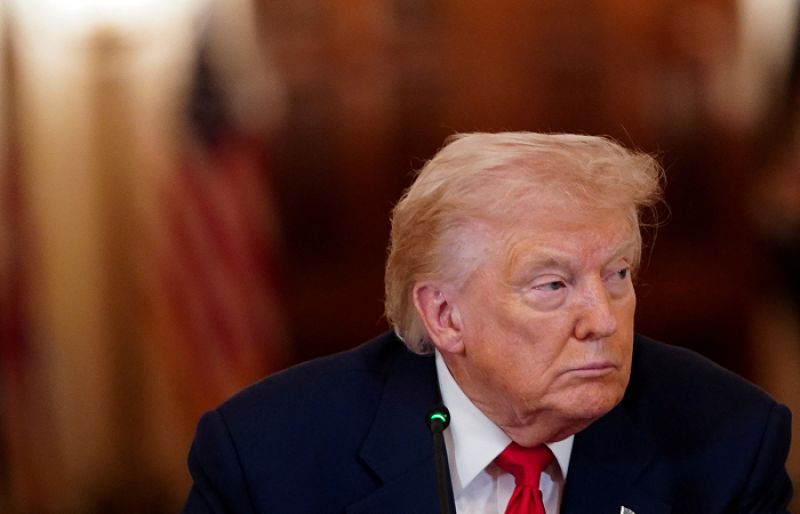

In a brief interview with The Financial Times, Trump said that as the United States has aided Ukraine in the war with Russia, he expects Europe to help on the Strait of Hormuz, whose closure has sent energy prices soaring around the world.
“If there’s no response or if it’s a negative response I think it will be very bad for the future of NATO,” said Trump, who over the years has criticized the alliance as freeloading on US largesse.
Trump also said an upcoming summit in Beijing with his Chinese counterpart Xi Jinping could be delayed as he presses for China’s help to open the strait.
“We’d like to know before” the summit, Trump said, noting that China as well as many European countries rely more than the United States on oil flowing from the Gulf.
“It’s only appropriate that people who are the beneficiaries of the Strait will help to make sure that nothing bad happens there,” Trump said.
Trump said separately to reporters travelling with him on Air Force One that the United States was in discussions with “about seven” countries on getting help to reopen the Strait of Hormuz.
Asked about specific help he was looking for, Trump told the FT he wanted minesweepers as well as “people who are going to knock out some bad actors that are along the (Iranian) shore.”
Uncertainty about how long the war against Iran might last has rattled oil markets, where crude prices have surged over the past two weeks due to the supply risks.
On Sunday, the US benchmark West Texas Intermediate opened 2.5 percent higher at $100.22 a barrel, while the price of Brent, the international benchmark, rose 2.9 percent to $106.11 a barrel.
Flights temporarily suspended at Dubai airport
Flights were temporarily suspended Monday at Dubai’s airport, previously one of the world’s busiest, after a “drone-related incident” sparked a fire nearby, city authorities said.
The incident impacted a fuel tank, the Gulf financial hub’s media office said, later adding authorities had extinguished the blaze that broke out and no injuries had been reported.
Iran calls strikes on Tehran fuel depots ‘ecocide’
Iran’s Foreign Minister Abbas Araghchi said on Monday that Israeli strikes on Tehran fuel depots constituted “ecocide” due to the long-term risks to residents’ health.
Trump says ‘talking’ to Iran
President Trump said that the United States was in discussions with Iran as the war enters its third week but that Tehran was not ready for a deal to end it. “But I don’t think they’re ready.
But they are getting pretty close,” Trump said. Iran’s foreign minister had denied earlier that any talks with the United States were taking place.
Macron tells Iran attacks on French interests ‘unacceptable’
French President Emmanuel Macron said Sunday he had told Iranian President Masoud Pezeshkian it was “unacceptable” to target French interests, after an Iranian-designed drone killed a French soldier in Iraq’s Kurdistan region last week.
“I called on him to put an immediate end to the unacceptable attacks that Iran is carrying out against countries in the region, whether directly or through proxies, as in Lebanon and Iraq,” Macron said on X after his call with Pezeshkian.
Israel strikes Beirut again
Israel launched a fresh strike on Beirut’s southern suburbs late Sunday as Israel’s military said it was striking Hezbollah infrastructure in the city following earlier raids mainly in the country’s south.
On Sunday morning, an AFP photographer in south Beirut saw empty streets covered with debris and buildings flattened, with smoke still rising from strikes in previous days.
Israel has ‘thousands’ more targets
“We still have thousands of targets in Iran, and we are identifying new targets every day,” Israeli military spokesman Brigadier General Effie Defrin told a televised briefing.
Trump-Starmer call
US President Donald Trump and British Prime Minister Keir Starmer spoke about the “importance” of reopening the Strait of Hormuz, currently blocked by Iran, the UK leader’s office said.
Iran hikes wages
Iran’s labour minister has announced a more than 60-percent hike in the minimum wage, local media reported, months after anti-government protests that began over discontent with dire economic conditions.
UN force shot at
The United Nations Interim Force in Lebanon said its peacekeepers were fired upon three times, “likely by non-state armed groups”, in the country’s south, two days after another position was hit.
Baghdad airport hit
Five people were wounded in a rocket attack on the Baghdad airport complex, which houses a US diplomatic facility, Iraqi authorities said.
Rafah crossing to partially reopen
Israel said it would partially reopen Gaza’s Rafah crossing with Egypt on Wednesday, after it closed the key gateway when it launched strikes on Iran.
Oil reserves released
Strategic oil reserves will be released “immediately” in Asia and Oceania, and as early as the end of March in America and Europe, the International Energy Agency said, as governments try to contain the surge in prices caused by the war.
Iran says no talks
Foreign Minister Abbas Araghchi said Iran was not interested in talks with the United States, pushing back on Trump’s stance that Tehran wants a deal to end the war.
Israelis injured
At least eight people were injured in Israel following repeated missile launches from Iran, at least two of which contained cluster munitions, according to Israeli authorities.
Italy-US base hit
Italy’s military said there had been a drone attack on the Ali Al Salem airbase in Kuwait hosting Italian and US forces, but said all its personnel were safe.
Lebanon says 850 dead
Lebanon’s health ministry said Israeli attacks have killed 850 people in the country during two weeks of war between Israel and Iran-backed militant group Hezbollah, including 66 women, 107 children and 32 health workers, with 2,105 wounded.
Hezbollah missile
Hezbollah said its fighters targeted Israel’s Palmachim air base south of Tel Aviv with “an advanced missile”.
Hamas official killed
An Israeli strike in south Lebanon’s Sidon area killed Hamas official Wissam Taha, a source from the Palestinian militant group told AFP, after state media reported a strike on an apartment.
Overnight strikes in Sidon and nearby Al-Qatrani killed at least four people, Lebanese state media and the government said.


NEW DELHI: A fire at a government-run hospital in eastern India killed at least 10 critically ill patients who were admitted in the trauma care unit, officials said on Monday.
Building fires are common in India due to a lack of firefighting equipment and a routine disregard for safety regulations.
The fire broke out early Monday on the first floor of the SCB Medical College and Hospital in Odisha state’s Cuttack city, Chief Minister Mohan Charan Majhi told reporters.
“A short circuit caused the fire in the trauma ICU ward where patients were being treated,” he said, adding that 23 patients were present on the floor at the time of the incident.
Ten people died following the blaze, while the remaining patients were moved to other wards, he added.
At least 11 staff members suffered burn injuries as they tried to rescue the patients.
Prime Minister Narendra Modi called the incident “deeply painful” in a post on social media and offered his condolences to the families of the victims.
He also announced compensation of $2,160 to affected families.
Electrical short circuits, often caused by poorly maintained wiring, remain the leading cause of fire incidents in India.
In 2024, a fire at a private hospital in the southern state of Tamil Nadu killed at least six people and injured more than two dozen.
The same year, 10 newborns were killed when a fire engulfed a hospital in the northern state of Uttar Pradesh.
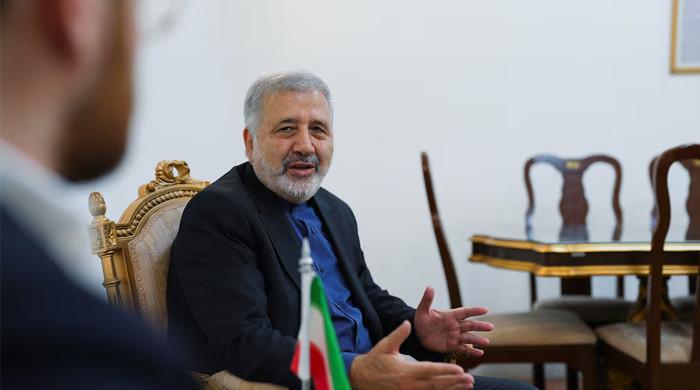
- Iran wants “serious review” of Gulf ties, says ambassador to Riyadh.
- Alireza Enayati did not say who had carried out attacks in Kingdom.
- “Iran was only attacking US and Israeli targets and interests.”
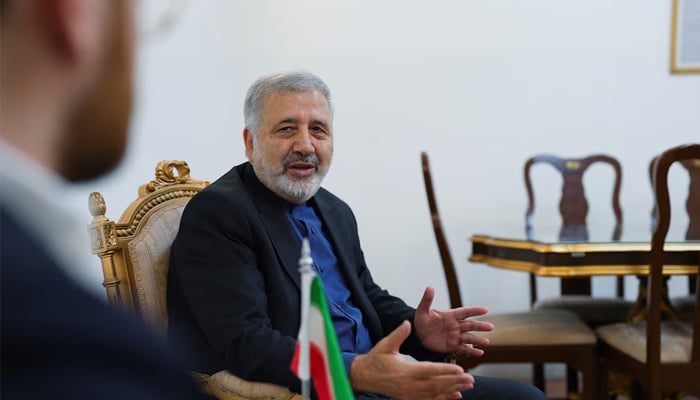
RIYADH: Iran’s relations with Gulf states will require a “serious review” in light of the US-Israeli war on Iran, limiting the power of external actors so the region can become prosperous, Tehran’s ambassador to Saudi Arabia told Reuters on Sunday.
Asked if he was concerned that relations would be harmed by the war, Ambassador Alireza Enayati said: “It’s a valid question, and the answer may be simple. We are neighbours and we cannot do without each other; we will need a serious review.”
“What the region has witnessed over the past five decades is the result of an exclusionary approach [within the region] and an excessive reliance on external powers,” he said in a written response to questions, calling for deeper ties between the Gulf Cooperation Council’s six members, along with Iraq and Iran.
Gulf Arab states have faced more than 2,000 missile and drone attacks since the outbreak of the war on February 28, with targets including US diplomatic missions and military bases but also critical Gulf oil infrastructure, ports, airports, and hotels.
The United Arab Emirates, which normalised relations with Iran’s arch-foe Israel in 2020, has faced the brunt of the attacks. But all Gulf Arab states have been impacted, and all have condemned Iran.
Behind the scenes, analysts and regional sources say there is also growing frustration at the US, long their security guarantor, at dragging them into a war they did not endorse but for which they are paying a hefty price.
In Saudi Arabia, attacks have been concentrated on the eastern region where most of the kingdom’s oil is produced, as well as the Prince Sultan Airbase hosting US forces east of Riyadh, and the Diplomatic Quarter on the Saudi capital’s western edge, according to Saudi defense ministry statements.
Saudi Arabia and Iran re-established full diplomatic relations in 2023 after years of enmity.
Iran ‘not responsible’ for attacks on Saudi oil sector
Enayati denied that Iran was responsible for the attacks on Saudi Arabia’s oil infrastructure, including the Ras Tanura refinery on the east coast and dozens of attempted drone attacks on the Shaybah oil field in the desert near the UAE border.
“Iran is not the party responsible for these attacks, and if Iran had carried them out, it would have announced it,” he said. He did not say who had carried out the attacks.
Saudi Defense Ministry statements have not assigned blame for individual incidents. Enayati said Iran was only attacking US and Israeli targets and interests.
Enayati said he personally was in ongoing contact with Saudi officials, with relations “progressing naturally” in many areas. He highlighted Saudi cooperation regarding the departure of Iranians who were in the kingdom for religious pilgrimage and the provision of medical assistance to others.
He said Tehran was in contact with Riyadh regarding Saudi Arabia’s publicly stated position that its land, sea and air would not be used to attack Iran, without elaborating on the discussions.
His message to Gulf states was that the war “has been imposed on us and the region.”
To resolve the conflict, the US and Israel must halt their attacks and regional countries should not be involved, while international guarantees must be secured to prevent their recurrence, he said.
“Only then can we focus on building a prosperous region,” he said.
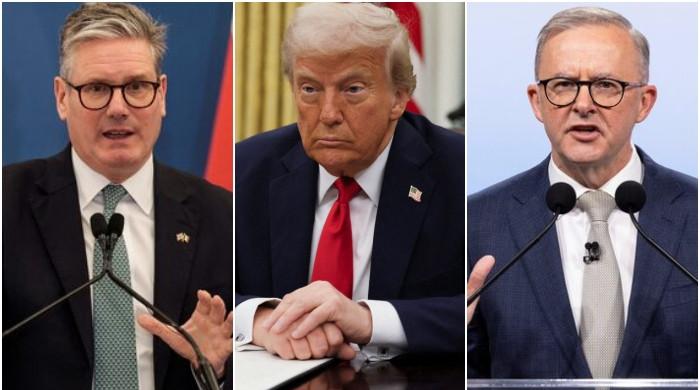
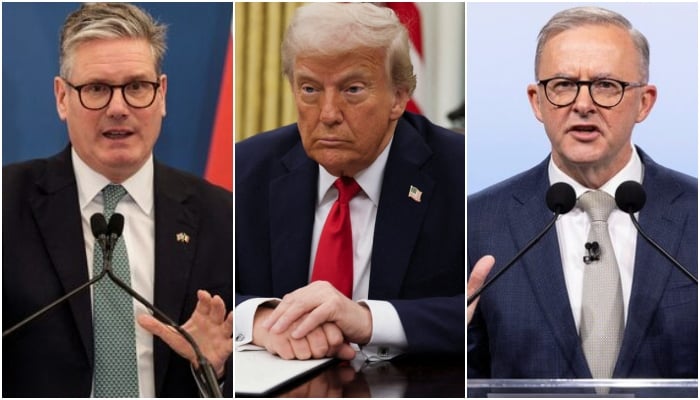
US President Donald Trump called on allies over the weekend to help secure the Strait of Hormuz as Iranian forces continue attacks on the vital waterway amid the US-Israeli war on Iran, now in its third week.
Trump said his administration has already contacted seven countries, but declined to identify them. In an earlier social media post, he said that he hoped China, France, Japan, South Korea, Britain and others would participate.
Iran has effectively shut the Strait, a narrow passage of water between Iran and Oman, choking off a fifth of global oil supply in the biggest disruption ever.
Below are how some countries have responded to Washington’s call to send ships to the region:
Japan
Japan does not currently plan to dispatch naval vessels to escort ships in the Middle East, Prime Minister Sanae Takaichi said on Monday.
“We have not made any decisions whatsoever about dispatching escort ships. We are continuing to examine what Japan can do independently and what can be done within the legal framework,” Takaichi told parliament.
Takaichi will travel to Washington this week for talks with Trump that she said will cover the conflict with Iran.
Australia
Australia will not send naval ships to assist in reopening the Strait of Hormuz, a government minister said on Monday.
“We won’t be sending a ship to the Strait of Hormuz. We know how incredibly important that is, but that’s not something that we’ve been asked or that we’re contributing to,” Catherine King, a member of Prime Minister Anthony Albanese’s cabinet, said in an interview with state broadcaster ABC.
South Korea
“We will communicate closely with the U.S. regarding this matter and make a decision after careful review,” South Korea’s presidential office said on Sunday.
Under South Korea’s constitution, overseas troop deployments require parliamentary approval, and opposition figures have said any dispatch of warships to the Strait would need consent from the legislature.
Britain
Prime Minister Keir Starmer discussed the need to reopen the Strait to end disruption to global shipping with Trump, a Downing Street spokeswoman said on Sunday.
Starmer also spoke with Canadian Prime Minister Mark Carney, and they have agreed to continue talks on the Middle East conflict at a meeting on Monday, the spokeswoman added.
EU
EU foreign ministers will on Monday discuss bolstering a small naval mission in the Middle East but they are not expected to discuss expanding its role to include the choked-off Strait, diplomats and officials say.
The EU’s Aspides mission was established in 2024 to protect ships from attacks by Yemen’s Houthi rebel group in the Red Sea.
Germany
German Foreign Minister Johann Wadephul said on Sunday that Aspides – named after the Greek word for “shields” — was not even effective in carrying out its current task.
“That is why I am very sceptical that extending Aspides to the Strait of Hormuz would provide greater security,” he said in an interview with Germany’s ARD television.


Transfer rumors, news: Real Madrid plot move for Bayern’s Olise

Dhaka seeks temporary US waiver to import Russian oil

Harry Styles takes hilarious dig at Andrew's arrest on ‘SNL'

India let Iran warship dock the day US sank another off Sri Lanka, say officials

Harry Styles kicks off new era with ‘One Night Only’ comeback show

Stock market crash today (March 12, 2026): Nifty50 opens below 23,600; BSE Sensex down over 900 points on continuing US-Iran war – The Times of India

-
 Politics1 week ago
India let Iran warship dock the day US sank another off Sri Lanka, say officials
-
 Entertainment1 week ago
Harry Styles kicks off new era with ‘One Night Only’ comeback show
-
Business4 days ago
Stock market crash today (March 12, 2026): Nifty50 opens below 23,600; BSE Sensex down over 900 points on continuing US-Iran war – The Times of India
-

 Tech1 week ago
It’s Time to Wrangle Your Messy Wires With Our Handy Guide to Cable Management
-

 Fashion6 days ago
Intertextile Shanghai 2026: Fringe events spotlight market trends
-
 Business1 week ago
Inside the booming business of wellness third spaces and membership clubs
-

 Sports1 week ago
Eight Pakistanis Appointed to ITF and ATF Committees for 2026–2027 – SUCH TV
-

 Sports1 week ago
Longtime Blackhawks great and broadcaster Troy Murray dies at 63, team says