

Politics
Trump says India will buy oil from Venezuela, not Iran

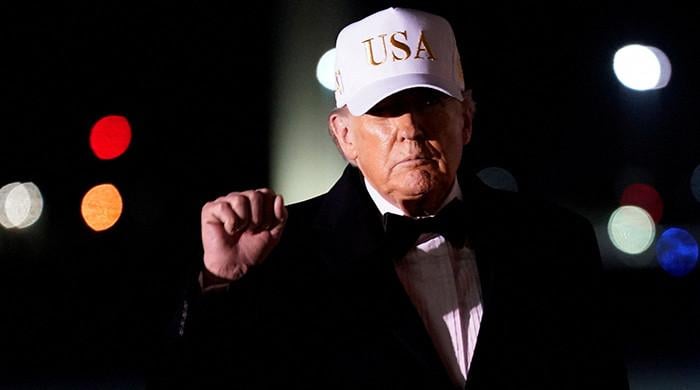
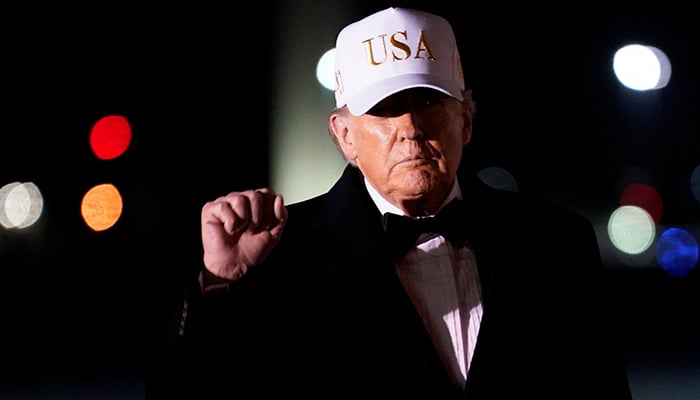
US President Donald Trump has said India will buy Venezuelan oil, as opposed to purchasing oil from Iran.
“We’ve already made that deal, the concept of the deal,” Trump told reporters aboard Air Force One as he travelled to his vacation home in Florida from Washington.
Reuters reported on Friday that the United States has told Delhi it could soon resume purchases of Venezuelan oil to help replace imports of Russian oil, citing three people familiar with the matter.
India has not been importing significant amounts of Iranian oil due to US sanctions, but became a major buyer of Russian oil after Russia’s invasion of Ukraine in 2022 triggered Western sanctions that drove down its price.
Trump in August doubled duties on imports from India to 50% to pressure New Delhi to stop buying Russian oil, and earlier this month said the rate could rise again if it did not curb its purchases.
However, Treasury Secretary Scott Bessent signaled in January that the additional 25% tariff on Indian goods could be removed, given what he called a sharp reduction in Indian imports of Russian oil.
Trump in March 2025 also imposed a 25% tariff on countries buying Venezuelan oil, including India. The US government this week lifted some sanctions on Venezuela’s oil industry to make it easier for US companies to sell its crude oil.
Trump’s comments on Saturday appeared to reflect continued improvement in US-India relations, which have been tense throughout the past year.
Trump also said China could make a deal with the US to buy Venezuelan oil.
“China is welcome to come in and would make a great deal on oil,” Trump said, without providing any details.
Politics
Trump approved Iran operation after Netanyahu argued for joint assassination of Khamenei: sources
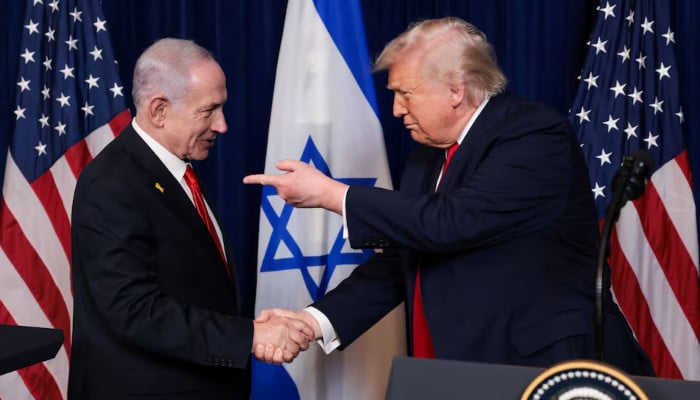
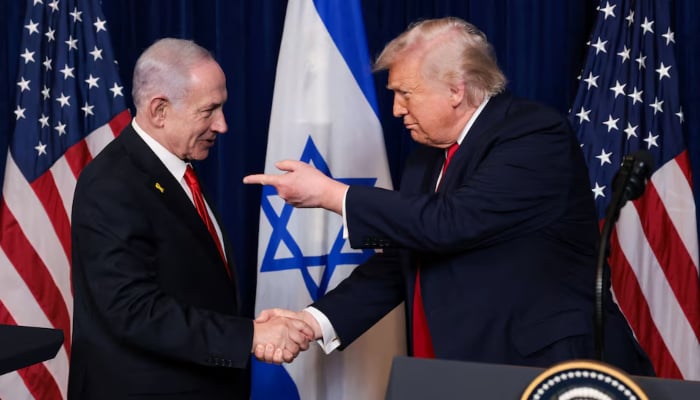
- Netanyahu lobbied hard for Iran attack.
- Rubio warned US facilities will be targeted.
- Operation Epic Fury launched Feb 27.
Less than 48 hours before the US-Israeli strike on Iran began, Prime Minister Benjamin Netanyahu spoke by phone to President Donald Trump about the reasons for launching the kind of complex, far-off war the American leader once had campaigned against.
Both Trump and Netanyahu knew from intelligence briefings earlier in the week that Iranian Supreme Leader Ayatollah Ali Khamenei and his key lieutenants would soon meet at his compound in Tehran, making them vulnerable to a “decapitation strike” — an attack against a country’s top leaders often used by Israelis but traditionally less so by the United States.
But new intelligence suggested that the meeting had been moved from Saturday night to Saturday morning, according to three people briefed on the call.
The call has not been previously reported.
Netanyahu, determined to move forward with an operation he had urged for decades, argued that there might never be a better chance to assassinate Khamenei
By the time the call took place, Trump already had approved the idea of the United States carrying out a military operation against Iran but had not yet decided when or under what circumstances the United States would get involved, said the sources, who spoke on condition of anonymity to discuss sensitive internal deliberations.
The US military had for weeks built up a presence in the region, prompting many within the administration to conclude it was just a matter of when the president would decide to move forward. One possible date, just a few days earlier, had been scuttled because of bad weather.
Reuters was unable to determine how Netanyahu’s argument affected Trump as he contemplated issuing orders to strike, but the call amounted to the Israeli leader’s closing argument to his US counterpart.
The three sources briefed on the call said they believed it — along with the intelligence showing a closing window to assassinate Iran’s leader — was a catalyst for Trump’s final decision to order the military on February 27 to move ahead with Operation Epic Fury.
The first bombs struck on Saturday morning, February 28. Trump announced that evening that Khamenei was dead.
In response to a request for comment, White House spokeswoman Anna Kelly did not directly address the call between Trump and Netanyahu but told Reuters the military operation was designed to “destroy the Iranian regime’s ballistic missile and production capacity, annihilate the Iranian regime’s Navy, end their ability to arm proxies, and guarantee that Iran can never obtain a nuclear weapon.”
Neither Netanyahu’s office nor Iran’s UN representative responded to comment requests.
Netanyahu in a news conference on Thursday dismissed as “fake news” claims that “Israel somehow dragged the US into a conflict with Iran. Does anyone really think that someone can tell President Trump what to do? Come on.”
Trump has said publicly that the decision to strike was his alone.
Reuters reporting, with officials and others close to both leaders speaking mostly on condition of anonymity given the sensitivity of internal deliberations, does not suggest that Netanyahu forced Trump to go to war.
But the reporting shows that the Israeli leader was an effective advocate and that his framing of the decision — including the opportunity to assassinate an Iranian leader — was persuasive to the president.
Defence Secretary Pete Hegseth in early March suggested that revenge was at least one motive for the operation, telling reporters, “Iran tried to kill President Trump, and President Trump got the last laugh.”
June attack targeted nuclear sites
Trump ran his campaign in 2024 based on his first administration’s foreign policy of “America First” and said publicly that he wanted to avoid war with Iran, preferring to deal with Tehran diplomatically.
But as discussions over Iran’s nuclear programme failed to produce a deal last spring, Trump began contemplating a strike, according to the three people familiar with White House deliberations.
A first attack came in June, when Israel bombed Iran’s nuclear facilities and missile sites, and killed several Iranian leaders. US forces later joined the attack, and when that joint operation ended after 12 days, Trump publicly reveled in the success, saying the US had “obliterated” Iran’s nuclear facilities.
Yet months later, talks began again between the US and Israel about a second aerial attack aimed at hitting additional missile facilities and preventing Iran from gaining the ability to build a nuclear weapon.
The Israelis began to plan their attack on Iran under the assumption they would be acting alone, Defence Minister Israel Katz told Israel’s N12 News on March 5.
But during a December visit to Trump’s Mar-a-Lago estate in Florida, Netanyahu told Trump that he was not fully satisfied with the outcome of the joint operation in June, said two people familiar with the relationship between the two leaders, speaking on condition of anonymity.
Trump indicated he was open to another bombing campaign, the people added, but he also wanted to try another round of diplomatic talks.
Two events pushed Trump toward attacking Iran again, according to several US and Israeli officials and diplomats.
The US operation on January 3 to capture Venezuela’s President Nicolas Maduro in Caracas — which resulted in no American deaths while removing from power a longstanding US foe — demonstrated the possibility that ambitious military operations could have few collateral consequences for US forces.
Later that same month, massive anti-government protests erupted in Iran. Trump vowed to help the protesters but did little immediately that was public.
Privately, however, cooperation intensified between the Israel Defence Forces and the US military’s Middle East command, known as Centcom, with joint military planning conducted during secret meetings, according to two Israeli officials, speaking on condition of anonymity.
Not long after, during a February visit by Netanyahu to Washington, the Israeli leader briefed Trump on Iran’s growing ballistic missile programme, pointing out specific sites of concern.
He also laid out the dangers of the ballistic missile programme, including the risk that Iran might eventually gain the ability to strike the American homeland, said three people familiar with the private conversations.
The White House did not respond to questions about Trump’s December and February meetings with Netanyahu.
Trump’s chances at history
By late February, many US officials and regional diplomats considered a US attack on Iran very likely to proceed, though the details remained uncertain, according to two other US officials, one Israeli official and two additional officials familiar with the matter.
Trump was briefed by Pentagon and intelligence officials on the potential advantages to be gained from a successful attack, including the decimation of Iran’s missile program, according to two people familiar with those briefings.
Before the phone call between Netanyahu and Trump, Secretary of State Marco Rubio told a small group of top Congressional leaders on February 24 that Israel was likely to attack Iran, whether or not the US participated, and Iran would then likely retaliate against US targets, according to three people briefed on the meeting.
Behind Rubio’s warning was an assessment by American intelligence officials that such an attack would indeed provoke counterstrikes from Iran against US diplomatic and military outposts and US Gulf allies, said three sources familiar with US intelligence reports.
This prediction proved accurate. The strikes have led to Iranian counterattacks on US military assets, the deaths of more than 2,300 Iranian civilians and at least 13 US service members, attacks on US Gulf allies, the closure of one of the world’s most vital shipping routes, and a historic spike in oil prices that is already being felt by consumers in the United States and beyond.
Trump had also been briefed that there was a chance, even if small, that the assassination of Iran’s top leaders could usher in a government in Tehran that was more willing to negotiate with Washington, said two other people familiar with Rubio’s briefing.
The possibility of regime change was one of Netanyahu’s arguments in the call shortly before Trump gave final orders to attack Iran, said the people briefed on it.
That view was not held by the Central Intelligence Agency, which had assessed in the weeks prior that Khamenei would likely be replaced by an internal hardliner if he was killed, as Reuters previously reported.
The CIA did not immediately respond to a request for comment.
Trump repeatedly called for an uprising after Khamenei was assassinated. With the war in its fourth week and the region engulfed in conflict, Iran’s Revolutionary Guards still patrol the nation’s streets. Millions of Iranians remain sheltered in their homes.
Khamenei’s son Mojtaba, considered even more harshly anti-American than his father, has been named the new supreme leader of Iran.
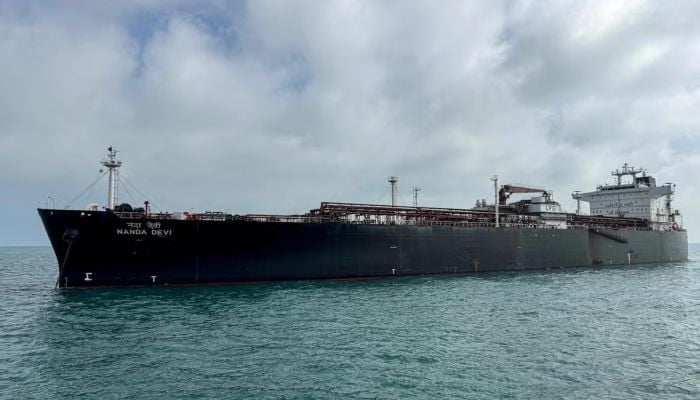
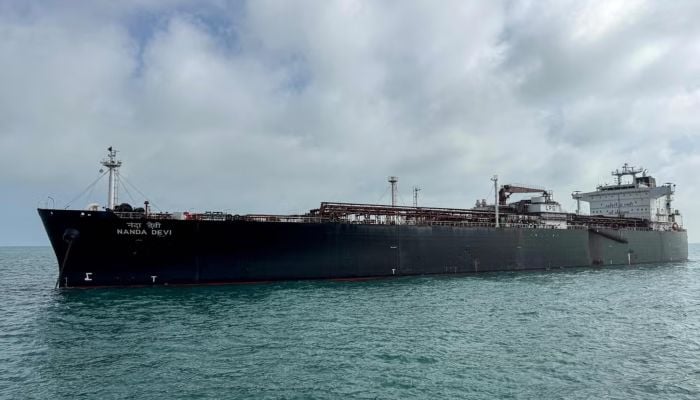
LONDON: Just a trickle of cargo ships and tankers — most of them Iranian — have made it through the Strait of Hormuz since Iranian forces effectively blocked the crucial trade route in the Middle East war.
Here are facts and figures about vessels that have passed through the 167-kilometre (104-mile) long strait since the war broke out with US-Israeli strikes on Iran on February 28.
95% shipping drop
From March 1 to 1600 GMT on March 23, commodities carriers made just 144 crossings, according to analytics firm Kpler — a 95% decrease from peacetime.
Of these, 91 crossings were by oil and gas tankers and more than half were loaded, Kpler data showed, with most travelling east out of the strait.
“Traffic through the Strait of Hormuz continues to be severely disrupted,” shipping intelligence journal Lloyd’s List said in its latest update Monday.
On Monday, two Indian-flagged tankers carrying liquefied petroleum gas (LPG) and a China-bound carrier were among the latest to navigate the strait, according to Kpler.
The Panama-flagged Bright Gold was due to arrive in China on April 13 with around 40,000 tonnes of methanol.
A Chinese-owned containership — the Newvoyager — also transited the waterway after making a payment to Iranian authorities, Lloyd’s List reported.
The exact amount and method of payment could not be confirmed, it said.
New approved route?
Monday’s crossings all appeared to have used a purported Tehran-approved northern route around Larak Island just off the Iranian coast.
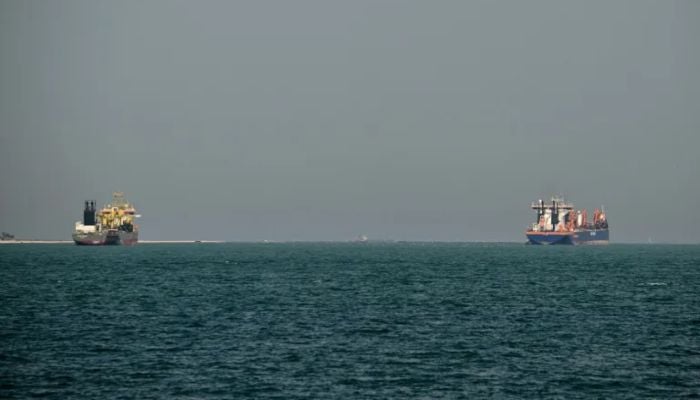
Lloyd’s List updated Monday that it has tracked more than 20 ships using the so-called corridor, with the majority Greek-owned but others Indian-, Pakistan- and Syrian-owned.
It added that the Iranian authorities are reportedly handling transit requests on a case-by-case basis while some governments, including India, were said to be negotiating with Tehran for bulk passage arrangements.
At least one vetted vessel paid a reported $2 million payment to pass safely through the strait, Lloyd’s List reported last week.
Two of the vessels navigating it Monday — the Bright Gold and the Indian tanker Pine Gas — kept their AIS transponders on, a rare occurrence for a non-Iranian vessel in the current climate.
Iranian, Greek, Chinese ships
The biggest proportion of ships to have passed through the strait are owned or flagged in Iran, followed by Greek and Chinese carriers, Bridget Diakun, an analyst at Lloyd’s List Intelligence, said last week.
“Although Iran is continuing to control the Strait and exit its own oil, everything else is largely still at a standstill,” Meade previously noted.
51 sanctioned ships
Since the war started, more than 40% of the ships transiting the strait have been under US, EU or UK sanctions, according to an AFP analysis of passage data.
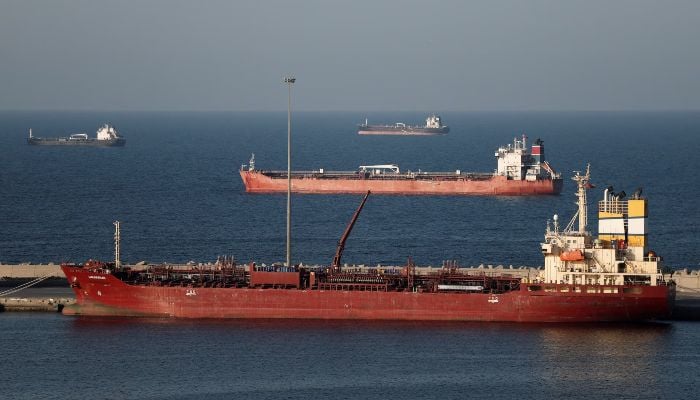
Of the oil and gas tankers, nearly 59% were under sanctions.
Since March 16, “anything heading westbound has been shadow fleet, gas carriers or tankers… they absolutely dominate the traffic going through,” Diakun told the Lloyds briefing.
Oil, LNG to Asia
Commodities analysts at JPMorgan bank have noted that most of the oil passing through the strait was headed for Asia, principally China.
Cichen Shen, Asia Pacific editor at Lloyd’s List, said there were indications online that Chinese authorities were working on “some sort of exit plan” for their big tankers stuck in the region.
Meanwhile, Europe-bound LNG cargoes have been diverted to Asia, according to MarineTraffic.
It noted that around 11 LNG tankers originally bound for Europe have been diverted to Asia since March 3, according to its analysis of market data, amid restricted supply and rising spot prices.
1.3m barrels of Iran oil
The JPMorgan analysts said overall 98% of the observable oil traffic through the strait was Iranian, averaging 1.3 million barrels a day “in early March”.
A fifth of the world’s oil and liquefied natural gas passes through the strait in peacetime.
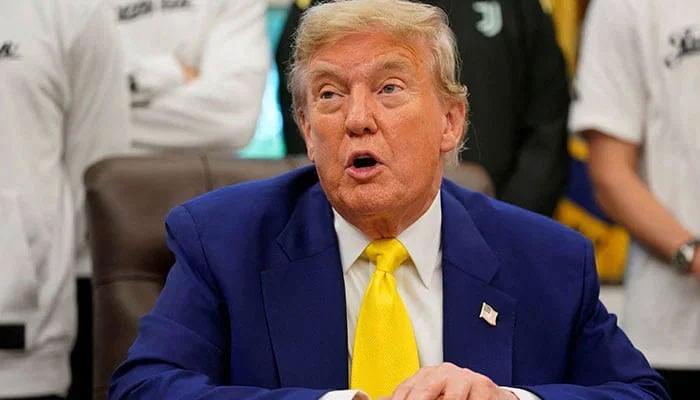
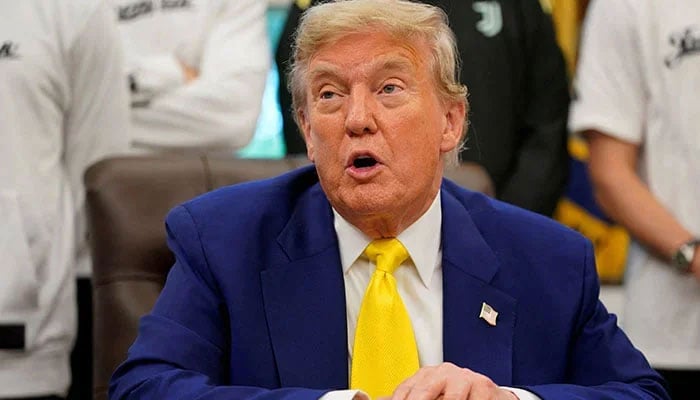
WASHINGTON: International markets and the world at large have grown used to US President Donald Trump’s abrupt reversals, but Monday’s about-face on Iran was one of his most spectacular yet.
Since returning to power last year, Trump has openly embraced governing “by instinct.”
On the Middle East conflict, he has made a flurry of contradictory statements about goals and the timeline, and even declared on March 13 that the war would end when he “felt it in his bones.”
“Trump has been a master of sudden pivots and switches. So it’s sometimes hard to know if there is a strategy or if it’s just always improvisation,” said Garret Martin, a professor of international relations at American University in Washington.
These reversals typically follow a pattern. The Republican president issues commercial, diplomatic or military threats — often accompanied by ultimatums — that stun the international community.
Then he abruptly reverses course. He claims to have secured decisive concessions that he rarely divulges and promises a resolution to the crisis, causing markets to swing dramatically.
On Monday, oil prices plunged and stocks surged after Trump announced on his Truth Social platform that the US had held talks with Iran about ending the conflict. North Sea Brent crude plummeted by more than 14 percent while its American equivalent, West Texas Intermediate, lost nearly 10 percent. The Dow Jones Industrial Average, meanwhile, jumped 700 points.
Taco
As recently as Saturday, Trump had given Iran 48 hours to reopen the Strait of Hormuz – a vital passage for oil shipments out of the Gulf – under threat of massive strikes against the country’s power plants. He did not mention dialogue.
But then on Monday, he declared a new deadline – five days this time – to allow time for the talks to continue.
He spoke of “very productive” discussions with “highly respected” and “very solid” Iranian officials, without identifying them.
But Iranian officials denied that any negotiations were taking place, which partially dampened market enthusiasm.
Trump bragged about his negotiating skills in a speech Monday in Memphis, Tennessee, highlighting his business instincts rather than specific concessions from Tehran.
“My whole life has been a negotiation, but with Iran we’ve been negotiating for a long time,” he said. “And this time they mean business.”
The pattern is so familiar that it has its own acronym — “TACO” for “Trump Always Chickens Out” — coined by The Financial Times journalist Robert Armstrong in May 2025 after Trump backed down on threats to impose global tariffs that caused market havoc.
Shaking up markets
The TACO term originally referred to a stock market strategy involving capitalising on a decline in assets — triggered by a bombastic announcement from Trump — to buy low, in the hope of reselling at a profit once he inevitably changed his mind.
Other examples include Trump backing down from threats on the US taking over Greenland, or those directed at Federal Reserve Chairman Jerome Powell over US interest rates.
Quite often, while these U-turns shake up markets, they remain nebulous in terms of actual deals.
US partners and adversaries alike now know “there’s always an impermanence with everything with this administration; agreements and promises are only as good as the minute they’re made,” said Martin.
In the case of Iran, Martin suggests that Trump backed down due to three factors: market jitters, potential pressure from Gulf nations and the emergence of “tensions” within his own Make America Great Again, or MAGA, political movement over the conflict.


How Jaxon Smith-Njigba’s contract extension impacts Seahawks

China sees rise in new FDI firms despite lower inflows
Vets to be legally required to publish price lists and cap prescription fees

Strategic oil stocks to be released ‘immediately’ in Asia and Oceania: IEA

New Income Tax Act 2025 To Take Effect From April 1: 10 Key Changes That Will Affect Your Money

Transfer rumors, news: Real Madrid open to Camavinga exit, as Premier League clubs circle

-
 Entertainment1 week ago
Strategic oil stocks to be released ‘immediately’ in Asia and Oceania: IEA
-
 Sports1 week ago
Transfer rumors, news: Real Madrid open to Camavinga exit, as Premier League clubs circle
-
Business1 week ago
New Income Tax Act 2025 To Take Effect From April 1: 10 Key Changes That Will Affect Your Money
-

 Sports1 week ago
PCB files complaint over allowing Bangladesh to take review on penultimate ball – SUCH TV
-
 Business7 days ago
Stocks and pound rise as US rate call approaches
-
 Tech6 days ago
Justice Department Says Anthropic Can’t Be Trusted With Warfighting Systems
-

 Sports6 days ago
March Madness 2026 – How to watch in SA, start time, schedule, TV channel for NCAA championship basketball tournament
-

 Sports7 days ago
WBC championship: USA-Venezuela preview, live updates, analysis