

Politics
Trump says Ukraine ‘gotta make a deal’ after summit with Putin yields no ceasefire

- Trump, Putin cite progress but offer no detail.
- Trump says Zelenskiy ‘gotta make a deal’.
- Zelenskiy says he’s willing to meet Trump and Putin.
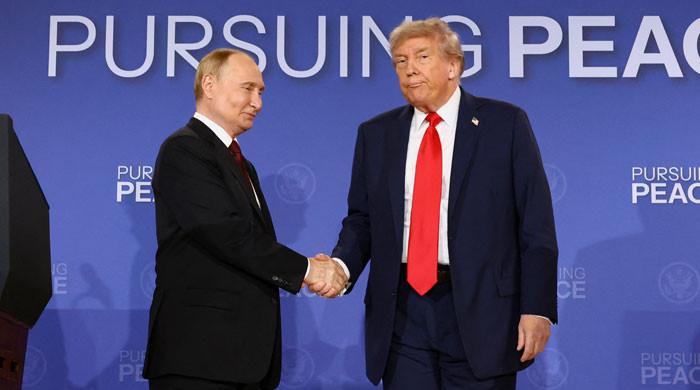
US President Donald Trump said on Saturday Ukraine should agree a deal to end the war with Russia because “Russia is a very big power, and they’re not”, after holding a summit with President Vladimir Putin that failed to yield a ceasefire.
“It was determined by all that the best way to end the horrific war between Russia and Ukraine is to go directly to a Peace Agreement, which would end the war, and not a mere Ceasefire Agreement, which often times do not hold up,” Trump said in a post on Truth Social.
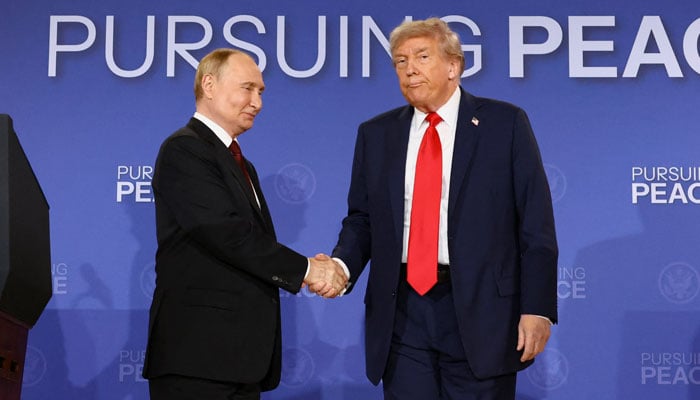
Trump’s comments came after he met Putin for nearly three hours in Alaska on Friday at the first US, Russia summit since Moscow launched its full-scale invasion of Ukraine in February 2022.
The war — the deadliest in Europe for 80 years — has killed or wounded well over a million people from both sides, including thousands of mostly Ukrainian civilians, according to analysts.
Trump said he would hold talks at the White House with Ukrainian President Volodymyr Zelenskiy on Monday, adding: “If all works out, we will then schedule a meeting with President Putin. Potentially, millions of people’s lives will be saved.”
Zelenskiy said after a lengthy conversation with Trump following the Alaska summit that Ukraine was ready for constructive cooperation, and he supported the idea of a trilateral meeting.
“Ukraine reaffirms its readiness to work with maximum effort to achieve peace,” he wrote on social media.
But Putin made no mention of meeting Zelenskiy when speaking to reporters earlier. Russian state news agency TASS quoted Putin’s foreign policy aide Yuri Ushakov as saying the possibility of a three-way summit including Zelenskiy had not been discussed.
Security guarantees
In a post-summit interview with Fox News’ Sean Hannity, Trump signalled that he and Putin had discussed potential land swaps and security guarantees for Ukraine.
“I think those are points that we negotiated, and those are points that we largely have agreed on,” Trump said.
“I think we’re pretty close to a deal,” he said, adding: “Ukraine has to agree to it. Maybe they’ll say no.”
When asked by Hannity what he would advise Zelenskiy, Trump said: “Gotta make a deal.”
“Look, Russia is a very big power, and they’re not. They’re great soldiers,” he added.
Zelenskiy has repeatedly underlined the importance of security guarantees for Kyiv as part of any deal, to deter Russia from launching a new invasion at some point in the future.
“We also discussed positive signals from the American side regarding participation in guaranteeing Ukraine’s security,” he said after his call with Trump.
Before the summit, Trump had set the goal of agreeing on a ceasefire in the war and said he would not be happy without it.
Putin signaled no movement in Russia’s long-held positions on the war, but said he agreed with Trump that Ukraine’s security must be “ensured”.
“We are ready to work on this. I would like to hope that the understanding we have reached will allow us to get closer to that goal and open the way to peace in Ukraine,” Putin said at a brief media appearance after the summit where neither leader took questions.
He added: “We expect that Kyiv and the European capitals will perceive all of this in a constructive manner and will not create any obstacles. That they will not attempt to disrupt the emerging progress through provocation or behind-the-scenes intrigue.”
For Putin, the very fact of sitting down face-to-face with the U.S. president represented a diplomatic victory. The Kremlin leader had been ostracized by Western leaders since the start of the war, and just a week earlier had been facing a threat of new sanctions from Trump.
‘1-0 for Putin’
Some commentators, especially in Europe, were scathing in their reaction.
“Putin got his red carpet treatment with Trump, while Trump got nothing. As feared: no ceasefire, no peace,” Wolfgang Ischinger, an ex-German ambassador to the United States, posted on X.
“No real progress — a clear 1-0 for Putin — no new sanctions. For the Ukrainians: nothing. For Europe: deeply disappointing.”
Tatiana Stanovaya, a senior fellow at the Carnegie Russia Eurasia Center, said: “Now Trump seems to be shifting most of the responsibility to Kyiv and Europe, but reserving some role for himself.”
She said, however, that Putin had apparently not succeeded as far as he had hoped in getting Trump to publicly side with him and put pressure on Kyiv.
Cold War historian Sergey Radchenko wrote: “Putin is a determined opponent, and, yes, he basically won this round because he got something for nothing. Still, Trump did not sell out Ukraine.”
After Trump returned to Washington, the White House said he spoke to NATO leaders following the lengthy conversation with Zelenskiy.
Espen Barth Eide, foreign minister of NATO member Norway, told reporters in Oslo: “We must continue to put pressure on Russia, and even increase it.”
Czech Defence Minister Jana Cernochova said the summit had not yielded significant progress toward ending the war but “confirmed that Putin is not seeking peace, but rather an opportunity to weaken Western unity and spread his propaganda.”
‘Next time in Moscow’
Both Russia and Ukraine carried out overnight air attacks, a daily occurrence in the 3-1/2-year war.
Russia launched 85 attack drones and a ballistic missile targeting Ukraine’s territory, Ukraine’s Air Force said on Saturday. It said its air defence units destroyed 61 of them.
The General Staff of Ukraine’s Armed Forces said 139 clashes had taken place on the front line over the past day. Russia said its air defences intercepted and destroyed 29 Ukrainian drones overnight.
Trump told Fox that he would hold off on imposing tariffs on China for buying Russian oil after making progress with Putin. He did not mention India, another major buyer of Russian crude, which has been slapped with a total 50% tariff on US imports that includes a 25% penalty for the imports from Russia.
“Because of what happened today, I think I don’t have to think about that now,” Trump said of Chinese tariffs. “I may have to think about it in two weeks or three weeks or something, but we don’t have to think about that right now.”
Trump ended his remarks on Friday by telling Putin, “I’d like to thank you very much, and we’ll speak to you very soon and probably see you again very soon.”
“Next time in Moscow,” a smiling Putin responded in English. Trump said he might “get a little heat on that one” but that he could “possibly see it happening.”
- Treasury dept accuses forces of being architects of crackdown.
- US says tracking Iranian leaders’ funds being wired to banks.
- Trump questions Reza Pahlavi’s ability garner support in Iran.
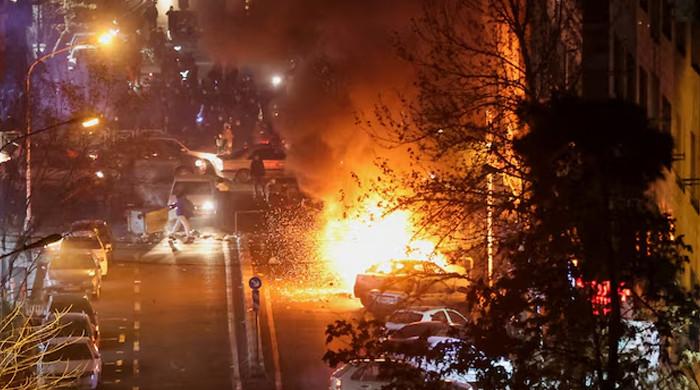
The United States on Thursday imposed sanctions on five Iranian officials it accused of being behind the crackdown on protests and warned it was tracking Iranian leaders’ funds being wired to banks around the world, as US President Donald Trump’s administration increases pressure on Tehran.
The US Treasury Department, in a statement, said it imposed sanctions on the Secretary of the Supreme Council for National Security as well as Islamic Revolutionary Guard Corps and law enforcement forces commanders, accusing them of being architects of the crackdown.
Treasury Secretary Scott Bessent, in a video on Thursday, said Washington’s message to Iran’s leaders was clear: “US Treasury knows, that like rats on a sinking ship, you are frantically wiring funds stolen from Iranian families to banks and financial institutions around the world. Rest assured, we will track them and you.”
“But there’s still time, if you choose to join us. As President Trump has said, stop the violence and stand with the people of Iran.”
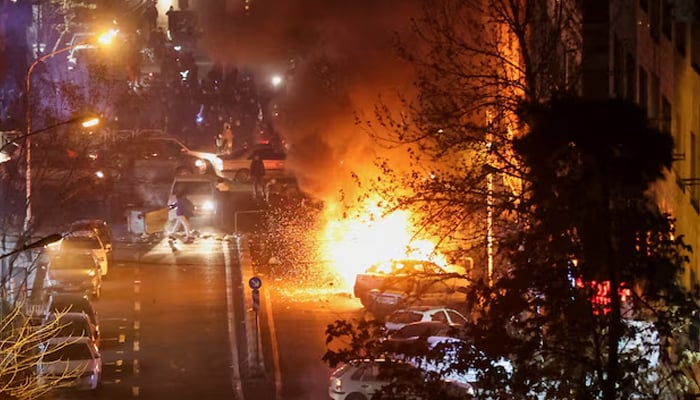
The unrest in Iran started with protests over soaring prices before turning into one of the biggest challenges to the establishment since the 1979 Islamic Revolution.
Trump has repeatedly threatened to intervene on behalf of protesters in Iran, where the establishment has cracked down hard on nationwide unrest since December 28.
“The United States stands firmly behind the Iranian people in their call for freedom and justice,” Bessent said in the statement. “Treasury will use every tool to target those behind the regime’s tyrannical oppression of human rights.”
The Treasury also imposed sanctions on 18 people it accused of involvement in laundering the proceeds of Iranian petroleum and petrochemical sales to foreign markets as part of “shadow banking” networks of sanctioned Iranian financial institutions.
Thursday’s action is the latest move targeting Tehran since Trump restored his “maximum pressure” campaign on Iran, which includes efforts to drive its oil exports to zero and help prevent Tehran from developing a nuclear weapon.
Trump questions Pahlavi’s ability to lead Iran
Separately, Trump — in an exclusive Reuters interview in the Oval Office — said that Iranian opposition figure Reza Pahlavi “seems very nice” but expressed uncertainty over whether Pahlavi would be able to muster support within Iran to eventually take over.
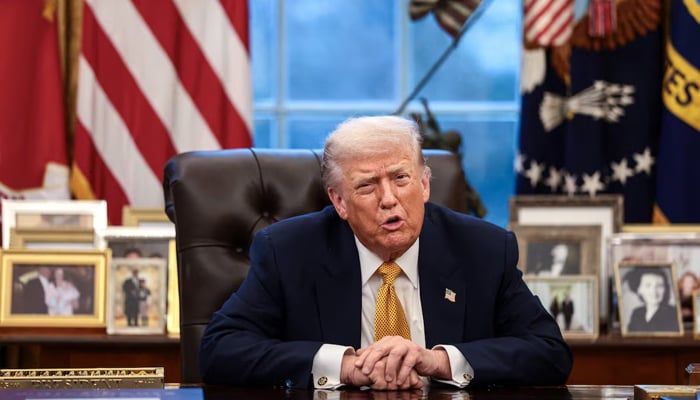
“He seems very nice, but I don’t know how he’d play within his own country,” Trump said. “And we really aren’t up to that point yet.
“I don’t know whether or not his country would accept his leadership, and certainly if they would, that would be fine with me.”
Trump’s comments went further in questioning Pahlavi’s ability to lead Iran, after he said last week that he had no plans to meet with him.
The US-based Pahlavi, 65, has lived outside Iran since before his father was toppled in the 1979 Islamic Revolution and has become a prominent voice in the protests.
Echoing Trump’s caution, Sanam Vakil, deputy director of Chatham House’s Middle East and North Africa Program, said Pahlavi had gained prominence among some protesters and had helped mobilise them to some extent. “But I wouldn’t overstate it. It’s very hard to see how much support he has or how much support any figure has in Iran,” she said.
Trump said it is possible the government in Tehran could fall due to the protests but that in truth “any regime can fail.”
“Whether or not it falls or not, it’s going to be an interesting period of time,” he said.
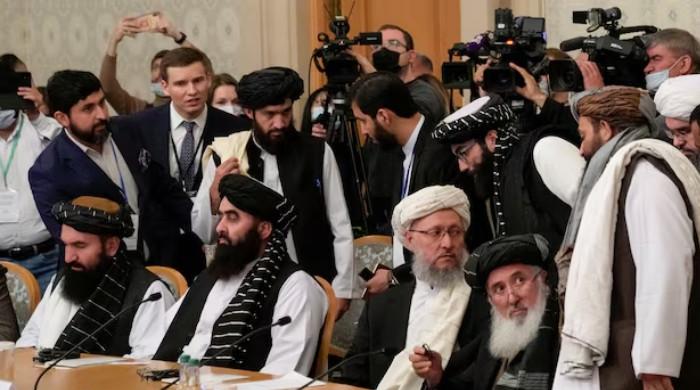
Four years into their rule in Afghanistan, the Afghan Taliban regime has reportedly been rocked by internal rifts, with key leaders pitted against each other.
The Taliban declared the war in Afghanistan was over after they took control of the presidential palace in Kabul on August 15, 2021, and the United States withdrew its forces from the war-ravaged country.
However, rifts have emerged within the Afghan Taliban ranks, with Supreme Leader Hibatullah Akhundzada warning that internal disagreements could bring them all down.
The BBC, citing an audio leak it obtained, reported that Akhundzada had voiced his concerns over division within the Taliban ranks.
In the leaked clip, purportedly from one of his speeches at a religious seminary in Kandahar in January 2025, Akhundzada can be heard warning that “the emirate will collapse and end” as a result of the ongoing divisions.
The publication, citing insiders, stated that the Afghan Taliban have been divided into two distinct groups: the Kandahar group and another based in the capital Kabul.
The Kandahar group remains loyal to Akhundzada, who is operating from his base in Kandahar, where leaders loyal to him control every aspect of the Afghan society.
The group includes Afghanistan Prime Minister Mohammad Hassan Akhund, Chief Justice Abdul Hakim Haqqani and Higher Education Minister Neda Mohammad Nadim.
The group is working towards the Taliban supreme leader’s vision of a strict Emirate that is isolated from the modern world.
The second group, comprising powerful Taliban members, is largely based in Kabul and advocates for engagement with the outside and allows girls and women access to education.
Afghanistan Deputy Prime Minister Abdul Ghani Baradar, Interior Minister Sirajuddin Haqqani, and Defence Minister Mohammad Yaqood Mujahid make up the Kabul group.
The BBC, citing a Taliban insider, described the situation as “the Kandahar house versus Kabul”.
According to the publication, the conflict between the two groups became evident in September last year, following the Taliban supreme leader’s directive to suspend internet and mobile phone services.
However, the services were restored three days later without any explanation given by the Afghan Taliban regime.
Citing Taliban insiders, BBC reported that the Kabul group went against Akhundzada’s orders and restored the services, an act described as “nothing short of a rebellion”.
The publication stated that the group restored the services as the move directly threatened officials’ privileges and financial resources.
Meanwhile, the Taliban supreme leader reportedly moved key departments to Kandahar — including distribution of weapons, which had been previously managed by Haqqani and Yaqoob, who are members of the Kabul group.
The group has recently struggled to secure meetings with Akhundzada, with Kabul-based ministers reportedly told to travel to Kandahar only if they receive an official invitation, the report said.
The situation appears contained as of early 2026, though underlying tensions persist.
Afghan Taliban regime spokespersons have downplayed the disagreement as a mere difference of opinion; however, the ideological rift continues through public statements.
- US must own island to prevent Russia, China from occupying it: Trump.
- Germany, France sending military officers to Greenland.
- Denmark, allies prepare for exercises to assure Trump of security.
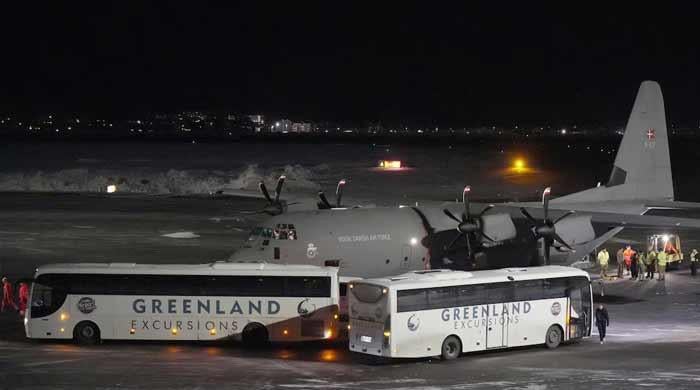
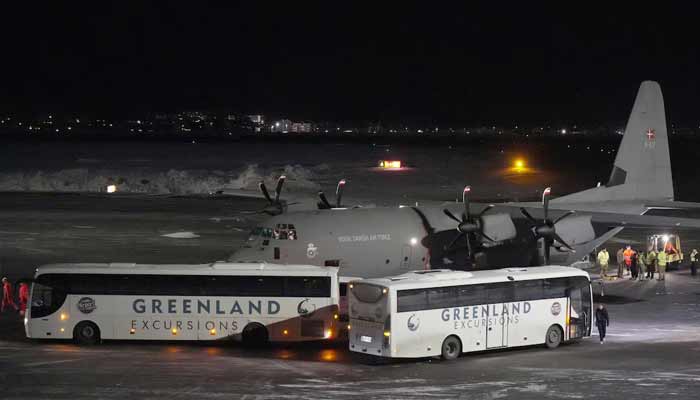
European countries were sending small numbers of military personnel to Greenland on Thursday as Denmark and its allies prepared for exercises to try to assure US President Donald Trump of its security as he pushes to acquire the island.
A meeting of officials from the United States, Denmark and Greenland on Wednesday avoided the type of public humiliation meted out to Ukrainian President Volodymyr Zelenskiy last year, but also produced no quick fix for the dispute.
“The American ambition to take over Greenland is intact,” Danish Prime Minister Mette Frederiksen said in a written comment to Reuters on Thursday, describing a “fundamental disagreement”.
“That is of course serious, and therefore we continue our efforts to prevent this scenario becoming a reality.”
Trump cites Russian and Chinese interest
Trump has said the strategically located and mineral-rich island is vital to US security and that the US must own it to prevent Russia or China occupying it. He has said all options are on the table for securing the territory, which is an autonomous territory of Denmark.
He says Denmark cannot ward off Russian and Chinese influence in the Arctic region.
Russia said Nato’s talk of Moscow and Beijing being a threat to Greenland was a myth designed to whip up hysteria and warned of the dangers of escalating confrontation in the region.
Still, any attempt to ignore Russia’s interests in the Arctic would not go unanswered, a foreign ministry spokeswoman later said.
There is currently little evidence that a large number of Chinese and Russian ships sail near Greenland’s coasts.
Greenland and Denmark say the island is not for sale, that threats of force are reckless and security concerns should be resolved among allies.
Prominent EU countries have backed Denmark, warning a US military seizure of Greenland could in effect spell the end of Nato.
Before Wednesday’s meeting in the US, Greenland and Denmark said they had begun to increase their military presence in and around Greenland in cooperation with Nato allies.
Germany, France, Sweden, Norway and the Netherlands have said they are sending military staff to begin preparations for larger drills later this year.
“The Danish Armed Forces, together with a number of Arctic and European allies, will explore in the coming weeks how an increased presence and exercise activity in the Arctic can be implemented in practice,” the Danish Ministry of Defence said.
Initial deployment appears small
Danish Foreign Minister Lars Lokke Rasmussen said on Wednesday about 200 US troops were stationed in Greenland, which has a population of around 57,000.
The scale of the planned European military build-up has not been made public, but initial deployments appear small.
The German Armed Forces were deploying a reconnaissance team of 13, first to Copenhagen, before heading on to Greenland with Danish personnel. Late on Wednesday, a Danish Air Force plane landed at Nuuk airport and personnel in military fatigues disembarked.
Sweden was sending three officers, and Norway two. Olivier Poivre d’Arvor, France’s ambassador to the Poles, said France was sending about 15 mountain specialists.
“A first team of French military personnel is already on the ground and will be reinforced in the coming days by land, air and naval assets,” French President Emmanuel Macron said.
France and the European Union as a whole must be “unyielding in upholding territorial sovereignty”, he added.
One British officer was joining the reconnaissance group. The Netherlands said it would send one officer from its navy. Poland said it would not send soldiers.
The European military deployment to Greenland sends two messages to the US administration, said Marc Jacobsen, an associate professor at the Royal Danish Defence College.
“[…] One is to deter, is to show that ‘if you decide to do something militarily, we’re ready to defend Greenland’,” he told Reuters. “And the other purpose is to say: ‘Well, we take your critique seriously, we increase our presence, take care of our sovereignty, and improve surveillance over Greenland’.”
After meeting US Secretary of State Marco Rubio and Vice President JD Vance on Wednesday, Rasmussen and Greenland’s foreign minister, Vivian Motzfeldt, said the US and Denmark would form a working group to discuss concerns regarding the island.
Greenland’s prime minister, Jens-Frederik Nielsen, reiterated on Facebook on Thursday that the island did not want to be governed by, or owned by, the United States, and that it would remain part of Denmark and the Nato alliance.
“Now is not the time for internal discussions. Now is the time for unity, calm and responsibility. I’m following the situation closely, and I stand with you to look after Greenland,” he said.


Xreal files patent suit against rival smart glasses maker Viture

Princess Kate crowned England’s Great with fiery Lioness spirit

Soshiotsuki wows with international debut at Pitti Uomo 109

-

 Politics1 week ago
UK says provided assistance in US-led tanker seizure
-

 Entertainment1 week ago
Does new US food pyramid put too much steak on your plate?
-

 Entertainment1 week ago
Why did Nick Reiner’s lawyer Alan Jackson withdraw from case?
-
 Business1 week ago
Trump moves to ban home purchases by institutional investors
-
 Sports5 days ago
Clock is ticking for Frank at Spurs, with dwindling evidence he deserves extra time
-
 Sports1 week ago
PGA of America CEO steps down after one year to take care of mother and mother-in-law
-
 Business1 week ago
Bulls dominate as KSE-100 breaks past 186,000 mark – SUCH TV
-
Sports6 days ago
Commanders go young, promote David Blough to be offensive coordinator