

Politics
Trump says US freeze on asylum decisions will last ‘a long time’

- Freeze applies to 19 countries already under US travel restrictions.
- Lakanwal, ex-CIA-backed fighter, charged with first-degree murder.
- Officials blame weak Joe Biden-era airlift vetting for shooter’s entry.
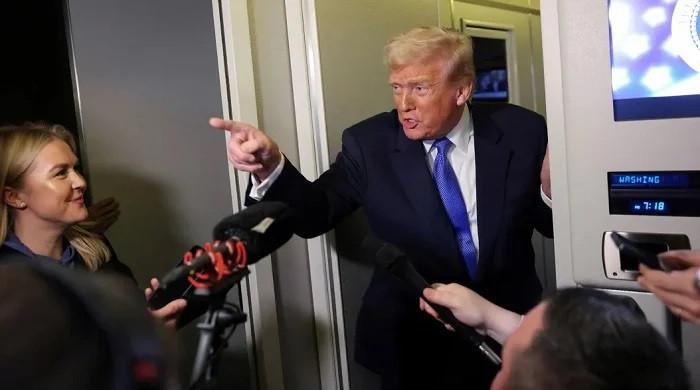
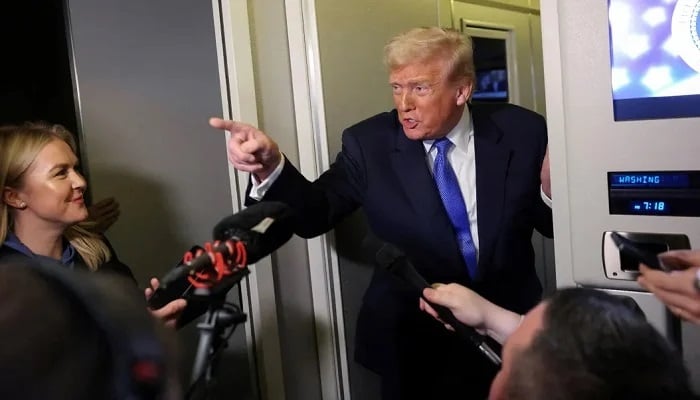
US President Donald Trump said Sunday his administration intends to maintain a pause on asylum decisions for “a long time” after an Afghan national allegedly shot two National Guard members near the White House, killing one of them.
When asked to specify how long it would last, Trump said he had “no time limit” in mind for the measure, which the Department of Homeland Security says is linked to a list of 19 countries already facing US travel restrictions.
“We don’t want those people,” Trump continued. “You know why we don’t want them? Because many have been no good, and they shouldn’t be in our country.”
The Trump administration issued the pause in the aftermath of the shooting in Washington on November 26, which left 20-year-old Sarah Beckstrom dead and another guard critically wounded.
A 29-year-old Afghan national, Rahmanullah Lakanwal, has been arrested and charged with first-degree murder in connection with the incident.
Lakanwal had been part of a CIA-backed “partner force” fighting the Taliban in Afghanistan, and entered the United States as part of a resettlement program following the American military withdrawal from Afghanistan in 2021.
Lakanwal had been granted asylum in April 2025, under the Trump administration, but officials have blamed what they called lax vetting by the government of Trump’s predecessor, Joe Biden, for his admission to US soil during the Afghan airlift.
Trump wrote after the shooting that he planned to “permanently pause migration from all Third World Countries to allow the US system to fully recover.”
Asked which nationalities would be affected, the Department of Homeland Security pointed AFP to a list of 19 countries — including Afghanistan, Cuba, Haiti, Iran and Myanmar — which since June have all faced travel restrictions to the United States.
Radicalised in US
Authorities believe the Lakanwal was not radicalised until after he came to the United States, Homeland Security Secretary Kristi Noem said on Sunday.
Speaking on NBC’s “Meet the Press” and ABC’s “This Week,” Noem said authorities think the alleged shooter was already living in Washington state when he became radicalised. Investigators are seeking more information from family members and others, Noem said.
Noem’s comments suggest Lakanwal, who was part of a CIA-backed unit in Afghanistan, may have embraced extremism after arriving in the United States.
“We believe he was radicalised since he’s been here in this country,” Noem told NBC News. “We do believe it was through connections in his home community and state, and we’re going to continue to talk to those who interacted with him, who were his family members.”
Noem said officials have received “some participation” so far from people who knew Lakanwal and warned the US would pursue anyone connected to the shooting.
“Anyone who has the information on this needs to know that we will be coming after you, and we will bring you to justice,” Noem said.
After Wednesday’s attack, the Trump administration took steps to clamp down on some legal immigration, including a freeze on the processing of all asylum applications.
Noem said on Sunday, immigration officials would consider deporting people with active asylum cases if it was warranted.
“We are going to go through every single person that has a pending asylum claim,” she said.
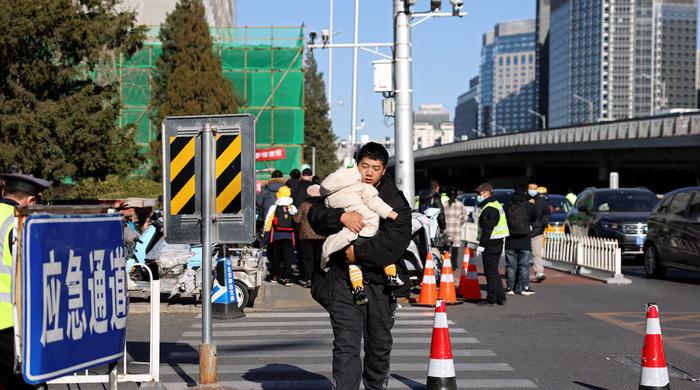
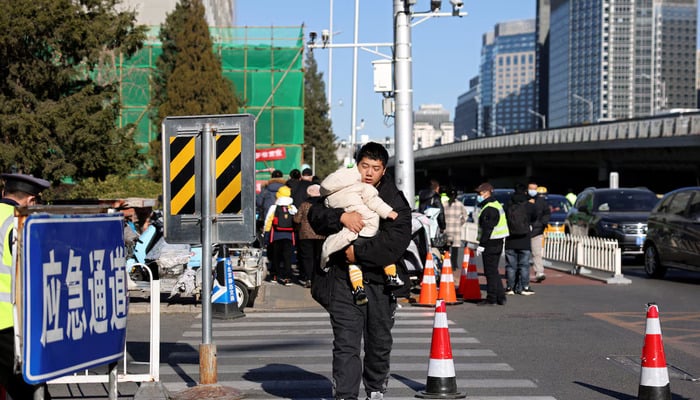
China said on Thursday it would build a “childbirth-friendly society” in the next five years, pledging to address concerns over employment, education, medical care, health and income, according to an official government report.
Authorities will improve population services and respond proactively on ageing, including “promoting high-quality, full employment, improving the income distribution system, and refining the social security system.”
They will also foster “positive attitudes towards marriage and childbearing,” the report said, adding that it would boost housing support for families with children.
China’s population fell for a fourth consecutive year in 2025, as the birth rate plunged to a record low, official data showed in January, with experts warning of further decline.
Policymakers have made population planning a key part of the country’s economic strategy and this year Beijing faces a total potential cost of around 180 billion yuan ($25.8 billion) to boost births, according to Reuters estimates.
Key costs are the national child subsidy, which was introduced for the first time last year, as well as a pledge that women throughout pregnancy have “no out-of-pocket expenses” in 2026, with all medical costs, including in vitro fertilisation (IVF), fully reimbursable under its national medical insurance fund.
Authorities will continue to implement the childcare subsidy system and expand demonstrations and trials for subsidised childcare services, the report said, without giving further details.
Services for women in early stages of pregnancy as well as reproductive health would be improved while authorities aimed to better prevent and treat birth defects.
Authorities will also refine policies on free preschool education and increase the supply of regular senior secondary school places, with government spending on education mandated to be higher than 4% of GDP, the report said.
Developing the ‘silver economy’
China’s population has been shrinking since 2022 and is ageing rapidly, complicating Beijing’s plan to boost domestic consumption and rein in debt.
New policies will be introduced to promote “high-quality development of the silver economy”, targeted at those aged 60 and older, with elderly care services to be increased, particularly in rural areas, the report said.
Authorities will also draw up measures to refine supportive policies designed for seniors including pension finance, wellness and care, it said.
By 2035, the number of Chinese over-60s is set to hit 400 million – roughly equal to the populations of the US and Italy combined – meaning hundreds of millions of people are set to leave the workforce at a time when pension budgets are already stretched.
China has already increased retirement ages, with men now expected to work until they are 63 rather than 60, and women until they are 58 rather than 55.
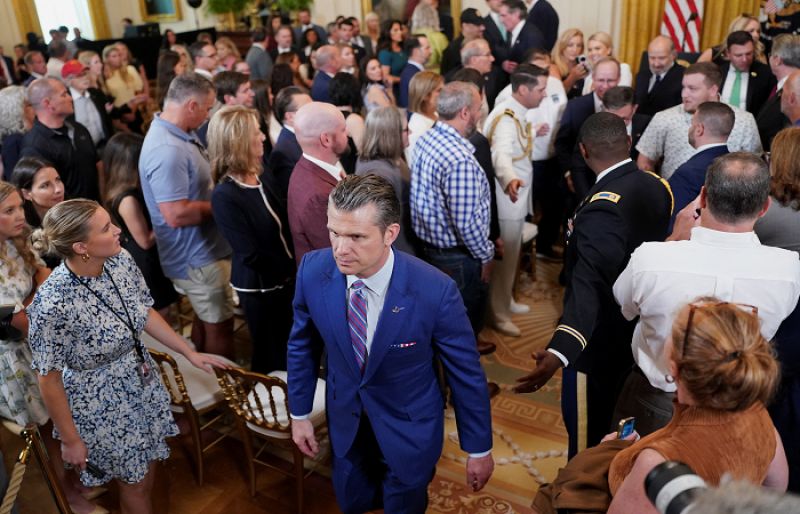

WASHINGTON: The United States Senate has rejected a resolution aimed at limiting President Donald Trump’s authority to continue military strikes against Iran.
The bipartisan measure, introduced by Tim Kaine and Rand Paul, sought to require the withdrawal of US forces from hostilities with Iran unless Congress formally authorized the campaign.
However, the resolution failed in a 53–47 vote, reflecting strong support from Republican lawmakers for the president’s military actions.
Debate Over War Powers
Democratic lawmakers argued that the president had bypassed Congress by ordering airstrikes on Iran without prior authorization.
Senator Tim Kaine said that classified briefings provided to lawmakers did not present evidence of an imminent threat from Iran to the United States.
Republicans, meanwhile, defended the military action, saying Iran had long posed a threat to US forces and interests in the region.
Growing Conflict in the Middle East
The vote comes amid an escalating conflict following US-Israeli strikes on Iran, which triggered retaliatory missile and drone attacks across the Gulf region.
The conflict has already resulted in the deaths of senior Iranian officials, including Ali Khamenei, and casualties among US troops stationed in the Middle East.
War Powers Act
The resolution invoked the War Powers Resolution, a law passed after the Vietnam War to limit the president’s ability to conduct military operations without congressional approval.
Even if the measure had passed both the Senate and the House of Representatives, President Trump could have vetoed it, requiring a two-thirds majority.
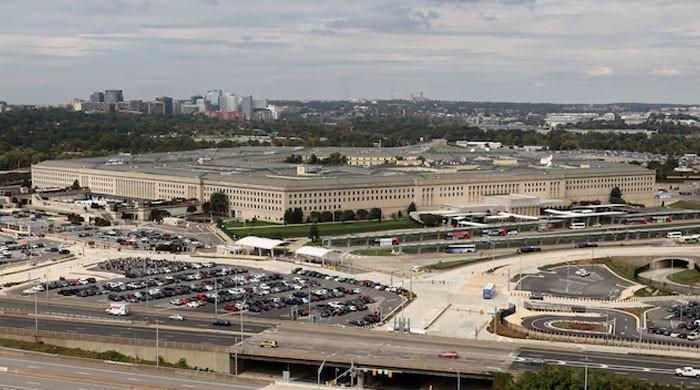
The US military asked mining companies last Friday to help boost domestic supplies of 13 critical minerals used to make semiconductors, weapons and other products, a document reviewed by Reuters showed.
The request, the day before the US and Israel launched strikes on Iran, is the latest example of Washington’s push for more access to the materials used widely in warfare.
The Pentagon asked members of the Defence Industrial Base Consortium (DIBC), a group of more than 1,500 companies, universities and others that supply the military, for proposals to be submitted by March 20 for projects that could mine, process or recycle select minerals, the document showed.
While the DIBC has worked on minerals-related issues for some time, there was no immediate indication as to whether the timing was intentionally coordinated to coincide with the start of the strikes on Iran.
The list of 13 minerals sought includes arsenic, bismuth, gadolinium, germanium, graphite, hafnium, nickel, samarium, tungsten, vanadium, ytterbium, yttrium and zirconium.
The US is reliant on imports for most of the 13. China is a dominant global producer of all of them.
DIBC member Guardian Metal Resources plans to apply for funding for its two tungsten projects in Nevada, said J.T. Starzecki, the company’s executive chairman. Tungsten is used to harden steel and China is the world’s largest producer.
“This is the opportunity we’ve been waiting for,” Starzecki told Reuters. “Our plan is to look for an application that would give us a funding package to allow us to get to full production at both sites.”
American Tungsten, which is developing an Idaho mine for that metal, plans to apply for funding next week that would complement a loan it has applied for from the US Export-Import Bank, said CEO Ali Haji.
The Pentagon asked for detailed information on the costs, including labour and material, needed to build a mine or processing facility. Projects could be awarded development funds ranging from $100 million to over $500 million, according to the request.
The document did not specify why only those 13 minerals were chosen. Some — including germanium, graphite and yttrium — have been subject to export restrictions by China, the top global producer.
Yttrium shortages, especially, have set off alarm bells throughout the aerospace industry. One of the 17 rare earths, yttrium is used in coatings that keep engines and turbines from melting at high temperatures. Without regular application of these coatings, engines cannot be used.
Colorado-based Energy, also a DIBC member, said it is developing facilities to process gadolinium and samarium by 2027, and is considering processing yttrium.
“The domestic supply of critical minerals remains essential to safeguarding both national security and economic stability,” said Mark Chalmers, the Energy Fuels CEO.
Nickel is a widely traded metal and Indonesia is the top global producer. Yet Jakarta has been throttling exports of the metal used widely in stainless steel and battery production.
The White House, DIBC and Pentagon did not immediately respond to requests for comment.
Latest request
DIBC’s request is just the latest attempt by the Trump administration to increase US supply of key critical minerals. China has been using its market control as diplomatic leverage in ongoing trade disputes with Washington.
Last month, Trump officials launched a $12 billion minerals stockpile backed by the US Export-Import Bank and proposed a preferential minerals trading bloc with more than 50 allies.
That trading bloc would aim to use reference prices for minerals derived in part by a Pentagon-created artificial intelligence programme, Reuters reported last week.
The administration has also taken equity stakes in rare earths miner MP Materials, Lithium Americas, and copper-and-cobalt developer Trilogy Metals.
Separately on Wednesday, the Defence Logistics Agency, which buys a range of goods for the US military, asked for information from miners on potentially acquiring lithium, chromium and tellurium for military stockpiles.


Canada’s Gildan posts $3.6 bn 2025 sales, growth supported by Hanes

Harry Styles shares marriage plans amid rumoured romance with Zoe Kravitz

China to build ‘birth-friendly society’, refine social security system

India Us Trade Deal: Fresh look at India-US trade deal? May be ‘rebalanced’ if circumstances change, says Piyush Goyal – The Times of India

What are Iran’s ballistic missile capabilities?
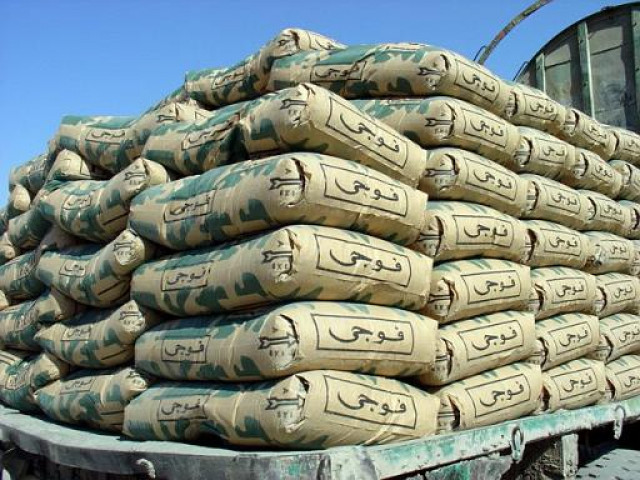
Attock Cement’s acquisition approved | The Express Tribune

-
Business6 days ago
India Us Trade Deal: Fresh look at India-US trade deal? May be ‘rebalanced’ if circumstances change, says Piyush Goyal – The Times of India
-
 Politics7 days ago
What are Iran’s ballistic missile capabilities?
-
Business7 days ago
Attock Cement’s acquisition approved | The Express Tribune
-
 Business1 week ago
Households set for lower energy bills amid price cap shake-up
-

 Politics1 week ago
US arrests ex-Air Force pilot for ‘training’ Chinese military
-
 Fashion1 week ago
OECD GDP growth slows to 0.3% in Q4 amid mixed trends
-

 Fashion6 days ago
Policy easing drives Argentina’s garment import surge in 2025
-

 Fashion6 days ago
Texwin Spinning showcasing premium cotton yarn range at VIATT 2026