

Tech
Trump Signs Executive Order That Threatens to Punish States for Passing AI Laws

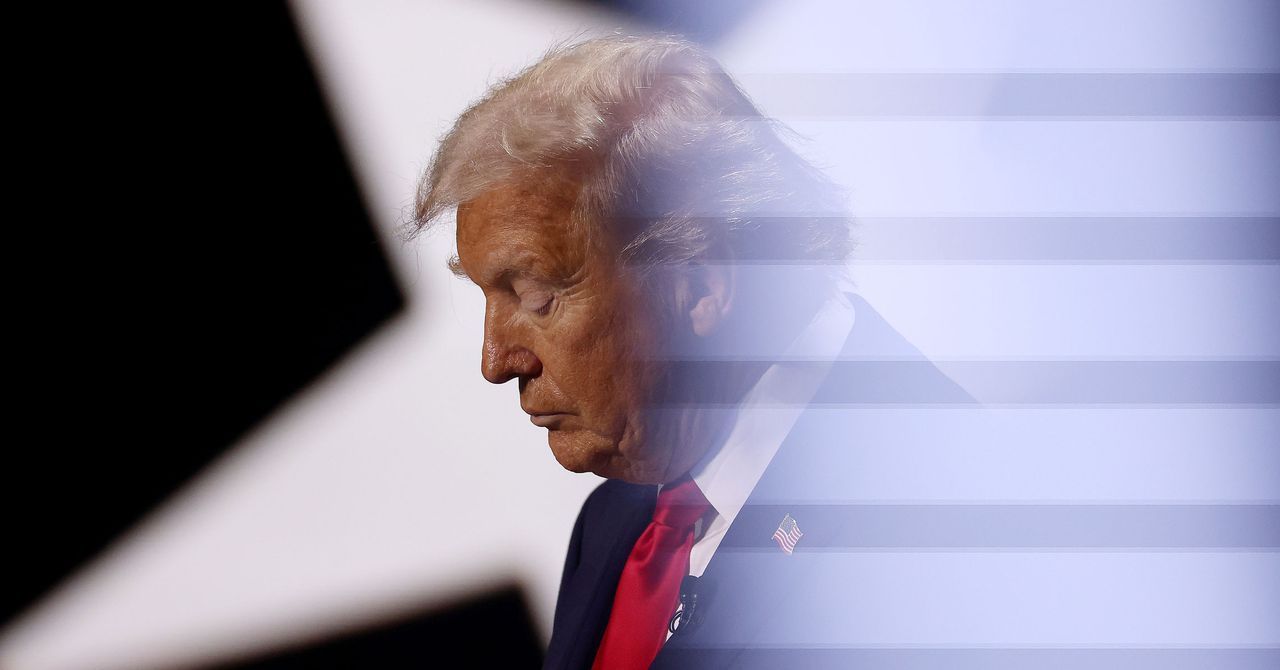
President Donald Trump signed a highly anticipated executive order on Thursday that sets in motion a plan to establish a national regulatory framework for artificial intelligence while undercutting states’ abilities to enact their own rules.
The order, titled “Ensuring a National Policy Framework for Artificial Intelligence,” creates an AI litigation task force within the Justice Department to directly challenge state AI laws the administration finds to conflict with federal policy. It also directs the Department of Commerce to craft guidelines that could make states ineligible for future broadband funding if they pass “onerous” AI laws.
The push for sweeping federal preemption of state AI laws has largely been fueled by AI investors, conservative policy shops, and tech industry trade groups. These groups have argued that a patchwork approach to AI regulation could stunt Silicon Valley’s AI boom and reduce America’s competitiveness on the global stage. White House AI and crypto adviser David Sacks has been one of the most vocal proponents of a light-touch approach to AI regulation.
“The EO gives your administration tools to push back on the most onerous and excessive state regulations,” Sacks told Trump during Thursday’s signing ceremony. “We’re not going to push back on all of them. For example, kids safety we’re going to protect.”
The order is similar in many respects to an earlier draft obtained by WIRED but with a few key differences. The executive order instructs Sacks and Michael Kratsios, the assistant to the president for science and technology, to prepare a legislative recommendation establishing a federal policy framework for AI. One of the new additions is a carve-out within this legislative recommendation asking Congress not to preempt state AI laws that aim to protect children, promote data center infrastructure, and encourage state governments to procure AI tools.
“We want one central source of approval, and we have great Republican support. I think we probably have Democrat support too, because it’s common sense,” Trump said during Thursday’s signing ceremony. “Every time you make a change, and it could be a very reasonable change, you still won’t get it approved if you have to go to 50 states. This centralizes it.”
In the absence of federal regulations, officials from states across the country have pushed through their own investigations and legislation to govern the use and development of AI. Trump’s executive order specifically calls out certain state AI laws—such as Colorado’s SB24-205, which aims to limit “algorithmic discrimination” in AI models—as an attempt to “embed ideological bias.”
Several other state AI laws may also fall in the crosshairs of this executive order. California governor Gavin Newsom signed a law in September requiring large tech companies to publish safety frameworks around their AI models. In June, New York’s legislature passed a bill that would empower the state’s attorney general to bring civil penalties of up to $30 million against AI developers that fail to meet safety standards. That bill is currently sitting on New York governor Kathy Hochul’s desk, awaiting her signature or veto—though she’s reportedly considering amendments that could weaken the bill significantly.









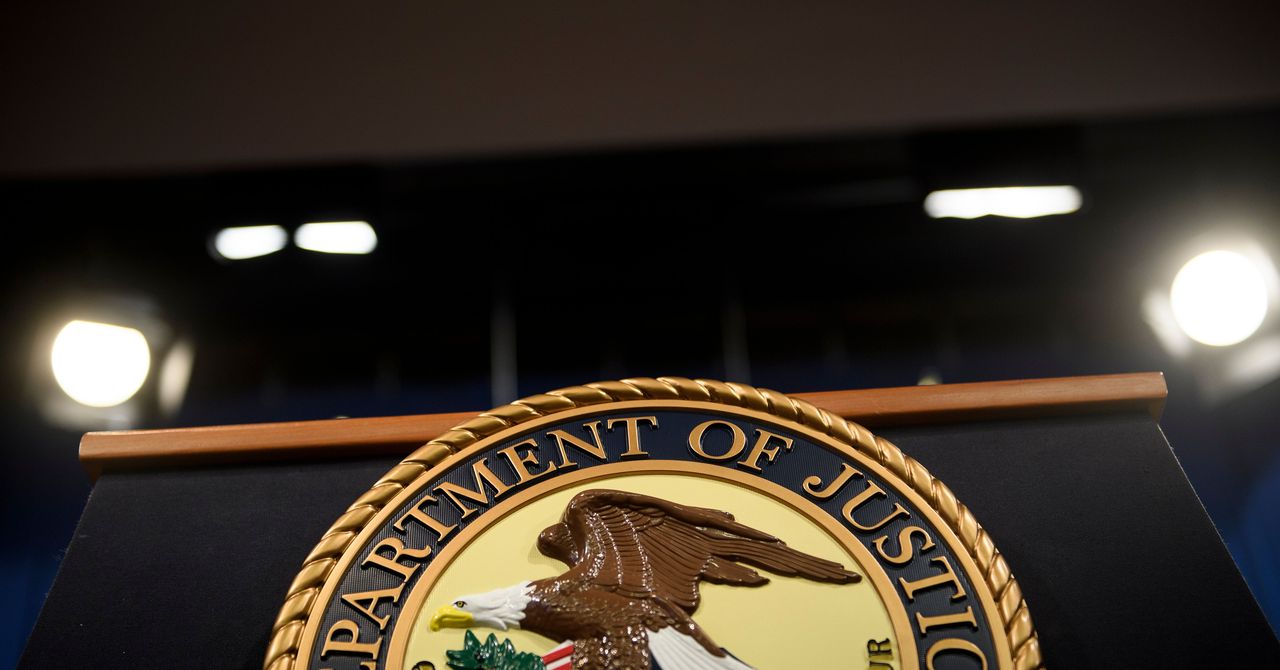
The collection of millions of hacked computers known as Aisuru and Kimwolf have been used to launch some of the biggest distributed denial-of-service (DDoS) attacks ever seen. Now United States law enforcement agencies have wiped both of them off the internet along with two of the other hordes of hijacked computers—known as botnets—in a single broad takedown.
On Thursday, the US Department of Justice, working with the cybercrime-fighting agency within the US Department of Defense known as the Defense Criminal Investigative Service, announced that it had dismantled four massive botnets in a single operation, removing the command-and-control servers used to commandeer the hacker-run armies of compromised devices known by the names JackSkid, Mossad, Aisuru, and Kimwolf. Together, operators of the four botnets had amassed more than 3 million devices, the Justice Department said, and often sold access to those devices to other criminal hackers as well as using them to target victims with overwhelming floods of attack traffic to knock websites and internet services offline.
Aisuru and Kimwolf, a distinct but Aisuru-related botnet, had together comprised more than a million devices, according to DDoS defense firm Cloudflare, with Aisuru infecting a variety of devices ranging from DVRs to network appliances to webcams, and its Kimwolf offshoot infecting Android devices including smart TVs and set-top boxes. Cloudflare says the two botnets, working in conjunction, carried out a cyberattack against a Cloudflare customer last November that reached more than 30 terabits of data per second, nearly three times the size of the previous biggest such attack.
No arrests were immediately announced along with the takedowns, but a Justice Department statement noted that the US government was collaborating with Canadian and German authorities, “which targeted individuals who operated these botnets.”
“The United States is steadfast in our commitment to safeguarding critical internet infrastructure and fighting the cybercriminals who jeopardize its security, wherever they might live,” US attorney Michael J. Heyman wrote in a statement.
Of the four botnets taken out in the operation, Aisuru had gained the most notoriety, thanks to a series of record-breaking or near-record cyberattacks it carried out last fall. The botnet, whose use was rented out like many such “booter” services offering their brute-force disruptive capabilities to anyone willing to pay, has been most visibly against gaming services like Minecraft and independent cybersecurity journalist Brian Krebs. Krebs, who has extensively investigated the botnet underground and Aisuru in particular, came under repeated attack from the botnet last year.
Then in November, Cloudflare absorbed a recording-breaking combined attack from Aisuru and Kimwolf that lasted only 35 seconds but reached 31.4 terabits per second, a volume of attack traffic close to triple the size of any seen before. (The company hasn’t revealed which of its customers was hit with that attack.)
In a report on the state of the DDoS ecosystem, Cloudflare described the maximum attack traffic of the combined Aisuru and Kimwolf botnets as equivalent to “the combined populations of the UK, Germany, and Spain all simultaneously typing a website address and then hitting ‘enter’ at the same second.” The botnet was capable, Cloudflare’s analysts wrote, of “launching DDoS attacks that can cripple critical infrastructure, crash most legacy cloud-based DDoS protection solutions, and even disrupt the connectivity of entire nations.”
In fact, all four botnets disrupted by the US operation were variants of Mirai, an internet-of-things botnet that first appeared in 2016, broke records at the time for the size of the cyberattacks it enabled, and eventually was used in an attack on the domain-name service provider Dyn that took down 175,000 websites simultaneously for much of the United States. Mirai’s code base has since served as the starting point for a decade of other internet-of-things botnets.
Tech
‘Uncanny Valley’: Nvidia’s ‘Super Bowl of AI,’ Tesla Disappoints, and Meta’s VR Metaverse ‘Shutdown’
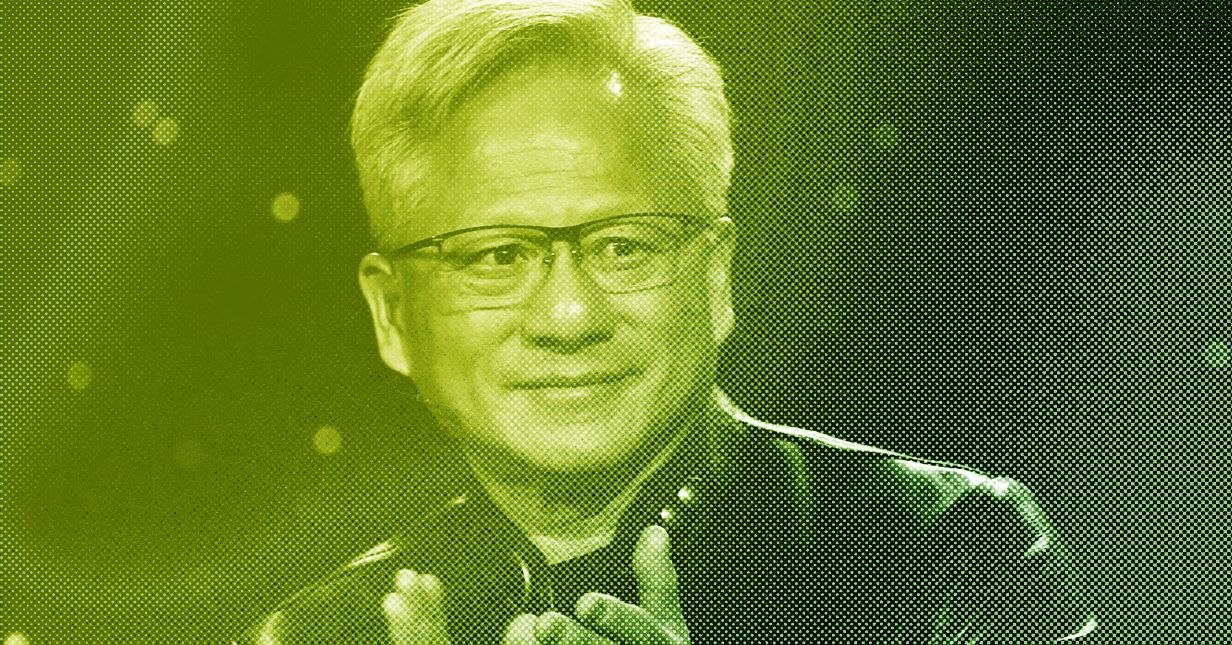
This week on Uncanny Valley, hosts Brian Barrett and Zoë Schiffer discuss the highlights from Nvidia’s annual developer conference, and why Tesla recently got in trouble with some of its most loyal fans online. Plus, Meta’s initial decision to shut down Horizon Worlds VR on the Quest headset signals the end of the metaverse dream. (Meta has since reversed course, saying it will keep the platform on limited support for the “foreseeable future.”)
Articles mentioned in this episode:
You can follow Brian Barrett on Bluesky at @brbarrett and Zoë Schiffer on Bluesky at @zoeschiffer. Write to us at [email protected].
How to Listen
You can always listen to this week’s podcast through the audio player on this page, but if you want to subscribe for free to get every episode, here’s how:
If you’re on an iPhone or iPad, open the app called Podcasts, or just tap this link. You can also download an app like Overcast or Pocket Casts and search for “uncanny valley.” We’re on Spotify too.
Transcript
Note: This is an automated transcript, which may contain errors.
Zoë Schiffer: Brian, hello. Very exciting to have another way to talk to you when I’m not pinging you on Slack every five seconds.
Brian Barrett: It’s great, because Slack doesn’t have the voice part.
Zoë Schiffer: It doesn’t.
Brian Barrett: I will say: very sad that Leah won’t be a part of that journey today.
Zoë Schiffer: I know. It is really sad, but when the Leah’s away, the mice will play, and we will be talking about topics that Leah hates, so just wait.
Brian Barrett: And to be clear, she’ll be back next week. She’s just sick.
Zoë Schiffer: Yeah.
Brian Barrett: It’s allergy season.
Zoë Schiffer: Welcome to WIRED’s Uncanny Valley. I’m Zoë Schiffer, WIRED’s director of business and industry.
Brian Barrett: I’m Brian Barrett, executive editor.
Zoë Schiffer: This week on the show, we’re diving into Nvidia’s annual developer conference, why some Tesla influencers are fleeing the brand, and why Meta has finally shut down Horizon Worlds on Meta Quest. So to start us off, this week, Nvidia had its annual developer conference in San Jose. This is the big event in the AI industry. Some people even call it the Super Bowl of AI. Developers go, CEOs, researchers, WIRED reporters—and we’re all waiting to hear what CEO Jensen Huang is going to tell us about the future of the company.
Brian Barrett: One thing that’s interesting about the Nvidia conference too, is I feel like so much of it is business facing. It’s not a lot of stuff that you, as an AI consumer or someone who plays around with Claude, wouldn’t necessarily connect with. One thing, with a grain of salt, because this is someone who stands to make this money, but Jensen did say the revenue opportunity for artificial intelligence chips just at Nvidia might reach at least a trillion dollars through 2027.
Zoë Schiffer: Pocket change.
Brian Barrett: Pocket change, I mean, really, for Nvidia at this point. One thing that was really interesting: He introduced a new product. I always like when there’s an actual product tied to this rather than the promise of a product. A while ago, Nvidia struck a licensing deal with a company called Groq, not to be confused with the occasionally—
A senior Federal Communications Commission official overseeing ABC-owned California stations privately offered to assist FCC Chairman Brendan Carr’s campaign last year against the Walt Disney Co. and Jimmy Kimmel Live!, according to internal emails obtained by WIRED.
On September 17, Carr threatened Disney with regulatory action regarding the Jimmy Kimmel monologue about the assassination of Charlie Kirk, prompting major station affiliates to drop the broadcast and forcing ABC to temporarily suspend the show.
Later that day, Lark Hadley, the FCC West Coast enforcement director, emailed Carr and FCC chief of staff Scott Delacourt. The email, obtained via the Freedom of Information Act, was titled “personal note of support re Charlie Kirk ABC/Disney issue” and quoted Carr’s remarks from an interview with conservative podcaster Benny Johnson: “This is a very, very serious issue right now for Disney. We can do this the easy way or the hard way,” Carr said during the interview.
Noting that he had been a broadcaster himself, Hadley wrote that the “absolute lack of accountability has always confused (and sickened) me,” telling Carr and Delacourt: “Please, do not let up, and let me know if I can help in any way.”
It is highly irregular for a career civil servant and enforcement chief to express support for a politically motivated pressure campaign, or pledge services to a targeted retaliation effort against a broadcaster in their own jurisdiction.
Federal ethics rules prohibit government employees from participating in matters where their impartiality could reasonably be questioned.
Carr’s office did not respond to a request for comment.
While FCC headquarters typically handles television content complaints, Hadley’s office holds direct enforcement authority over physical ABC-owned stations in its jurisdiction, including KABC-TV in Glendale, the broadcast origin for Jimmy Kimmel Live!
The brief suspension of Jimmy Kimmel Live! became a defining test of Carr’s ability to leverage the FCC’s regulatory apparatus against political critics. Following Carr’s public threats, major affiliate networks Nexstar and Sinclair—both of which had multibillion-dollar mergers pending before the commission—refused to air the program, forcing Disney to temporarily pull the show.
An ABC spokesperson did not immediately respond to a request for comment.
Will Creeley, legal director at the Foundation for Individual Rights and Expression, tells WIRED that regional directors like Hadley have no business cheering on the FCC chairman’s regulatory threats against broadcasters that air views the president doesn’t like.
“Just like Brendan Carr, they swore an oath to uphold the Constitution—and that includes the First Amendment, which bars the government from coercing private broadcasters into censoring dissent,” Creeley says. “This is a public servant paid by our taxpayer dollars. Is it too much to ask for him not to sound so excited about the chairman abusing the power of his office?”


FIFA clears Israeli settlement clubs but fines IFA over breaches

Prince William and Kate wow with last-minute surprise portrait drop

US Takes Down Botnets Used in Record-Breaking Cyberattacks

Stock market crash today (March 12, 2026): Nifty50 opens below 23,600; BSE Sensex down over 900 points on continuing US-Iran war – The Times of India

UK’s Topshop unveils Tolu Coker capsule collection

US ignites Iran war, but Gulf Arab states pay the price | The Express Tribune

-
Business1 week ago
Stock market crash today (March 12, 2026): Nifty50 opens below 23,600; BSE Sensex down over 900 points on continuing US-Iran war – The Times of India
-
 Fashion1 week ago
UK’s Topshop unveils Tolu Coker capsule collection
-
Business1 week ago
US ignites Iran war, but Gulf Arab states pay the price | The Express Tribune
-

 Fashion1 week ago
India’s textile recycling market may reach $3.5 bn by 2030: Report
-

 Tech1 week ago
Meta Developed 4 New Chips to Power Its AI and Recommendation Systems
-

 Sports1 week ago
Bangladesh crush Pakistan in ODI series opener | The Express Tribune
-
 Business1 week ago
8th Pay Commission: How Much Will Central Govt Employees’ Salaries Rise? What We Know So Far
-

 Entertainment1 week ago
Ed Sheeran makes surprising Benny Blanco confession after hygiene uproar