

Business
Trump tariffs on kitchen cabinets and timber come into force

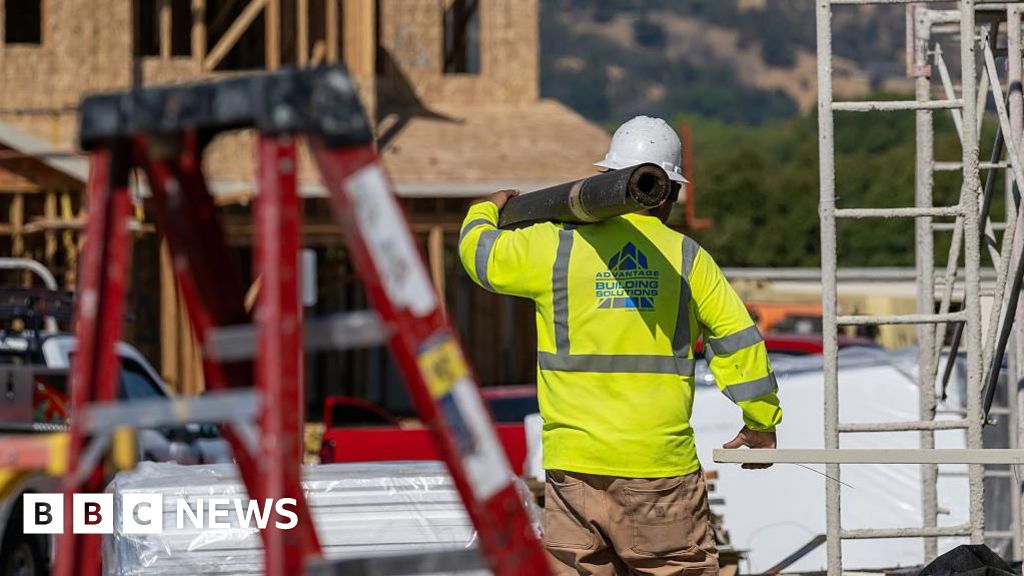
New US tariffs on imported kitchen cabinets, vanities, lumber, timber and certain upholstered furniture have come into effect.
Under a proclamation signed by President Donald Trump last month, a 10% tariff on softwood lumber and timber imports will apply as of Tuesday.
A 25% tariff will also apply to imported kitchen cabinets and vanities – rising to 50% on 1 January – and a 25% tariff on upholstered wooden furniture will increase to 30%, unless new trade agreements are reached.
Trump has cited the need to protect US manufacturers and national security concerns for the move, but some in the industry worry the tariffs could raise housing costs and make customers postpone home renovations.
Tariffs are taxes on imported goods typically charged as a percentage of a good’s value and are paid to the US government by companies bringing in the products.
These firms may pass some or all of the extra cost on to their customers, which in this case means ordinary Americans and other US businesses.
The president’s tariff policies have been a key feature of his second term in the White House.
Trump has previously imposed sector-specific tariffs on steel, copper, aluminium, cars and vehicle components.
The additional global 10% tariffs on softwood lumber means the product from Canada – the second largest producer of globally and a major US supplier – is now tariffed at more than 45%.
There is already a combined 35.16% US countervailing and anti-dumping duties placed on most Canadian producers as part of a decades-long dispute over the product between the two countries.
As part of existing trade deals with the US, duties on wood products from the UK will not exceed 10%, while those from the European Union and Japan will not exceed 15%.
The White House says Trump’s tariffs have been implemented “to protect against threats” to the US’s national security and to “strengthen manufacturing”.
But the National Association of Homebuilders said in a statement in late September that the new levies could raise housing costs.
“These new tariffs will create additional headwinds for an already challenged housing market by further raising construction and renovation costs,” said chairman Buddy Hughes.
According to Telsey Advisory Group managing director and senior retail analyst Cristina Fernández, retailers will have no choice but to raise prices on imported goods.
Speaking to the BBC’s US partner CBS News last month, she said retailers would try not to raise prices too much ahead of the holiday season, but “they can’t absorb 30% tariffs on top of other tariffs that are already in place”.
“They’ll have to pass through pricing, probably in the form of a double-digit price increase,” she added.
Last month Swedish furniture giant Ikea said the tariffs on furniture imports make doing business “more difficult”.
“The tariffs are impacting our business similarly to other companies, and we are closely monitoring the evolving situation,” the company said.

The supply chain risk designation of the artificial intelligence firm is a first for a US company.
Source link

Thomas Fuller | SOPA Images | Lightrocket | Getty Images
UniQure needs to run another study to prove that its gene therapy “actually helps people with Huntington’s disease,” a senior U.S. Food and Drug Administration official said on a call with reporters Thursday.
The official, who requested anonymity before discussing sensitive information, confirmed the agency has asked the company to run a placebo controlled trial of its treatment, which is administered directly into the brain. UniQure has said that type of study isn’t ethical because it would require putting people under general anesthesia for hours, a characterization the official disputed.
“So what is really going on? UniQure is the latest company to make a failed therapy for Huntington’s patients,” the official said. “They likely acknowledge or understand at some deep level that their trial failed years ago, and instead of doing the right thing and running the correct clinical study, UniQure is performing a distorted or manipulated comparison in the mind of FDA.”
The comments mark the latest development in a messy public spat between UniQure and the FDA, and as the agency comes under fire for a number of recent drug approval application rejections, including some where companies have accused it of going back on previous guidance. FDA Commissioner Marty Makary in an interview with CNBC’s Becky Quick last week seemingly criticized UniQure’s gene therapy for Huntington’s disease. Makary didn’t name UniQure but described its treatment.
UniQure then accused the FDA of reversing its stance that the company’s clinical trial data would be sufficient to seek approval. UniQure’s study used an outside database to measure how patients with Huntington’s disease might decline without treatment, known as an external control. UniQure has said it wouldn’t be feasible to run a true randomized, double-blind placebo-controlled study, considered the gold standard, because it wouldn’t be ethical to make people undergo a sham hours-long brain surgery.
The FDA official said the agency “never agreed to accept this distorted comparison” and the FDA “never makes such assurances.” Instead, the “FDA will always say, ‘Well, we have to see the data when we get it.'”
UniQure didn’t immediately comment.
The company’s stock rose more than 10% on Thursday and has fallen 58% this year as of Thursday afternoon.
Business
US mortgage rates rise to 6% after three-week slide as oil-driven bond yields climb – The Times of India

The average long-term US mortgage rate edged higher this week, ending a three-week decline as bond yields rose amid oil-price pressures linked to the war with Iran.The benchmark 30-year fixed mortgage rate increased to 6% from 5.98% last week, mortgage buyer Freddie Mac said on Thursday. A year ago, the average rate stood at 6.63%, AP reported.The modest uptick breaks a three-week slide in borrowing costs, with mortgage rates having hovered close to the 6% mark for most of this year. Last week’s average had marked the first time the rate dipped below 6% since September 2022, reaching its lowest level in nearly three and a half years.Mortgage rates are influenced by several factors, including the Federal Reserve’s interest-rate policy, investor expectations about inflation and economic growth, and movements in the bond market.They typically track the direction of the 10-year US Treasury yield, which lenders use as a benchmark for pricing home loans.The 10-year Treasury yield rose to 4.14% at midday Thursday, up from around 4% a week earlier.Treasury yields have moved higher in recent days as rising oil prices added fresh inflation concerns, potentially complicating the Federal Reserve’s plans to cut interest rates.


Trump pays tribute to Lou Holtz after legendary football coach’s death

US Senate backs Trump’s Iran operations after House vote

Harry Kane calf injury imperils Bundesliga record chase

What are Iran’s ballistic missile capabilities?

India Us Trade Deal: Fresh look at India-US trade deal? May be ‘rebalanced’ if circumstances change, says Piyush Goyal – The Times of India

Attock Cement’s acquisition approved | The Express Tribune

-
 Politics1 week ago
What are Iran’s ballistic missile capabilities?
-
Business7 days ago
India Us Trade Deal: Fresh look at India-US trade deal? May be ‘rebalanced’ if circumstances change, says Piyush Goyal – The Times of India
-
Business1 week ago
Attock Cement’s acquisition approved | The Express Tribune
-

 Fashion1 week ago
Policy easing drives Argentina’s garment import surge in 2025
-

 Politics1 week ago
US arrests ex-Air Force pilot for ‘training’ Chinese military
-
 Business6 days ago
Greggs to reveal trading amid pressure from cost of living and weight loss drugs
-

 Sports6 days ago
LPGA legend shares her feelings about US women’s Olympic wins: ‘Gets me really emotional’
-

 Fashion7 days ago
Texwin Spinning showcasing premium cotton yarn range at VIATT 2026